Best Online Therapy Services 2026: Find the Right Therapist
Mental health challenges have become a common part of today’s busy and demanding lifestyle. Almost everyone experiences stress, anxiety, emotional overload, or mental exhaustion at some point. The biggest question most people face is whether they actually need therapy and how to choose the right therapist for their concerns.
In this article, you will learn how to identify mental health symptoms, understand when therapy is needed, and choose the right therapist based on your emotional needs. You will also explore the best online therapy services available today and how online therapy fits perfectly into modern, fast-paced lives. With Lyfsmile’s online therapy services, you can access professional mental health support without disrupting your daily routine—helping you focus on healing while staying comfortable and stress-free.
What is Online Therapy?

Online therapy is a convenient way to receive professional mental health support from home using video calls, audio sessions, chat, or secure messaging. It removes common barriers like time constraints, travel, and hesitation about in-person visits. Platforms like Lyfsmile connect you with licensed therapists and psychologists in a safe and confidential setting.
Key Features of Online Therapy:
Access therapy through video, audio, chat, or messaging, based on your comfort
Sessions led by licensed therapists and clinical psychologists
Attend therapy from home or any private space
Flexible scheduling that fits busy lifestyles
High privacy and confidentiality
Support focused on long-term emotional well-being
How Does Online Therapy Work?

Online therapy follows a step-by-step, structured process to ensure that every individual receives the right kind of mental health support based on their specific concerns. At Lyfsmile, the process is designed to be simple, personalized, and effective—especially for individuals looking for the best online therapy service and across India.
1. Initial Assessment Call or Form
The therapy journey usually begins with an assessment call or a detailed intake form. This step helps therapists understand your emotional state, mental health symptoms, personal challenges, and therapy expectations.
During this stage, you may be asked about:
Your current emotional concerns (anxiety, stress, low mood, burnout, etc.)
Duration and intensity of symptoms
Past therapy or mental health history
Lifestyle, work pressure, relationship dynamics, or family stress
This assessment ensures that therapy is not generic, but thoughtfully planned from the very beginning. For clients seeking online counseling, this step also helps align therapy with urban lifestyle stressors such as work pressure, traffic stress, long working hours, and social expectations.
2. Right Therapist Selection (CBT, Trauma Therapist, EMDR Therapist, Psychiatrist)
Based on the assessment, clients are matched with the most suitable mental health professional. This is one of the most important steps in online therapy.
At Lyfsmile, therapist selection may include:
CBT Therapists specialize in treating anxiety, depression, overthinking, OCD, and negative thought patterns. With expert CBT Therapy in Delhi, you can receive personalized, effective care from licensed professionals.
Trauma Therapists for emotional wounds caused by past experiences
EMDR Therapists for trauma, PTSD, childhood trauma, and flashbacks
Psychiatrists for conditions like panic attacks, severe anxiety, or depression where medication support may be needed
This personalized matching ensures that clients receive specialized care, not just general counseling—making online therapy highly effective and goal-oriented.
3. Weekly Online Therapy Sessions
Once matched with the right therapist, clients begin weekly online therapy sessions through secure video or audio platforms. These sessions provide a consistent space to explore emotions, thoughts, behaviors, and patterns affecting mental health.
Weekly sessions help:
Build a strong therapist-client connection
Create emotional safety and trust
Maintain continuity in the healing process
Address challenges in real time as they arise
For busy individuals, professionals, and families in cities like Gurgaon, weekly online sessions make therapy manageable without disrupting daily routines.
4. Progress Tracking & Customized Healing Plan
Online therapy is not limited to conversations alone. Therapists regularly track emotional progress, review challenges, and adjust strategies based on how the client is responding to therapy.
Each client receives a customized healing plan, which may evolve over time and includes:
Emotional goals
Behavioral changes
Coping strategies
Long-term mental wellness planning
This ensures therapy remains dynamic, responsive, and deeply personalized.
5. Therapy Toolkit: Worksheets, Grounding Exercises & CBT Techniques
To support healing beyond sessions, clients are provided with a therapy toolkit designed to encourage self-awareness and emotional regulation in daily life.
This toolkit may include:
Worksheets to identify thought patterns, triggers, and emotional responses
Grounding exercises to manage anxiety, panic, and emotional overwhelm
Journaling prompts to process emotions and gain clarity
CBT techniques to challenge negative thoughts and build healthier thinking habits
These tools empower clients to actively participate in their healing journey, making online therapy practical, engaging, and results-driven.
Overall, online therapy at Lyfsmile combines professional expertise, structured care, and flexible access—making it an effective mental health solution for individuals seeking trusted online therapy.
Benefits of Online Therapy at lyfsmile

Online therapy makes mental health care easier for today’s busy lives. These six benefits show how Lyfsmile helps you access professional support in a convenient, affordable, and private way—without disrupting your daily routine.
1. Time-Saving and Convenient
One of the biggest advantages of online therapy is that it saves time. There is no need to commute, sit in waiting rooms, or adjust your entire day around a therapy appointment. Sessions can be attended from home, office, or any private space, making it especially helpful for working professionals, students, parents, and individuals with busy schedules.
For people living in fast-paced cities, online therapy allows mental health care to fit into daily life rather than becoming another source of stress.
2. Affordable Mental Health Care
Online therapy is often more affordable than traditional in-person sessions. Lower operational costs allow platforms like Lyfsmile to offer high-quality therapy at accessible prices without compromising on professional expertise.
This affordability makes long-term therapy possible, which is essential for meaningful emotional healing and mental well-being.
3. Comfort of Your Own Home
Being in a familiar and safe environment helps individuals feel more relaxed and open during therapy sessions. Many people find it easier to talk about sensitive emotions when they are at home rather than in a formal setting.
This comfort often leads to deeper conversations, emotional honesty, and faster progress—especially for those dealing with anxiety, trauma, or emotional vulnerability.
4. Better Privacy and Confidentiality
Privacy is a major concern for many individuals seeking therapy. Online therapy provides a high level of confidentiality, allowing clients to attend sessions discreetly without fear of being seen or judged.
Secure platforms and ethical guidelines ensure that conversations remain private, helping clients feel emotionally safe and respected throughout their therapy journey.
5. Access to Specialized Therapists
Online therapy provides access to a wider range of mental health professionals, including:
Trauma therapists
CBT and EMDR experts
This means individuals can connect with the right therapist for their specific needs, rather than settling for limited local options.
6. Privacy and Comfort Compared to Offline Therapy
Offline therapy also offers privacy, but many people feel more comfortable at home during online sessions. Online therapy removes travel and unfamiliar settings, helping clients feel relaxed, open, and less judged—making emotional expression easier and more effective.
7. Ideal for Introverts and Socially Anxious Individuals
Online therapy works particularly well for introverts and people with social anxiety. The virtual format reduces social pressure and allows clients to communicate at their own pace.
Features like chat-based counseling and audio sessions help individuals express themselves more comfortably, making therapy feel less intimidating and more supportive.
Overall, online therapy combines convenience, affordability, privacy, and professional care—making it a powerful and practical mental health solution for people seeking effective emotional support in today’s world.
Online Therapy for Individuals, Professionals & Families
Online therapy supports anyone feeling emotionally stressed, overwhelmed, or mentally exhausted due to daily life pressures. Personal responsibilities, work stress, relationships, and life transitions can affect emotional well-being at any stage. Lyfsmile’s online therapy adapts to different lifestyles and roles, offering personalized support without disrupting daily routines. The sections below explain how online therapy helps women, men, professionals, and families based on their unique emotional needs.
Online Therapy for Women
Women experience mental health challenges that are deeply connected to their biological, emotional, social, and relational roles. From managing hormonal changes to balancing relationships, careers, family expectations, and personal identity, many women carry an invisible emotional load every day. Online therapy offers a supportive and flexible space where women can focus on their emotional well-being without guilt or judgment.
Common Challenges Faced by Women
1. Hormonal changes, PMS, and mood swings
Hormonal changes during periods, pregnancy, postpartum, or menopause can deeply affect mood, energy, and emotional balance. Women may feel irritated, anxious, sad, or emotionally sensitive without understanding why. These symptoms are often dismissed as “normal,” which makes women ignore their mental health. Therapy helps women understand these changes and manage emotional ups and downs in a healthy way.
2. Work pressure and office stress
Women often face constant pressure to perform well at work while also managing personal responsibilities. Deadlines, expectations, job insecurity, and workplace comparisons can create stress and self-doubt. Many women feel they have to prove themselves again and again, which becomes emotionally exhausting. Therapy helps in managing work stress, building confidence, and creating healthier work-life balance.
3. Emotional fatigue from multitasking
Handling multiple roles at the same time—employee, caregiver, partner, daughter, or mother—can drain emotional energy. Women rarely get time to rest mentally because they are always thinking about others. This ongoing multitasking can lead to burnout and emotional numbness. Therapy helps women slow down, prioritize themselves, and regain emotional strength.
4. Relationship stress and emotional responsibility
Women are often expected to emotionally support partners, families, and friends. Constantly being available for others can lead to feeling unheard or emotionally alone. Unresolved conflicts and unmet needs can silently build stress. Therapy provides a space to express emotions openly and learn healthier communication and relationship boundaries.
5. Difficulty setting boundaries and saying no
Many women struggle to say no due to fear of disappointing others or being judged. This people-pleasing habit can cause emotional overload and resentment. Over time, ignoring personal limits affects mental health and self-respect. Therapy helps women build confidence to set clear boundaries without guilt.
6. Postpartum depression and new-mother stress
Becoming a mother brings emotional, physical, and identity changes. New mothers may feel overwhelmed, anxious, guilty, or emotionally disconnected while still being expected to feel happy. Lack of sleep and support can make these feelings stronger. Online therapy allows new mothers to seek help privately and comfortably from home.
7. Low self-esteem and constant self-doubt
Social pressure, comparison, and criticism can slowly affect a woman’s confidence. Many women question their abilities, appearance, or decisions. Over time, this self-doubt can limit personal and professional growth. Therapy helps rebuild self-worth and develop a healthier self-image.
8. Overthinking and anxiety
Many women experience racing thoughts, constant worry, and fear of making mistakes. This mental overload can disturb sleep, focus, and emotional peace. Overthinking often increases when responsibilities feel too heavy. Therapy helps calm the mind and develop better ways to manage anxious thoughts.
9. Unhealed emotional pain from the past
Past emotional experiences, relationship trauma, or unresolved pain can affect present behavior and emotions. When ignored, these wounds continue to trigger anxiety, trust issues, or emotional reactions. Therapy helps women safely process past experiences and heal emotionally.
10. Ignoring mental health due to guilt or responsibility
Women often put everyone else’s needs first and delay taking care of themselves. They may feel guilty for seeking help or believe their problems are not serious enough. Over time, this neglect can worsen mental health. Therapy reminds women that their emotional well-being matters too.
How Online Therapy Helps Women
Emotional clarity and grounding
Therapy helps women make sense of complex emotions by identifying triggers, patterns, and unmet needs. Grounding techniques support emotional regulation during moments of overwhelm, anxiety, or emotional flooding.
Stress reduction tools
Women learn practical tools to manage daily stress, reduce mental overload, and prevent emotional burnout. These tools are designed to fit into real-life routines, making them sustainable and effective.
Safe, non-judgmental healing space
Online therapy at Lyfsmile offers a confidential, compassionate environment where women can speak openly—without fear of being misunderstood, blamed, or minimized. This emotional safety is essential for healing.
Therapy Tools Used
CBT (Cognitive Behavioral Therapy) to challenge negative self-talk, anxiety, and emotional patterns
Mindfulness practices to improve emotional awareness and reduce stress
Inner-child work to heal unresolved emotional wounds and relationship patterns
EMDR therapy for women dealing with trauma, emotional pain, or past distressing experiences
Online therapy empowers women to reconnect with themselves, strengthen emotional resilience, and navigate life’s challenges with greater confidence and self-compassion.
Online Therapy for Men
Men face emotional and mental pressure every day, but most are taught to stay silent and “handle it on their own.” Work stress, financial responsibility, relationship expectations, and the pressure to always stay strong often leave men feeling exhausted, frustrated, or emotionally disconnected. Online therapy gives men a private, judgment-free space to talk openly and understand what they are really going through.
Common Challenges Faced by Men
1. Constant pressure to be strong
Men are often expected to stay strong no matter what. Showing emotions or asking for help is still seen as a weakness. Over time, suppressing feelings leads to stress, frustration, and emotional burnout. Therapy helps men understand that emotional strength comes from expression, not silence.
2. Work stress that never switches off
Office pressure, deadlines, job insecurity, and performance expectations stay in the mind even after work hours. Many men carry this stress home, which affects their mood, sleep, and relationships. Therapy helps in managing work stress and creating a healthier work–life balance.
3. Anger and irritation without clear reasons
Sudden anger, impatience, or emotional outbursts are often signs of unprocessed stress. Many men don’t realize that anger is usually a cover for deeper emotions like fear, pressure, or exhaustion. Therapy helps identify the root cause instead of just controlling reactions.
4. Difficulty expressing emotions
Many men struggle to explain what they feel, especially in relationships. This leads to misunderstandings, emotional distance, or silence. Online therapy helps men slowly build emotional awareness and express feelings with confidence.
5. Financial stress kept inside
Responsibilities like savings, EMIs, family expenses, and future planning create constant mental pressure. Most men don’t talk about this stress, which affects their peace of mind and sleep. Therapy provides emotional support and mental clarity around financial stress.
6. Emotional distance in relationships
Feeling disconnected from a partner, lack of communication, or frequent misunderstandings can silently damage relationships. Men often avoid discussing these issues, hoping they will resolve on their own. Therapy helps improve communication and emotional connection.
7. Feeling lonely despite being surrounded by people
Even with friends, family, or colleagues around, many men feel emotionally alone. This loneliness is often ignored but can lead to sadness or emotional numbness. Therapy offers a safe space to talk without pretending everything is fine.
8. Mental and emotional exhaustion
Feeling tired all the time, losing motivation, or not enjoying things that once felt good are signs of burnout. This exhaustion is not just physical—it is emotional. Therapy helps men regain energy, clarity, and motivation.
9. Pressure of self-expectations
Many men constantly push themselves to do better and feel they are never doing enough. This self-pressure lowers confidence and self-worth. Therapy helps men develop healthier self-expectations and self-compassion.
10. Belief that asking for help is weakness
One of the biggest barriers is the belief that seeking help makes a man weak. This mindset delays support and increases emotional struggle. Online therapy helps break this belief and shows that asking for help is a sign of strength.
Additional challenges often seen in men
Fear of vulnerability or appearing weak
Relationship conflicts due to poor emotional communication
Isolation and lack of emotional support systems
Sleep issues and unhealthy coping habits
How Online Therapy Helps Men
Building emotional intelligence
Therapy helps men recognize, understand, and name their emotions. This emotional awareness improves self-control, decision-making, and relationships.
Stress and anger management
Men learn practical tools to release stress in healthy ways, manage anger triggers, and respond rather than react during emotionally charged situations.
Developing clear communication skills
Therapy supports men in expressing thoughts and emotions calmly and confidently, improving both personal and professional relationships.
Safe and private support
Online therapy offers discretion and privacy, making it easier for men to seek help without fear of judgment or social stigma.
Therapeutic Techniques Used
Solution-Focused Therapy to address immediate problems and set practical goals.
CBT (Cognitive Behavioral Therapy) to manage stress, anger, anxiety, and negative thought patterns.
Mind-management tools to improve focus, emotional control, and mental clarity.
Online therapy helps men break free from emotional suppression, develop healthier coping mechanisms, and build emotional strength that supports long-term mental well-being.
Online Therapy for Working Professionals
Working professionals today face constant mental pressure due to fast-paced work cultures, long hours, high expectations, and limited work–life balance. In cities like Gurgaon and Delhi, competitive environments, commute stress, performance targets, and job insecurity further intensify emotional exhaustion. Online therapy for working professionals offers a practical and confidential way to manage these challenges without disrupting daily schedules.
Common Challenges Faced by Working Professionals
Burnout and chronic exhaustion
Burnout is more than feeling tired—it is emotional, mental, and physical exhaustion caused by prolonged stress. Many professionals in corporate roles experience lack of motivation, detachment from work, irritability, and a sense of being constantly overwhelmed. Without timely support, burnout can impact mental health, productivity, and overall quality of life.
Workplace stress and constant deadlines
Pressure to meet deadlines, handle multiple responsibilities, manage team expectations, and maintain performance levels can create continuous stress. This often leads to anxiety, overthinking, and difficulty switching off from work even after office hours.
Sleep issues and mental fatigue
Stressful work routines often disrupt sleep patterns. Professionals may struggle with insomnia, racing thoughts at night, or poor sleep quality, which further reduces focus and emotional regulation during the day.
Productivity loss and lack of focus
When stress builds up, concentration drops. Many professionals notice decreased efficiency, procrastination, decision fatigue, and difficulty completing tasks, which increases self-doubt and pressure.
Career confusion and lack of direction
Despite professional success, many individuals feel stuck, unfulfilled, or unsure about their career path. Therapy helps explore values, goals, and personal meaning beyond external achievements.
How Online Therapy Helps Working Professionals
Healthy boundary-setting
Therapy helps professionals learn how to set emotional and work boundaries—such as saying no, managing expectations, and separating personal time from professional responsibilities—without guilt.
Stress detox and emotional regulation
Professionals learn stress detox methods to release accumulated tension, calm the nervous system, and prevent emotional overload.
Burnout recovery and long-term resilience
Online therapy focuses not just on recovery but also on building emotional resilience, helping professionals sustain mental well-being in demanding environments.
CBT Therapy in Gurgaon & Delhi
Many professionals benefit from CBT therapy in Gurgaon and in Delhi, which helps identify stress-inducing thought patterns and replace them with healthier, more productive responses.
Therapeutic Techniques Used
CBT (Cognitive Behavioral Therapy) – effective for managing work stress, anxiety, burnout, and negative thinking.
Productivity-focused therapy – improves focus, motivation, and time management.
Mindfulness-Based Stress Reduction (MBSR) – calms the mind, reduces emotional reactivity, and improves sleep quality.
With online therapy services, Lyfsmile supports working professionals in restoring balance, improving productivity, and protecting long-term mental health—without compromising career growth.
4. Online Therapy for College Students
College life is a phase where students are expected to “figure everything out” while still learning who they are. Academic pressure, constant comparison, fear of failure, and uncertainty about the future can quietly impact a student’s mental health. Many students struggle internally but hesitate to seek help, believing their stress is “normal” or temporary.
Common Challenges Faced by College Students
Exam pressure and performance anxiety
Exams often become more than tests—they turn into measures of self-worth. Students may experience panic, blanking out during exams, racing thoughts, or physical symptoms like nausea and headaches. The fear of disappointing parents or losing future opportunities intensifies this pressure.
Low confidence and self-doubt
Repeated comparison with peers, academic setbacks, or negative feedback can make students doubt their abilities. Over time, this leads to impostor syndrome, where students feel they are “not good enough” despite achievements.
Social anxiety and emotional isolation
Making friends, participating in class, or fitting into social groups can be emotionally exhausting. Some students feel lonely even when surrounded by people, leading to withdrawal and sadness.
Career confusion and fear of the future
Choosing a career path feels overwhelming, especially when interests conflict with expectations. This confusion often creates anxiety, indecision, and loss of motivation.
How Online Therapy Helps Students
Online therapy helps students improve focus, regulate emotions, and rebuild confidence. Therapists support students in managing exam stress, breaking negative thinking cycles, developing emotional resilience, and gaining clarity about their goals—all in a private and comfortable environment.
5. Online Therapy for Caregivers
Caregivers are often emotionally invisible. While they support others, their own emotional needs remain unmet. Over time, this imbalance can deeply affect mental health.
Challenges Faced by Caregivers
Emotional exhaustion and burnout
Caregivers are often “on duty” all the time, with little or no emotional rest. Continuous caregiving without breaks can lead to extreme tiredness, irritability, emotional numbness, and loss of motivation. Many caregivers feel exhausted but keep going because they feel there is no other choice.
Guilt and constant emotional pressure
Caregivers often feel guilty for feeling overwhelmed, frustrated, or even wanting time for themselves. They may believe that taking a break is selfish or unfair to the person they care for. This guilt creates constant emotional pressure and prevents them from prioritizing their own needs.
Lack of emotional support
Caregivers are expected to be strong, patient, and understanding at all times. Unfortunately, their emotions are rarely acknowledged. They may feel unheard, unseen, and emotionally isolated, even while surrounded by people.
Loss of personal identity
Over time, caregivers may stop seeing themselves as individuals with their own dreams, needs, and emotions. Life begins to revolve only around caregiving duties, leading to a loss of self and emotional disconnect.
How Therapy Supports Caregivers
Online therapy provides emotional validation, helps caregivers process guilt, and teaches boundary-setting. It restores emotional energy and reminds caregivers that caring for themselves is not selfish—it is necessary.
6. Online Therapy for Introverts
Introverts experience emotions very deeply, but they often process those emotions internally. They may not feel comfortable expressing their thoughts immediately or speaking openly in social or unfamiliar settings. Because of this, traditional face-to-face therapy can sometimes feel overwhelming, mentally draining, or emotionally unsafe for introverts.
Introverts usually need time, trust, and a calm environment to open up. Online therapy offers a gentle, flexible, and pressure-free space where introverts can express themselves at their own pace—without feeling rushed or judged.
Challenges Faced by Introverts
Difficulty opening up emotionally
Introverts often take time to organize their thoughts and feelings before sharing them. Instant verbal communication can feel uncomfortable, especially with someone new. They may struggle to speak freely in traditional therapy rooms, even when they want help. This does not mean they lack emotions—it means they process them more internally.
Fear of judgment or being misunderstood
Many introverts worry that their feelings may be misunderstood, ignored, or taken lightly. They may hesitate to share personal thoughts because they fear being judged or not taken seriously. This fear often leads them to suppress emotions instead of expressing them.
Emotional overload in social settings
Busy clinics, waiting rooms, or face-to-face interactions can feel mentally exhausting for introverts. Too much stimulation can make it harder for them to focus on their emotions during therapy sessions.
Overthinking and self-doubt
Introverts tend to reflect deeply, which can sometimes turn into overthinking. They may replay conversations, doubt their feelings, or question whether their problems are “valid enough” to talk about.
7. Online Therapy for Immigrants & Expats
Moving to a new country often comes with better opportunities, career growth, and new experiences. However, behind this change, many immigrants and expats silently struggle with emotional loss, stress, and adjustment challenges. Leaving behind family, friends, familiar culture, and a sense of belonging can deeply affect emotional well-being.
While life may look settled from the outside, many immigrants and expats feel emotionally disconnected, misunderstood, or alone. Online therapy provides a safe and familiar space where they can express emotions freely, without cultural or language barriers.
Common Emotional Challenges
Homesickness and loneliness
Being away from family, childhood connections, and familiar traditions can create a strong sense of emotional emptiness. Festivals, family moments, and important life events often feel incomplete when celebrated alone. Over time, this loneliness can turn into sadness, anxiety, or emotional withdrawal.
Cultural stress and identity confusion
Adapting to a new culture often requires changing communication styles, social behavior, and even personal values. Many immigrants feel caught between their old identity and new expectations, leading to confusion about where they truly belong. This internal conflict can affect confidence, self-worth, and emotional stability.
Language and communication barriers
Even when people are fluent in a new language, expressing emotions can feel difficult. Misunderstandings, fear of being judged, or not finding the right words can increase emotional frustration and isolation.
Pressure to adjust and “fit in”
There is often an unspoken pressure to adjust quickly, succeed, and appear strong. Immigrants and expats may avoid sharing struggles to prevent worrying family back home, which leads to suppressed emotions and increased stress.
How Therapy Helps
Online therapy offers emotional support that feels familiar and culturally sensitive. Speaking with a therapist who understands emotional transitions helps individuals process loss, rebuild identity, and develop healthy coping strategies. Therapy provides grounding tools and emotional stability during life transitions—helping immigrants and expats feel supported, confident, and emotionally balanced in their new environment.
8. Online Therapy for Entrepreneurs
Entrepreneurs are often seen as confident, driven, and strong—but behind this image, many carry silent mental pressure every day. Running a business means constantly taking risks, making tough decisions, and handling uncertainty, often without emotional support. Over time, this pressure can affect mental health, focus, and personal life.
Online therapy gives entrepreneurs a private, judgment-free space to talk openly about fears, stress, and emotional overload—without worrying about appearing “weak” or unsuccessful.
Challenges Faced by Entrepreneurs
Decision fatigue and constant uncertainty
Entrepreneurs make multiple decisions daily—about finances, employees, growth, and future plans. This constant mental load slowly drains energy and increases anxiety. Fear of making the wrong choice can lead to overthinking, self-doubt, and emotional exhaustion.
Financial stress and business pressure
Income uncertainty, investment risks, and financial responsibilities create ongoing stress. Even during success, the pressure to maintain growth can feel overwhelming. Financial stress often spills into sleep problems, irritability, and constant worry.
Emotional isolation and lack of support
Many entrepreneurs feel they cannot share their struggles with family, friends, or team members. This emotional isolation increases loneliness and suppresses stress, which can later surface as burnout or emotional numbness.
Work–life imbalance and burnout
Long working hours and blurred boundaries between personal and professional life leave little time for rest. Over time, this leads to burnout, loss of motivation, and feeling disconnected from life outside work.
How Therapy Helps
Online therapy helps entrepreneurs manage stress, process uncertainty, and regain mental clarity. Therapy provides practical tools for emotional regulation, decision-making, and resilience building. It also helps entrepreneurs reconnect with themselves—so success does not come at the cost of mental well-being.
9. Online Therapy for New Moms
Motherhood is often shown as a joyful phase, but the emotional reality can be very different. New mothers go through major physical, emotional, and identity changes all at once. Along with caring for a newborn, many women silently struggle with exhaustion, emotional overwhelm, and self-doubt—yet hesitate to talk about it openly.
Online therapy offers new moms a safe and flexible space to express emotions, seek support, and take care of their mental health without stepping away from their baby or daily routine.
Challenges Faced by New Moms
Postpartum depression and anxiety
After childbirth, hormonal changes, sleep deprivation, and constant responsibility can lead to intense sadness, anxiety, fear, or emotional numbness. Many new moms feel guilty for not feeling “happy enough,” which delays seeking help. Therapy helps normalize these emotions and provides coping tools for emotional stability.
Identity shift and emotional exhaustion
Many women struggle with losing their sense of self beyond being a mother. Personal time, career goals, and individuality often take a back seat, leading to frustration and emptiness. Constant caregiving without rest causes physical and emotional exhaustion. Therapy helps new moms reconnect with their identity, set healthy expectations, and rebuild emotional strength.
Sleep deprivation and constant fatigue
New moms often get very little uninterrupted sleep. Continuous night feedings and baby care disturb the body’s natural rhythm, leading to irritability, low patience, poor concentration, and emotional breakdowns. Over time, this exhaustion can seriously affect mental health.
Fear of being a “bad mother”
Many new mothers constantly worry if they are doing enough or doing things right. Comparing themselves with others (family members, social media, other moms) increases self-doubt and anxiety. This fear often remains unspoken but deeply affects confidence.
Lack of emotional support
While attention is focused on the baby, the mother’s emotional needs are often ignored. Many women feel lonely, unheard, or emotionally disconnected even when surrounded by people. This emotional neglect can increase sadness and withdrawal.
Relationship changes with partner
After a baby arrives, dynamics with the partner often change. Less communication, lack of intimacy, and increased responsibilities can lead to misunderstandings, emotional distance, or resentment, adding to stress.
How Therapy Helps New Moms
Online therapy helps new mothers process overwhelming emotions, manage anxiety, and rebuild self-confidence. It offers emotional validation, coping strategies, and a non-judgmental space to talk freely. Therapy also supports identity rebuilding—helping women feel like themselves again, not just caregivers.
10. Online Therapy for Couples & Relationships
Every relationship goes through ups and downs, but when emotional issues remain unresolved, they can slowly damage trust, communication, and emotional closeness. Busy schedules, stress, misunderstandings, and unspoken expectations often create distance between partners. Online therapy offers couples a safe and neutral space to talk openly and work through these challenges together.
How Online Therapy Supports Couples & Relationships
Marriage counseling online
Helps couples address ongoing conflicts, emotional disconnect, and unmet expectations. Therapy supports rebuilding trust, improving understanding, and strengthening long-term commitment.
Couple therapy for communication
Many relationship problems arise from poor communication. Online couple therapy helps partners express emotions clearly, listen without defensiveness, and develop healthier conversation patterns.
Therapy for toxic relationships
In emotionally draining or toxic relationships, therapy helps individuals recognize unhealthy patterns, set boundaries, and make informed decisions about their emotional well-being.
Online counseling for relationship problems
Whether it’s frequent arguments, emotional distance, intimacy issues, or trust concerns, online therapy provides structured support to resolve relationship struggles in a respectful way.
Breakup and separation support
Ending a relationship can bring grief, confusion, guilt, and emotional pain. Therapy supports emotional healing, closure, and rebuilding self-worth during and after separation.
Overall, online couples therapy helps partners feel heard, understood, and emotionally connected—guiding them toward healthier relationships under professional and compassionate guidance.
Our Online Therapy Services & How They Help
Online Therapy for Anxiety – Symptoms: Worry, panic, restlessness | How it helps: Reduces overthinking, teaches coping techniques.
Online Therapy for Depression – Symptoms: Low mood, hopelessness, fatigue | How it helps: Improves mood, builds coping skills, and provides emotional support.
Online Stress Counseling – Symptoms: Overwhelm, tension, irritability | How it helps: Teaches stress management, relaxation, and mindfulness.
Online Psychiatrist for Panic Attacks – Symptoms: Sudden fear, palpitations, shortness of breath | How it helps: Combines therapy and medication to reduce panic episodes.
Online CBT Therapy – Symptoms: Negative thoughts, unhelpful behaviors | How it helps: Changes thought patterns and develops healthier behaviors.
EMDR Therapy Online – Symptoms: Trauma, PTSD, flashbacks | How it helps: Processes past trauma and reduces emotional distress.
Trauma Therapist Online – Symptoms: Emotional pain, anxiety, fear from past events | How it helps: Provides safe space for healing and coping strategies.
Online Therapy for Social Anxiety – Symptoms: Shyness, fear of judgment, avoidance | How it helps: Builds confidence and social coping skills.
Online Therapy for OCD – Symptoms: Intrusive thoughts, repetitive behaviors | How it helps: Uses CBT & ERP techniques to manage symptoms.
Online Therapy for Burnout – Symptoms: Exhaustion, low motivation, irritability | How it helps: Restores energy, sets boundaries, and improves work-life balance.
Best Online Therapy for Anxiety & Stress – Symptoms: Anxiety, tension, overwhelm | How it helps: Holistic approach combining therapy, tools, and strategies.
Online Counseling for Relationship Problems – Symptoms: Conflict, poor communication, emotional distance | How it helps: Improves communication and strengthens connections.
Online Therapy for Anger Management – Symptoms: Irritability, outbursts, frustration | How it helps: Identifies triggers and teaches emotional regulation.
Online Therapy for Sleep Problems / Insomnia – Symptoms: Difficulty sleeping, fatigue, restlessness | How it helps: CBT-I, relaxation, and sleep hygiene techniques.
Online Counseling for Self-Esteem Issues – Symptoms: Low confidence, self-doubt | How it helps: Builds self-worth and positive self-image.
Online Therapy for Overthinking – Symptoms: Racing thoughts, indecision, worry | How it helps: Mindfulness, grounding techniques, and thought management.
Online Therapy for Grief and Loss – Symptoms: Sadness, emptiness, difficulty coping | How it helps: Provides emotional support and coping strategies.
Therapy for Childhood Trauma Online – Symptoms: Anxiety, trust issues, flashbacks | How it helps: Inner child work and trauma-focused healing.
Online Therapy for Marriage Problems – Symptoms: Conflict, lack of connection, communication issues | How it helps: Couples therapy and relationship-building tools.
Online Therapy for Work Stress – Symptoms: Burnout, pressure, anxiety | How it helps: Stress reduction techniques and coping strategies for workplace challenges.
Tips for Making Online Therapy Effective

Online therapy can work wonders, but your involvement makes all the difference. Following simple habits before, during, and after sessions can help you feel comfortable, stay engaged, and get the most out of your therapy. The points below will guide you to create the right environment, communicate openly, and make your online sessions truly effective.
Choose a Quiet and Private Space
Select a calm, private space where you feel safe and free from interruptions. A quiet environment helps you focus better, express emotions openly, and feel emotionally secure during sessions. Privacy also allows you to speak honestly without fear of being overheard, which is essential for effective therapy.
Prepare Notes Before Each Session
Before your therapy session, take a few minutes to jot down thoughts, emotions, or situations that have been bothering you. This may include mood changes, triggers, conflicts, or questions you want to discuss. Preparing notes helps you use session time effectively and ensures important concerns are not forgotten.
Communicate Openly with Your Therapist
Honest communication is the foundation of successful therapy. Share your thoughts, fears, discomforts, and even doubts about the process. Remember, therapy is a non-judgmental space designed to support you. The more openly you communicate, the more personalized and effective your therapy becomes.
Follow Assigned Homework and Exercises
Therapy often includes exercises such as journaling, CBT worksheets, grounding practices, or mindfulness techniques. These tools are designed to support emotional growth between sessions. Consistently following them helps reinforce learning, manage emotions in daily life, and accelerate healing.
Attend Sessions Regularly
Consistency is key in online therapy. Regular sessions help maintain emotional momentum, track progress, and build trust with your therapist. Skipping sessions can interrupt the healing process, while regular engagement leads to deeper self-awareness and long-term mental well-being.
By creating the right environment, staying engaged, and committing to the process, online therapy becomes not just a conversation—but a powerful journey toward emotional balance and personal growth.
Why Choose Lyfsmile for Online Therapy?

Choosing the right mental health platform is an important decision. At Lyfsmile, online therapy is designed to be professional, compassionate, and deeply personalized, ensuring that individuals receive the right support at the right time. For people looking for trusted online therapy Lyfsmile offers expert-led care with a strong ethical and clinical foundation.
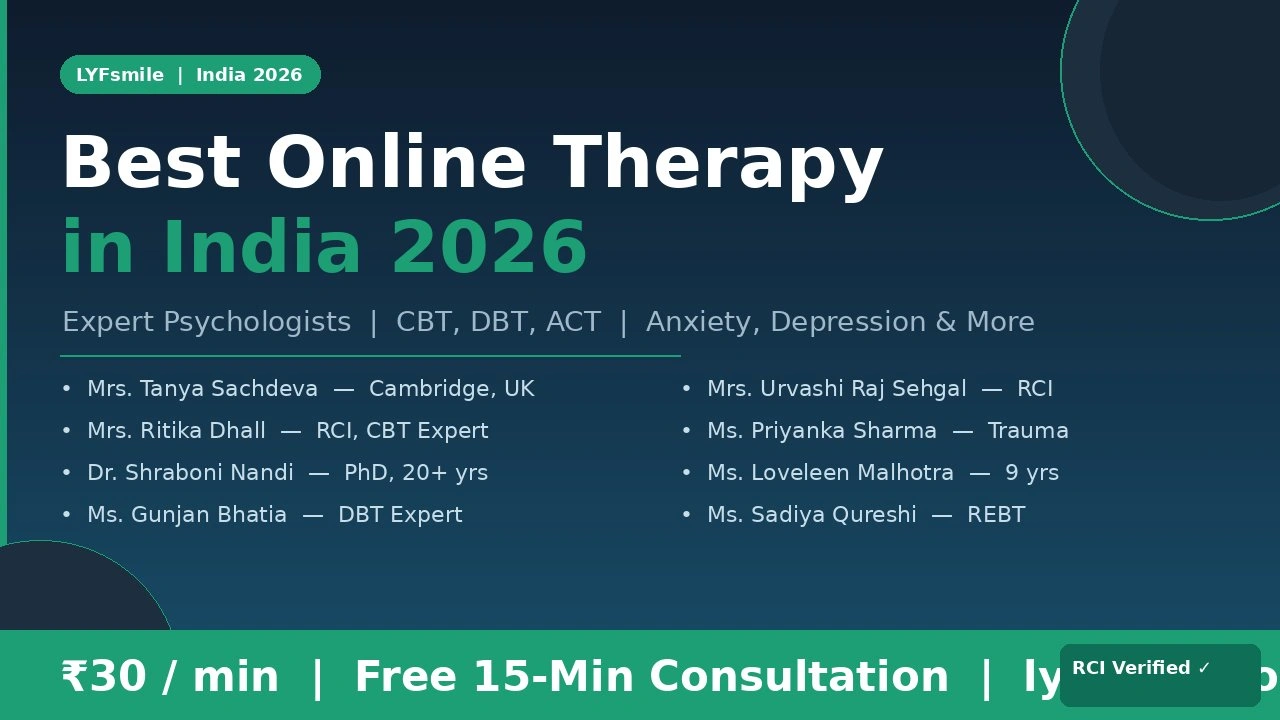
Experienced & Qualified Psychologists at Lyfsmile
Lyfsmile works with trained and experienced mental health professionals who understand real-life emotional challenges across age groups and life stages. Our team includes:
Mrs. Ritika Dhall – Counselling Psychologist
Specializes in emotional well-being, stress management, anxiety, and personal growth, offering a supportive and empathetic therapy experience.Dr. Shraboni Nandi – RCI Licensed Psychologist
Provides evidence-based psychological care for anxiety, depression, trauma, and complex emotional concerns, ensuring ethical and clinically sound treatment.
Supports adults with emotional regulation, stress management, anxiety-related concerns, and personal growth through structured, evidence-based therapeutic approaches.
This diverse team ensures that clients are matched with the right psychologist based on their specific needs, not a generic approach.
Trauma-Informed, CBT & EMDR Specialists
At Lyfsmile, therapy is grounded in scientifically proven methods. Our psychologists are trained in:
CBT (Cognitive Behavioral Therapy) for anxiety, depression, overthinking, OCD, and stress
Trauma-informed therapy for emotional wounds and past experiences
EMDR therapy for trauma, PTSD, and unresolved emotional distress
These approaches help clients not only cope, but heal at a deeper emotional level.
Psychiatric Support When Needed
For conditions such as panic attacks, severe anxiety, or depression, psychiatric support is available as part of the online therapy process. This integrated approach ensures safe assessment, therapy, and medication support when clinically required.
Affordable, Confidential & Online-First Care
Lyfsmile believes mental health care should be accessible and stigma-free. Our online therapy services are:
Completely confidential
Accessible from home
Suitable for busy professionals, students, parents, and families
100% Personalized Healing Plans
No two individuals are the same—and neither are their emotional journeys. At Lyfsmile, each client receives a fully personalized therapy plan based on their emotional needs, goals, pace, and progress. Therapy plans are reviewed and adapted regularly to ensure meaningful and lasting outcomes.
By choosing Lyfsmile, you choose a mental health platform that combines clinical expertise, human understanding, and flexible online care—supporting you at every step of your healing journey.
Online Therapy for Children & Offline Sessions

If your child is also facing emotional or behavioral challenges, we have expert psychologists for them too. Just connect with us, and our specialists in Delhi and Gurgaon will guide both you and your child. For those not comfortable with online sessions, we also offer offline therapy in a safe and private setting. Our sessions are designed to support the whole family without disrupting daily routines. Whether online or offline, Lyfsmile ensures professional care, emotional support, and long-term well-being for everyone.
Support for Kids & Teens: Trained child psychologists help children handle anxiety, school stress, low confidence, or emotional challenges in a safe, engaging environment.
Flexible Online Sessions: Children can attend therapy from home, making it convenient and comfortable for them.
Offline Therapy Available: For those who prefer in-person interaction, Lyfsmile offers offline sessions in Delhi and Gurgaon.
Parental Involvement: Offline sessions allow parents to stay involved and support their child’s emotional growth.
Personalized & Confidential Care: Both online and offline therapy ensure privacy, flexibility, and tailored guidance for each child.
Accessible for the Whole Family: Lyfsmile provides mental health support for adults and children alike, making it easier for families to prioritize emotional well-being.
Conclusion
Online therapy has transformed mental health care in today’s fast-paced world, making it accessible, flexible, and highly effective. Whether you are struggling with anxiety, depression, stress, or burnout, connecting with the right therapist can make your healing journey smoother, more structured, and deeply supportive.
At Lyfsmile, online therapy designed to meet your needs with qualified psychologists, trauma-informed techniques, CBT, EMDR, and personalized healing plans. From managing daily stress to overcoming deep-seated emotional challenges, Lyfsmile provides a safe, confidential, and convenient space for adults to focus on mental well-being without the barriers of traditional in-person therapy.
By choosing Lyfsmile, you are investing in your mental health—accessible from home, guided by experts, and tailored to your life and challenges. Start your journey today and experience the benefits of online therapy for emotional clarity, resilience, and long-term wellness.