

Anupam Tripathi
Parent–Child Therapy Gurgaon
Parent–child therapy in Gurgaon is a guided process that helps parents and children understand recurring conflicts, improve communication, and practise healthier ways of interacting. Families may consider support when daily arguments, frequent tantrums, or difficulties with routines begin affecting life at home.
The right approach depends on the child’s age, family circumstances, and the concerns involved. This guide explains how parent–child therapy differs from individual child counselling, what families can expect from sessions, and what to check before choosing a therapist in Gurgaon.
Unlike traditional counselling that focuses only on the child, these child therapy services strengthen both the relationship and behavioural patterns, helping parents learn exactly what to say, how to say it, and when to say it, in real time.
Parents searching for a Child Psychologist Near Me, Child Counseling, or a trusted Child Therapist in Gurgaon often choose parent–child therapy to improve communication, emotional bonding, and behaviour at home.
This explains:
What Parent–Child Therapy Gurgaon actually is
Which families benefit the most
How sessions work step-by-step
How parent-guided behaviour intervention, real-time parenting coaching, and cooperative behaviour training improve behaviour
How long therapy takes
When should you consult a psychologist
How to get an assessment done at Lyfsmile Gurgaon
What Is Parent–Child Therapy Gurgaon?
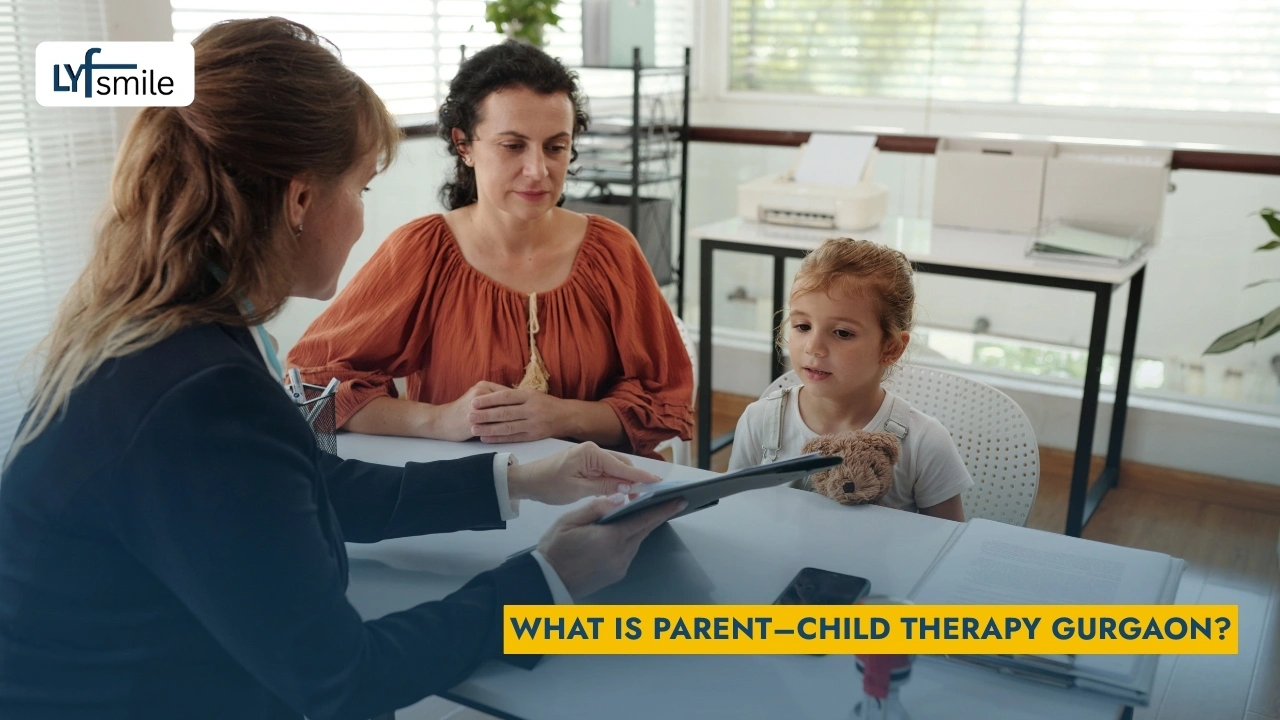
Parent-Child Therapy is a guided counselling process where both parents and children work with a therapist to improve communication, understanding, and emotional bonding.
It helps families:
talk without conflict
understand each other’s emotions
reduce misunderstandings at home
The core objective of Parent–Child Therapy Gurgaon is to equip parents with predictable, calm, and consistent strategies so they can confidently manage tantrums, aggression, refusal, emotional overwhelm, anxiety, or rigid behaviour patterns.
The therapy integrates powerful tools like:
Parent-guided behaviour intervention
Strengthening parent–child bonding
Real-time parenting coaching
Cooperative behaviour training
Behavioural relationship building
Each technique works together to reduce problematic behaviours and establish a healthier, emotionally secure home environment.
How is Parent-Child Therapy Different from Child Counselling?
Child Counselling focuses on helping the child individually with emotional, behavioural, or mental health issues through one-on-one sessions.
Parent-Child Therapy focuses on improving the relationship and communication between parents and the child by working with both together, not just the child alone.
Who Needs Parents–Child Therapy in Gurgaon?
This therapy is suitable for children 2 to 12 years old, although parents of older kids and teens also report benefits, especially when behavioural patterns have become deeply rooted.
Common Reasons Parents Seek This Therapy:
1. Daily Tantrums or Meltdowns
If your child gets overwhelmed easily, cries often, throws things, or struggles with transitions, this therapy helps you learn how to respond calmly and reduce escalation.
2. Aggression or Hitting Behaviour
Hitting, biting, pushing, or throwing are signs of emotional dysregulation. The therapy provides clear, consistent strategies to reduce aggressive behaviour at home.
3. Not Listening or Ignoring Instructions
When children refuse, argue constantly, or avoid tasks, cooperative behaviour training helps parents give effective instructions and end power struggles.
4. Sibling Rivalry or Fights
Jealousy and competitiveness can turn daily life stressful. Parent–Child Therapy Gurgaon teaches peaceful conflict resolution strategies.
5. ADHD-like Behaviours
Hyperactivity, impulsive behaviour, and difficulty sitting still are common in many children. This therapy improves compliance, attention span, and cooperation.
6. Anxiety or Emotional Sensitivity
Behavioural relationship building improves emotional security and helps children regulate their reactions.
7. Autism-Related Behavioural Concerns
Children with autism benefit deeply from clear routines, structured interactions, and predictable communication techniques taught in this therapy.
If any of these sound familiar, your child is likely to benefit from a structured parent–child behavioural approach.
How Does Parent–Child Therapy In Gurgaon Work?
Parent–child therapy works by helping families understand the emotions, behaviours, and communication patterns that may be creating tension or conflict at home. The therapy is designed in two transformational phases:
Phase 1: Strengthening Parent–Child Bonding
This phase focuses on improving the emotional connection.
When children feel safe, heard, and understood, their behaviour naturally improves.
Therapists teach parents:
Warm, sensitive communication
Play-based engagement strategies
How to follow the child’s lead
How to praise correctly and meaningfully
How to reduce negative talk
How to build trust during emotional moments
This foundational stage is crucial because it rewires the child’s sense of security. Most families start noticing early improvements in routines, communication, and behaviour within 2–3 weeks.
Phase 2: Behaviour Correction Through Parent-Guided Behaviour Intervention
Once the emotional bond is strengthened, the focus shifts to behaviour modification.
Parents learn:
How to give effective, short, direct instructions
How to encourage cooperation without arguments
How to create predictable routines
How to use calm firmness during tantrums
How to apply logical consequences consistently
How to reinforce positive behaviours
How to reduce unwanted behaviours gently but firmly
One of the most powerful elements of this therapy is real-time parenting coaching.
The therapist observes your interaction and coaches you instantly—helping you adjust tone, body language, and instruction style on the spot.
This makes Parent–Child Therapy Gurgaon far more effective and faster than traditional counselling.
Parent Counselling vs Parent–Child Therapy vs Parent Training
Parent counselling: Parents can discuss recurring family difficulties, communication patterns, boundaries, and ways to respond to challenging situations. Depending on the approach, the child may not need to attend every session.
Parent–child therapy: The parent and child work together with a qualified professional to understand interaction patterns and practise healthier communication.
Behavioural parent training: Parents learn structured strategies for responding to behaviour, setting routines, giving instructions, and reinforcing appropriate behaviour. Some programmes follow a specialised model, so families should confirm which approach the therapist actually provides.
The most suitable option depends on the child’s needs and the concerns affecting the family. A professional assessment can help determine which type of support may be appropriate.
Why Parent–Child Therapy Gurgaon Works So Well
Parent–child therapy in Gurgaon helps families address behavioural concerns, emotional difficulties, communication problems, and relationship conflicts. By working with a trained psychologist, parents and children can develop stronger trust, better understanding, and healthier patterns of interaction.
1. Real-Time Parenting Coaching
Instead of giving feedback later, the therapist guides you during the actual interaction.
This helps parents quickly master skills like:
Tone control
Staying calm under stress
Clear communication
Effective instruction-giving
Consistency during difficult moments
The learning is immediate and practical.
2. Faster Behaviour Improvements
Because parents practice the skills daily at home, changes become visible quickly.
Families commonly report:
Fewer tantrums
Better cooperation
Longer attention span
Calmer routines
Less shouting and frustration
3. Long-Lasting Results
Parents become their own behaviour experts.
Even after therapy ends, they understand how to maintain progress and handle new challenges confidently.
How Many Sessions Are Required?
 Every child is different, but common timelines include:
Mild behavioural issues: 8–10 weeks
Moderate issues: 12–16 weeks
Severe tantrums, aggression, ODD, or ADHD: 4–6 months
Sessions are typically 60 minutes once a week, but daily home practice is essential for long-term success.
Most centres offering Parent–Child Therapy Gurgaon also provide weekly progress tracking, parent worksheets, and home-practice resources.
What Happens in a Parent–Child Therapy Gurgaon Session?
Every family is different, so no two therapy sessions look the same. A parent–child therapist begins by understanding the concerns, family dynamics, and emotional needs of both the parent and the child. Sessions may involve individual conversations, joint activities, communication exercises, and practical strategies to improve understanding, reduce conflicts, and strengthen the parent–child relationship. The goal is to create healthier interactions at home and help both parent and child feel heard, supported, and connected.
Step 1: Initial Parent Consultation (with a Psychologist)
Your concerns, parenting style, and the child’s behaviour patterns are discussed in detail.
Step 2: Observing Child Behaviour
The therapist observes natural parent–child interaction to identify triggers and behaviour patterns.
Step 3: Teaching the Skills
Parents are taught specific techniques to apply at home.
Step 4: Live Coaching
This is the main element.
Parents interact with their child while the therapist coaches through:
An earpiece
A device
A one-way mirror
A specialised therapy setup
Step 5: Weekly Progress Review
Parents receive personalised feedback and a structured behaviour plan.
Why Gurgaon’s Parents Prefer Parent–Child Therapy in Gurgaon
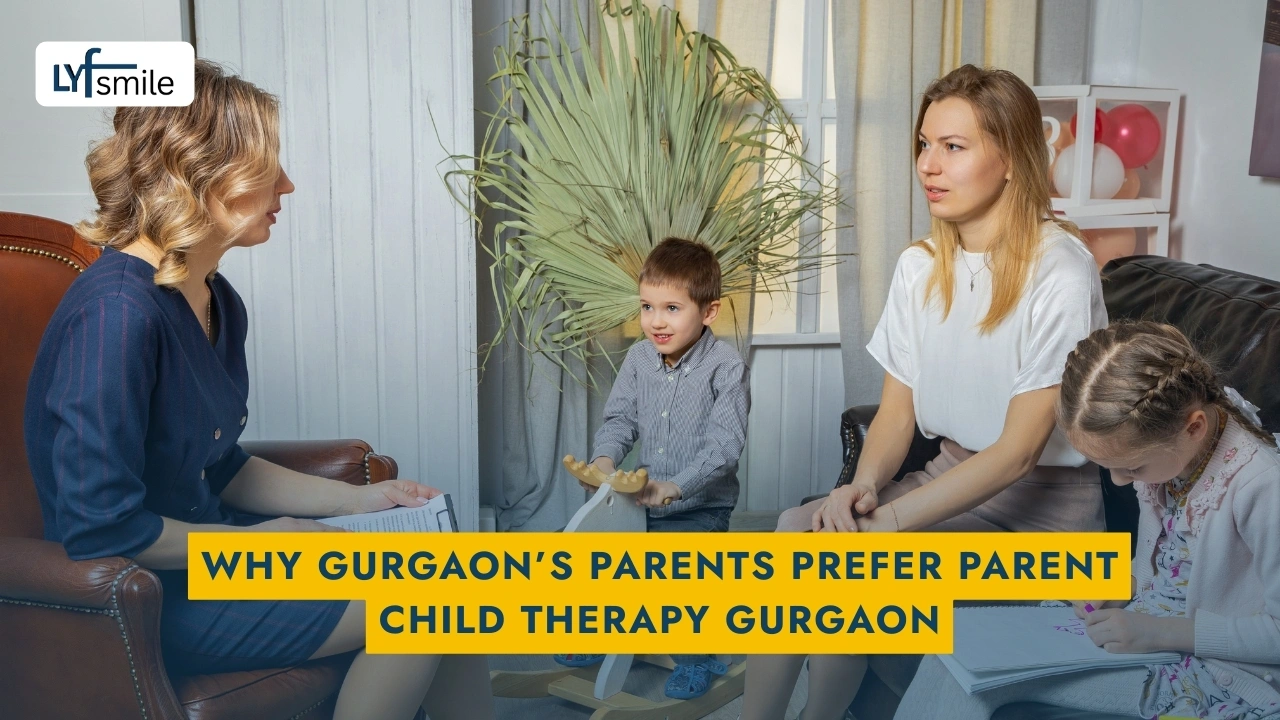 They prefer a child psychologist in Gurgaon and nearby because of the interactive sections and given below:
Highly trained and experienced child psychologists
Short waiting list for appointments
Convenient weekly sessions
Faster results than traditional therapy
Works for behavioural and emotional issues
Effective for kids with autism, ADHD, anxiety, and aggression
This is why the demand for Parent–Child Therapy Gurgaon is rapidly increasing.
Benefits of Parent–Child Therapy Gurgaon
Parent–child therapy offers more than just solutions to immediate conflicts; it helps build a stronger, healthier relationship for the long term. By improving communication, emotional understanding, and trust, therapy can help families navigate challenges more effectively.
Better Emotional Regulation
Children learn how to manage big feelings in healthier ways.
Improved Listening
Compliance and cooperation increase noticeably.
Stronger Emotional Bond
Children become more affectionate, open, and trusting.
Reduced Power Struggles
Parents learn techniques that end daily arguments.
Increased Parental Confidence
Parents feel in control and supported.
Long-Term Behaviour Stability
Skills learned today benefit children for years ahead.
Commercial Options for Parents
Families looking for structured support can:
Book a PCIT behavioural coaching session
Parent-child therapy specialist in Gurgaon
PCIT appointment for behaviour improvement in Gurgaon
These services ensure personalised guidance and faster behavioural improvements.
Behaviour Assessment at Lyfsmile Gurgaon
If you’re unsure whether your child truly needs therapy, start with a simple professional assessment.
At Lyfsmile Gurgaon, you can take a detailed behavioural test for just ₹500, conducted by an experienced psychologist.
This assessment helps you understand:
What your child is struggling with
Whether therapy is needed
Which intervention will work best
How severe the behaviour patterns are
What improvements can you expect
This assessment gives clarity, direction, and a personalised plan for your child’s growth.
Final Thoughts
If daily tantrums, arguments, emotional outbursts, or behavioural challenges are leaving you exhausted, you are not alone.
These situations can feel overwhelming, but behaviour is not fixed; it can be understood, guided, and improved with the right support.
Parent-Child Therapy in Gurgaon at Lyfsmile provides a structured approach to help you rebuild healthier patterns at home.
Whether you are looking for Child Therapy Near Me, an experienced Child Therapist, or Child Counseling in Gurgaon, early intervention can strengthen your relationship with your child and support long-term emotional well-being.
FAQ's
1. My child doesn’t listen. Is PCIT effective?
Yes. PCIT is one of the most effective therapies for children who don’t listen. It teaches parents real-time techniques to improve cooperation, reduce resistance, and build positive behaviour at home. Most families notice improvement within a few weeks.
2. How can we reduce daily fights and yelling at home?
Therapies like PCIT and parent coaching help parents learn calm, structured communication methods. You’re taught how to give commands effectively, manage emotional outbursts, set routines, and prevent power struggles, so yelling naturally reduces.
3. What is the best therapy for parent-child conflicts in Gurgaon?
PCIT, parent coaching, and behaviour modification therapy are considered the most effective. These therapies teach both parents and children how to communicate better, follow rules, and stay connected emotionally.
4. Does PCIT help with stubborn or defiant kids?
Absolutely. PCIT is specifically designed for children who are stubborn, defiant, or show oppositional behaviour. It teaches parents step-by-step strategies to strengthen cooperation and reduce defiance.
5. Who is the best therapist for improving cooperation at home in Gurgaon?
Look for therapists specialising in PCIT, behaviour therapy, or parent-child counselling. They can observe interactions and guide you in real time to improve listening, compliance, and family harmony.
6. My child argues constantly. What therapy is recommended?
PCIT, behaviour therapy, and emotional regulation counselling work well for children who argue frequently. These therapies help children understand rules, manage frustration, and learn respectful communication.
7. What is real-time parenting support for behaviour issues?
This is a PCIT-based approach where the therapist guides parents through an earpiece or live observation window during play or routine activities. You immediately learn what to say, how to respond, and how to shape behaviour effectively.
8. Is there bonding therapy for parents with strong-willed children?
Yes. Therapies like PCIT, play-based attachment sessions, and parent–child bonding programmes help rebuild trust, emotional closeness, and smooth daily routines with strong-willed kids.
9. What behaviour guidance is available for parents of toddlers in Gurgaon?
You can opt for toddler behaviour therapy, PCIT, or parenting sessions that focus on tantrum control, listening skills, early discipline, and emotional development.
10. Are there sessions to improve parent–child teamwork?
Yes. Parent–child interaction programs, PCIT, family counselling, and cooperative play therapy help parents and children work together, follow routines, and build stronger teamwork skills at home.