

Sarvesh Kumari
Psychological Erectile Dysfunction: Online Therapy & Support
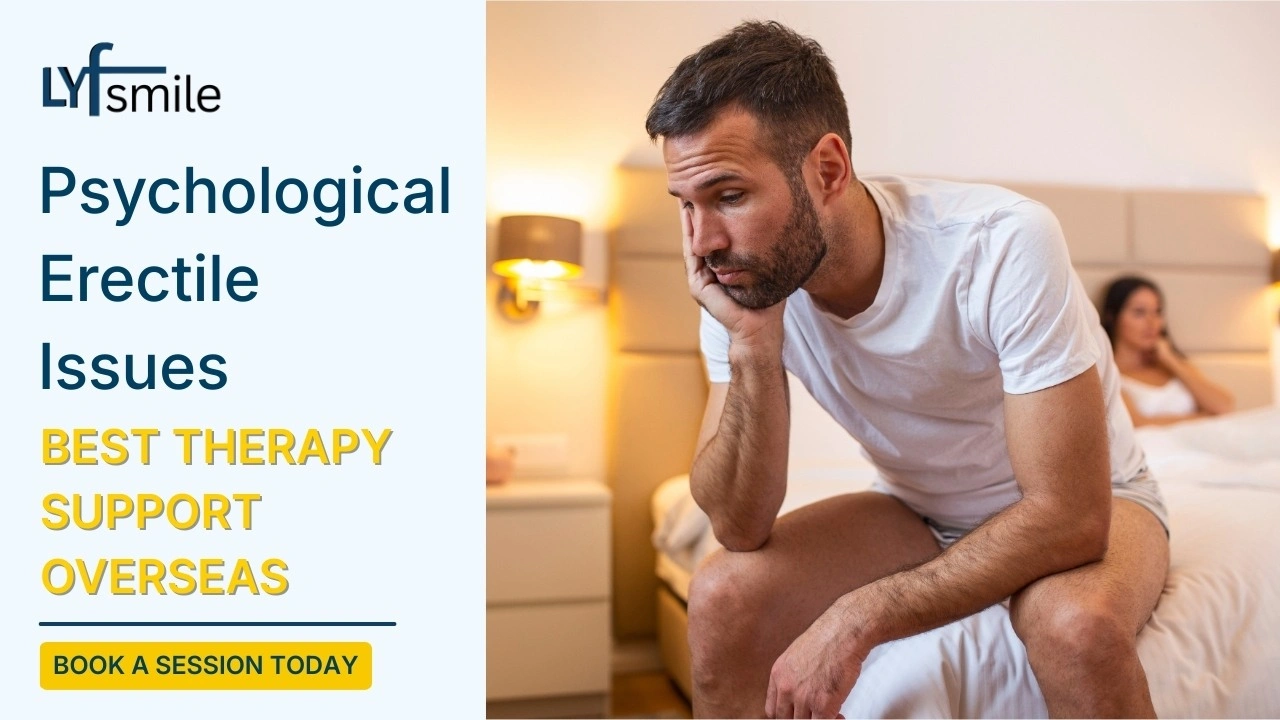
Psychological erectile dysfunction is a difficulty getting or maintaining an erection that may be influenced by anxiety, stress, performance pressure, relationship concerns, or other emotional factors. For some men, worrying about sexual performance can create additional pressure and make intimacy more difficult.
Psychological factors are not always the only explanation. Physical health, medications, lifestyle, and emotional wellbeing can sometimes overlap, which is why understanding the individual situation is important. Online counselling can provide a private space to explore the psychological and relationship factors that may be affecting sexual confidence.
At Lyfsmile, our licensed therapists offer confidential online therapy for erectile dysfunction in a safe, judgment-free environment. Whether you're based in India or reaching out as an NRI from overseas, help is just one click away.
What Are the Mental Causes of Erectile Dysfunction?
Understanding the emotional causes of erectile dysfunction is the critical first step toward recovery. Unlike physical ED, psychological ED develops when mental or emotional stressors block the brain's ability to trigger a healthy sexual response. Here are the most common triggers:
Performance Anxiety and Erectile Dysfunction
Performance anxiety erectile dysfunction is one of the leading psychological causes. The fear of "not being enough" or of repeating a past difficulty creates a self-reinforcing cycle. The more you worry, the more the body struggles. Men ask us constantly: "I can't maintain an erection due to anxiety - what do I do?" The answer lies in breaking that cycle through structured therapy for erectile dysfunction.
Stress-Induced Erectile Dysfunction
Chronic work pressure, financial strain, or family conflict keeps the nervous system locked in a state of high alert. This stress-induced erectile dysfunction is your body's way of signalling that the mind needs relief. When cortisol levels stay elevated, sexual arousal is suppressed not because anything is physically wrong, but because the brain simply isn't in the right state.
Anxiety-Related Erectile Dysfunction
Generalised anxiety or health anxiety can also interfere with erections. Anxiety-related erectile dysfunction often appears in otherwise healthy men with no physical diagnosis. If doctors have ruled out medical causes and the problem persists, the root is almost certainly emotional.
Relationship Issues and Erectile Dysfunction
Unresolved conflict, emotional distance, or poor communication between partners are deeply connected to sexual performance. Relationship stress causing erectile dysfunction is extremely common in couples who love each other but have stopped feeling emotionally safe together. Restoring that safety - through couples counselling or sex therapy for erectile dysfunction - often resolves the physical issue without any medication.
Depression, Low Self-Worth, and Intimacy Anxiety
Depression reduces libido and creates feelings of disconnection. Intimacy anxiety in relationships, often rooted in past experiences or insecure attachment, can silently sabotage sexual confidence for years. These emotional causes of erectile dysfunction deserve the same compassionate care as any physical condition.
How Online Therapy for Erectile Dysfunction Can Help You Recover
 The good news for anyone dealing with psychological erectile issues is that recovery is not just possible it is likely with the right support. Modern psychological ED support through online platforms has made expert care more accessible than ever, especially for NRIs or men who value privacy.
Cognitive Behavioural Therapy (CBT) is one of the most evidence-backed approaches in psychological erectile dysfunction treatment. It helps men identify and restructure the fear-based thoughts driving performance anxiety. For example, thoughts like "What if it fails again?" can be systematically reframed, reducing the anxiety that causes the failure in the first place.
Sex therapy for erectile dysfunction (psychosexual therapy) : addresses both the mental and relational dimensions of sexual difficulties. An online sex therapist for ED guides individuals and couples through graduated exercises that rebuild confidence and restore comfort during intimacy. Sessions are conducted virtually, making online sex therapy for erectile dysfunction a genuinely practical option for those who cannot attend in person.
Erectile dysfunction counselling at Lyfsmile goes beyond symptom management. Our counsellors work on the underlying emotional causes past trauma, relationship patterns, communication gaps, and self-esteem to produce lasting change rather than temporary relief.
For NRIs and men overseas: You do not need to be in India to access professional support. Our NRI sex therapy support, virtual therapy for erectile dysfunction, and overseas relationship counselling services bring the same quality of care to your screen whether you're in the UK, USA, Canada, or the Middle East. Confidential online ED therapy has helped hundreds of our clients abroad reclaim their confidence and intimate relationships.
What a Typical Journey at Lyfsmile Looks Like
Most men who reach out for online counselling for erectile dysfunction go through a clear, supportive process:
A free 15-minute consultation to understand your situation no pressure, no judgment
A personalised therapy plan that may combine CBT, psychosexual therapy, and couples counselling
Weekly virtual sessions with a qualified therapist, conducted privately via video call
Ongoing support as you rebuild confidence, reduce anxiety, and restore intimacy
Men wondering "how to overcome psychological erectile dysfunction" often find that within 6 to 12 weeks of consistent therapy, they notice significant improvement not just sexually, but in their overall mental health and relationship quality.
Conclusion
Psychological erectile issues are not a reflection of your masculinity, your worth, or your relationship. They are a signal one that your emotional world needs attention and care. Whether the cause is performance anxiety, stress, depression, or relationship tension, counselling for sexual performance anxiety and structured therapy for erectile dysfunction offer a clear path forward.
You don't have to manage this silently or feel ashamed to ask for online help for erectile dysfunction abroad. The best online therapy for psychological ED combines clinical expertise with genuine human empathy and that is exactly what Lyfsmile provides.
Take the first step today. Book your free 15-minute session on WhatsApp and start your journey toward confidence, connection, and restored intimacy.
FAQs
Q1: Can stress cause erectile dysfunction?
Yes. Stress-induced erectile dysfunction is very common among working men in cities like Delhi, Mumbai, and Bangalore. When your mind is overloaded, your body cannot respond sexually. Online therapy at Lyfsmile helps you manage stress and restore function.
Q2: Why do I lose my erection due to anxiety?
Anxiety triggers your fight-or-flight response, cutting off the signals needed for an erection. This is one of the most common psychological sexual problems in men across India and among NRIs in the UK, USA, and Canada. CBT-based online counselling can break this cycle.
Q3: Is there online help for erectile dysfunction if I live abroad?
Yes. Lyfsmile offers confidential virtual therapy for erectile dysfunction for NRIs in the UK, USA, UAE, Canada, and Australia. You get the same expert psychological ED support from a licensed therapist from wherever you are, at a time that suits you.
Q4: Can relationship problems cause erectile dysfunction?
Absolutely. Relationship stress causing erectile dysfunction is extremely common in couples in cities like Pune, Hyderabad, and Chennai, as well as among NRI couples overseas. Couples counselling and sex therapy for erectile dysfunction at Lyfsmile address both the emotional and sexual dimensions together.
Q5: What is the best online therapy for psychological ED?
The most effective approaches are CBT, psychosexual therapy, and erectile dysfunction counselling often combined. Lyfsmile's therapists serve clients across India and internationally, including NRIs in Singapore, the UK, and the Gulf, offering structured, confidential online sex therapy for erectile dysfunction.