Diksha Shankhwar
Online Marriage Counseling India | Trusted by NRIs in 70+ Countries
Do you feel your relationship is slowly losing its spark? In India's fast-paced lifestyle, even the strongest couples face emotional distance, communication gaps, and unresolved conflicts. You are not alone — and it does not have to stay this way.
Online marriage counseling in India offers a private, flexible, and affordable way to reconnect — from the comfort of your home, without the stigma of walking into a clinic. At Lyfsmile, licensed therapists provide evidence-based couples therapy tailored to Indian cultural realities. Sessions start at just ₹30/minute, with a 15-minute free consultation to help you begin without any pressure.
Ready to start? Book your 15-minute Free Consultation here
7 Warning Signs You Need Online Marriage Counseling in India
Many couples in India wait too long, hoping that time will heal their relationship. However, ignoring the early warning signs often leads to deeper emotional distance and resentment. Recognising these patterns early is the first step toward saving your bond. If you find yourself stuck in a cycle of unhappiness, timely intervention through online couples therapy can prevent a permanent breakdown.
Does your relationship show these red flags?
The "Repeat" Argument Cycle: You fight about the same issues — money, in-laws, household chores — over and over without ever reaching a solution.
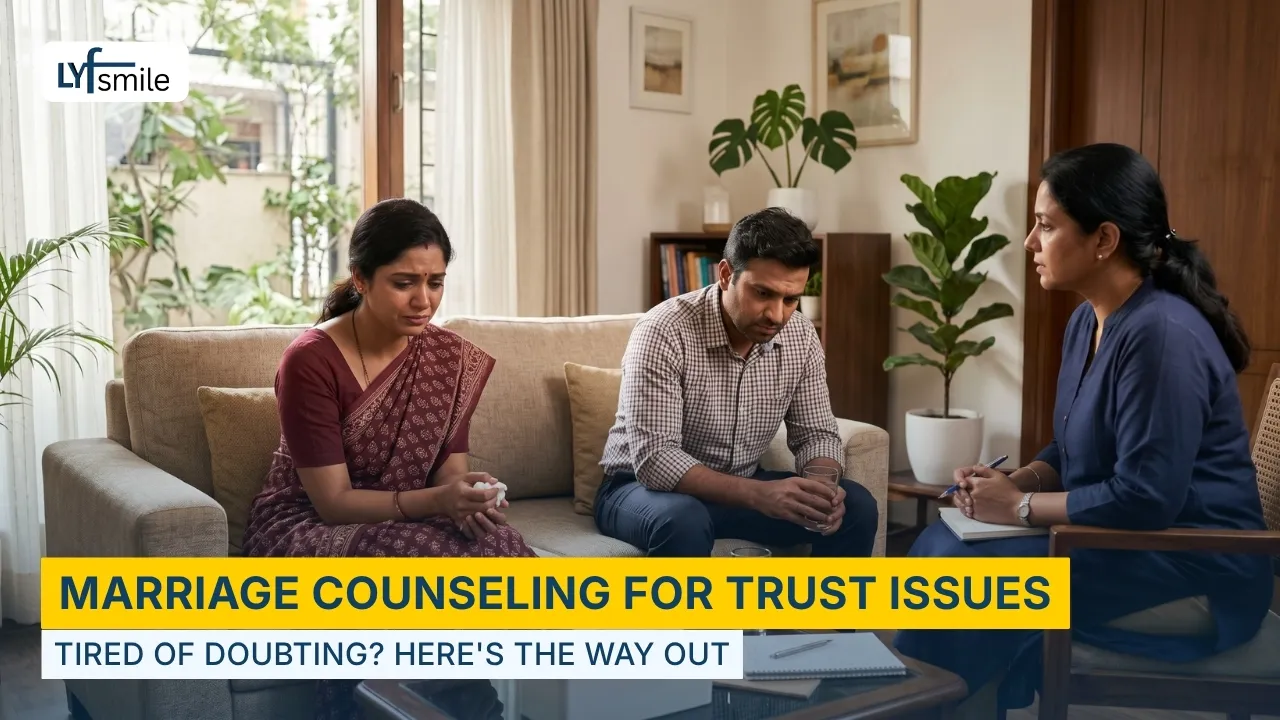
A Breach of Trust: Whether it is emotional infidelity or hidden secrets, struggling to trust your partner is a major sign you need professional guidance.
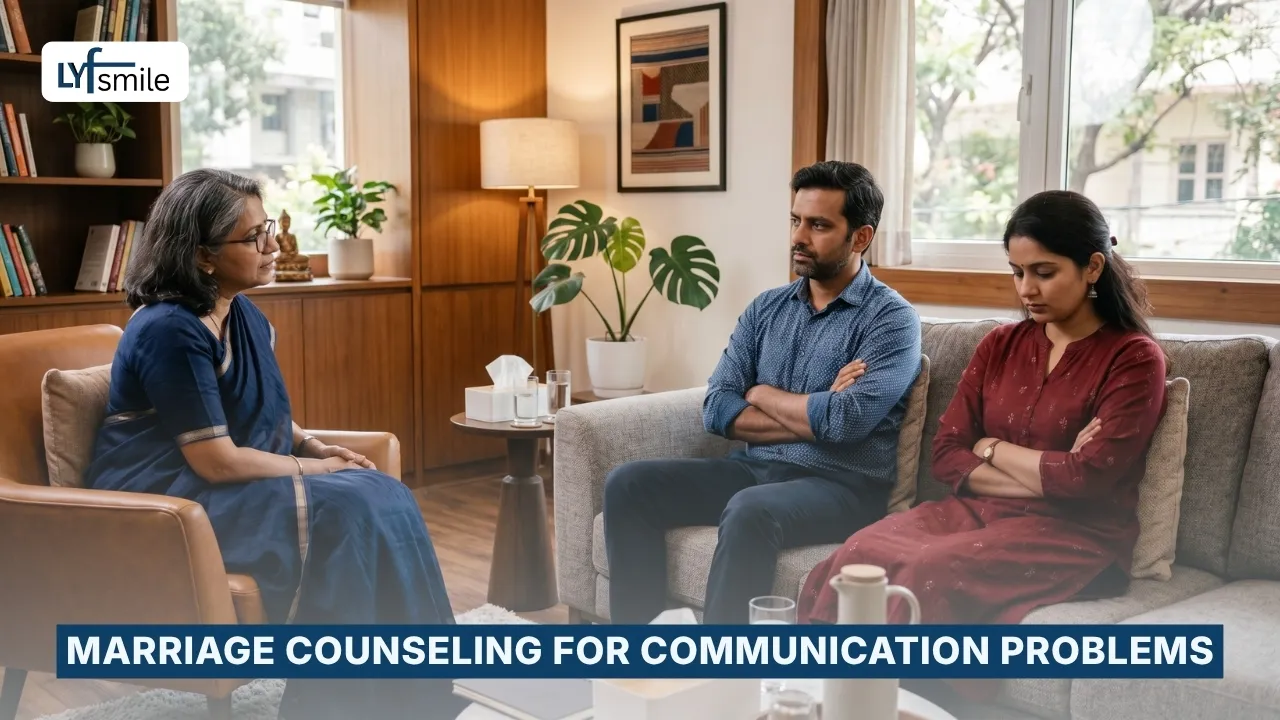
The "Silent Treatment" or Communication Breakdown: When you stop sharing your day or feel like you are "walking on eggshells" to avoid a fight.
Lack of Intimacy: Feeling like "roommates" rather than partners, with a significant drop in both emotional and physical connection.
External Interference: When family, in-laws, or friends' opinions start creating more friction between you and your spouse.
Constant Criticism & Resentment: Feeling unappreciated or constantly being judged by your partner for small things.
Contemplating Separation: If the thought of "leaving" or "divorce" has crossed your mind, it is a clear signal to seek expert marriagerelationship counseling.
Don't wait for a crisis. Consulting the best relationship counsellor in India can provide the neutral perspective you need to transform your relationship
Why Should You Choose Online Marriage Counseling in India?
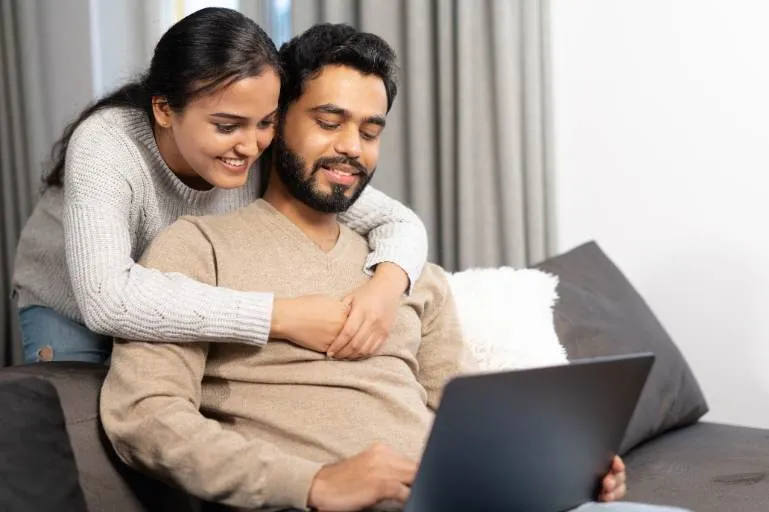 Modern relationships in India carry unique pressures — joint family expectations, career stress, financial disagreements, and the silent weight of things left unsaid. Online relationship counseling addresses these challenges in a structured, professional environment with real results.
Here is why thousands of Indian couples are choosing this path:
Conflict Resolution: Learn to manage disagreements before they turn into permanent damage.
Communication Repair: Replace blame and silence with active listening and honest expression.
Healing Trust Issues: Whether from infidelity or broken promises, therapy provides a safe space to rebuild.
Managing In-Law Stress: A very common pain point in Indian marriages — expert guidance helps set healthy boundaries.
Convenience & Privacy: Access the best marriage counselor online from Delhi, Mumbai, Bangalore, Hyderabad, Pune, or any city — no travel, no waiting rooms, no social stigma.
Online Marriage Counseling India Free — What Is Actually Available?
Many couples search for online marriage counseling India free before committing financially — and that is a completely valid concern. Financial hesitation should never stop a couple from getting the help they need.
At Lyfsmile, we offer a genuine 15-minute free consultation with a licensed relationship counsellor — not a chatbot, not a form, but a real session. This free session helps you:
Share your situation without any financial commitment
Understand how the counseling process actually works
Decide whether the therapist is the right fit for you and your partner
Think of it as a zero-risk first step. No payment required to begin your journey toward a healthier relationship.
Why NRIs Choose Online Marriage Counseling in India
Living far from home comes with its own set of challenges for couples. Time zone gaps, demanding careers, adapting to new cultures, and being away from family support networks can really take a toll on relationships. That's why so many Indians living overseas turn to online marriage counselling with an experienced marriage counsellor India who actually gets it; they understand our cultural values and what we expect from marriage.
No rushing to appointments, no dealing with language barriers, and no trying to explain your background to someone who might not fully grasp where you're coming from. What really works for Indian families abroad is that these sessions can actually include both partners and family members, no matter which countries they happen to be in. That's been a game-changer for so many couples we know.
Marriage Therapy for NRIs: Support Across Time Zones
Living abroad comes with its own set of challenges, and maintaining a healthy marriage while juggling different time zones can feel overwhelming at times. The good news? You don't have to figure it all out on your own.
One of the best things about online marriage counselling for NRIs is the flexibility it offers. Whether you're in New York and your partner is in Mumbai, or vice versa, sessions can be arranged to fit your schedules,no rushing to make it to an office or worrying about traffic.
If you're newly married and trying to find your footing, or you've been together for years but feel like life overseas has created some distance between you, a good therapist can help. Marriage counselling for Indians abroad who specialise in NRI relationships understands the unique pressures of being away from family, navigating cultural expectations, and building a life in a new country.
Pre-Marriage and Post-Marriage Counseling: Support at Every Stage
Relationships need care at every stage — not just in crisis. Lyfsmile's relationship counselling online covers the full journey of a couple's life together.
Pre-Marriage Counseling
Starting married life on a strong foundation matters more than most couples realize. Pre-marital counseling helps you:
Align on values, finances, and future goals before the wedding day
Navigate family dynamics and in-law expectations proactively
Build communication skills that prevent resentment from forming later in life
Post-Marriage Counseling
Life after marriage brings its own pressures — career changes, parenting conflicts, financial stress, and growing emotional distance. Post-marriage couples therapy helps partners:
Restore trust and emotional intimacy after a difficult patch
Break repetitive argument cycles with proven conflict resolution tools
Protect the relationship from outside pressures — work, family, and social expectations
"Counselling is not just for broken relationships. It is for couples who want to stay strong together."
Meet the Best Relationship Counsellors in India at Lyfsmile
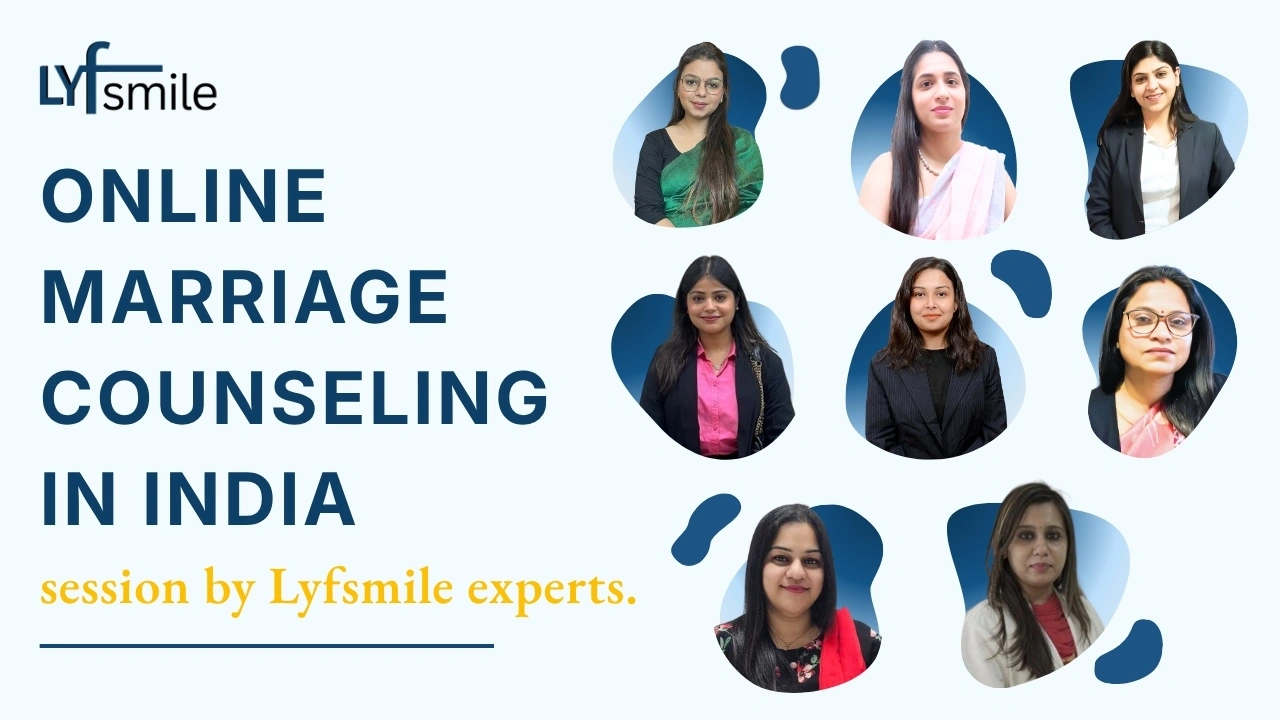 The role of a skilled therapist goes beyond just listening — it is about providing the tools to transform a relationship. At Lyfsmile, our team of renowned experts — including Mrs. Ritika Dhall, Mrs. Tanya Sachdev, Ms. Gunjan Bhatia, Dr. Shraboni Nandi, Mrs. Urvashi Raj Sehgal, Ms. Priyanka Sharma, Ms. Loveleen Malhotra, and Ms. Sadiya Qureshi — deliver world-class relationship counselling to help couples overcome deep-seated challenges. Their compassionate and evidence-based approach has made Lyfsmile a trusted choice for NRIs seeking the Best Marriage Counselor in India for NRIs to strengthen their relationships and rebuild emotional connection.
Leading Indian platforms and networks for couples and marriage therapy include:
Stress Management Techniques: Learn to prevent external pressures — work, family, finances — from affecting your marital peace.
Emotional Intelligence: Develop the ability to understand your partner's unspoken needs and triggers.
Root Cause Identification: Move past superficial arguments to resolve the actual core conflicts.
Refining Communication Patterns: Replace toxic criticism with constructive and healthy dialogue.
By choosing India's best online marriage counselor, you ensure that your relationship receives the scientific and empathetic attention it deserves.
How Much Does Online Marriage Counseling Cost in India?
Affordability is one of the biggest reasons couples choose Lyfsmile for the best online marriage counseling in India.
Service Type | Duration | Price |
Free Consultation | 15 Minutes | FREE |
Quick Support Session | 30–45 Minutes | From ₹30/minute |
Standard Couples Session | 60 Minutes | ₹1,800 – ₹2,500 |
Expert / Premium Session | 60 Minutes | ₹3,000+ |
No hidden charges — pay only for the time you use
Bundle discounts available for 5 or 10 sessions
Flexible scheduling that fits busy Indian work and family routines
Investing in your relationship today costs far less — financially and emotionally — than dealing with the consequences of letting things fall apart.
How to Choose the Best Marriage Counsellor Online
Selecting the right relationship counsellor in India is a personal decision. To get the best results, keep these points in mind:
Check Specialisation — Look for therapists who handle your specific issue — trust problems, in-law stress, intimacy, or communication breakdown.
Feel Comfortable First — Professional qualifications matter, but feeling safe and heard by your counsellor is what drives real progress.
Read Verified Reviews — Look for real stories from Indian couples who faced similar challenges.
Flexible Timings — Choose a platform like Lyfsmile that works around your schedule, not the other way around.
Start Free — Use the free consultation to test the fit before any financial commitment.
Real Couple Story — How 5 Sessions Changed Everything
Priya & Karan | Married 4 Years | Delhi
Priya and Karan had everything from the outside — good careers, a new home, a supportive family. But inside their marriage, communication had completely broken down. Every conversation about finances turned into a fight. By the time they reached Lyfsmile and talked to an Indian relationship counselor they were barely speaking.
Their therapist helped them see that the fights were never really about money. They were about feeling unseen and undervalued by each other. Over five sessions of online marriage counseling, they learned how to raise concerns without triggering defensiveness and how to truly listen — not just wait for a turn to speak.
Within three weeks, arguments dropped significantly. Within two months, they described their relationship as stronger than ever before.
"We almost gave up. One free session gave us a reason to stay." — Priya, Lyfsmile Client
Privacy Notice: Illustrative story based on common client experiences. Names changed to protect confidentiality.
Conclusion: The First Step Is the Most Important One
Online marriage counseling in India is no longer a last resort — it is a proactive, modern choice that thousands of Indian couples are making every year. Whether your relationship is in crisis or simply needs a stronger foundation, relationship counselling online gives you the tools, the perspective, and the support to move forward — together.
Do not let silence become the loudest thing in your relationship. Start today with Lyfsmile's best online marriage counseling in India — one free session, zero pressure, and a real chance at a happier future.
Frequently Asked Questions (FAQs)
1. What is online marriage counseling and how does it work in India?
Online marriage counseling is professional therapy for couples delivered via secure video or phone calls with a licensed marriage therapist. At Lyfsmile, every new couple starts with a free 15-minute consultation to understand the process and feel comfortable before committing to a full plan.
2. Is online couples therapy as effective as in-person sessions?
Yes. Research consistently shows that online couples therapy produces outcomes comparable to in-person sessions — with the added benefit of comfort, privacy, and convenience that Indian couples often need to open up fully.
3. Is there any free relationship counselling online in India?
Lyfsmile offers a genuine 15-minute free consultation with a licensed relationship counsellor. It is the most honest way to access online marriage counseling India free — no bots, no forms, just a real conversation with a qualified professional.
4. Who is the best relationship counsellor in India for couples?
The best relationship counsellor in India is one who understands your specific challenges — whether it is trust, communication, intimacy, or in-law pressure. Lyfsmile's team of RCI-registered and certified marriage therapists specialise in Indian relationship problems and couple dynamics.
5. What is the cost of online marriage counseling in India?
Sessions at Lyfsmile start at ₹30 per minute, with standard 60-minute sessions priced between ₹1,500–₹2,500. The first consultation is completely free with no commitment required.
6. Can counseling actually save a marriage from divorce?
Yes — when both partners are willing. Couples therapy with a trained marriage therapist helps rebuild trust, improve communication, and resolve deep-rooted marital conflict. Many Lyfsmile couples report meaningful improvement within 3 to 5 sessions.
7. Is online marriage counseling confidential in India?
Absolutely. All sessions follow strict ethical confidentiality standards. Your conversations with your relationship counsellor in India are private, secure, and never shared — giving you a completely safe space to be honest.
8. What is the difference between a marriage counselor and a relationship counsellor?
A marriage counselor works specifically with married couples on conflicts, intimacy, or separation. A relationship counsellor in India supports couples at any stage — dating, pre-marital, live-in, or married. At Lyfsmile, our licensed therapists are trained to handle both with full expertise.
9. Can online counseling help with in-law problems and family interference?
Yes. In-law stress is one of the most common relationship problems in India. Our marriage therapists use proven boundary-setting and conflict de-escalation techniques to help couples navigate family pressure without damaging their bond.
10. How do I find the best marriage counselor online in India?
Look for verified reviews, relevant specialisation in your issue, and a platform that offers a free trial session. At Lyfsmile, you can read detailed counsellor profiles, check their areas of expertise, and use the free consultation to find the right fit — before spending a single rupee.