Lakshika Kaushik
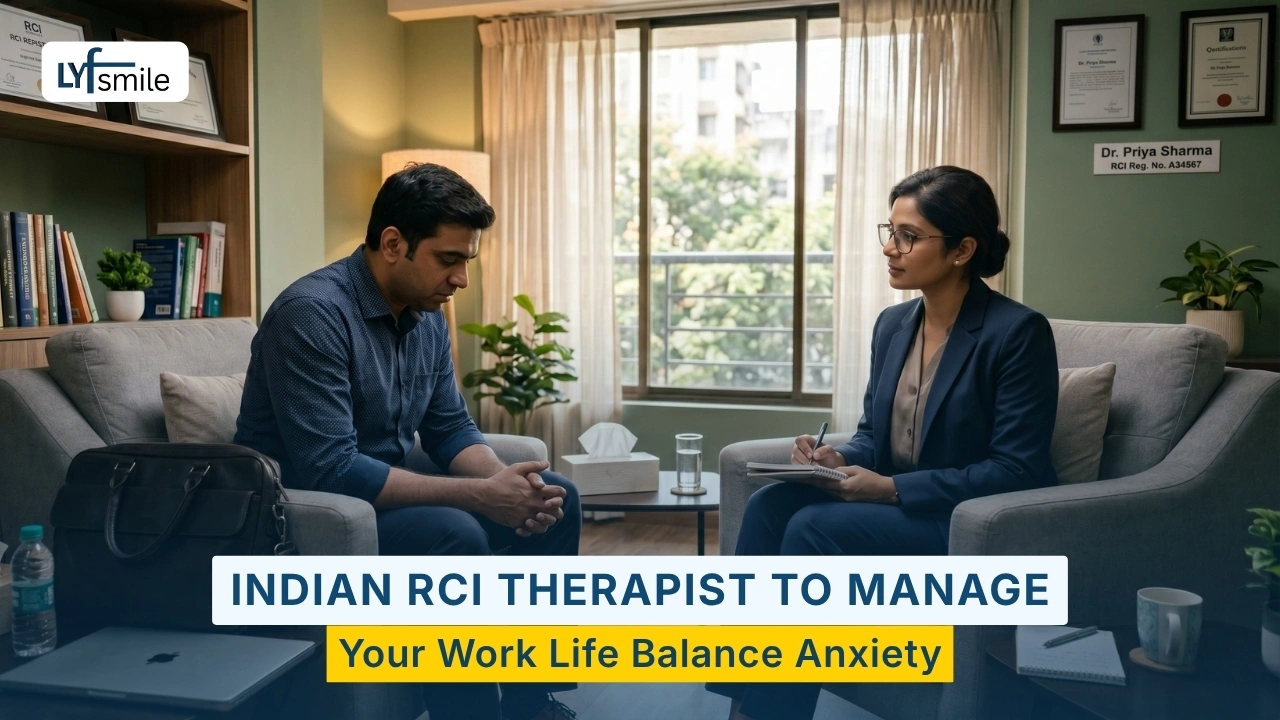
Indian RCI Therapist to Manage Your Work-Life Balance Anxiety
There is a particular kind of exhaustion that comes not from doing too much, but from never quite feeling like enough. Work that follows you home. Personal responsibilities that sit quietly at the back of your mind during meetings. A constant, low-level guilt about whichever side of life is not getting your full attention right now.
Work-life balance anxiety is not simply stress that a holiday will fix. It is a pattern that builds gradually, until the weight of it begins to affect sleep, relationships, health, and the ability to be present in any part of life at all.
Maintaining a healthy work-life balance can be challenging in today's fast-paced world. When work pressure begins affecting relationships, sleep, emotional well-being, and overall quality of life, professional support may help. Work-life balance therapy in India can help individuals manage stress, overcome workaholism, and build healthier boundaries between personal and professional responsibilities.
The good news is that it is not permanent. At Lyfsmile, Dr Shraboni Nandi a PhD in Psychology with over 20 years of experience and Mrs Urvashi Raj Sehgal, an RCI Registered Rehabilitation Counsellor specialising in anxiety and depression, provide therapeutic support designed around the specific pressures of professional life in India and abroad.
Whether you are a working professional in India or an NRI navigating a demanding career far from home, Lyfsmile offers affordable, confidential therapy designed around your life, not a generic template.
What Is Work-Life Balance Therapy?
Work-life balance therapy helps individuals understand and manage the emotional challenges that arise when professional responsibilities begin affecting personal well-being. When work demands constantly compete with personal relationships, rest, and self-care, stress levels can increase and eventually lead to anxiety, burnout, or emotional exhaustion.
A work-life balance therapist helps identify unhealthy patterns, set realistic boundaries, improve stress management skills, and create healthier routines that support both professional success and personal well-being.
The Real Reasons It Builds Up Without Warning
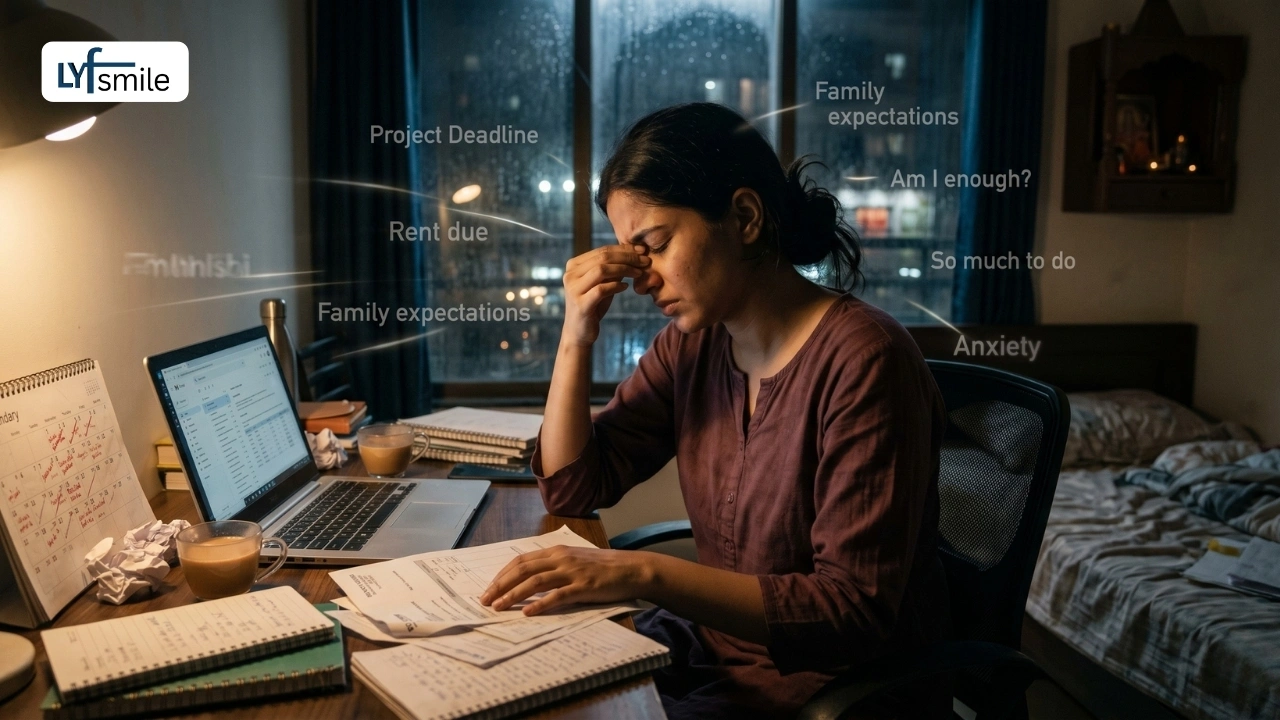 Work-life balance anxiety rarely appears suddenly. It accumulates in small decisions, habits, and assumptions that seem reasonable at the time but compound over months and years into something much heavier.
The Pressure of Meeting Every Expectation at Once
Professional life in India and for NRIs abroad often carries expectations that extend well beyond the job description. Career advancement, family responsibilities, social obligations, and personal aspirations overlap, compete, and create a constant background pressure to perform across every domain simultaneously. When that pressure has no outlet, it turns inward.
Boundaries That Were Never Clearly Set
For many professionals, particularly those in environments where availability is implicitly expected, the boundary between work and personal life was never clearly drawn. Remote work and digital connectivity have made this more acute. When the office is always accessible, rest never fully arrives.
When Guilt Becomes a Constant Background Noise
Guilt is one of the most consistent features of work-life balance anxiety. Guilt at work for thinking about home. Guilt at home for thinking about work. Guilt during rest for not being productive. This guilt is not a moral failing it is a symptom of carrying too much without adequate support. Therapy helps a person understand where that guilt comes from and gradually release the hold it has.
What Chronic Work Stress Does to the Mind and Body Over Time
When work-life balance anxiety becomes chronic and sustained over months or years, its effects extend well beyond mood.
Cognitively, chronic stress narrows focus and impairs decision-making. Concentration becomes harder to sustain. Creativity, often the first casualty of sustained anxiety, diminishes. Working longer under these conditions often produces less than working well under calmer ones.
Physically, the body registers sustained stress through disrupted sleep, tension headaches, digestive issues, fatigue that does not resolve with rest, and a lowered immune response.
Relationally, work-life balance anxiety creates distance from partners, children, friends, and sometimes from a person's own sense of self. The relationships and activities that restore energy are the first things to be reduced.
How an RCI Therapist Approaches Work-Life Balance Differently
 An RCI-registered therapist brings a level of clinical training and professional accountability that matters, particularly when the concerns being addressed are affecting daily functioning over an extended period.
What distinguishes a trained RCI therapist's approach is the ability to assess the full picture not just surface symptoms, but the underlying thought patterns, emotional responses, and relational dynamics that are sustaining the anxiety. Generic advice addresses behaviour. Therapy addresses what is driving it.
At Lyfsmile, this is exactly how Dr Shraboni Nandi and Mrs Urvashi Raj Sehgal work.
Dr Shraboni Nandi, with a PhD in Psychology and over 20 years of experience approaches work-life balance anxiety by first understanding how a person's environment is shaping their stress. She looks at behavioural patterns, cognitive responses, and family dynamics together because in her experience, what appears as work stress is often rooted in deeper invisible pressures. Her sessions use Cognitive Therapy, Behaviour Therapy, and a Humanistic approach to help clients identify what is actually driving the imbalance and build realistic, practical coping strategies that hold in daily life.
Mrs Urvashi Raj Sehgal, an RCI Registered Rehabilitation Counsellor specialising in anxiety and depression works at a deeper emotional level. With 6.5 years of experience and 200+ clients, she draws on Mindfulness-Based Cognitive Therapy, Emotion Focused Therapy, and Psychodynamic Psychotherapy to explore why a person relates to work and responsibility the way they do. For professionals caught in cycles of guilt and overextension, her approach helps surface the underlying beliefs and self-image patterns that keep the cycle going and gradually replace them with healthier ways of living and working.
The expectations placed on Indian professionals, whether in India or abroad, are not identical to those in other parts of the world. Family dynamics, career pressure, social comparison, and the particular weight of being an NRI all shape the experience in ways that require culturally informed support. Both Dr Nandi and Mrs Sehgal bring exactly that.
How Can a Work-Life Balance Therapist Help?
Many people struggle to switch off from work, feel guilty when taking breaks, or constantly worry about unfinished tasks. Over time, these patterns can affect mental health, relationships, sleep quality, and overall life satisfaction.
A work-life balance therapist can help by:
Identifying sources of stress and overwhelm
Developing healthier work boundaries
Improving time management and self-care habits
Addressing anxiety related to work responsibilities
Building coping strategies for workplace pressure
Strengthening communication in personal and professional relationships
Through professional support, individuals can learn to create a healthier relationship with work while maintaining their emotional well-being.
Can Therapy Help Overcome Workaholism?
Yes. Therapy can be highly beneficial for individuals struggling with workaholism. While dedication and ambition are valuable qualities, excessive work involvement can negatively impact mental health, physical health, and relationships.
In many cases, work-related stress can also affect emotional well-being, relationships, confidence, and daily functioning. Through adult counselling, individuals can better understand these challenges, develop healthier coping strategies, and create a more sustainable balance between personal and professional life.
Some common signs of workaholism include:
Difficulty taking time off
Constantly thinking about work outside office hours
Feeling guilty when resting
Neglecting personal relationships
Sleep disturbances related to work concerns
Therapists help individuals understand the underlying beliefs driving workaholic behaviour and develop healthier ways to achieve professional goals without sacrificing personal well-being. For many professionals in India, therapy provides a safe space to address work-related stress and build a more sustainable work-life balance.
According to the World Health Organisation, chronic workplace stress can negatively affect both physical and mental health.
Therapy Techniques That Create Lasting Change, Not Just Relief
Effective therapy for work-life balance anxiety works at the level of the patterns, cognitive, emotional, and behavioural, that are generating the anxiety in the first place.
CBT: Changing the Thoughts That Drive Overwork
Cognitive Behavioural Therapy identifies specific beliefs like 'I must always be available' or 'Resting means falling behind' and examines them carefully. CBT does not dismiss these beliefs; it tests them against evidence and gradually replaces them with more accurate and sustainable ways of thinking.
Mindfulness: Creating Space in an Overcrowded Day
Mindfulness-based approaches teach a different relationship with thought, one where the mind can observe its own activity without being swept along by it. In the context of work-life balance anxiety, this creates the ability to be present in one area of life without the other constantly pulling for attention.
Time and Emotional Regulation: Practical Tools That Hold
Beyond cognitive work, therapy also equips individuals with concrete strategies for prioritising, setting boundaries, communicating needs at work and at home, and managing the emotional responses that arise when those boundaries are tested.
Small Daily Shifts That Support the Bigger Work in Therapy
Therapy creates the framework. Daily habits reinforce it. Small, consistent changes in how a person structures their day can make a meaningful difference over time.
Set a clear end to the workday: A defined stopping point signals to the nervous system that rest is legitimate and scheduled.
Protect one personal commitment daily: A walk, a meal without a screen, time with a person who matters as a non-negotiable part of the day.
Notice guilt without acting on it: When guilt about rest arises, acknowledge it, then choose not to let it redirect behaviour.
Use brief breathing practices during transitions: Even two minutes of slow, conscious breathing can shift the nervous system meaningfully.
Communicate one boundary clearly this week: Boundaries become easier to hold when they have been spoken aloud at least once.
These steps create the conditions in which therapy can do its most effective work.
Support That Reaches You ,Whether You Are in India or Abroad as an NRI
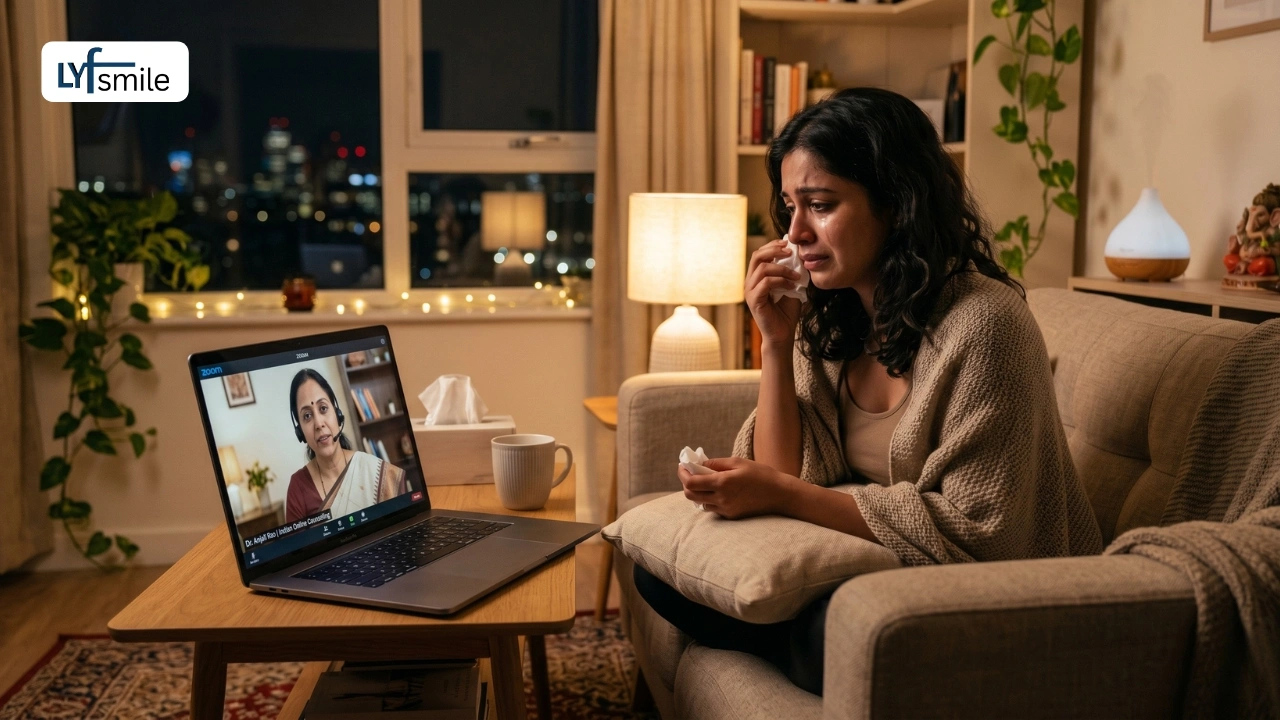 Work-life balance anxiety does not respect geography. It follows professionals whether they are in Mumbai, Bengaluru, London, Toronto, or Dubai. The specific pressures faced by NRIs building a career in a different country while maintaining family connections, cultural identity, and personal wellbeing can make the experience particularly complex.
Accessible and Affordable Therapy Across India
Lyfsmile provides online therapy that fits around professional schedules. Sessions are private, flexible, and priced to be genuinely accessible. At ₹30 per minute, professional support from an Indian RCI therapist is available without barriers of cost, commute, or waiting lists.
Flexible Sessions for NRI Professionals Worldwide
For NRIs, working with a therapist who shares cultural context is often the difference between support that genuinely helps and support that misses the point. Lyfsmile's online sessions are scheduled flexibly across time zones.
What Working With Lyfsmile Actually Looks Like
At Lyfsmile, sessions begin where you are. The first conversation is about understanding your situation what is creating pressure, how long it has been building, and what has and has not worked before. A personalised approach is then developed, drawing on CBT, mindfulness, and other evidence-based methods depending on what your specific situation requires.
Sessions are held online, at times that work around your schedule. Everything discussed remains entirely confidential. And the pace is yours; there is no pressure to move faster than feels manageable.
Work-life balance anxiety is common among professionals. But it does not have to be permanent.
Book a session with Lyfsmile today online- affordable and designed around your life.
Taking the First Step
Work-life balance anxiety is not a sign that something is fundamentally wrong with you. It is a sign that you are carrying a great deal, and that the way things are currently structured is not sustainable. That is a solvable problem, not a permanent condition.
If maintaining a healthy work-life balance feels increasingly difficult, seeking support can be an important step toward better emotional well-being. Whether you're experiencing work-related stress, burnout, or signs of workaholism, professional therapy can help you develop healthier habits and regain balance in daily life.
With Dr Shraboni Nandi and Mrs Urvashi Raj Sehgal at Lyfsmile, you have access to therapists who understand not just the clinical picture but the cultural and professional reality you are living in whether that is in India or as an NRI anywhere in the world.
Lyfsmile offers a first session to help you understand what working together might look like. Affordable, private, and available across India and for NRIs worldwide, it is a conversation worth having.
Frequently Asked Questions About Work-Life Balance Anxiety
1. What is work-life balance anxiety, and how is it different from normal stress?
Normal stress is temporary and responds to a specific situation. Work-life balance anxiety is persistent, the ongoing experience of feeling pulled between professional and personal demands without ever feeling adequately present in either.
2. Who is an RCI therapist, and why does it matter?
An RCI therapist is registered with the Rehabilitation Council of India, the statutory body that regulates mental health professionals in India. This registration indicates recognised clinical training, ethical standards, and professional accountability.
3. What are the common signs of work-life balance anxiety?
Common signs include persistent guilt, difficulty switching off from work, disrupted sleep, irritability, chronic fatigue, reduced concentration, and physical symptoms such as tension headaches or digestive discomfort.
4. Can therapy help even if I cannot reduce my workload right now?
Yes. Therapy works with how you relate to your current situation the thoughts that sustain anxiety, emotional responses, and the boundaries that could be adjusted even within demanding constraints. Many people find significant relief without any immediate change to their workload.
5. Where can I find affordable work-life balance therapy in India?
Lyfsmile offers online therapy with Indian RCI therapists at ₹30 per minute making professional support genuinely accessible across India, including smaller cities and towns.
6. Is online therapy effective for work-life balance anxiety?
Research consistently supports online therapy as equally effective as in-person sessions for anxiety-related concerns. For working professionals, the flexibility of online therapy can itself reduce a barrier to getting consistent support.
7. Can work-life balance anxiety affect physical health?
Yes. Sustained work stress can disrupt sleep, weaken immune function, cause persistent fatigue, and contribute to physical symptoms such as headaches and digestive issues. Addressing the psychological roots through therapy tends to improve physical well-being as well.
8. Does work-life balance anxiety affect workplace performance?
Frequently. Chronic anxiety narrows cognitive focus and impairs decision-making. Many professionals find that addressing work-life balance anxiety improves clarity, productivity, and professional relationships.
9. Is work-life balance anxiety common among NRI professionals?
Yes, NRI professionals navigate career demands, family distance, cultural identity, and time zone differences simultaneously. Lyfsmile's therapists provide support that is genuinely culturally informed rather than generic.
10. How is work-life balance anxiety connected to social anxiety at the workplace?
The two often coexist. Work-life balance anxiety can heighten sensitivity to judgment and make social interactions at work feel more demanding. Addressing one often supports progress with the other.