


Lakshika Kaushik
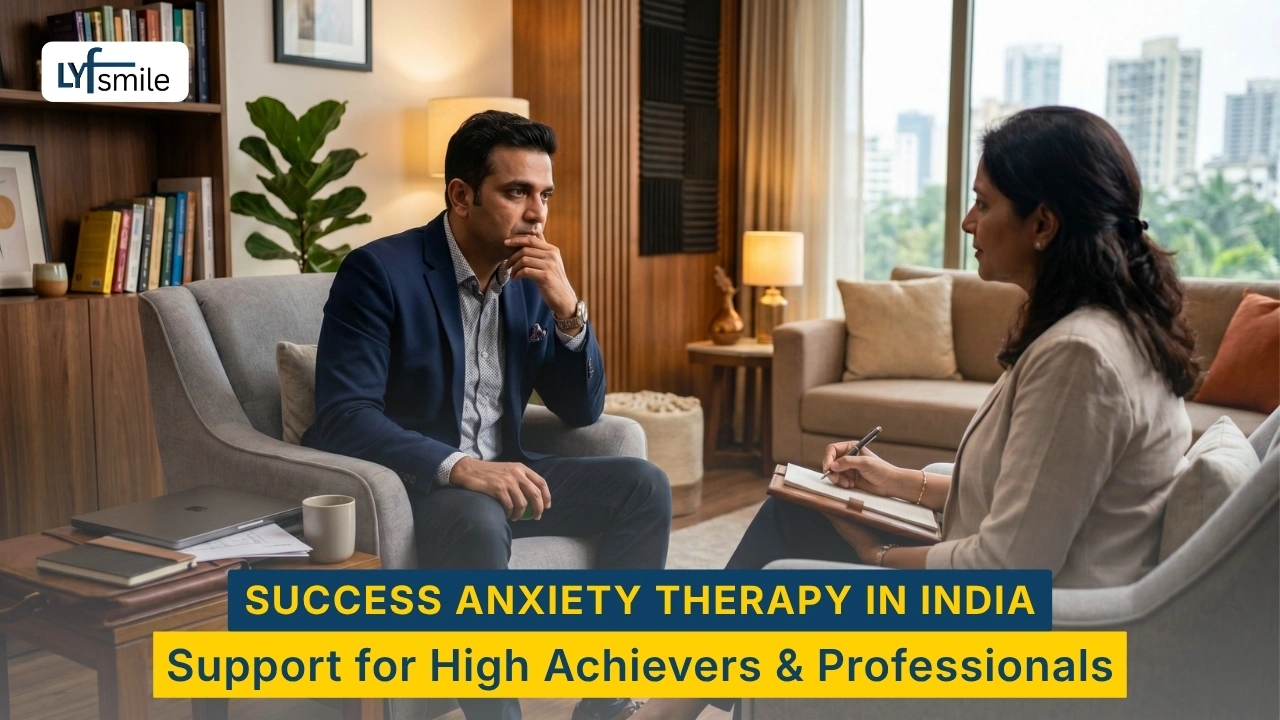
Success Anxiety Therapy in India | Support for High Achievers & Professionals
Success often feels like the ultimate goal but for many professionals and students, it brings unexpected emotional pressure. Success anxiety in India is rising due to intense competition, societal expectations, career pressure, and the constant need to prove oneself. From competitive exams like UPSC, NEET, and JEE to demanding corporate careers, many people feel trapped in a linear definition of success — school → college → stable job → financial achievement. Despite achieving it, people often experience restlessness, fear of failure, and emotional exhaustion.
Nearly 70% of Indian students report moderate-to-high anxiety because of family expectations, social comparison, and performance pressure. Social media has further deepened the comparison trap, making high achievers constantly question their worth. If you struggle with the fear of success or the pressure to always perform, you are not alone.
Success anxiety therapy in India helps individuals manage stress, reduce burnout, and overcome self-sabotage. Through expert support and online therapy, people can build emotional resilience, handle high achiever stress, and protect their mental well-being while continuing to grow professionally.
Signs You May Be Struggling with Success Anxiety
Success is supposed to bring peace but for many people at the top, it actually triggers new mental health challenges. Many entrepreneurs and corporate leaders experience deep restlessness and burnout exactly when they reach their career goals.
If you recognise these signs, seeking success anxiety therapy is a powerful step toward regaining control:
Feeling Like a Fraud - Even with great results, you fear that you do not deserve your success and that people will eventually find out. This is one of the most common signs of imposter syndrome among high achievers.
Constant Pressure to Perform - Further success starts feeling like a threat rather than a reward. The higher you climb, the more exposed you feel.
Fear of Losing It All - Despite financial security and professional achievements, you constantly worry that everything might disappear tomorrow.
Avoiding New Opportunities - You start stepping back from promotions or new projects — not because you cannot handle them, but because the fear of failure feels too overwhelming.
Inability to Enjoy Success - You reach a goal and immediately move to the next one, never pausing to feel the achievement. Rest feels uncomfortable. Stillness feels dangerous.
If these symptoms sound familiar, professional support can help you move from constant performance pressure to genuine, sustainable confidence.
Do You Have Success Anxiety? Take This Quick Self-Check
 Not sure if what you are feeling is success anxiety? Answer these 7 questions honestly.
Question 1: Even after achieving a big goal, do you feel restless or unsatisfied?
Question 2: Do you worry that people will eventually find out you do not deserve your success?
Question 3: Do you feel constant pressure to perform, even when things are going well?
Question 4: Do you avoid new opportunities to escape the fear of failure?
Question 5: Do you struggle to relax without thinking about what is next?
Question 6: Do you fear that your success could disappear at any moment?
Question 7: Has success-related stress affected your sleep, health, or relationships?
If you answered Yes to 3 or more, you may be experiencing success anxiety.
The good news: it is completely treatable. Expert therapists have helped hundreds of high achievers find their peace again without giving up their ambition.
Managing and Coping with Success Anxiety
While professional help is often the most effective way to address success anxiety, these coping strategies can help you manage achievement-related stress, self-doubt, and performance pressure in daily life.
Professional Support: Working with a psychologist can help you understand the fears driving your success anxiety, whether it is fear of failure, fear of judgment, impostor syndrome, or the pressure to maintain achievements. Evidence-based approaches such as Cognitive Behavioural Therapy (CBT) can help you develop healthier thought patterns and build confidence in handling success.
Challenge Perfectionism: Many people with success anxiety feel that every achievement raises the standard for future performance. Learning to set realistic expectations and accepting that mistakes are part of growth can reduce the constant pressure to prove yourself.
Separate Self-Worth from Achievement: Success anxiety often develops when personal value becomes tied to accomplishments, promotions, grades, or recognition. Reminding yourself that your worth extends beyond your achievements can create a healthier and more sustainable relationship with success.
Practice Present-Moment Awareness: Instead of worrying about maintaining success or anticipating future challenges, mindfulness exercises can help you focus on the present. Grounding techniques, deep breathing, and body awareness practices can reduce anxiety when achievement-related stress becomes overwhelming.
Celebrate Progress, Not Just Outcomes: People experiencing success anxiety often move quickly from one goal to the next without acknowledging what they have accomplished. Taking time to recognize growth, effort, and milestones can help reduce feelings of inadequacy and increase emotional resilience.
Build a Balanced Life: Maintaining meaningful relationships, hobbies, physical health, and personal interests outside of work or achievement can prevent success from becoming your sole source of identity and reduce anxiety associated with performance and expectations.
While these coping techniques can provide relief and help you navigate day-to-day challenges, lasting change often comes from addressing the underlying patterns that fuel success anxiety. Let's explore the evidence-based therapy approaches that can help you develop a healthier relationship with achievement, self-worth, and success.
Proven Therapeutic Approaches for Success Anxiety
Choosing the right therapy is essential for managing the unique pressures of a high-stakes career. Here are the most effective approaches used at Lyfsmile:
1. Cognitive Behavioural Therapy (CBT)
CBT is one of the most extensively researched treatments for anxiety. It helps you identify irrational beliefs around perfectionism and replaces them with a resilient, grounded mindset. Most professionals see significant improvement in managing performance-linked anxiety within 12 to 20 weeks of consistent sessions.
2. Acceptance and Commitment Therapy (ACT)
ACT focuses on accepting anxious thoughts instead of fighting them. By aligning your actions with your core values, you can reduce the constant pressure to stay at the top and feel less controlled by external measures of success.
3. Exposure Therapy for High-Stakes Tasks
This approach involves gradually facing situations that trigger anxiety like taking on a high-profile project or speaking in front of senior leadership. It helps de-sensitise the fear response and build professional confidence over time.
4. Mindfulness-Based Stress Reduction (MBSR)
For high achievers, the mind is always in the future. Mindfulness uses meditation and breathing techniques to keep you grounded in the present — preventing the mental exhaustion that leads to burnout.
Meet the Top Success Anxiety Therapists in India
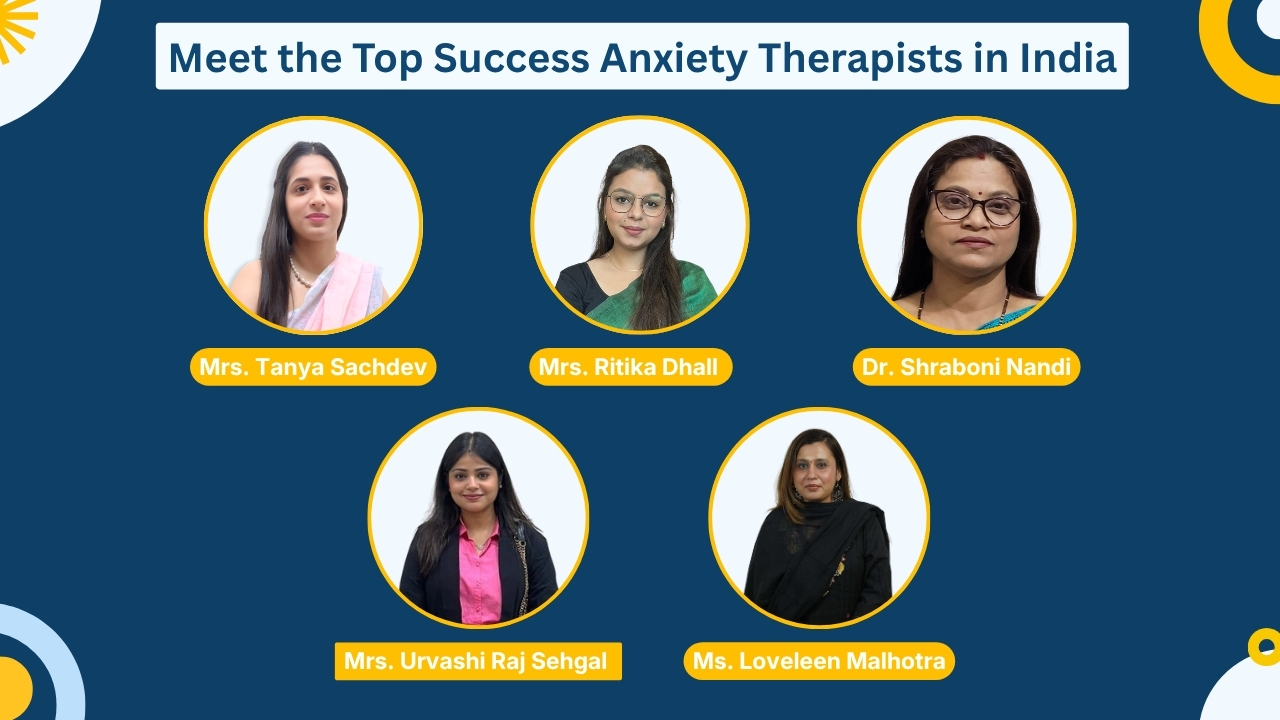 Professionals in India often face mental health challenges due to high-stakes careers and constant performance pressure. Each therapist below specialises in helping high achievers find mental peace without stepping back from their ambitions.
Mrs. Ritika Dhall - CBT Expert | Anxiety & Performance Pressure
Mrs. Ritika Dhall is a senior counselling psychologist known for her result-oriented, structured approach. She specialises in CBT for imposter syndrome and achievement anxiety, helping professionals break down performance-linked thought patterns and replace them with genuine confidence.
Mrs. Tanya Sachdev - Holistic Therapist | Executive Well-being & Burnout
Mrs. Tanya Sachdev holds an MSc in Clinical Child Psychology from Cambridge University and focuses on the unique mental health needs of corporate leaders and executives. She understands the pressure that comes with high-stakes decision-making and provides a confidential, empathetic space to work through it.
Dr. Shraboni Nandi - RCI Registered | PhD Psychology | 20+ Years Experience
Dr. Shraboni Nandi brings over two decades of clinical experience with RCI Registration and a PhD in Psychology. Rather than just addressing surface symptoms, she works on the root causes of why success can feel like a burden, building long-term emotional resilience through an analytical, evidence-based approach.
Mrs. Urvashi Raj Sehgal - RCI Registered Counsellor | Mindfulness & Confidence
Mrs. Urvashi Raj Sehgal specialises in personalised counselling that aligns with your career goals. She combines psychodynamic understanding with mindfulness-based techniques — building a resilient mindset that ensures success does not come at the cost of your mental health.
Ms. Lovleen Malhotra - Counselling Psychologist | Anxiety & Burnout
Ms. Loveleen Malhotra has 9+ years of experience working with individuals dealing with anxiety, burnout, and the emotional weight of long-term high performance. Her approach focuses on the deeper patterns that keep success anxiety in place — identity, self-worth, and the belief that stopping means falling behind.
Why High Achievers Choose Lyfsmile
At Lyfsmile, every therapist is licensed or holds equivalent professional qualifications structured, evidence-based support specifically for the pressures of high-stakes professional life.
Sessions are available in Hindi and English, online and in-person, with flexible timing including early mornings, evenings, and weekends - designed around demanding professional schedules.
Sessions start at ₹30/minute. No large upfront packages. No hidden costs. Pay per session, at a pace that works for you.
Book your appointment the same day via WhatsApp at +91 98047 91047 or at lyfsmile.com
How to Overcome Success Anxiety and Find Peace Again
Achieving success is only half the battle. The real challenge is building the mental peace to actually enjoy it. If the weight of your achievements feels more like a burden than a win, these steps will help:
Adopt a Growth Mindset - Success anxiety often comes from fear of not being able to maintain your position. Reframing your thoughts from "I must protect what I have" to "I have the capacity to keep growing" fundamentally changes how pressure feels.
Separate Self-Worth from Performance - When your identity is entirely tied to your achievements, every setback feels like a personal failure. Therapy helps you build a stable sense of self that does not depend on your last result.
Manage Performance-Linked Stress Proactively - The constant drive to stay at the top leads to burnout if left unmanaged. Learning effective coping strategies before you reach breaking point is far easier than recovering after.
Build Emotional Resilience - Success brings unique challenges that most people around you will not understand. Developing the emotional steadiness to handle pressure, reputation, and expectation ensures that your achievements remain a source of pride not panic.
Real Stories: How High Achievers Cope with Success Anxiety
"I was a startup founder who had everything on paper, a growing company, a great team, financial stability. But every morning I woke up with a knot in my stomach, waiting for it all to fall apart. After just 6 sessions with my Lyfsmile therapist, I learned to separate my self-worth from my achievements. I still work hard but now I actually enjoy it." - Anonymous, 34-year-old Founder, Bengaluru
"I kept telling myself I was just being ambitious. But the panic before every board meeting, the inability to sleep after a good quarter that was not ambition. That was anxiety. My therapist helped me see that clearly. Three months later, I feel like myself again." - Anonymous, Senior Manager, Mumbai
Frequently Asked Questions
1. What is the best therapy for success anxiety?
Cognitive Behavioural Therapy (CBT) is one of the most extensively researched treatments for success anxiety. It helps high achievers identify negative thought patterns like imposter syndrome and replaces them with a resilient mindset, providing practical tools to manage performance-linked stress and maintain long-term mental peace.
2. Can I get online therapy for executive burnout?
Yes. Online therapy is highly effective for busy professionals and executives — offering the flexibility to manage high-stakes career stress from anywhere in India or abroad. Sessions are available on secure platforms around your schedule.
3. Why do I feel anxious after achieving a big goal?
This often happens due to what is known as the arrival fallacy, the disconnect between expecting success to bring peace and the reality of new pressures it creates. After a big win, high achievers often feel a "now what?" pressure or the stress of maintaining their new status. Success anxiety therapy focuses on separating your self-worth from your achievements to reduce this restlessness.
4. How do I know if I need success anxiety therapy?
If you feel restless despite your wins, fear being seen as a fraud, or find it impossible to relax, you may be experiencing psychological barriers to growth. Consulting an expert can help you overcome these patterns before they lead to chronic burnout or health issues.
5. Is success anxiety common among high achievers in India?
Yes. With India's competitive startup and corporate culture, managing performance pressure has become a vital skill. Many entrepreneurs and leaders now prioritise their mental health to maintain their professional edge without compromising their physical well-being.
6. Is online therapy safe and confidential?
Yes. All sessions on Lyfsmile are conducted on a secure, encrypted platform. No information is shared with any third party. Your employer, family, or anyone else will never know you sought therapy unless you choose to tell them.
7. How is Lyfsmile different from other therapy platforms?
Lyfsmile works only with verified, RCI-registered, and degree-qualified therapists. Every therapist is background-checked and credentialed. Sessions start from ₹30/minute with no large upfront packages, giving you complete control over your therapy journey.
8. Can success anxiety be treated without medication?
Yes. Success anxiety, imposter syndrome, and performance-linked burnout respond well to therapy alone, particularly CBT, ACT, and mindfulness-based approaches. For more complex cases, a combination of therapy and psychiatric support may be recommended.