


Sarvesh Kumari
Emotional Intimacy and Sex: Best Couples Counselling in India
Feeling distant from your partner even when you're in the same room is one of the most painful experiences in a relationship. Emotional intimacy and sex are deeply intertwined, and when emotional closeness begins to erode, physical connection usually follows. Whether you're navigating intimacy issues in relationships, a gradual drift in your marriage, or a complete emotional disconnection in relationships, understanding this bond is the first step toward healing. At Lyfsmile, our expert counselors specialize in helping couples restore both emotional and physical intimacy through evidence-based therapy tailored to their unique needs.
How Emotional Intimacy Shapes Your Sex Life
Most couples are surprised to discover that lack of emotional intimacy is one of the leading root causes of sexual dissatisfaction. This is not about desire or attraction alone it is about emotional closeness in relationships that makes physical vulnerability feel safe.
When partners feel emotionally seen, heard, and valued, the body responds. Trust opens the door to desire. This is why sex and emotional connection are not two separate conversations they are one.
Research and clinical experience both confirm that emotional bonding between couples directly enhances sexual satisfaction. When you feel emotionally close to your partner, you are more willing to be vulnerable, more expressive about your needs, and more present during physical intimacy. Without that foundation, sex can start to feel routine, forced, or completely absent.
Here is how emotional intimacy in marriage shapes the physical relationship:
Signs of emotional intimacy, like sharing fears, expressing needs, and feeling truly heard are the same building blocks that fuel a fulfilling sex life.
Emotional intimacy and communication go hand in hand. Couples who talk openly about feelings tend to communicate more openly about physical needs too.
When emotional intimacy problems arise- unspoken resentment, emotional withdrawal, or feeling unappreciated- sexual desire is often the first casualty.
Intimacy and connection in couples flourish when both partners feel emotionally safe, not just physically attracted.
Understanding why intimacy is important in a relationship helps couples stop treating physical and emotional closeness as separate goals. They are the same goal, approached from different directions.
At Lyfsmile, our therapists work with couples to identify the emotional blocks that are quietly draining physical connection and create a clear path back to both. Start with a free 15-minute session →
Why Couples Struggle with Emotional and Physical Intimacy
Relationship intimacy problems rarely appear overnight. They build slowly, through unresolved arguments, increasing distance, and the quiet habit of not sharing what is really happening inside.
Couples intimacy issues are especially common during major life transitions a new job, parenthood, moving abroad, or managing family pressure. For many Indian couples, cultural expectations around emotional expression can make it even harder to voice what is missing.
Some of the most common causes of emotional disconnection in relationships include:
Unspoken emotional needs. When partners stop expressing what they need affirmation, quality time, physical affection those needs do not disappear. They turn into resentment, withdrawal, and distance.
Poor communication patterns. Criticism, defensiveness, and stonewalling quietly dismantle emotional safety. Over time, this makes how to build emotional intimacy feel impossible without outside help.
Sexual performance anxiety. For many couples, anxiety around sex creates a feedback loop the more pressure there is to perform, the less emotionally present both partners become, making emotional intimacy problems worse.
Unresolved trauma or past experiences. Past wounds, whether from previous relationships or childhood, can unconsciously prevent emotional vulnerability in the present.
Life stress and neglect. Careers, parenting, and daily responsibilities can push emotional connection to the bottom of the priority list until the distance feels insurmountable.
Recognizing these patterns is not about blame it is about awareness. And awareness is where improving intimacy in relationships begins.
How Emotional Intimacy Therapy at LyfSmile Helps Couples Reconnect
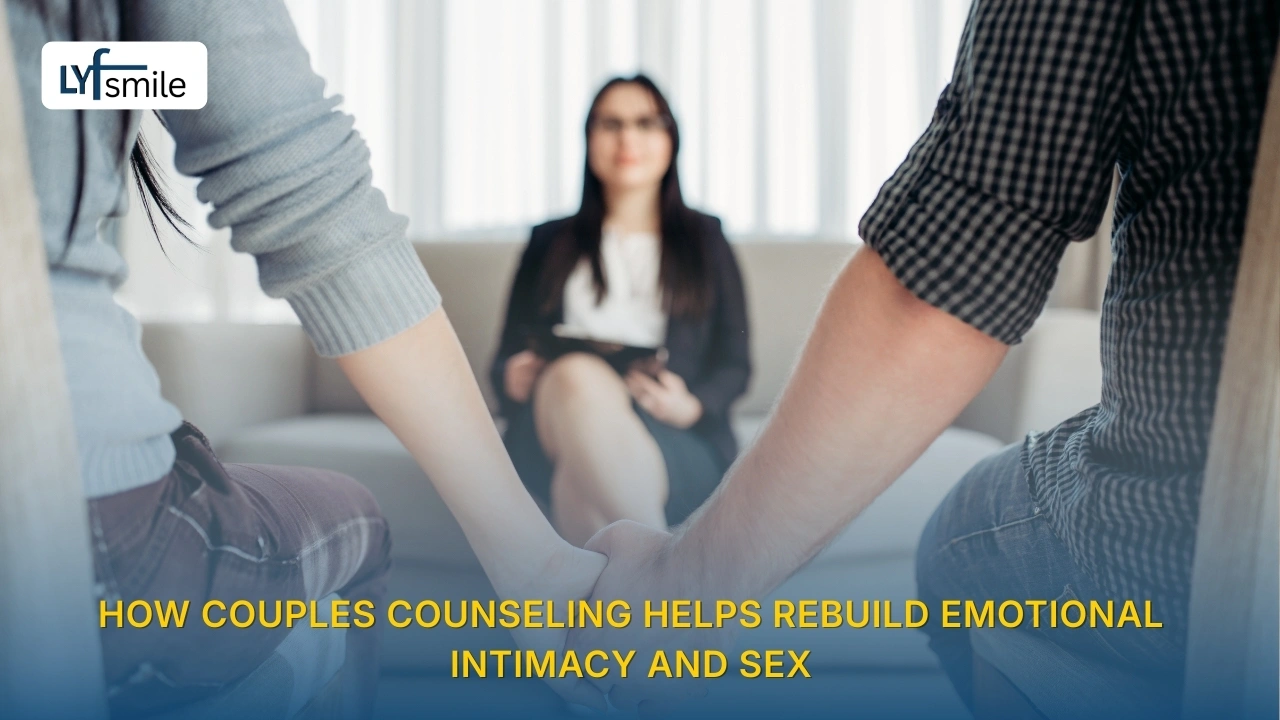 Relationship counseling for intimacy issues works because it gives couples a structured, safe space to do what feels impossible at home: to be honest, to be heard, and to begin rebuilding trust.
At Lyfsmile, emotional intimacy therapy is led by experienced psychologists including Mrs. Medhavi Bhalla (MSc, University of Edinburgh), a Certified Practitioner in Emotional Freedom Technique (EFT) and Matrix Reimprinting, trained in CBT, Solution-Focused Therapy, and Emotion-Focused Therapy.
Here is what the process looks like:
Identifying emotional triggers. Therapy helps couples understand what specific situations, words, or behaviors activate emotional withdrawal so they can interrupt those patterns.
Rebuilding emotional safety. Using Emotion-Focused Therapy and mindfulness-based approaches, couples learn to create the safety needed for genuine emotional vulnerability.
Addressing sexual concerns directly. Sex therapy within the counseling process helps couples talk openly about physical needs, reduce performance anxiety, and reconnect physically without pressure.
Developing lasting communication tools. Practical, evidence-based techniques from CBT help couples change unhelpful interaction patterns and replace them with habits that build emotional closeness in relationships over time.
Couples intimacy issues do not resolve themselves. But with the right support, even deeply disconnected couples can find their way back to warmth, trust, and genuine closeness.
Every couple deserves to feel connected again. Book your free session with LyfSmile today. Schedule Now →
Conclusion
Rebuilding emotional and physical closeness in a marriage takes effort, understanding, and the right guidance. Emotional intimacy and sex are at the heart of a strong relationship, and addressing emotional disconnect, intimacy issues, or sexual performance anxiety can help couples feel truly connected again. Small steps like open communication, quality time, and physical affection, combined with professional support, can make a big difference in restoring both trust and closeness.
At Lyfsmile, our experienced counselors guide couples to strengthen emotional bonding and sexual connection, overcome intimacy challenges, and enjoy a fulfilling, loving relationship. With the right support, every couple can rediscover warmth, affection, and the deep connection that makes their marriage feel alive and strong once again.
Frequently Asked Questions
Q1: What is the connection between emotional intimacy and sex?
Emotional intimacy builds the trust and safety that makes physical intimacy fulfilling. When partners feel emotionally close, sexual desire and satisfaction naturally improve. Without emotional connection, sex often feels hollow or decreases over time.
Q2: What are the signs of emotional intimacy problems in a relationship?
Common signs include feeling lonely despite being together, avoiding deep conversations, lack of physical affection, frequent misunderstandings, and a general sense of emotional distance. If sex has also declined, emotional disconnection is likely a root cause.
Q3: Can lack of emotional intimacy affect a marriage long-term?
Yes. Ongoing lack of emotional intimacy leads to resentment, communication breakdown, and loss of physical closeness. Over time, it can make couples feel more like roommates than partners, significantly reducing overall relationship satisfaction.
Q4: How can couples rebuild emotional and physical intimacy?
Start with open, non-defensive communication about feelings and needs. Prioritize quality time, small acts of affection, and active listening. For deeper issues, emotional intimacy therapy with a trained couples counselor provides structured tools to reconnect effectively.
Q5: When should couples seek relationship counseling for intimacy issues?
If emotional distance, lack of physical intimacy, or repeated unresolved conflicts have persisted for more than a few weeks, professional support is recommended. Early counseling prevents small gaps from becoming deeper disconnections and helps couples rebuild trust faster.