

Sarvesh Kumari
Female Orgasmic Disorder and Psychological Support for NRIs
Female sexual health is an important part of overall well-being, but many women still find it difficult to talk openly about their intimate concerns. Conditions like difficulty reaching orgasm, low sexual satisfaction, or lack of emotional connection during intimacy can sometimes be linked to female orgasmic disorder's psychological causes. Stress, anxiety, relationship conflicts, past emotional experiences, and performance pressure can quietly affect how the body and mind respond during intimate moments.
For many women, especially NRIs living abroad, discussing such personal concerns may feel uncomfortable due to cultural stigma or fear of judgment. As a result, many women continue to struggle in silence without realizing that psychological support can help them better understand these challenges and improve their intimate well-being.
This is where Lyfsmile provides professional and confidential psychological support for women dealing with intimacy and sexual health concerns. Through compassionate counseling and expert guidance, women can explore the emotional factors affecting their sexual well-being, rebuild confidence, and work toward healthier and more satisfying relationships. Seeking the right help can make a meaningful difference in both personal happiness and relationship harmony.
Why do many women struggle to reach orgasm despite feeling desire?
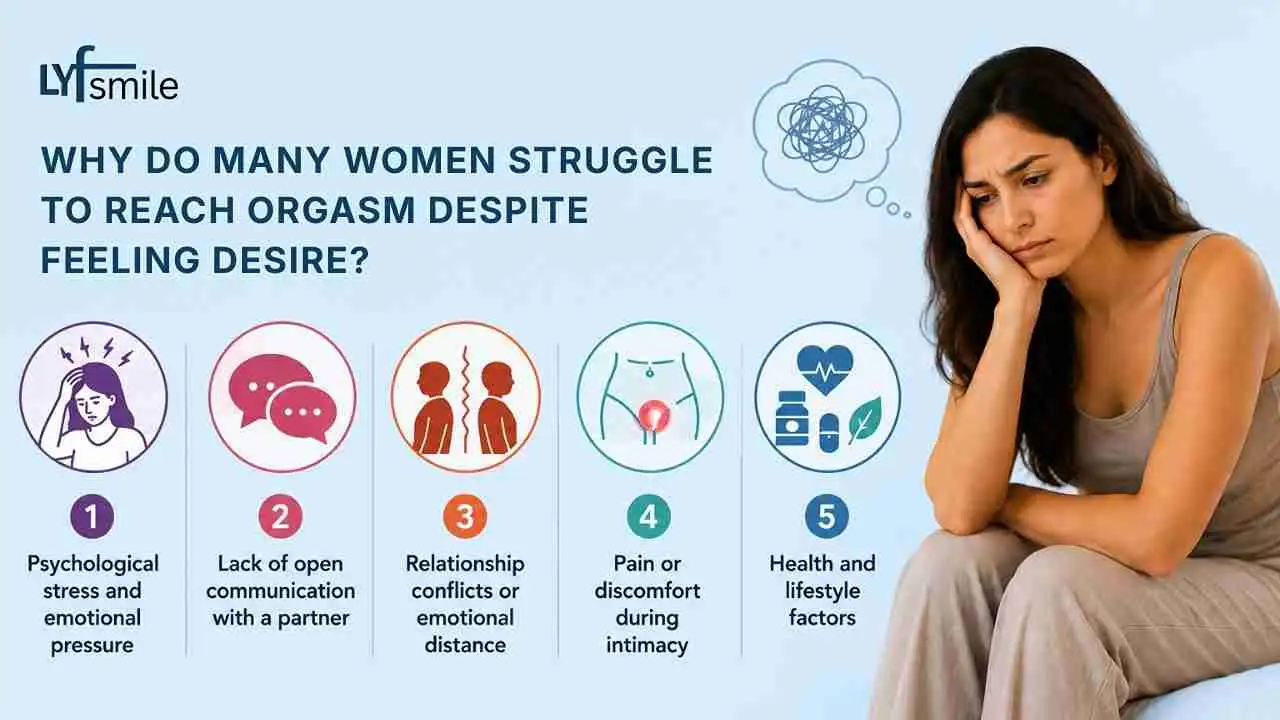 Many women may feel sexual desire but still find it difficult to reach orgasm. This experience can feel confusing because sexual satisfaction is influenced by both emotional and physical factors. Relationship dynamics, stress, anxiety, emotional disconnect, and intimacy-related concerns can all affect how the body responds during intimate moments. With the right intimacy therapy for women, emotional wellness counselling, and guidance for relationship concerns, many individuals can better understand and address these challenges. Below are some common reasons that may explain this experience.
1. Psychological stress and emotional pressure
Stress and anxiety do not always appear loudly; sometimes they slowly affect your most personal moments and emotional connection. Many women experiencing female orgasmic disorder struggle with intimacy anxiety, emotional pressure, and relationship stress. With the right female orgasmic disorder counselling and Relationship Counselling, these challenges can gradually improve.
2. Lack of open communication with a partner
Healthy sexual relationships often depend on clear communication and emotional understanding. Every person experiences pleasure differently, and without open discussion, partners may struggle to understand each other’s needs. Hesitation in expressing preferences or concerns can create emotional distance and confusion during intimacy, which may contribute to difficulty reaching orgasm. In such situations, couples counselling for intimacy problems and relationship therapy can help improve communication and emotional connection. This lack of communication can sometimes result in difficulty reaching orgasm.
3. Relationship conflicts or emotional distance
Unresolved conflicts, lack of trust, or emotional distance between partners can affect sexual satisfaction and intimacy. When someone feels emotionally disconnected, pressured, or unsupported, it may become difficult to fully relax during intimate moments. Emotional safety, trust, and healthy communication often play an important role in building a satisfying relationship. In such cases, emotional intimacy therapy and couples counseling can help partners rebuild connection and understanding.
4. Pain or discomfort during intimacy
For some women, physical discomfort during sexual activity can create fear or tension. Conditions such as “genitopelvic pain-penetration disorder” may cause pain, tightness, or involuntary muscle contractions during penetration. When intimacy becomes associated with discomfort, the body may resist stimulation, making it harder to reach orgasm.
5. Health and lifestyle factors
Certain health conditions, medications, hormonal changes, alcohol use, or smoking can also influence sexual response. These physical factors may interfere with arousal and orgasm. However, emotional well-being and psychological stress can often intensify these challenges.
Understanding these factors is an important step toward improving sexual well-being. When emotional concerns, relationship challenges, or psychological stress are addressed in a supportive environment, many women can regain confidence and experience healthier intimacy. Professional psychological guidance can help individuals better understand these barriers and work toward more satisfying and comfortable intimate experiences.
You don’t have to struggle with intimacy concerns in silence. Connect with the experts at Lyfsmile and take the first step toward understanding and improving your sexual well-being with a 15-minute free session.
What Are the Symptoms of Female Orgasmic Disorder?
Delayed orgasm
Difficulty reaching orgasm
Infrequent orgasms
Orgasms that feel significantly less intense
Difficulty reaching orgasm despite feeling sexually aroused
Difficulty reaching orgasm only in certain situations
Distress or frustration related to orgasm difficulties
Psychological Support for NRIs Facing Female Orgasmic Disorder
 Many women experience intimacy concerns but hesitate to discuss them openly because of embarrassment, cultural stigma, or fear of being misunderstood. Emotional stress, anxiety, relationship conflicts, or past experiences can quietly affect how the mind and body respond during intimacy. These emotional barriers may contribute to ongoing orgasm difficulties, even when sexual desire is present. In such situations, women’s sexual wellness counselling, intimacy therapy for women, and professional emotional support can help individuals better understand these concerns.
Sex Therapy for Sexual Response Difficulties
Focuses on understanding sexual concerns in a structured, non-judgmental way. It helps identify emotional, psychological, or relational factors that may be affecting orgasmic response and intimacy satisfaction.Cognitive Behavioural Therapy (CBT) for Anxiety & Thought Patterns
Helps address negative thoughts, performance pressure, and anxiety around intimacy. CBT supports healthier thinking patterns that can improve relaxation and sexual responsiveness.Mindfulness-Based Intimacy Support
Encourages being present during intimacy instead of overthinking or self-judgment. This approach can reduce stress and improve emotional and physical connection with a partner.Relationship Counselling for Emotional Disconnect
Works on communication gaps, unmet emotional needs, and long-distance relationship stress common among NRIs. It helps rebuild trust, closeness, and emotional safety in the relationship.This approach can also help couples dealing with related sexual concerns, including situations where partners are seeking premature ejaculation treatment, as emotional stress can affect both individuals in a relationship.Culturally Sensitive Therapy for NRIs
Addresses cultural expectations, guilt, stigma around sexual health, and adjustment challenges abroad. This creates a safe space to discuss concerns without judgment.Emotional Regulation & Stress Management Therapy
Focuses on reducing general life stress, work pressure, and emotional overwhelm that can indirectly impact sexual desire and orgasmic response.
Building confidence and emotional comfort
Many women struggle with body image concerns or feelings of guilt around sexuality. Counseling provides a safe and non-judgmental space where these feelings can be explored. When women begin to feel more confident and emotionally comfortable, it can positively influence their experience of intimacy and overall relationship satisfaction.
At Lyfsmile, women can receive compassionate psychological support from experienced professionals such as Ritika Dhall, a certified CBT expert. She is a seasoned counseling psychologist who focuses on the transformative power of cognitive behavioral therapy (CBT). Through this approach, she helps individuals understand how thoughts, emotions, and behaviors influence their mental well-being.
Mrs. Ritika Dhall creates a supportive and empathetic space where people can openly explore their concerns without judgment. Her work focuses on helping individuals manage anxiety, stress, and emotional challenges while developing practical strategies that lead to lasting positive change. By empowering individuals to take control of their mental health, psychological therapy can help women better understand their intimacy concerns and move toward healthier and more fulfilling relationships.
Conclusion
Female sexual health is closely connected to emotional well-being, relationship comfort, and psychological balance. When concerns like orgasm difficulties or other forms of sexual dysfunction in women appear, they may be influenced by emotional stress, anxiety, or relationship challenges. Female Orgasmic Disorder and Psychological Support for NRIs focuses on understanding these emotional concerns and providing the right guidance through women’s sexual wellness counselling, relationship therapy, and intimacy support for women to improve confidence, emotional connection, and overall relationship satisfaction.
FAQ’s
1. Can stress or anxiety affect a woman’s sexual response?
Yes, stress and anxiety can strongly affect sexual response in women. When the mind is overwhelmed with worries or emotional pressure, the body may struggle to relax during intimacy. This can lead to reduced arousal, difficulty reaching orgasm, or other forms of sexual dysfunction. Psychological support can help identify emotional triggers and improve sexual well-being.
2. Can emotional blocks affect intimacy in relationships?
Emotional blocks can make it difficult for a person to feel comfortable and connected during intimate moments. These blocks may develop due to past experiences, relationship conflicts, or fear of vulnerability. When these emotional barriers are addressed through counseling, individuals often feel more confident and emotionally open in their relationships.
3. Why do some women feel a lack of emotional connection during intimacy?
A lack of emotional connection can occur due to stress, unresolved relationship conflicts, or mental health concerns such as anxiety or depression. When emotional needs are not fully met, it can affect both emotional closeness and sexual satisfaction in a relationship.
4. Can anxiety or stress cause pelvic pain during intimacy?
Yes, emotional stress and anxiety can sometimes contribute to pelvic discomfort or tension in the body. When the body remains stressed, muscles may tighten, which can lead to discomfort during intimacy. Psychological therapy can help manage stress and improve relaxation.
5. Can medications for mental health affect sexual desire or orgasm?
Some medications used for anxiety or depression may affect sexual desire, arousal, or the ability to reach orgasm. These effects vary from person to person. If someone notices changes in their sexual response after starting medication, it is important to discuss it with a qualified healthcare professional.
6. Why do some men lose interest in intimacy in long-term relationships?
Loss of interest in intimacy can occur due to emotional distance, stress, relationship conflicts, or lifestyle pressures. Sometimes routine, lack of communication, or unresolved emotional issues can also affect sexual interest. Addressing these concerns through open communication or counseling can help rebuild the connection.
7. How can couples improve communication about intimacy?
Open and honest communication is essential for healthy intimacy. Couples can start by discussing their needs, comfort levels, and expectations without judgment. Professional counseling can also help couples develop better communication skills and improve emotional understanding.
8. Can hormonal changes affect sexual satisfaction in women?
Yes, hormonal changes during different life stages can influence sexual desire, lubrication, and orgasm. These physical changes can sometimes affect sexual satisfaction, but emotional well-being and relationship factors also play an important role.
9. How do psychological factors affect female sexual well-being?
Psychological factors such as stress, anxiety, self-confidence, body image, and past experiences can significantly affect sexual response. When these emotional concerns are addressed with professional support, many women experience improvement in intimacy and relationship satisfaction.
10. When should someone seek professional help for intimacy concerns?
If sexual concerns such as low desire, difficulty reaching orgasm, or emotional discomfort during intimacy continue for a long time or affect the relationship, seeking professional guidance can be helpful. Psychological counseling can help identify the underlying causes and provide strategies to improve emotional and sexual well-being.