


Sarvesh Kumari
Medication-Induced Sexual Dysfunction Therapy for NRIs
Medication-induced sexual dysfunction refers to changes in sexual desire, arousal, orgasm, erection, lubrication, or overall sexual satisfaction that may occur as a side effect of certain medicines. Antidepressants are one common example, but other medications may also affect sexual function. The effect can vary depending on the medication, dose, individual health, and other factors
If this sounds familiar, you are not alone. At Lyfsmile, many individuals seek help for psychological causes of premature ejaculation, especially when it is linked to stress, anxiety, or emotional pressure. Medication-induced sexual dysfunction is also one of the most underreported side effects of common psychiatric medications and one of the least talked about, particularly in Indian households and NRI communities.
Let’s understand why antidepressants affect sexual desire, what the psychological impact of medication on intimacy looks like, and how online Couple therapy for Indians and NRIs can help you navigate these changes without shame, confusion, or silence.
Experiencing intimacy changes after starting medication? Call or WhatsApp 9804791047.
What is Medication-Related Sexual Dysfunction?
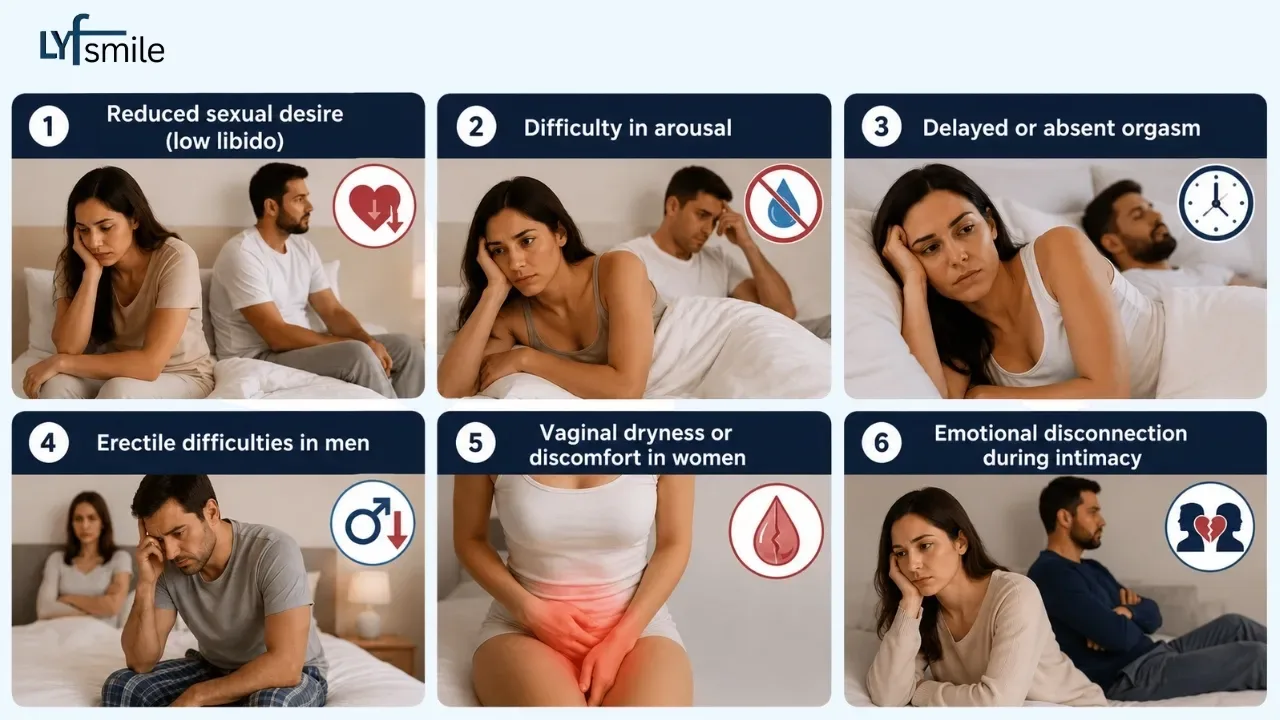 Medication-related sexual dysfunction refers to changes in sexual desire, performance, or satisfaction caused as a side effect of certain medications.
Common symptoms include:
Reduced sexual desire (low libido)
Difficulty in arousal
Delayed or absent orgasm
Erectile difficulties in men
Vaginal dryness or discomfort in women
Emotional disconnection during intimacy
For NRIs, these concerns may feel more isolating due to cultural stigma, long-distance relationships, or limited access to culturally sensitive care.
Key Causes of Medication-Induced Sexual Changes
Sexual side effects may occur due to how certain medications interact with brain chemistry and hormonal balance.
1. Antidepressants and mood stabilizers: These can affect serotonin levels, which may reduce sexual desire or delay orgasm.
2. Antipsychotic medications: May lower dopamine activity, impacting arousal and pleasure response.
3. Blood pressure medications: Some can reduce blood flow, affecting sexual performance.
4. Hormonal treatments: Changes in estrogen or testosterone levels can influence libido and physical response.
Psychological Impact on NRI's
Medication-related sexual dysfunction is not only physical, it also affects emotional well-being.
NRIs may experience:
Anxiety about intimacy in long-distance relationships
Guilt or confusion about reduced sexual interest
Stress due to cultural expectations around sexual performance
Relationship strain due to lack of communication
Over time, this can create avoidance patterns and emotional distance between partners.
When Should You Seek Help for Sexual Side Effects?
Support may help when intimacy changes become long-lasting, emotionally upsetting, or start affecting relationships; relationship therapy can also help rebuild emotional connection. Ongoing loss of desire, emotional numbness, or anxiety around antidepressants and sex life should not be ignored. Lyfsmile offers supportive guidance for these concerns.
Can Therapy Help With Medication-Related Sexual Dysfunction?
Therapy may help when medication-related sexual changes are accompanied by anxiety, low confidence, relationship tension, emotional distress, or fear around intimacy. A therapist can provide a confidential space to explore these emotional and relationship factors, while medication-related decisions should remain with the prescribing healthcare professional.
Can sexual side effects improve, and how does therapy support recovery?
 Sexual side effects caused by medication or stress can feel frustrating, but in many cases, they can improve with the right guidance and support. Emotional stress, depression, and relationship pressure often make these concerns more intense. When people understand what is happening in their mind and body, recovery becomes much more possible.
1. Understanding antidepressants and sexual side effects
Some people notice changes in desire, arousal, or emotional connection after starting medication. These antidepressants and sexual side effects can happen because the medicine changes brain chemicals that control mood and emotions. While these medicines help manage depression and anxiety, they may sometimes reduce sexual interest or make intimacy feel different.
2. Managing stress and emotional triggers
Stress plays a big role in sexual well-being. When the mind is under constant pressure, such as from relationship problems, work stress, or major life changes, the body produces more stress hormones, such as cortisol. Over time, this can reduce desire and emotional connection. Therapy helps people understand these mental health medication effects and learn healthier ways to manage stress, emotions, and relationship concerns.
3. Learning healthy ways of coping with intimacy challenges
When sexual changes happen, some people start avoiding intimacy because they feel confused or embarrassed. Therapy helps individuals and couples focus on coping with medication-related intimacy issues by improving communication, rebuilding emotional connection, and reducing anxiety around intimacy.
4. Therapy Approaches for Medication-Induced Sexual Dysfunction (Psychological Help)
Medication-induced sexual dysfunction often has both biological and psychological layers, especially when symptoms affect desire, arousal, or performance. Therapy focuses on helping individuals cope emotionally, reduce distress, and restore confidence while medical adjustments are managed separately by a doctor if needed.
1. Cognitive Behavioral Therapy (CBT)
CBT helps identify and change negative thought patterns such as fear of sexual failure, performance anxiety, or frustration caused by medication side effects. It also reduces stress that can worsen sexual symptoms.
2. Sex Therapy & Psychosexual Counseling
Sex Therapy focuses on rebuilding sexual confidence, improving intimacy, and addressing emotional withdrawal that may occur due to medication-related changes in desire or performance.
3. EFT (Emotional Freedom Techniques)
EFT helps reduce emotional stress, anxiety, and frustration linked to sexual dysfunction. It supports emotional regulation and helps individuals feel more relaxed about intimacy.
4. Matrix Reimprinting Therapy
This technique works on subconscious emotional patterns formed due to past experiences, anxiety, or trauma that may intensify sexual concerns during medication use.
5. Mindfulness-Based Therapy
Mindfulness helps individuals stay present during intimacy instead of overthinking performance or side effects. It reduces anxiety-driven sexual difficulties.
With the right psychological support and stress management strategies, many people can improve their emotional well-being, rebuild intimacy, and create healthier relationships again.
Experiencing intimacy changes after medication? Book your session today and at Lyfsmile to receive compassionate psychological support to restore comfort and confidence.
What Should You Do If Your Medication Is Affecting Your Sex Life?
Notice when the symptoms started.
Discuss the change with the prescribing doctor.
Don't stop medication suddenly without medical advice.
Consider psychological or relationship support if anxiety, shame or communication problems are adding to the difficulty.
Seek appropriate medical evaluation when physical causes may also be involved.
Conclusion
Medication-induced sexual dysfunction is real, common, and most importantly manageable. It does not mean your medication is wrong for you, and it does not mean something is permanently broken in your intimate life.
What it means is that your mind and body are navigating a chemical adjustment, and that navigation becomes far easier with the right support. Whether it is a sexual concern vs sexual disorder, antidepressants affecting your sex life, emotional disconnection after medication, or the relationship strain that follows therapy addresses all of it.
For Indians and NRIs who carry the added weight of cultural silence around these topics, online therapy for NRIs at Lyfsmile offers something rare: a genuinely safe, judgment-free, culturally informed space to speak openly and move forward.
You do not have to navigate this alone. You do not have to choose between your mental health and your intimate life.
FAQ’s
Q1: What is medication-induced sexual dysfunction and is it common?
Medication-induced sexual dysfunction refers to changes in desire, arousal, orgasm, or satisfaction caused by prescribed medications, most commonly antidepressants. Studies suggest it affects 30–70% of people on SSRIs, making it one of the most common but least-discussed medication side effects.
Q2: Do antidepressant sexual side effects go away on their own?
Sometimes but not always. For some people, antidepressant sexual side effects ease as the body adjusts over 4–8 weeks. For others, they persist for as long as the medication is taken. If they persist beyond 6 weeks, speak to both your doctor and a therapist rather than waiting indefinitely.
Q3: Which antidepressants are least likely to cause sexual side effects?
Bupropion and Mirtazapine are generally considered to have lower rates of sexual dysfunction from SSRIs. However, medication decisions should always be made with your prescribing doctor never adjust your medication without medical supervision.
Q4: Can I talk to an Indian therapist online about antidepressants and my sex life?
Yes. Lyfsmile's therapists are fluent in English and Hindi and experienced in working with Indians and NRIs on these exact concerns. Sessions are fully confidential and available from anywhere in the world.
Q5: Will my partner know I am in therapy for this?
No. All sessions at Lyfsmile are strictly confidential. You may choose to involve your partner in couples sessions, but individual sessions are entirely private.
Q6: Can therapy help even if I am still on the medication?
Absolutely. Therapy for antidepressant sexual side effects works alongside your medication — not instead of it. CBT for sexual dysfunction and psychosexual therapy address the psychological and relational impact while your medical team manages the medication itself.
Q7: Is it safe to stop my antidepressants to fix my sex life?
It is not safe to stop abruptly without medical guidance. Discontinuation syndrome can cause serious withdrawal effects. If antidepressants cause low libido is your concern, speak to your doctor about dose adjustment or switching and simultaneously pursue therapy to manage the psychological impact.