

Sarvesh Kumari
Female Sexual Interest & Arousal Disorder Therapy For Women Living Abroad
Living far from home is hard in ways people rarely talk about, New culture, New routines. A support system that is suddenly thousands of miles away. For many women, that quiet weight slowly seeps into the most intimate parts of life and stays there.
If you have been struggling with low sexual desire, difficulty feeling aroused, or a growing emotional distance from your partner, you are not alone and you are not broken. What you may be experiencing has a name: Female Sexual Interest and Arousal Disorder (FSIAD).
And the good news? At Lyfsmile, Female Sexual Interest & Arousal Disorder Therapy is accessible, effective, and designed with cultural sensitivity for Indians living abroad — helping women improve emotional connection, intimacy comfort, and overall sexual wellbeing no matter where in the world they live.
What Is Female Sexual Interest & Arousal Disorder?
FSIAD is a recognised clinical condition involving a significant, persistent drop in sexual interest, desire, arousal, or pleasure.
It is not "just a phase." It is not a sign your relationship is failing. It is a real, treatable condition and it is exactly what female arousal disorder counseling and psychosexual therapy for women are designed to address.
Common Signs of FSIAD
Little or no interest in sexual activity
Difficulty becoming physically aroused, even when the desire is there
Absent or reduced sexual thoughts and fantasies
Little or no pleasure during intimacy - a core sign of therapy for sexual dissatisfaction
Feeling emotionally disconnected from your partner during sex
Important to know: FSIAD is not a reflection of your love for your partner. It is a medical and psychological condition and seeking Female Sexual Interest & Arousal Disorder Therapy is one of the most self-aware things you can do for yourself and your relationship.
Why Women Living Abroad Face Unique Challenges
Relocating changes everything:
Your sense of identity
Your daily language and routine
Your closest friendships and support network
Your access to familiar, trusted healthcare
Many expat women find that cultural adjustment, loneliness, and constant change quietly wear down their women's sexual wellness. The emotional causes of low sexual desire, stress, isolation, anxiety, loss of identity are deeply amplified when you are living far from home.
The result: Most women push through alone. They assume it will pass. They stay silent.
And finding a therapist who offers women's intimacy support in a culturally sensitive, judgment-free way? That can feel nearly impossible abroad.
This is exactly where online counseling changes everything.
Whether you are in Dubai, Singapore, London, Toronto, or Sydney qualified therapists who specialise in low sexual desire counseling and FSIAD are just a few clicks away, available on your schedule, in your language, from the privacy of your own home.
Why Women with Low Sexual Interest May Avoid Intimacy
Many women feel confused when intimacy fades despite love and emotional connection still being present. Avoiding intimacy does not always mean attraction is gone. In many cases, emotional stress, low sexual desire, or psychological barriers play a major role which is why many women seek Female Sexual Interest & Arousal Disorder Therapy for support.
• Emotional Stress and Relationship Pressure
Stress, unresolved conflicts, or feeling emotionally unheard can create distance in relationships. Women with low sexual interest may avoid intimacy because they feel mentally exhausted or emotionally disconnected, often leading them to seek low sexual desire counseling.
• Low Sexual Desire and Mental Fatigue
Low sexual desire in women can develop due to stress, hormonal changes, body image concerns, or emotional burnout. Therapy for low libido in women helps address these emotional and psychological triggers.
• Psychological or Emotional Barriers
Common female sexual dysfunction causes include anxiety, fear of intimacy, past negative experiences, or relationship insecurity. Female intimacy counseling helps women rebuild emotional comfort and confidence.
• Physical Discomfort During Intimacy
Some women avoid intimacy because of pain or discomfort. Pain during intercourse treatment combined with women’s sexual wellness therapy can help improve both physical comfort and emotional safety.
• Psychological Challenges Affecting Sexual Response
Stress and anxiety can also contribute to intimacy challenges such as psychological erectile disorder, where emotional pressure affects sexual response and relationship connection.
With open communication, psychosexual therapy for women, and the right therapeutic support, many couples can rebuild emotional intimacy and restore a healthier connection.
When desire feels distant, it doesn’t mean something is wrong with you; it may simply mean your mind and body need understanding, care, and a safe space to heal, starting with a 15-minute free session.
How Female Sexual Interest & Arousal Disorder Therapy Works
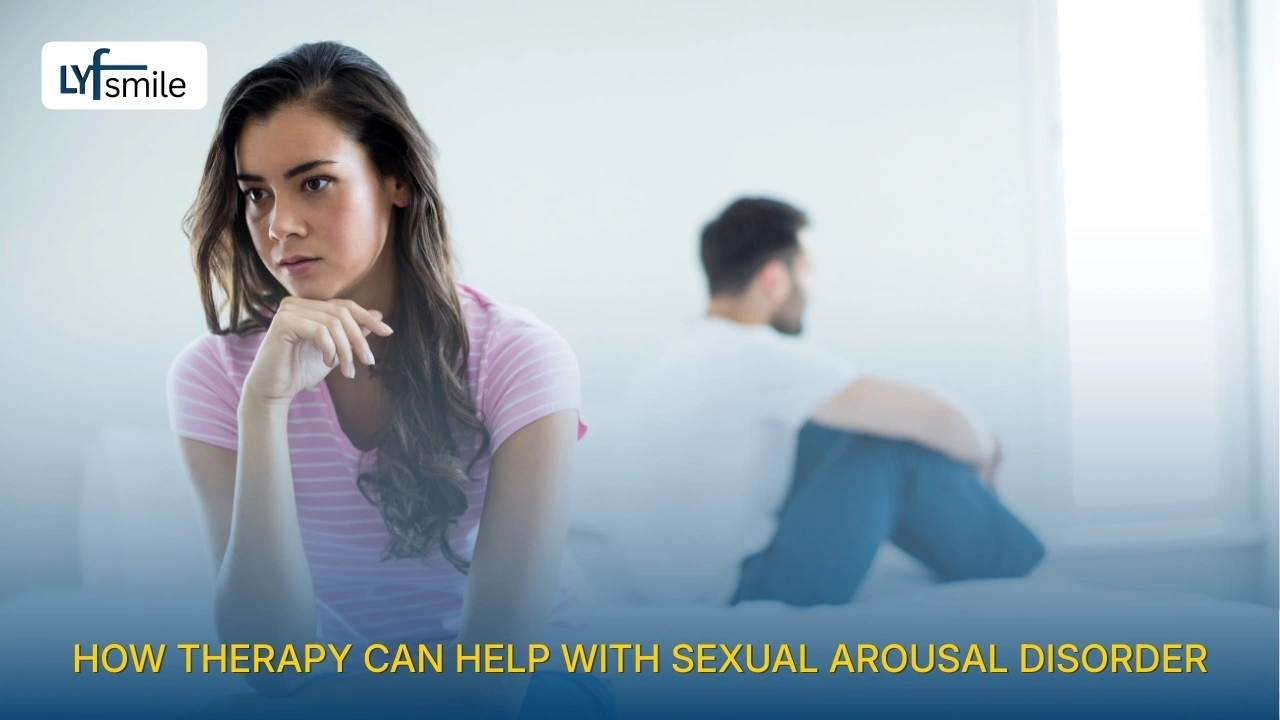 Effective Female Sexual Interest & Arousal Disorder Therapy is not one-size-fits-all. A good therapist builds a personalised plan based on your history, your needs, and your relationship context.
Here is what evidence-based treatment typically includes:
Cognitive Behavioural Therapy (CBT)
What it does: Identifies and reshapes negative thought patterns around sex, your body, and intimacy.
Many women seeking female intimacy counseling carry years of unexamined beliefs shaped by culture, family, religion, or past experiences. CBT creates a structured, safe space to gently challenge those beliefs and replace them with healthier ones.
Mindfulness-Based Therapy
What it does: Helps you reconnect with your body and physical sensations, without judgment or pressure.
This is especially effective for women dealing with anxiety and low sexual desire. Sensate focus exercises introduced gradually and at your own pace rebuild physical awareness and intimacy in a way that feels completely safe.
Psychoeducation
What it does: Gives you the knowledge to understand your own experience.
Understanding how hormones, life stages, stress-related low libido, and mental health all intersect with sexual response is genuinely empowering. Knowledge replaces shame. It helps you move forward with clarity and confidence.
Couple Therapy
What it does: Brings both partners into the healing process.
FSIAD rarely exists in isolation, it affects the relationship, not just the individual. Relationship counseling for intimacy issues and couple therapy alongside individual sessions helps both partners communicate openly, rebuild trust, and reconnect emotionally and physically — without pressure, blame, or frustration.
Psychosexual Therapy for Women
What it does: Addresses the deeper psychological roots of sexual difficulty.
Psychosexual therapy for women goes beyond surface-level symptoms. It explores past experiences, body image, self-worth, and relationship dynamics creating lasting change from the inside out. It is one of the most comprehensive tools available in women's relationship counseling for sexual health concerns.
Conclusion
Female Sexual Interest & Arousal Disorder Therapy helps women understand and overcome the emotional, psychological, and relationship factors affecting intimacy and desire. Many Sexual Problems Between Couples develop silently through stress, emotional distance, anxiety, or unresolved intimacy concerns, but with the right therapeutic guidance, healing and reconnection are possible. Through low sexual desire counseling, psychosexual therapy for women, and relationship-focused support, couples can gradually rebuild emotional intimacy, confidence, and a healthier sexual connection.
Frequently Asked Question
1. What is Female Sexual Interest & Arousal Disorder Therapy?
Female Sexual Interest & Arousal Disorder Therapy helps women address low sexual desire, difficulty with arousal, emotional disconnection, and intimacy concerns through evidence-based counseling and psychosexual support.
2. Who can benefit from Female Sexual Interest & Arousal Disorder Therapy abroad?
Women living in countries like United Arab Emirates, Canada, Australia, United Kingdom, and Singapore who are struggling with low libido, intimacy stress, or emotional disconnect can benefit from culturally sensitive online therapy.
3. Can low sexual desire counseling help with stress-related intimacy issues?
Yes. Low sexual desire counseling helps women manage stress, anxiety, emotional burnout, and relationship concerns that may affect intimacy and arousal.
4. Is online couple counselling available for expat couples?
Yes. Online couple counselling allows partners living abroad to attend private therapy sessions together from anywhere in the world.
5. What does psychosexual therapy for women focus on?
Psychosexual therapy for women focuses on emotional wellbeing, body image, intimacy concerns, relationship patterns, and psychological causes of low desire.
6. Is therapy for low libido in women confidential?
Yes. Online sessions are completely private, secure, and confidential, making therapy comfortable for women living internationally.
7. Can relationship counseling for intimacy issues improve emotional connection?
Yes. Relationship counseling for intimacy issues helps couples rebuild communication, emotional intimacy, trust, and physical connection.
8. Is women’s sexual wellness therapy available worldwide?
Yes. Women’s sexual wellness therapy is accessible online for Indians and expat women living across United States, New Zealand, Germany, Ireland, and other global locations.
9. Can therapy help women who feel emotionally disconnected during intimacy?
Yes. Female intimacy counseling helps women reconnect emotionally and physically with their partner without pressure or judgment.
10. How do I start online counseling for intimacy concerns in women?
You can begin by booking a private online consultation with a therapist experienced in counseling for intimacy concerns in women and female sexual wellness support.