

Sarvesh Kumari
Delayed Ejaculation in Indians Abroad: Psychological Causes and Therapy Support
For many people, ejaculation is simply seen as the moment when semen is released during sexual activity, but it is actually a natural process involving both the brain and the body. In men, ejaculation usually happens at the peak of sexual arousal or orgasm, when muscles contract and semen is released through the penis. It is a normal part of sexual response and is often connected with physical pleasure, emotional satisfaction, and intimacy. However, when ejaculation becomes difficult, delayed, or does not happen despite enough stimulation, it may start affecting confidence, emotional well-being, and relationships.
For Indians living abroad, Concerns such as Delayed Ejaculation Psychological Causes and female orgasmic disorder psychological show how emotional stress, anxiety, depression, performance pressure, or relationship difficulties.
Rather than being only a physical concern, it is frequently linked to psychological, emotional, and relational factors that respond well to psychosexual therapy and structured therapeutic support.
For many Indians living abroad, silence around sexual health adds confusion and emotional isolation. At Lyfsmile, this concern, often discussed under this theme is addressed through culturally sensitive couple therapy, focusing on emotional understanding, intimacy concerns, and psychological healing.
When intimacy starts feeling stressful instead of natural, it may be time to understand the emotional side behind it. The right support can help you rebuild confidence and connection. Reach out to us at 9804791047.
What is Delayed Ejaculation?
 Delayed ejaculation is a condition where ejaculation takes significantly longer than expected or does not occur during sexual activity.
Common signs Of Delayed Ejaculation
Difficulty reaching orgasm despite strong arousal
Very prolonged time to ejaculate
Feeling mentally “disconnected” during intimacy
Frustration or anxiety during sexual activity
Avoidance of sexual encounters due to performance pressure
For Indians abroad, these symptoms are often underreported due to stigma and lack of open discussion about sexual health and limited access to intimacy counseling.
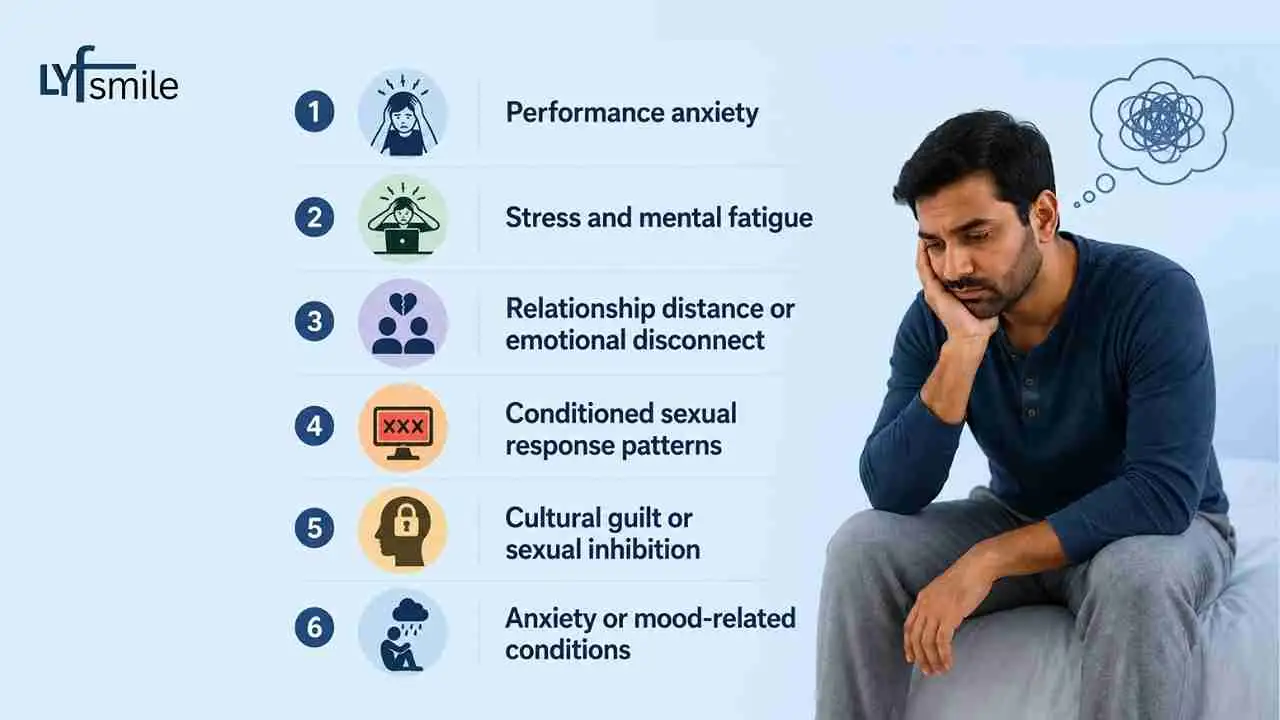
Psychological Causes of Delayed Ejaculation in Indians Abroad
In many cases, delayed ejaculation is more psychological than physical.
1. Performance anxiety: Fear of not satisfying a partner can interfere with natural sexual response and is often addressed through CBT-based sex therapy techniques.
2. Stress and mental fatigue: Work pressure, relocation stress, and emotional exhaustion can reduce sexual responsiveness.
3. Relationship distance or emotional disconnect: Long-distance relationships or unresolved emotional issues may affect intimacy and are often supported through relationship counseling.
4. Conditioned sexual response patterns: Pornography use or rigid expectations may alter natural arousal pathways.
5. Cultural guilt or sexual inhibition: Deep-rooted beliefs around sexuality can create subconscious resistance to pleasure and orgasm.
6. Anxiety or mood-related conditions: Depression and anxiety can significantly reduce sexual responsiveness and delay orgasm.
Why Indians Abroad Experience It More Intensely
Indians living abroad may face additional emotional and social factors such as:
Pressure to maintain ideal relationship expectations
Limited open conversation around sexual health
Reduced emotional support systems
Difficulty finding culturally sensitive therapists
High work stress and lifestyle imbalance
These factors can intensify emotional distress around intimacy and increase the need for sexual dysfunction therapy support.
Psychological Impact on Individuals and Relationships of Delayed Ejaculation
If not addressed, this concern can affect both personal well-being and relationships:
Reduced sexual confidence
Increased anxiety around intimacy
Relationship dissatisfaction
Emotional withdrawal from partner
Misunderstanding between partners
This is why timely counseling support becomes important for emotional stability and recovery.
Therapy Support Framework for Delayed Ejaculation in Indians Abroad
Modern therapy usually follows a structured approach that integrates emotional, cognitive, behavioral, and relational work through relationship therapy approaches for couples.
Phase 1: Understanding the Pattern
Focuses on identifying emotional triggers, anxiety patterns, and relationship dynamics to understand the root cause clearly.
Phase 2: Cognitive Restructuring
Helps reduce performance-based thinking and replaces it with healthier sexual expectations.
Phase 3: Body Reconnection Exercises
Helps shift focus from performance to sensation and rebuild natural sexual response.
Phase 4: Relationship Work
Improves communication, reduces misunderstandings, and rebuilds emotional safety between partners.
Phase 5: Stress and Anxiety Regulation
Focuses on emotional regulation, stress management, and mindfulness-based techniques to reduce sexual anxiety.
Phase 6: Relearning Intimacy Patterns
Helps individuals move from performance-driven intimacy to emotional connection, improving natural sexual response over time.
Can Medication Cause Delayed Ejaculation?
Some antidepressants, antipsychotics, blood-pressure medicines and other medications can contribute to delayed ejaculation. If symptoms started after beginning or changing medication, the person should discuss it with the prescribing clinician rather than stopping medication independently
Conclusion
Delayed ejaculation in Indians abroad is often influenced by emotional stress, performance anxiety, cultural conditioning, and relationship challenges rather than only physical factors. Because sexual health conversations remain limited in many Indian communities, many individuals silently struggle with confusion, shame, and emotional distance in relationships.
With the right psychological support, delayed ejaculation can improve over time. Psychosexual therapy, CBT-based techniques, mindfulness, and relationship counseling help reduce anxiety, rebuild intimacy, and create healthier emotional and sexual connection. At Lyfsmile, culturally sensitive therapy support focuses on helping individuals and couples navigate intimacy concerns with understanding, emotional safety, and long-term well-being.
FAQs
1. Can stress and anxiety cause delayed ejaculation?
Yes, Mental pressure during intimacy can make it difficult to stay emotionally present, which may delay orgasm or ejaculation.
2. Is delayed ejaculation common among Indians living abroad?
Many Indians abroad experience delayed ejaculation due to work stress, cultural conditioning, emotional isolation, and relationship pressure. The lack of open conversations around sexual health often makes the concern feel more confusing and emotionally overwhelming.
3. Can relationship problems affect delayed ejaculation?
Yes. Emotional distance, unresolved conflicts, poor communication, or fear of disappointing a partner can affect intimacy and sexual responsiveness. Couples therapy and intimacy counseling are often recommended to rebuild emotional connection and reduce pressure.
4. Does pornography affect delayed ejaculation?
Excessive pornography consumption or conditioned arousal patterns may sometimes affect natural sexual response during real-life intimacy. Therapy can help individuals understand these patterns and gradually rebuild healthier emotional and physical connection.
5. Can therapy really help with delayed ejaculation?
Psychosexual therapy, CBT-based techniques, mindfulness practices, and relationship counseling can help address anxiety, emotional blocks, intimacy fears, and performance pressure. Many individuals experience improvement when psychological and relational factors are properly understood and treated.