Lakshika Kaushik
Night-Time Anxiety: Why It Happens and How It Affects You
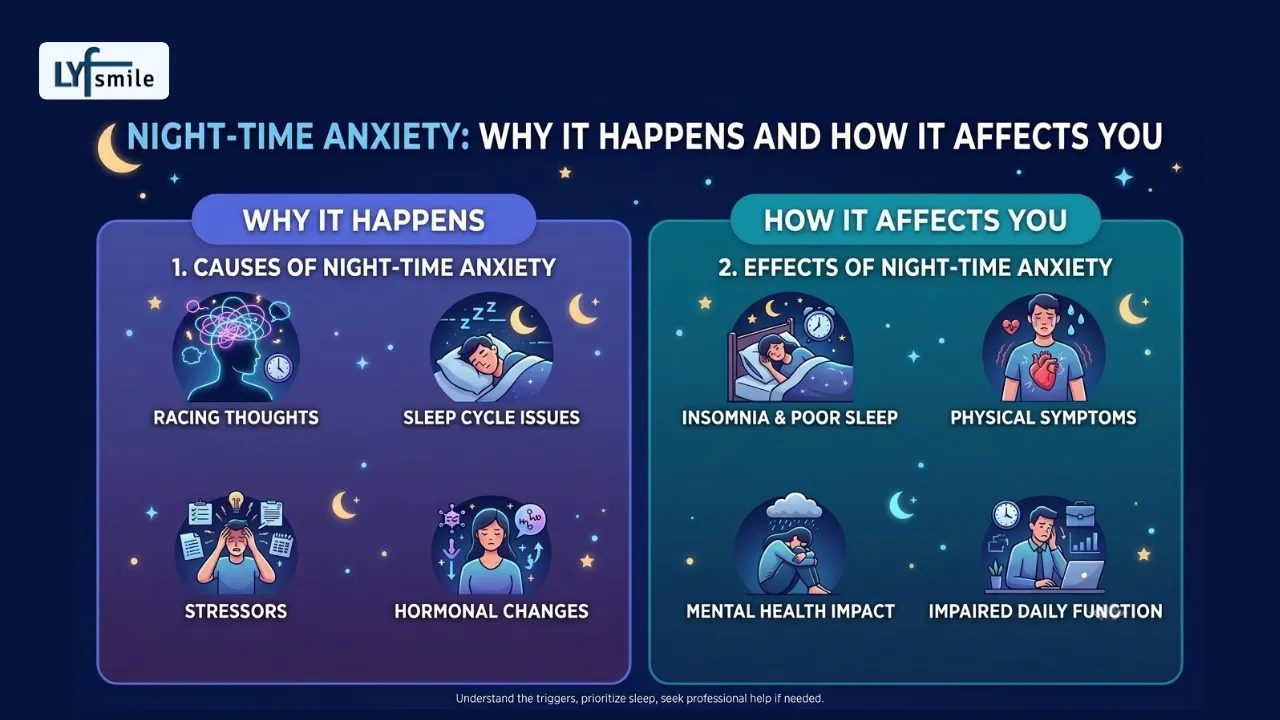
Night-time anxiety is a feeling of worry, fear or restlessness that makes it difficult to relax or fall asleep. Stress, unresolved problems, racing thoughts and worries about the next day can contribute to anxiety before sleeping. Some people also experience physical symptoms such as a pounding heart, muscle tension or breathlessness. Understanding the causes and effects of this anxiety can help you find practical ways to manage it.
Why Does Anxiety Feel Stronger After Dark?
Anxiety can feel more intense at night because daily activities and distractions begin to fade. Without work, conversations or other tasks occupying your attention, worries that were easier to ignore during the day may become more noticeable. However, anxiety does not necessarily worsen at night for everyone.
Several factors may contribute to the experience:
Fewer distractions: Quiet surroundings can leave more room for repetitive thoughts and worries.
Unresolved concerns: Difficult conversations, personal problems or unfinished tasks may come back to mind when you try to rest.
Worry about tomorrow: Anticipating deadlines, responsibilities or challenging situations can increase tension before sleep.
Pressure to fall asleep: Watching the clock and worrying about getting enough rest can make relaxation more difficult.
Emotional overload: Feelings that were pushed aside during a busy day may become more noticeable when you finally slow down.
These circumstances can contribute to overthinking, anxiety before sleeping and emotional distress. When you begin worrying about whether you will be able to relax, that concern can create additional tension and make it harder to settle down.
What Triggers Restlessness, Racing Thoughts and Sleeplessness?
Anxious Thoughts may be associated with ongoing stress, uncertainty, relationship difficulties, past experiences or worries about work, family and the future. Caffeine, certain medications and physical health conditions may also contribute to these difficulties.
Common Night-Time Anxiety Symptoms include persistent worry, racing thoughts, restlessness, difficulty concentrating and trouble relaxing. Depending on the underlying cause, these experiences may contribute to different problems.
Overthinking
Overthinking involves repeatedly analysing situations, revisiting past conversations or imagining negative outcomes. You might question your decisions, worry about what someone meant or feel unable to stop thinking about tomorrow's responsibilities. Overthinking at Night can make it difficult to mentally switch off when you want to sleep.
Panic Attacks
Panic attacks involve sudden episodes of intense fear or discomfort. Symptoms may include a pounding heart, sweating, trembling, dizziness or breathlessness. Night-Time Panic Attacks can feel particularly frightening when they interrupt sleep or happen unexpectedly. However, similar physical symptoms can have medical causes, so new or concerning symptoms should not automatically be attributed to anxiety.
Insomnia
Insomnia involves persistent difficulty falling asleep, staying asleep or returning to sleep after waking. Stress, irregular routines, environmental factors and health conditions can all contribute. Persistent worry can lead to anxiety-induced sleep problems, making it difficult to fall asleep or stay asleep. When anxiety and sleep difficulties occur together, they may create a cycle in which worrying interferes with rest and tiredness makes everyday stress harder to manage.
Emotional Distress
Emotional distress may involve sadness, loneliness, frustration, helplessness or feeling overwhelmed. Conflict, family pressure, grief or unresolved experiences can contribute to these feelings. Such concerns may become more noticeable during quiet hours, contributing to emotional distress at night.
These experiences can overlap, but they are not interchangeable, and one does not automatically mean another is present. If symptoms persist or interfere with daily functioning, a qualified healthcare or mental health professional can help you understand what you are experiencing.
How Anxious Thoughts Affect Your Mental and Physical Health
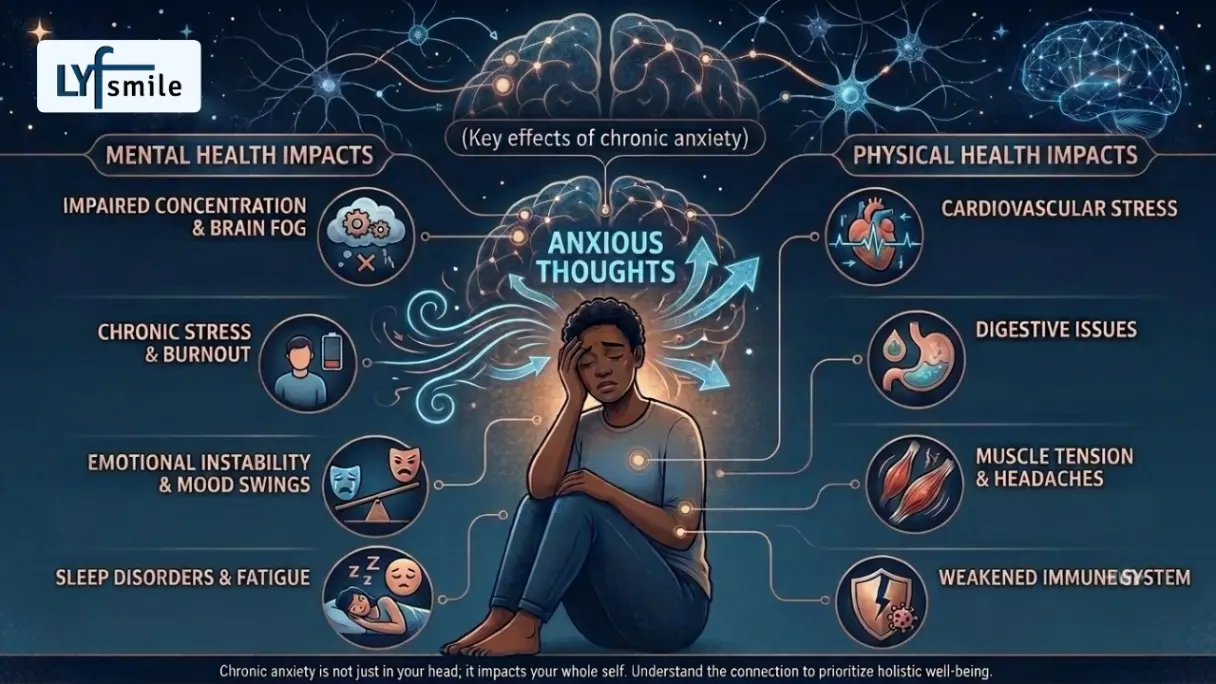 Anxiety can affect both your thoughts and your body, especially when worries continue for long periods or interfere with sleep.
Mental and emotional effects:
Difficulty concentrating: Worrying thoughts can make it harder to focus on work, studies or everyday tasks.
Irritability: You may feel frustrated, emotionally sensitive or overwhelmed by small problems.
Mental exhaustion: Constantly thinking about problems can leave you feeling drained, even when you have not done much physically.
Difficulty managing emotions: You may struggle to understand or express what you are feeling, particularly during stressful situations.
Physical effects:
Muscle tension: Anxiety can cause tightness in the shoulders, neck or jaw.
Headaches and fatigue: Ongoing stress and disrupted sleep may contribute to headaches and low energy.
Racing heartbeat: Anxiety can make your heart beat faster, sometimes accompanied by sweating or trembling.
Sleep disturbances: You may struggle to fall asleep, stay asleep or feel rested when you wake up.
Sometimes, you may experience feelings that are difficult to explain or express to others. You might keep your worries to yourself because you cannot find the right words or are unsure how to communicate what you are going through. The Unspoken Feelings can be a starting point for reflecting on emotions that often remain unexpressed.
At other times, you may not fully understand why you feel anxious, restless or emotionally overwhelmed. The Mind Decoder can serve as a starting point for exploring your thoughts and experiences and developing greater self-awareness.
If these feelings persist or begin affecting your sleep and daily life, Lyfsmile offers online and offline counselling to help you explore possible anxiety triggers, understand your emotional responses and develop practical coping strategies with professional guidance.
Practical Ways to Relax Your Mind Before Bedtime
Managing anxiety does not always require major lifestyle changes. Small, consistent habits can help you establish a calmer bedtime routine and respond to worries more effectively.
1. Write your thoughts in a diary. Spend a few minutes writing down your worries, emotions or anything that is on your mind. Putting your thoughts into words may help you recognise recurring concerns and feel less mentally overwhelmed before sleep.
2. Set aside time for worries. Think about your concerns earlier in the evening rather than trying to solve everything in bed. Separate what you can act on from what is outside your control, and choose one manageable step for the following day.
3. Follow a consistent sleep routine. Try to go to bed and wake up at similar times each day. A predictable routine can help your body prepare for rest.
4. Practice gentle breathing. Breathe slowly and comfortably, allowing your exhalation to be slightly longer than your inhalation if that feels natural. Avoid forcing deep breaths if they make you uncomfortable.
5. Try light stretching or gentle movement. A few minutes of comfortable stretching, gentle yoga or slow walking in the evening may help release muscle tension and help you unwind. Avoid intense exercise close to bedtime if it makes you feel more alert.
6. Reduce potential sleep disruptors. Limit caffeine later in the day, reduce stimulating screen use before bedtime and make your sleeping environment comfortable and quiet.
7. Avoid forcing yourself to sleep. If you remain awake and increasingly frustrated, get out of bed for a short while and do something quiet in dim lighting. Return when you feel sleepy rather than repeatedly checking the clock.
8. Seek professional guidance when needed. If anxiety repeatedly disrupts your sleep, affects your daily activities or feels difficult to manage alone, professional support can help you identify triggers and develop appropriate coping strategies. Cognitive behavioural therapy for insomnia (CBT-I) is an evidence-based treatment for persistent insomnia.
Finding Support for Night-Time Anxiety
An Anxiety Therapist can help you understand recurring worries and develop healthier ways to respond to stress. Therapy for Anxiety at Night may focus on identifying triggers, managing emotions and addressing patterns that interfere with sleep.
Working with an Online therapist for Anxiety can help you manage recurring worries from the comfort of your home, with online counselling available across India. If you prefer face-to-face sessions, Lyfsmile also has counselling centres in Dwarka, Gurgaon and Panipat. A Therapist for Overthinking can help you recognise repetitive thought patterns and develop healthier ways to manage them.
Lyfsmile offers affordable counselling at ₹30 per minute, along with a free 15-minute consultation to discuss your concerns and explore suitable support options. You can book your consultation to take the first step towards managing anxiety with professional guidance.
Anxiety can be distressing, but understanding what triggers it is an important first step. If you experience new or severe chest pain, significant breathing difficulty or fainting, seek urgent medical assessment rather than assuming the symptoms are caused by anxiety.
Frequently Asked Questions
1. Can anxiety occur without an obvious reason?
Yes. Stress, past experiences, changes in routine or underlying anxiety conditions can cause anxious feelings even when there is no clear trigger.
2. When should anxiety become a concern?
Occasional anxiety is a normal stress response. However, if it becomes frequent, intense or starts interfering with sleep and daily activities, consider consulting a qualified mental health professional.
3. Why do worries feel stronger when I go to bed?
Daytime activities can keep your attention occupied. When your surroundings become quieter, unresolved concerns and repetitive thoughts may become more noticeable.
4. Can poor sleep affect my mood and relationships?
Yes. Inadequate sleep can contribute to irritability, reduced concentration and low energy, which may affect communication, relationships and everyday responsibilities.
5. What kind of therapist can help with anxiety and overthinking?
A qualified mental health professional experienced in anxiety management can help you identify triggers, understand recurring thought patterns and develop practical coping strategies.
6. What should I discuss during my first therapy session?
Explain your main concerns, when they occur, how they affect your sleep and daily life, and any patterns you have noticed. You can also discuss your goals and ask about suitable treatment options.