

Lakshika Kaushik
Divorce Counseling for Women: Rebuild Your Life with the Right Support
Divorce can change many parts of a woman’s life at the same time. It may affect her relationship, family life, parenting responsibilities, daily routine, personal identity, and plans for the future. The experience can also look very different depending on whether she is considering divorce, going through the process, or adjusting after separation.
Divorce counseling for women provides professional psychological support through these different stages. It offers a confidential space to understand difficult experiences, work through personal concerns, and make healthier choices without having to handle every part of the transition alone.
Divorce Can Bring Difficult Decisions at Every Stage
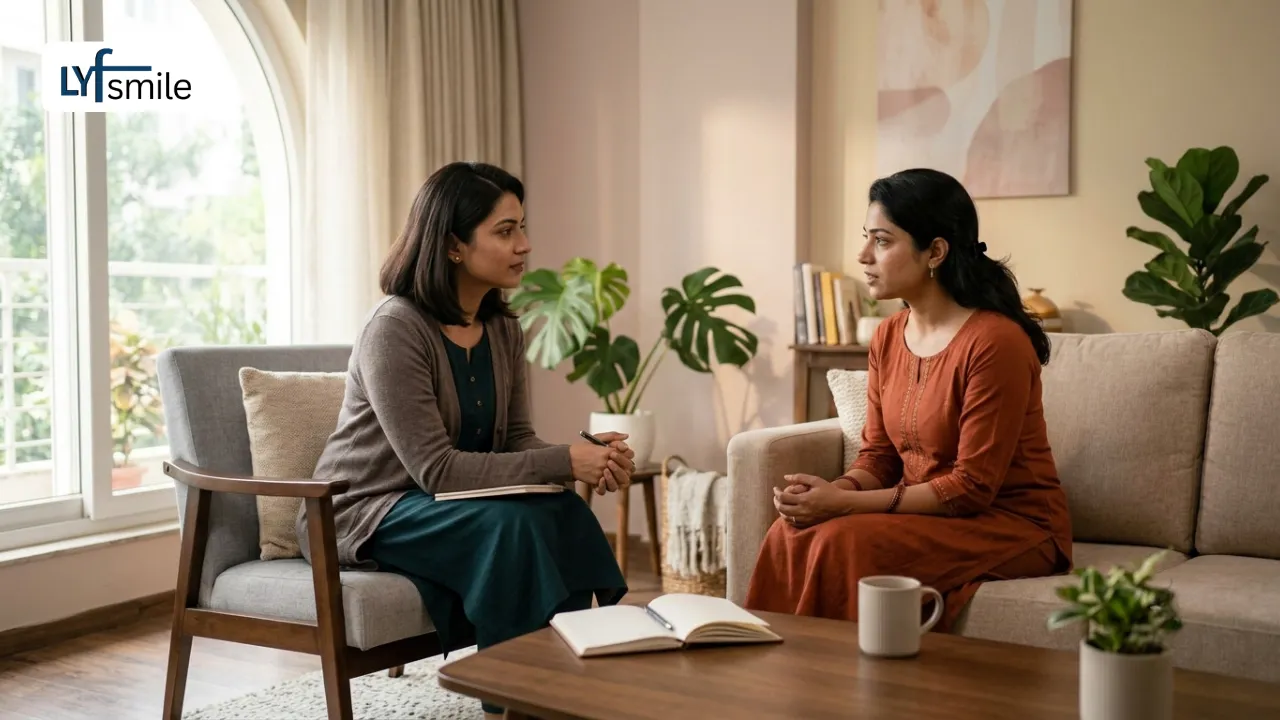 Divorce is not one single event. The emotional and practical experience can change from the time a woman first considers separation to the period after the divorce is finalized.
Before Divorce: Understanding What You Want
Before making a decision about divorce, a woman may have questions about her marriage, her future, and what she wants from the relationship.
She may be trying to:
Understand what she is feeling about the marriage
Think through separation without outside pressure
Recognize personal boundaries and priorities
Make sense of repeated relationship concerns
Consider how different choices may affect her future
Prepare for difficult conversations with her spouse or family
Counseling at this stage does not mean that a woman has to choose divorce or remain in the marriage. It can simply provide a private space to explore her thoughts and make decisions based on her own circumstances.
During Divorce: Managing an Uncertain Period
Once separation or divorce proceedings begin, several concerns may exist at the same time. Communication with a spouse may become difficult, while conversations about children, family responsibilities, living arrangements, or other changes continue.
During this stage, separation counseling can provide a private space to manage emotional pressure, changing responsibilities, and difficult communication while the situation is still unfolding.
Counseling may focus on:
Handling strong emotional reactions
Communicating more calmly during difficult situations
Setting appropriate boundaries
Managing stress during ongoing changes
Coping with uncertainty
Maintaining emotional stability while dealing with everyday responsibilities
The purpose is not to make the divorce process easier in every practical sense, but to help a woman take care of her psychological wellbeing while she moves through it.
After Divorce: Adjusting to Life After Separation
The end of legal proceedings does not always mean that adjustment is complete. A woman may now have a different routine, new responsibilities, or a different relationship with family and social circles.
This stage may involve:
Adjusting to life without the marriage
Managing new parenting responsibilities
Becoming more independent in everyday decisions
Re-establishing personal routines
Thinking about future goals
Understanding what she wants from future relationships
Post-divorce counseling can provide space to work through these changes at a pace that feels appropriate for the individual.
Your Life Can Change Long After Separation Is Finalized
Life after divorce can involve changes that are not always visible to other people. A woman may appear to have moved forward while still trying to understand what this new stage means for her personally.
One important area can be identity. After spending years in a marriage, a woman may need time to reconnect with interests, values, goals, and parts of herself that were placed in the background.
Another area is independence. Managing responsibilities differently can require new confidence and decision-making skills. Counseling can provide a space to examine self-doubt and develop a stronger understanding of personal capabilities.
Relationships may also change. Friendships, family connections, and social interactions can feel different after divorce. Some women may need to establish new boundaries or decide which relationships feel healthy for their current stage of life.
Future relationships can bring another set of questions. A woman may want to understand what she has learned from her previous marriage, what she now expects from a relationship, and which boundaries are important to her.
Divorce does not define the rest of a woman's life. With time and the right support, the focus can gradually shift toward personal goals, meaningful relationships, independence, and the kind of future she wants for herself.
Counseling Can Help You Navigate the Transition With More Clarity
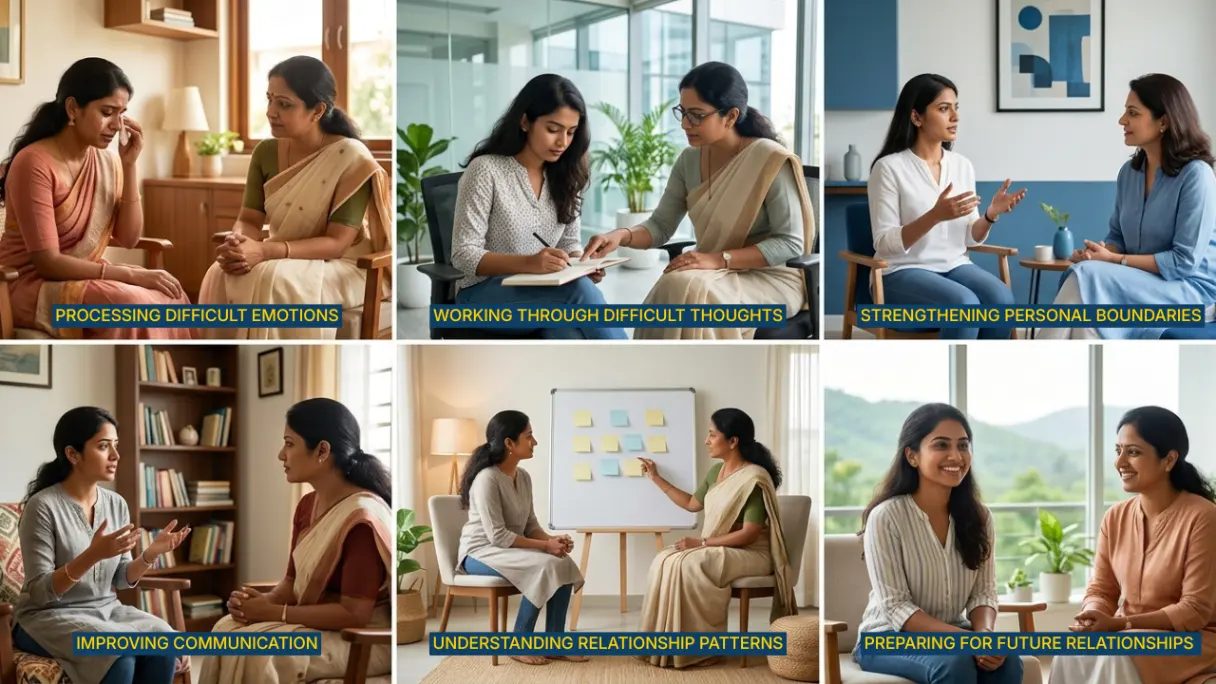 Divorce counseling is not about telling a woman what decision to make or how quickly she should move forward. The work is shaped around her individual circumstances and the areas she wants to address.
Depending on her needs, counseling may involve:
Processing difficult emotions:
A woman may experience grief, anger, guilt, sadness, anxiety, or mixed emotions during or after divorce. Counseling can provide a structured space to understand these feelings and develop healthier ways to respond to them.
Working through difficult thoughts:
Divorce can sometimes lead to repeated self-questioning or negative thinking. Therapy can help identify unhelpful thought patterns and develop more balanced ways of looking at difficult situations.
Strengthening personal boundaries:
Healthy boundaries can become especially important after separation. Counseling can help women understand their limits and communicate them clearly in personal and family relationships.
Improving communication:
Where contact with an ex-spouse or family members continues, communication can remain challenging. Counseling can help develop more constructive ways to express needs and respond during difficult conversations.
Understanding relationship patterns:
Looking at past relationship patterns can increase self-awareness. This may help a woman understand how communication, conflict, expectations, or boundaries affected her previous relationship.
Preparing for future relationships:
Counseling can help women develop greater awareness of what they want from future relationships and how they can approach trust, communication, and boundaries differently.
The focus can change as the woman's circumstances change. Counseling is therefore not a fixed process that looks the same for everyone. For women who need divorce guidance while making sense of personal choices or the next stage of life, professional counseling can provide a neutral space to think things through.
Choosing the Right Counseling Support for Your Situation
The quality of the counseling experience depends not only on the topic being addressed but also on whether the professional support feels appropriate for the individual.
Before choosing divorce counseling, women may want to consider:
Professional qualifications: Look for a trained mental-health professional who is appropriate for your concerns.
Confidentiality: Personal matters should be discussed in a professional and private setting.
Therapist comfort: Feeling comfortable communicating openly can make the counseling process more productive.
Individual focus: Your circumstances should guide the sessions rather than following a fixed formula.
Accessibility: Online sessions can be useful if travel, work, parenting, or location makes regular in-person appointments difficult.
Affordability: Counseling should be financially realistic enough to allow consistency when ongoing support is needed.
At Lyfsmile, women can access individual counseling for divorce, separation, relationship concerns, emotional wellbeing, and major life transitions. Online sessions are available across India, while in-person services are available at selected Lyfsmile locations, including Gurgaon and Panipat.
For women who cannot regularly attend in-person sessions, online divorce counseling can make professional support easier to access from home.
Choosing the right divorce counselor can also make the counseling experience more comfortable. Look for a professional who has appropriate qualifications, understands the concerns you want to discuss, and gives you space to participate at your own pace.
Lyfsmile also offers a free 15-minute consultation, giving you an opportunity to discuss your concerns and understand the counseling process before deciding whether to continue.
Ongoing sessions are available at ₹30 per minute, making professional psychological support more accessible for women who may need counseling during different stages of separation and adjustment.
Frequently Asked Questions
Can I take divorce counseling before deciding to separate?
Yes. Counseling can be useful even when you are still trying to understand what you want. It can provide a private space to explore your thoughts, relationship concerns, boundaries, and possible choices without deciding for you.
Is counseling useful if my divorce was not my choice?
Yes. A counselor can provide professional space to process the emotional impact of a separation that you did not expect or want and help you adjust to the changes that follow.
Can I continue counseling while my divorce case is going on?
Yes. Counseling can continue during legal proceedings. A counselor can address emotional wellbeing and coping, while legal questions should be discussed with a qualified lawyer.
Do I need my former spouse to attend counseling?
No. Divorce counseling can be taken individually. You can work on your own emotional wellbeing, boundaries, communication, parenting concerns, and adjustment without your former spouse attending.
Can counseling help with co-parenting after divorce?
Yes. Counseling can help you work on communication, emotional responses, boundaries, and ways of managing difficult parenting situations. The specific approach depends on your circumstances and the needs of your family.
Is online divorce counseling available for women living outside India?
Online counseling may be available to women living outside India, depending on the therapist's qualifications, location, and applicable professional and legal requirements. It is important to confirm whether the service can be provided in your country or jurisdiction.
Divorce may change the direction of your life, but it does not have to define what comes next. If you feel that professional guidance could make this transition easier to navigate, you can start with Lyfsmile's free 15-minute consultation.
If You Are Experiencing Abuse or Feel Unsafe During Separation?
If you are facing abuse or feel unsafe during separation, your safety should come first. You do not have to handle the situation alone or wait until it becomes more serious.
If you are in India, you can contact the Women Helpline at 181 for assistance and information. If there is an immediate threat to your safety, you can also call 112 for emergency help.
Counseling can provide emotional support and help you cope with what you are experiencing, but situations involving immediate danger may also require emergency, legal, or other safety support. If possible, move to a safer place and reach out to someone you trust.