



Sarvesh Kumari
Best Couples Counseling for In-Law Problems in Indian Marriages
In many Indian marriages, problems with in-laws do not start as major conflicts. They often begin with small comments, hurtful words, or disrespect that is quietly ignored in the name of family values and adjustment. Over time, these moments build emotional stress, create distance between partners, and place one spouse in the painful position of choosing between their marriage and their family.
For many couples, especially in Indian households where elders hold strong influence, standing up to in-laws can feel uncomfortable or even disrespectful. A partner may stay silent to avoid conflict, while the other feels unsupported, hurt, or alone. When boundaries are not clearly set, the emotional impact can slowly damage trust, communication, and marital peace.
Couples counseling for in-law problems helps partners face these challenges together. It creates a safe space where both spouses can express their feelings, learn how to set healthy boundaries with in-laws, and support each other without guilt or fear. With the right guidance, couples can protect their marriage while still handling family relationships with respect and clarity.
Common In-Law Problems Faced by Married Couples
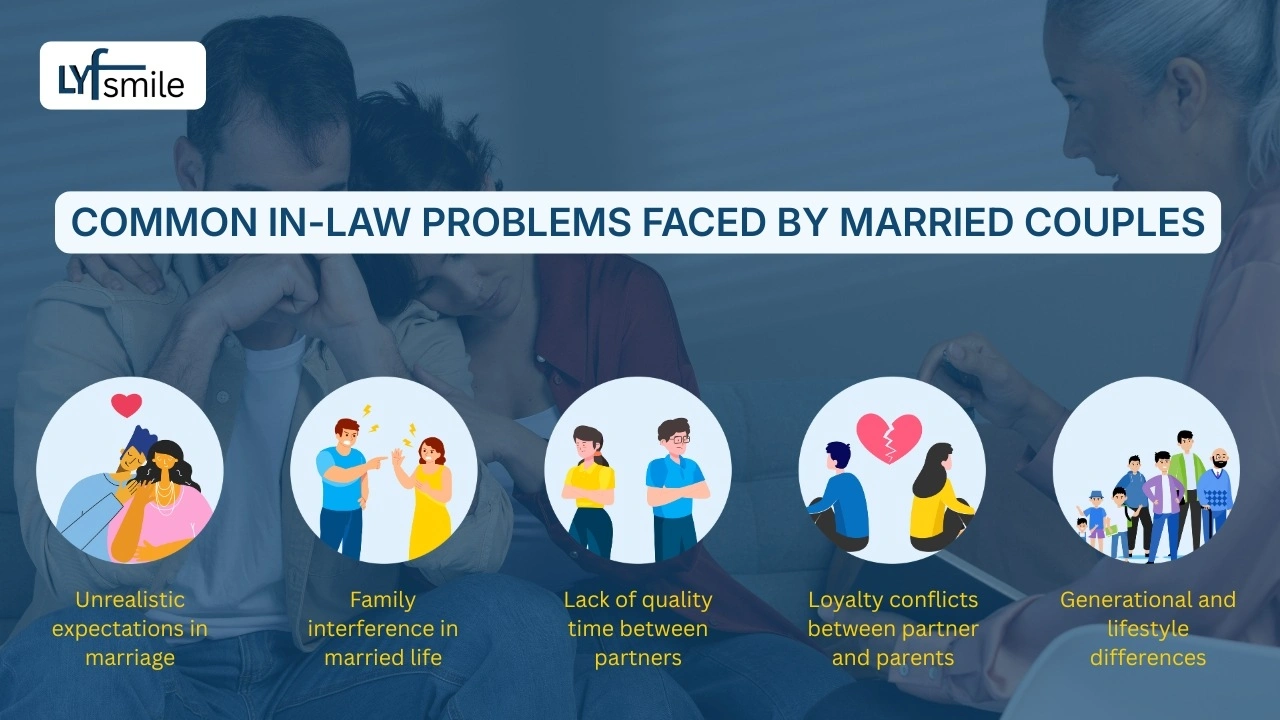 Many married couples face in-law problems not because of a lack of love, but because of daily pressure, unmet expectations, and limited personal space. What starts as “adjustment” slowly turns into emotional stress, especially when one partner feels they cannot be themselves inside their own home.
Some of the most common in-law issues faced by married couples include
Unrealistic expectations in marriage: Being expected to follow strict rules around clothing, routines, rituals, or household roles, even after a long workday, can feel exhausting and unfair.
Family interference in married life: In-laws often get involved in personal decisions like finances, lifestyle choices, or how a couple should spend their time together, leaving little room for privacy.
Lack of quality time between partners: Long working hours already reduce couple time. When in-laws are around, the time to talk, bond, and build trust becomes even more limited.
Loyalty conflicts between partner and parents: One spouse may feel torn between supporting their partner and not upsetting their parents, which can lead to silence, guilt, and unresolved tension.
Generational and lifestyle differences: Differences in thinking, use of technology, money habits, and personal freedom often create misunderstandings that grow into repeated conflicts.
When these issues continue without clear boundaries, they slowly affect emotional connection and marital peace. Couples counseling for in-law problems helps partners understand each other’s struggles, address family interference, and work through therapy for unrealistic expectations in marriage. With the right support, couples can protect their relationship while maintaining respectful family ties.
Strong marriages are nurtured, not strained by family tensions.
With understanding and support, you can face challenges and grow stronger together with a 15-minute free session.
Signs That In-Law Conflicts Are Damaging Your Marriage!
Occasional disagreements with family are a normal part of married life, but when tension with in-laws becomes a constant presence, it can slowly chip away at the emotional bond between partners. Left unaddressed, these issues often turn into resentment, communication breakdowns, and ongoing stress within the marriage. This is where Couples Counselling for In-Law Problems in India can make a real difference, helping couples work through these challenges before they cause lasting damage to the relationship.
Here are some warning signs worth paying attention to:
You and your spouse keep getting into arguments about parents or extended family members.
One partner often feels caught in the middle, like they have to pick between their spouse and their own family.
In-laws frequently end up influencing decisions about money, parenting, or where you live.
Family gatherings have become something you dread because they almost always lead to conflict.
Conversations between you and your partner have grown more defensive or distant over time.
Anger, guilt, or resentment are starting to seep into your everyday relationship.
The same family-related disagreements keep coming back, never really getting resolved.
How Couples Counseling Helps Resolve In-Law Conflicts in Marriages
In-law conflicts can slowly create stress, confusion, and emotional distance in a marriage. When family interference, unclear boundaries, and loyalty conflicts are not handled properly, couples may start blaming each other instead of solving the real problem. This is where professional support becomes important.
Couples counseling for in-law problems offers practical solutions such as:
Helping couples communicate clearly and calmly
Counseling teaches partners how to express their feelings without anger or fear. Instead of silent suffering or arguments, couples learn respectful ways to talk about in-law issues.Setting healthy boundaries with in-laws
Couples are guided on how to decide what is acceptable and what is not and how to communicate these boundaries politely to family members without creating unnecessary conflict.Reducing family interference in married life
Therapy helps couples limit outside involvement in personal matters like finances, routines, and relationship decisions, allowing the marriage to grow independently.Managing loyalty conflicts between spouse and parents
Counseling supports partners who feel torn between their parents and spouse, helping them understand that choosing the marriage does not mean abandoning family.Building unity and mutual support between partners
Couples learn how to stand together as a team, make joint decisions, and support each other emotionally when dealing with in-law pressure.
With guidance from professionals at Lyfsmile, couples receive a safe and supportive space to work through in-law challenges. Counseling focuses on practical solutions that protect emotional well-being, strengthen trust, and help couples handle family relationships in a healthy and balanced way.
Types of counselling that can save your relationship!
The good news is that several forms of therapy can help couples deal with family pressure and build a healthier relationship. Depending on what you're going through, a mental health professional might suggest one or more of the approaches below.
Relationship Counselling
Relationship counselling works on improving communication, sorting out conflicts that keep coming back, and helping couples function as a team. It can be particularly useful when issues with in-laws are causing distance or constant arguments between partners.
Family Counselling
In certain cases, family counselling can help, especially when unhealthy family patterns or boundary problems involve more than just the couple. Family therapy gives everyone a chance to understand their role, talk to each other with more respect, and ease ongoing tension
Marriage Counselling
Marriage counselling gives couples a safe space to talk about difficult topics without pointing fingers. Through Couples Counselling for In-Law Problems in India, partners can pick up practical ways to set boundaries with relatives while also strengthening their bond.
Online Relationship Counselling
For couples with busy schedules or those living apart, online relationship counselling makes it easier to get professional help. Virtual sessions can support couples in handling in-law conflicts, improving how they communicate, and finding better ways to deal with family expectations.
Couples Therapy for Family Issues
Some therapists focus specifically on couples therapy for family issues, things like in-laws, joint family setups, differences in parenting, and cultural expectations
With the right support, couples can handle family conflicts better and build a relationship that's stronger and more supportive over time.
Conclusion
In-law problems are a common part of many marriages, but they do not have to damage your relationship. When family interference, unclear boundaries, and loyalty conflicts are left unaddressed, they can slowly create emotional distance between partners. What matters most is how couples face these challenges together.
Couples counseling for in-law problems helps partners communicate openly, set healthy boundaries, and support each other without guilt or fear. With the right guidance, couples can learn to protect their marriage while still maintaining respectful relationships with their families.
Every marriage deserves peace, understanding, and emotional safety. With support from Lyfsmile, couples can find practical solutions to in-law conflicts and move forward with greater trust, balance, and connection, building a stronger marriage that feels like home.
Frequently Asked Questions (FAQs)
1. How can you stop a mother-in-law from interfering in your marriage?
The key is setting respectful but firm boundaries as a couple. Communicate clearly what decisions belong to you and your spouse, and present a united front. Consistency and calm communication help reduce interference over time.
2. What are common examples of a mother-in-law overstepping boundaries?
Examples include interfering in daily decisions, criticizing parenting or household choices, controlling finances, creating conflict between spouses, or expecting constant involvement in the couple’s private matters.
3. What boundaries should exist with parents and in-laws after marriage?
Healthy boundaries include privacy in marital decisions, limited involvement in conflicts, respect for the couple’s routines, and freedom to make independent choices. Emotional and financial boundaries are especially important.
4. How can someone set boundaries with a controlling husband or in-laws without hurting feelings?
Use calm, respectful language and focus on feelings rather than blame. Express needs clearly, acknowledge their concern, and reinforce limits gently. Boundaries can be firm without being disrespectful.
5. How do couples overcome family interference in their marriage?
Couples overcome interference by prioritizing their relationship, supporting each other openly, and addressing issues together rather than individually. Marriage counseling can help couples develop strategies to manage external pressure.
6. How do cultural expectations in India contribute to family interference in marriage?
In India, joint family systems and traditional roles often blur boundaries between couples and parents. While these expectations are deeply rooted, they can be gradually changed through communication, awareness, and mutual respect.
7. Can cultural patterns around in-law interference be changed over time?
Yes, change is possible. Younger couples are increasingly redefining boundaries while still respecting elders. Small, consistent changes and open conversations help shift long-standing expectations.
8. How does family interference affect trust between spouses?
When one partner sides with family over the spouse, it can damage trust and emotional safety. Rebuilding trust requires reassurance, clear prioritization of the marriage, and sometimes professional support.
9. How can trust be rebuilt after a marriage has been damaged by family interference?
Rebuilding trust involves honest conversations, accountability, emotional reassurance, and setting stronger boundaries moving forward. Counseling can help couples heal resentment and rebuild confidence in each other.
10. When should couples seek marriage counseling for in-law or family-related issues?
Couples should seek counseling when family interference causes frequent conflict, emotional distance, or loss of trust. Early intervention can prevent long-term damage and help couples regain control of their relationship.