

Lakshika Kaushik
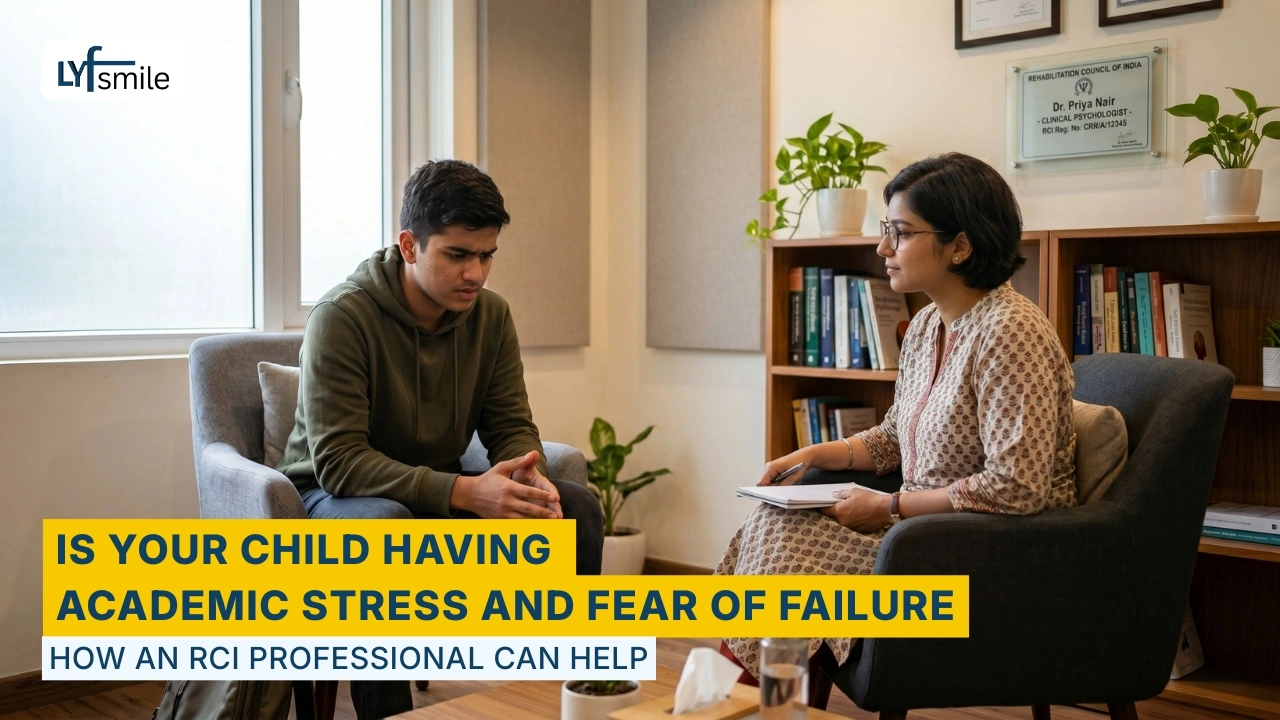
Is Your Child Having Academic Stress and Fear of Failure? How an RCI Professional Can Help
Your child is trying. But something has quietly shifted and you can feel it. They used to ask questions. Now they go quiet. They used to try. Now they say "I already know I'll get it wrong" and don't try at all.
As a parent, you feel it. That invisible weight your child is carrying into every exam, every class, every time someone asks, "So how did it go?" You're not imagining it. And you're not overreacting.
Child academic pressure today is real, and in cities like Gurgaon, where expectations are high and comparison is constant, academic stress in children can build faster than anyone notices.
What starts as wanting to do well slowly becomes fear of failure in children, and that fear, if left unaddressed, doesn't just affect marks. It affects confidence, identity, and the way your child sees what they are capable of. Academic pressure can affect much more than school performance. Early Counseling for School Stress, Child Counseling, and Child Mental Health Counseling help children manage fear of failure, improve emotional resilience, and develop healthier attitudes towards learning and exams.
What is Academic Stress and Fear of Failure and Why It's More Than Just Study Pressure
This is one of the most common things parents say and it points to something deeper than just study stress in children.
Academic stress in children happens when school pressure starts affecting their emotions, focus, and behaviour. It is not about how much they study, it is about how studying feels to them.
Fear of failure in children develops when a child becomes more focused on avoiding mistakes than on learning, which is one of the common causes behind academic failure and anxiety in children. Instead of thinking “let me try”, they think “what if I get it wrong?” That one shift: from curiosity to fear, changes everything.
Why This Is More Than Just Pressure
It affects how your child feels about themselves, not just about studies
It creates child performance anxiety that shows up even when your child is well-prepared
It leads to child procrastinating studies, avoidance, and emotional shutdown
In severe cases, this intense academic fear in children is known as atychiphobia, where even the thought of making a mistake triggers anxiety and avoidance
It quietly becomes child anxiety and constant worry that follows them everywhere, not just at the study table
Child academic pressure does not stay in the classroom. It comes home. It sits at dinner. It keeps them awake at night. And the earlier it is understood, the easier it is to help. Children who constantly worry about exams or mistakes may also benefit from Child Anxiety Therapy and Child Counseling for Anxiety, helping them manage anxious thoughts before they begin affecting confidence and daily life.
Signs Your Child Is Struggling: What It Looks Like in Their Daily Behaviour
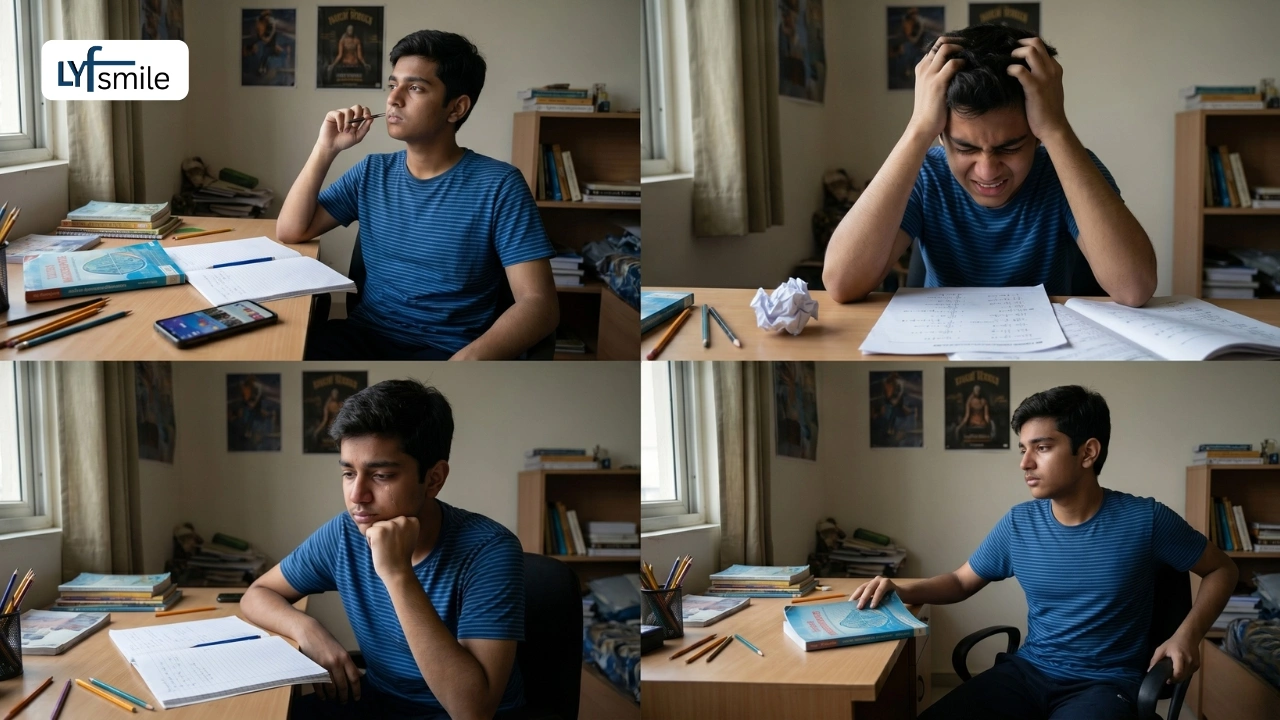 Fear of failure doesn't always come out in words. Most children don't say "I'm afraid of failing", they don't even know that's what it is.
Instead, it shows up in small, everyday changes that are easy to explain away, until the pattern becomes impossible to ignore.
In Studies
Lack of interest in studies - even in subjects your child once enjoyed
Blank during exams - prepared but freezing when it matters
Not attempting questions in exam - leaving answers blank out of fear of being wrong
Frequent attention and focus problems while studying or completing tasks
Crying due to studies - emotional reactions that feel bigger than the situation
Making excuses to avoid homework - headaches, stomach aches, sudden tiredness
In Emotions
Anxiety before exams - panic, restlessness, inability to sleep
Negative self talk - "I'm stupid," "I'll never get it right," "what's the point"
Feeling worthless after failure - one bad mark feels like the end of the world
Low self esteem due to studies - confidence quietly eroding with every mistake
Hopeless about studies - giving up before trying, refusing to attempt
At Home
Stressed about marks - constantly worrying about results even after exams
Not sharing feelings - shutting down when you ask what's wrong
Sudden mood swings in teens - irritable, withdrawn, or emotionally unpredictable
Stomach ache before exams - physical symptoms with no medical cause
Sleep problems in adolescents - unable to rest because the mind won't stop
Fatigue due to academic pressure - exhausted before the day even begins
These are not behaviour problems. These are distress signals - your child's way of showing you something they cannot yet say out loud.
Why Your Child Keeps Avoiding Studies: Procrastination & Overthinking
This is parental overthinking and worry at its most common and most painful. Because from the outside, it looks like laziness. But from the inside, your child is paralysed. When academic anxiety in children builds, the brain begins to associate studying with threat. And when something feels threatening, the natural response is to avoid it.
What Avoidance Actually Looks Like
Procrastinating studies - delaying homework until it feels impossible to start
Avoiding studies - finding any reason not to sit down and begin
Overthinking about results - spending more time worrying than actually studying
Giving up on tasks - starting and stopping, never finishing
Skipping school due to stress - school stress in children turning into fear, phobias, and school avoidance
Getting angry during studies - frustration exploding when the pressure gets too much
Losing interest in studies - what started as stress has now become complete disconnection
Why Telling Them to "Just Do It" Doesn't Work
Because exam stress in children is not a motivation problem, it is a fear problem. A child in the grip of academic anxiety in children is not choosing to avoid it. They are coping the only way they know how.
Pushing harder increases the fear. What your child needs is not more pressure, it is understanding, and the right tools to move through the fear.
When Academic Pressure Starts Affecting Your Child's Confidence and Self-Worth
This is the part that breaks a parent's heart the most. Because at some point, child academic pressure stops being about exams and starts being about identity. Your child stops thinking "I didn't do well in the test" and starts thinking "I am just not good enough."
What This Looks Like
Doubting abilities even after preparing well: child low confidence in studies
Feeling "not good enough" compared to classmates: changes in friend circle and peer pressure making it worse
Child fear of judgment: avoiding participation, never raising their hand in class
Getting discouraged easily after small mistakes: child emotional breakdown before exams
Low self esteem and lack of confidence becoming their default way of seeing themselves
Comparing themselves with peers and always feeling behind
Losing interest in trying new things: why try if the result might disappoint anyway?
Child feeling pressure from parents: even when parents don't intend to create it
The Silent Damage
Child low self esteem due to studies doesn't stay in studies. It leaks into friendships, into how they carry themselves, into what they believe they are capable of. A child who once said "I want to be a scientist" starts saying "I'm not smart enough for that."
That shift : quiet, gradual, devastating is what happens when academic fear in children goes unsupported for too long.
How This Cycle Leads to Child Anxiety, Burnout, and Giving Up Easily
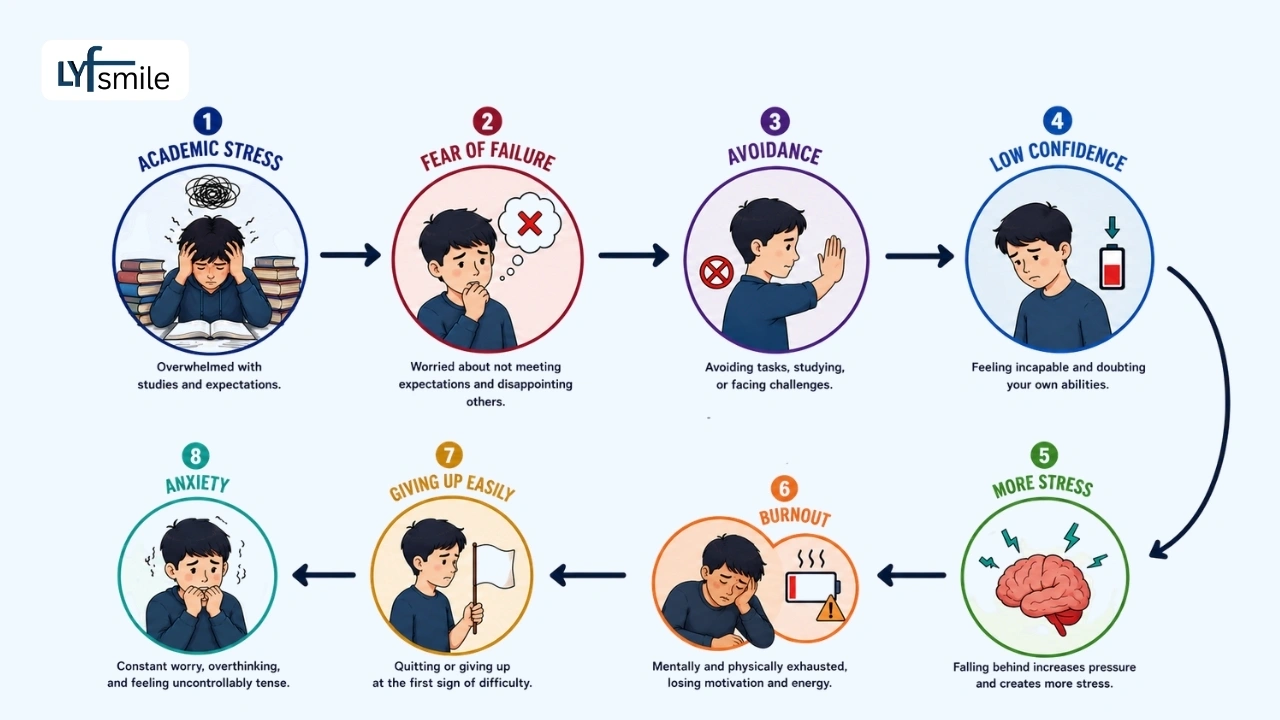 This is the cycle. And once it starts, it doesn't stop on its own.
When school stress in children continues without relief, it stops being just about studies. It becomes emotional exhaustion burnout where your child feels stuck, drained, and unable to move forward.
What Burnout Looks Like in Children
Child anxiety and constant worry: calm on the outside, constantly worried inside
Child fatigue due to academic pressure: mentally exhausted before the day begins
Lack of interest in studies spreading to everything they once enjoyed
Anger issues and irritability in teens: emotional regulation breaking down
Depression and sadness in children: a heaviness that doesn't lift
Child school refusal: not wanting to go, making up reasons to stay home
Attention and focus problems: unable to concentrate even when they want to
"What's the point?" - the most heartbreaking thing a parent can hear their child say
Why Early Support Matters
Child burnout is not laziness. It is what happens when a child has been carrying too much, for too long, without the right help. The good news: it is reversible. With the right support, children come back to learning, to confidence, to themselves.
But the sooner that support comes, the easier the journey.
Book a Free 15-Minute Consultation
No pressure. No judgment. Just one honest conversation about your child and what the right support can look like. Early support makes the biggest difference. Don't wait for the cycle to get heavier.
Simple Ways to Help Your Child Handle Academic Stress and Exam Pressure Better
You don't need to wait for professional support to begin making a difference. Small, consistent changes at home can reduce exam stress in children and help your child feel safer around studies.
What You Can Do Starting Today
Talk about effort, not marks: "I'm proud of how hard you tried" matters more than you know
Allow mistakes without immediate correction: let them know wrong answers are part of learning
Keep study conversations calm: no pressure, no comparison, no "your cousin got 95"
Notice the small wins: finished a chapter? That deserves acknowledgment
Create a balanced routine: study time + breaks + physical activity + rest
Give space to express without judgment: "What felt hard today?" instead of "Why didn't you finish?"
Avoid comparisons with peers: changes in friend circle and peer pressure already make this hard enough
Watch for physical signs: a child's stomach ache before exams, a child's headache due to study stress, are not excuses, they are real
One Thing Most Parents Don't Realise
Parental overthinking and worry transfer to children. When a parent is anxious about results, children feel it, even when nothing is said. Staying calm, even when you're worried, is one of the most powerful things you can do.
When Home Support Is Not Enough
If help for school-related stress at home isn't making a difference, if the avoidance, anxiety, or emotional shutdown continues, it may be time to seek structured support from an RCI-registered child therapist in Gurgaon.
How Dr Shraboni Nandi (RCI Registered Child Psychologist) in Gurgaon Helps Break This Pattern
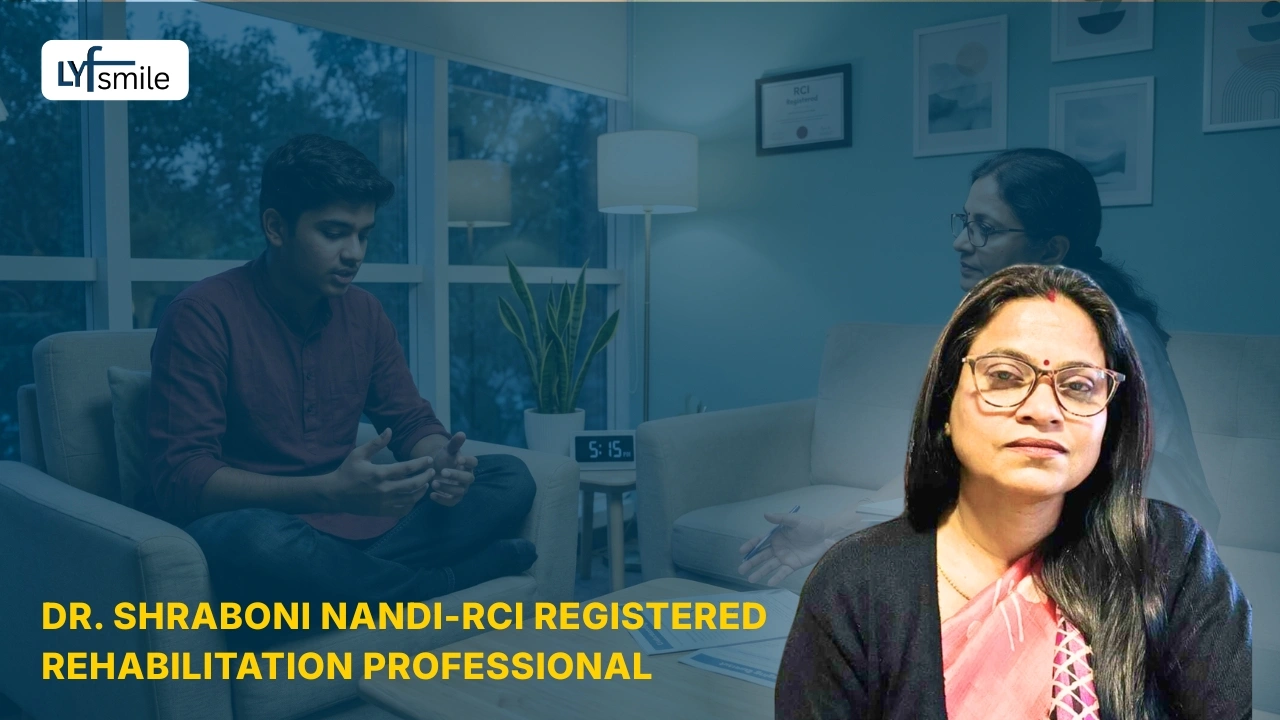 At Lyfsmile, Gurgaon, Dr Shraboni Nandi, RCI Registered (Govt. of India certified) Rehabilitation Professional, PhD in Psychology, with over 20 years of experience, works with children and adolescents dealing with academic stress, fear of failure, exam anxiety, and related emotional challenges.
She is one of the most experienced RCI-registered child psychologists in Gurgaon, and her approach is both structured and deeply human.
What Support With Dr. Shraboni Nandi Looks Like
Area of Support | How It Helps Your Child |
Academic Stress and School Adjustment | Manages study pressure and fear of failure more effectively |
Anxiety and Stress Management | Reduces child anxiety before exams, overthinking, and worry |
Child & Teen Psychology | Improves understanding of thoughts, behaviour, and emotions |
Behavioural and Developmental Concerns | Supports better daily behaviour and focus |
Bullying and Peer Pressure | Builds confidence in handling social and peer situations |
Screen Addiction and Digital Balance | Healthier screen habits, improved attention and focus |
Adolescent Identity and Self-Image | Strengthens low self esteem and lack of confidence |
Parent–Child Relationship Counseling | Improves communication and emotional connection at home |
Trauma and Abuse Recovery | Helps process difficult experiences safely |
You Are Part of the Process
Along with supporting your child, Dr Shraboni Nandi also guides parents, helping you understand how to respond to your child in ways that reduce pressure rather than increase it.
Because structured professional support works best when the home environment supports it too.
Connect With Dr. Shraboni Nandi, Lyfsmile, Gurgaon | Online & In-person sessions available | Sessions from ₹30/min | Best child psychologist near you, now easier to access than ever
Final Thought
Academic stress and fear of failure in children can develop quietly, one exam, one comparison, one moment of self-doubt at a time.
What looks like avoidance is often anxiety. What looks like laziness is often burnout. What looks like "not trying" is often a child who has tried so hard for so long that they have nothing left.
Your child is not broken. They are overwhelmed. And overwhelmed children, with the right support, find their way back. If your child is avoiding studies, crying before exams, losing confidence, or giving up easily, this is not something to wait out.
One conversation with an RCI-registered child psychologist in Gurgaon can help you understand what your child is going through and what can actually help.
Call Lyfsmile Gurgaon: +91 9804791047 Academic Stress Counseling Gurgaon | Child Therapy Center Gurgaon
Frequently Asked Questions
Can fear of failure make my child avoid school or studies?
Yes. Fear of failure in children creates anxiety around performance and the brain's natural response to anxiety is avoidance. Child skipping school due to stress and fear, phobias, and school avoidance are both common results of unaddressed academic fear in children. This is a response to stress, not a character flaw.
Why does my child give up so easily even when they know the answer?
Child giving up on tasks is often linked to child performance anxiety, the fear that trying and failing is worse than not trying at all. A licensed child counselor or RCI registered child therapist can help your child reframe this pattern and rebuild the confidence to try.
Can academic stress cause anxiety in children?
Absolutely. Exam stress in children and academic anxiety in children are closely linked. When school stress in children continues without support, it can develop into child anxiety and constant worry that affects sleep, mood, and daily functioning not just studies.
Can academic pressure cause depression in children?
Yes. When child academic pressure builds over time without relief, it can lead to depression and sadness in children, especially when a child begins to feel hopeless about their abilities. Early support from a child psychologist for exam stress Gurgaon can prevent this progression.
Is fear of failure normal in children?
Some level of wanting to do well is normal. But when fear of failure in children leads to child procrastinating studies, avoidance, emotional breakdown, or child not attempting exams, it has moved beyond normal and needs attention.
How do I talk to my child about exam pressure without making it worse?
Focus on effort, not outcome. Ask "what felt hard today?" instead of "what did you get?" Avoid comparisons. Let mistakes be okay. And if child not sharing feelings continues, a child therapist for academic anxiety Gurgaon can provide a safe space where your child feels comfortable opening up.
When should I seek help for my child's academic stress?
Seek professional support if your child shows constant anxiety about exams, avoids school or studies, loses confidence despite effort, shows physical symptoms like stomach aches or headaches, or appears emotionally drained. Early support from an RCI-registered child psychologist in Gurgaon makes a significant difference.