

Lakshika Kaushik
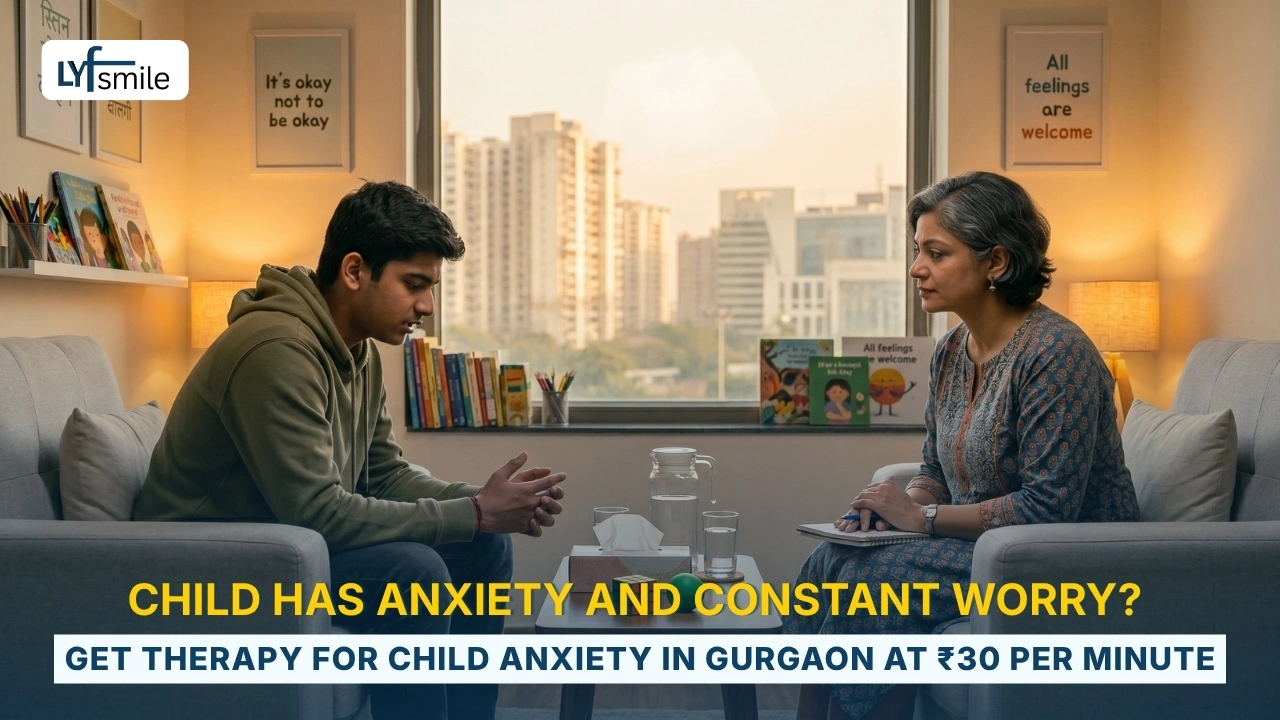
Child Anxiety and Constant Worry? Child Anxiety Therapy in Gurgaon from ₹30/Minute
You can see something is wrong. Your child can't explain it. And that silence is the hardest part. Your child is sitting quietly. Nothing has happened. No exam tomorrow, no fight with a friend, no big reason to worry. And yet something feels off. They look tense. They keep asking "what if." They cannot sleep. Or they are clinging to you in a way that feels different from before.
Constant worry can slowly affect a child's confidence, relationships, sleep, and daily routine. Early Child Anxiety Therapy, Child Counseling for Anxiety, and Child Mental Health Counseling help children understand anxious thoughts, develop healthy coping skills, and feel emotionally safe again.
If my child is always worried about everything sounds familiar, if the worry feels constant and the fears feel bigger than they should be you are not imagining it. And you are absolutely right to pay attention.
Small Worries Can Slowly Build And Become Harder to Ignore
Every child worries. That is completely normal. A child nervous before an exam, anxious about making a new friend, or worried about a school performance, that is childhood.
But child anxiety is different. It does not come and go with the situation. It stays. It grows. And over time, small worries quietly stack on top of each other until they become something your child cannot carry alone.
Child Anxiety vs Normal Worry: How Parents Can Tell the Difference
Normal worry is connected to a specific situation. Once that situation passes, the child settles and moves on.
Child anxiety vs normal worry is an important distinction. Child anxiety does not pass. It moves from one worry to the next. It shows up even when nothing is wrong. Ask yourself:
Does my child worry about the same things repeatedly, even after reassurance?
Does the worry show up even without a clear reason?
Is it affecting sleep, appetite, school, or friendships?
Does my child avoid situations out of fear of what might go wrong?
If your answer is yes to most of these, what you are seeing is likely more than normal worry.
Why Is My Child So Anxious All the Time? What Parents Often Miss
Most parents assume their child is being overly sensitive or attention-seeking. But children who are always worried about everything are not choosing to feel that way. Their brain is genuinely processing the world as more threatening than it is and they need help learning to feel safe again.
Common Reasons Behind Constant Worry in Children
Academic pressure: fear of failure, fear of judgment, fear of getting answers wrong
Social anxiety: child worried about what others think, scared of embarrassment
Family environment: tension at home or changes in routine
Excessive screen time: constant stimulation keeping the brain in high alert
Past experiences: something that scared them that was never fully processed
Temperament: some children are simply wired to feel things more deeply
Is It Separation Anxiety, School Anxiety, or Something Deeper?
Sometimes the anxiety is specific separation anxiety in children who panic when a parent leaves, or school anxiety in a child who refuses to go to school. Sometimes it is more general, a child scared of everything, worried constantly, unable to explain why. Both are real. Both respond well to the right support. When anxiety begins affecting daily life, professional Child Counseling helps children recognise emotional triggers, improve coping strategies, and gradually reduce excessive worry through structured therapeutic support.
What Your Anxious Child Is Feeling But Cannot Say Out Loud
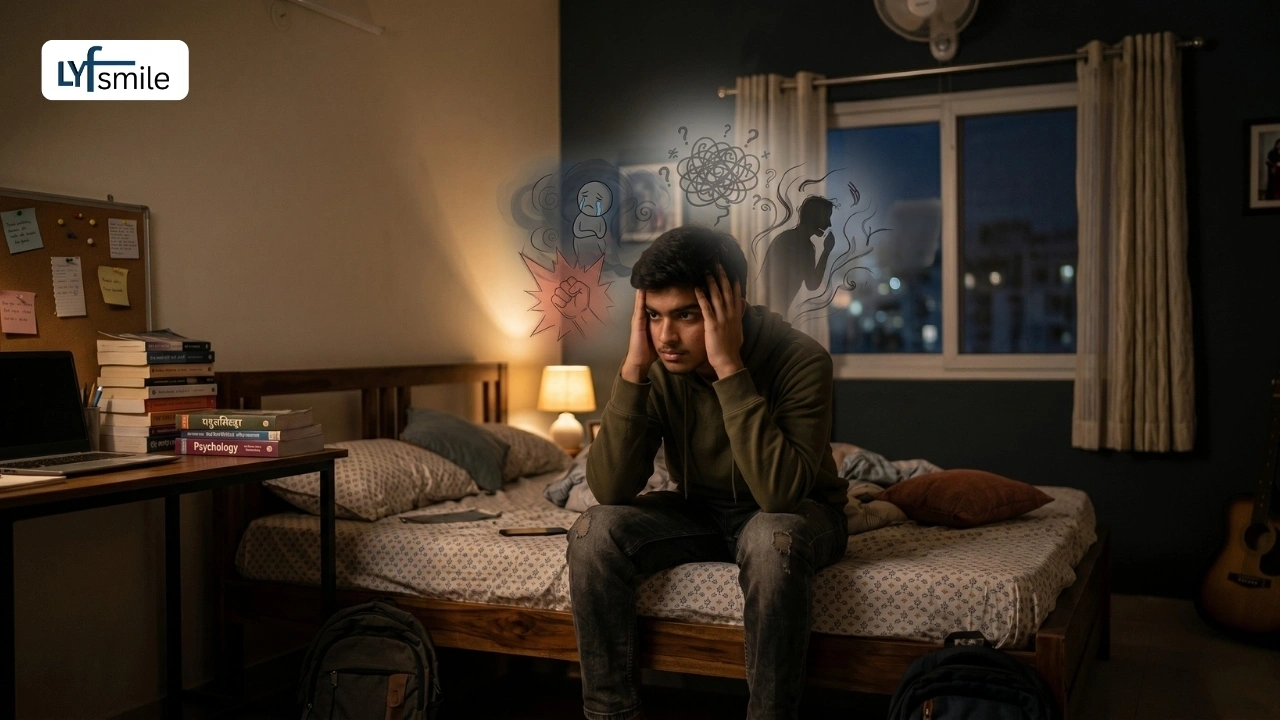 Children rarely say, "I'm anxious." Instead, they say:
"My tummy hurts."
"I don't want to go."
"What if something bad happens?"
"I just can't."
And sometimes, they say nothing at all.
Signs of Anxiety in Younger Children Ages (3 to 7)
Toddler anxiety symptoms and anxiety in 5 year old children often look like:
Separation anxiety: extreme clinginess, child clingy and anxious when parent leaves
Refusing to sleep alone or waking repeatedly at night
Child stomach ache before school with no medical cause
Fear of new people, places, or any change in routine
Regression - returning to habits they had already outgrown
Anxiety Symptoms in School Age Children Ages (7 to 12)
Anxiety in 7, 8, and 9 year olds often shows up around school and social situations:
Refuses to go to school, complaining of feeling sick every morning
Anxious about school performance, terrified of getting answers wrong
Child asking what if questions constantly, needing repeated reassurance
Crying for no reason visible to parents
Afraid of making mistakes - so afraid they stop trying altogether
Child worried about what others think, scared of embarrassment
How Anxiety Shows Up Differently in Teenagers
Anxiety in teenagers is often mistaken for attitude or mood swings:
Withdrawal - pulling away from family and friends
Irritability and emotional outbursts that feel out of proportion
Child scared of exams and results, avoiding studying altogether
Constant tiredness or chest tightness with no clear medical cause
Child panic attacks symptoms - racing heart, breathlessness, overwhelming fear
Physical Symptoms Parents Often Mistake for Illness
Child stomach ache before school, frequent headaches, nausea, and fatigue are real physical experiences not made up. They are how a child's body responds to ongoing emotional stress. If your child has been checked medically and nothing is found, anxiety may be the answer worth exploring.
Signs Your Child's Anxiety Is Affecting Daily Life: Not Just Mood
Child anxiety at night, a child not sleeping due to worry, lying awake for hours, or coming to your room repeatedly, this affects the entire family. And a tired, anxious child struggles even more the next day, creating a cycle that is hard to break without support.
Child Refuses to Go to School: Is Anxiety Behind It?
When a child refuses to go to school anxiety every morning crying, clinging, complaining of stomach aches, it is easy to think they are being difficult. But school refusal is one of the clearest signs of anxiety in children. Something about school feels genuinely threatening to them and that deserves understanding, not pressure.
Child Afraid of Making Mistakes: How Anxiety Kills Confidence
A child afraid of making mistakes stops trying. They stop raising their hand. They avoid new activities. They say "I can't" before they even begin. Over time this quietly destroys confidence and the once curious child starts believing they are simply not good enough.
How Long Is Too Long to Wait
If these patterns have continued for four weeks or more and home strategies are not helping, it is time to speak to a child psychologist for anxiety. The longer child anxiety goes unaddressed, the harder it becomes to rebuild confidence and comfort together.
How to Help an Anxious Child: First Steps Every Parent Can Take
How to talk to child about anxiety is one of the most important things a parent can learn. Instead of saying "don't worry, it will be fine" - which dismisses what they feel try:
"I can see this feels really scary. That makes sense."
"You don't have to figure this out alone. I am right here."
"Let's think about this together."
Feeling heard reduces anxiety. Feeling dismissed increases it.
Breathing Techniques and Calm Down Tools That Actually Work
Simple breathing techniques for an anxious child can make a real difference in the moment. Try this with your child:
Breathe in for 4 counts. Hold for 4. Breathe out for 4. Repeat 4 times.
This activates the body's calm response and works for children as young as 5 and for teenagers too.
Child Anxiety Exercises at Home Recommended by Therapists
These child anxiety exercises at home are simple, practical, and therapist-recommended:
Worry time - set aside 10 minutes daily where your child can voice all their worries freely
Feelings journal - encourage drawing or writing feelings each day
Grounding exercise - name 5 things you can see, 4 you can touch, 3 you can hear
What Not to Say to an Anxious Child
"Stop worrying, there is nothing to be scared of"
"You are being too sensitive"
"Just be brave"
"Other children don't act like this"
These phrases, however well-meaning, tell your child their feelings are wrong and make them less likely to come to you next time.
Affordable Child Anxiety Therapy in Gurgaon
 CBT for Child Anxiety: How It Works and Why It Is Effective
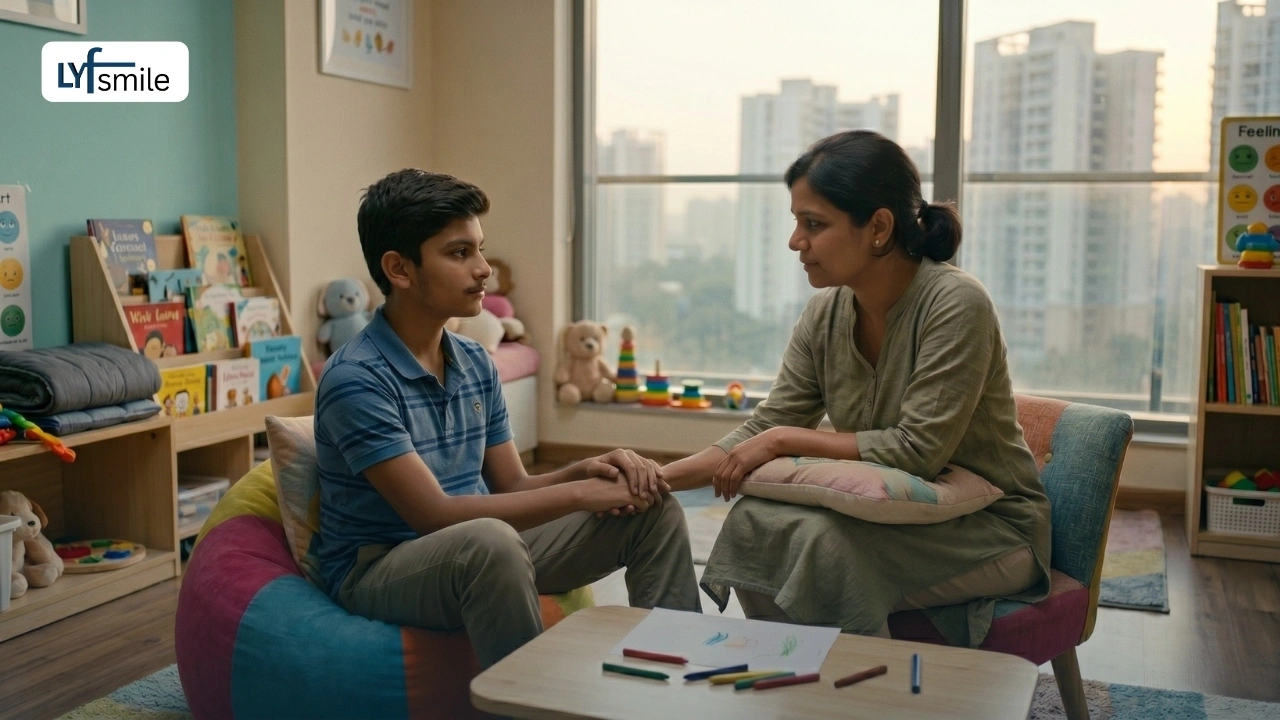
CBT for child anxiety is one of the most researched and effective approaches available. It helps children identify thoughts driving their worry, gently challenge them, and replace them with more balanced thinking. Children learn that their anxious thoughts are not facts and that they have more control than they realise.
Play Therapy for Younger Anxious Children
For younger children who cannot express feelings in words, play therapy creates a safe space where emotions come out naturally, through play, drawing, and storytelling. This is one of the most effective forms of child anxiety treatment without medication.
Parent Guidance Sessions, Because Your Role Matters Too
Our therapists work with you, not just your child, so you understand what is happening and how to calm an anxious child without increasing pressure at home.
Online vs In-Person Therapy: What Works Better for Children
Both work well. Many children are more comfortable opening up from home, online therapy for anxious children removes the unfamiliarity of a new space. In-person works well for younger children who benefit from a structured environment. Our therapists will help you decide what suits your child best.
Meet Our Child Anxiety Therapists in Gurgaon
Mrs. Tanya Sachdev – Holistic Family Therapist
Supports children and teenagers dealing with anxiety, emotional regulation, academic stress, and behavioural concerns using a strength-based approach.
Ritika Dhall – CBT Practitioner
Helps children manage anxious thoughts, develop coping skills, and build confidence through evidence-based CBT techniques.
Dr. Shraboni Nandi – RCI Registered Rehabilitation Professional
Works with children and parents to improve emotional regulation, coping abilities, and everyday functioning.
Mrs Urvashi Raj Sehgal – RCI Registered Rehabilitation Counsellor
Specialises in anxiety, depression, mindfulness, and adolescent counselling while helping children develop healthier emotional patterns.
Parents looking for the Best Child Psychologist or an experienced Child Therapist in India should seek support early, before anxiety begins affecting confidence, school performance, and emotional development.
WhatsApp: Free 15-minute consultation: no waitlist, no judgment
Your Child's Worry Is Real, And Help Is Closer Than You Think
Child anxiety symptoms may not always settle on their own, especially when they start affecting sleep, school, or daily life. But with the right therapy for child anxiety, children genuinely get better: calmer, more confident, and more comfortable in their own skin.
Your child deserves to feel safe in their own mind. And you deserve to feel less afraid about what you are seeing at home.
The first step is simply one honest conversation with someone who understands what your child is going through.
Families across India can also access Online Child Counseling with a Child Psychologist Online India, making expert support for child anxiety, emotional well-being, and parent guidance available from the comfort of home.
Lyfsmile Gurgaon: +91 9804791047 Child anxiety therapy | CBT for child anxiety | Sessions from ₹30/min
Frequently Asked Questions About Child Anxiety and Therapy
1. Why does anxiety feel stronger at night for children or teens?
At night, external distractions reduce, and the mind gets more space to think. Thoughts that were pushed aside during the day can come back more strongly, leading to overthinking, restlessness, or difficulty relaxing. For children and teens, this can make worries feel bigger than they actually are.
2. Can child anxiety happen without any clear reason?
Yes, anxiety does not always need a clear cause. Your child may feel uneasy, worried, or tense without being able to explain why. This is common in child anxiety and constant worry, where the feeling exists even without a specific trigger.
3. Can changes in routine or environment trigger anxiety in children?
Yes, even small changes like a new class, exams, different schedules, or social situations can create uncertainty. Children and teens often rely on routine, so changes can increase worry, hesitation, or overthinking as they try to adjust.
4. Can too much screen time increase anxiety in children?
Excessive screen time can reduce real interaction and increase comparison or mental stimulation. This can lead to overthinking, reduced focus, and emotional restlessness, which may contribute to anxiety over time.
5. How can parents respond when their child feels constantly worried?
A calm and supportive response helps the most. Listening without interrupting, avoiding immediate correction, and allowing your child to express themselves freely can reduce pressure. Consistent reassurance and patience help your child feel safe and understood.
6. Can anxiety affect a child’s sleep or daily routine?
Yes, anxiety can affect sleep, energy levels, and daily habits. Your child may find it difficult to fall asleep, feel mentally tired, or struggle to follow routine activities due to constant thinking and emotional strain.