Lakshika Kaushik
Communication Gap with Your Child in Gurgaon: How to Reconnect
A parent–child communication gap develops when conversations become limited, one-sided, or emotionally disconnected, making it difficult to understand each other clearly. This gap can affect emotional connection, understanding, and everyday communication between you and your child.
Easy or natural communication with your child may start feeling limited, one-sided, or harder to continue, gradually creating a parent–child communication gap. In fast-paced environments like Gurgaon, these changes can sometimes go unnoticed as routines become busy and conversations become shorter.
A communication gap rarely develops overnight. Professional Child Counseling, guidance from an experienced Child Therapist, and early Child Mental Health Counseling help children express emotions more openly while improving trust, understanding, and everyday communication within the family.
You try to talk, but responses feel shorter, delayed, or unclear. At times, it may seem like your child is listening but not really engaging, which can make it difficult to understand what they are thinking or feeling. This often leads to misunderstanding, emotional distance, or difficulty connecting with your child.
When Conversations with Your Child Start Feeling Difficult or Limited
At some point, you may start feeling that conversations with your child are not as open or natural as they used to be. Even when you try to talk, it may feel like something is missing—either the response, the connection, or the understanding. This is often where a parent–child communication gap begins to build.
Your child talking less or keeping conversations very brief
Feeling like your child is not opening up the way they used to
Conversations feeling one-sided or forced
Difficulty understanding what your child is thinking or feeling
A sense of emotional distance even while talking regularly
Your child avoiding deeper conversations or changing topics quickly
These changes can make it feel like “my child doesn’t talk to me like before”, even though communication hasn’t completely stopped. Over time, this gap can affect how connected you feel with your child and how easily conversations flow between you. Children who avoid conversations because of worry, fear, or emotional discomfort may also benefit from Child Anxiety Therapy, helping them express feelings with greater confidence and emotional security.
Why Conversations with Your Child May Feel Disconnected or Misunderstood
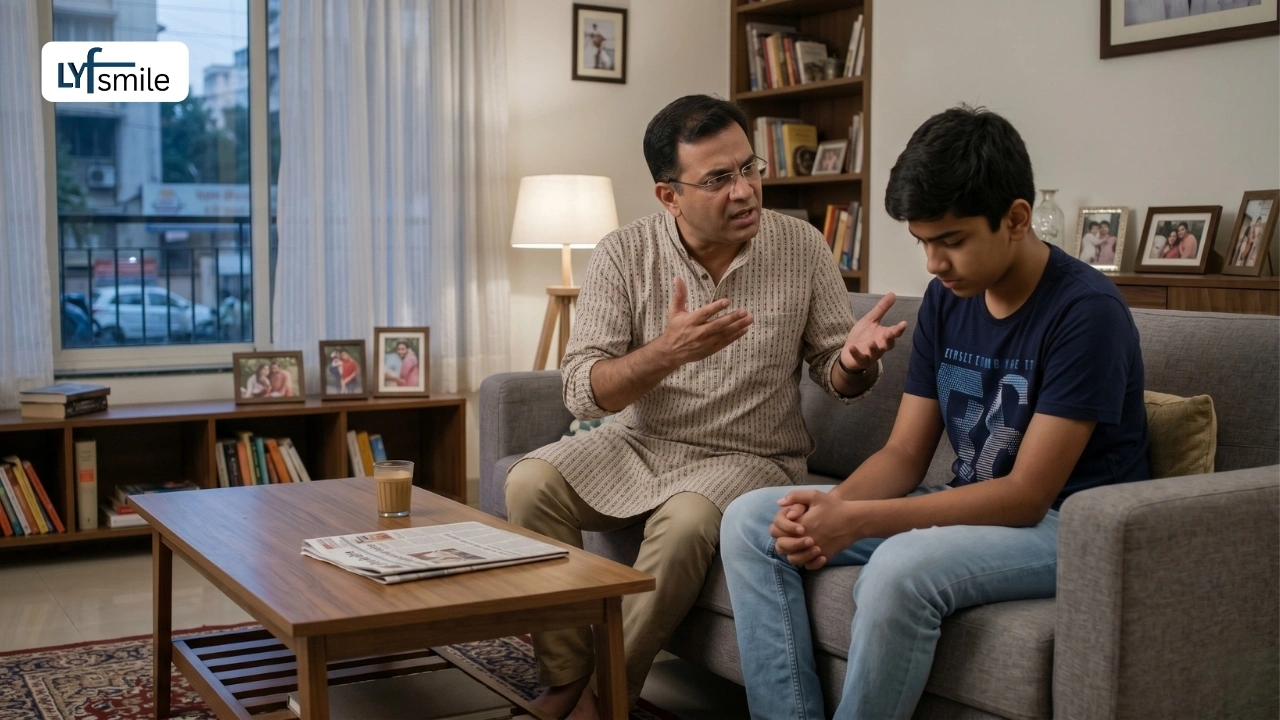 Communication issues don’t always come from one big problem. They often grow through repeated moments where both you and your child feel unheard or misunderstood. Over time, even simple conversations can start turning tense, creating frustration on both sides and slowly increasing the parent–child communication gap.
Small conversations quickly turning into disagreements
Your child reacting strongly even to simple questions
Feeling like whatever you say is taken the wrong way
Repeated arguments around the same topics without resolution
A sense that your child is not listening or intentionally avoiding your point
Both of you feeling misunderstood after most conversations
These situations can make it feel like “my child doesn’t listen to me” or “why does my child argue all the time”, even when you intend to guide or support. Over time, this pattern can create emotional distance, making everyday communication feel stressful instead of natural.
A communication gap between parents and children can lead to misunderstandings, emotional distance, and repeated conflicts over time.
How mobile use, routine changes, and daily habits affect communication with your child
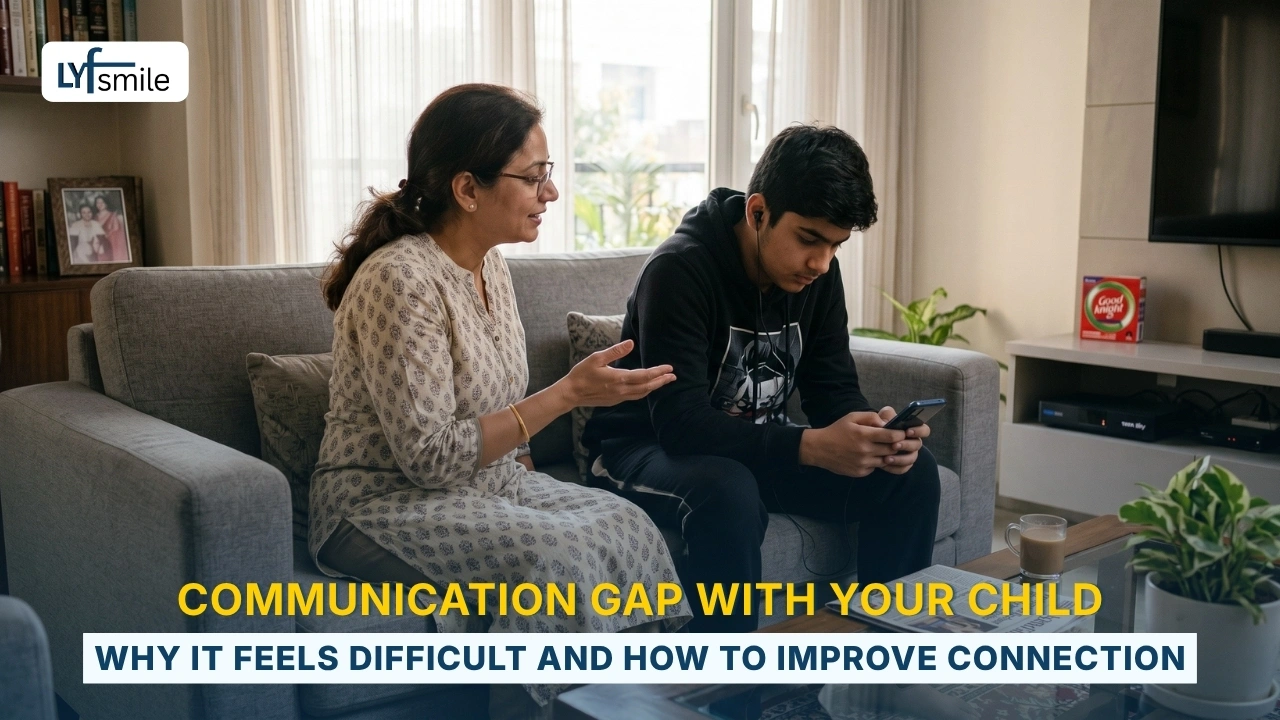
Daily routines and habits can quietly change how communication happens at home. As screen time increases and schedules become more packed, especially in cities like Gurgaon—there are fewer natural moments for conversation, which can slowly create a gap.
Your child staying engaged with the phone even during family time
Conversations getting shorter because attention is divided
Less interest in sitting together or talking without distractions
Daily routines leaving little time for relaxed, natural conversations
Your child responding while distracted, without full involvement
Fewer opportunities to talk without interruptions or screens
Over time, this can feel like “my child is always on the phone and not talking to me”, even though both of you are physically present. Gradually, these habits can reduce meaningful interaction and make communication feel more limited and less natural. Along with reducing screen-related distractions, consistent Child Emotional Support helps children feel heard and understood, making meaningful conversations easier to rebuild over time.
When your child avoids conversations or responds less than before
A noticeable shift in communication often shows up as avoidance or reduced responses. Your child may still be around you, but conversations feel limited, shorter, or harder to continue. This can create a sense that something has changed, even if it’s not clearly expressed.
You may notice:
Your child giving short or minimal replies to questions
Avoiding longer conversations or leaving discussions midway
Preferring to stay in their own space instead of interacting
Changing topics when conversations go deeper
Responding only when necessary, without engagement
Taking longer to reply or ignoring certain conversations
This can feel like “my child avoids talking to me” or “my child answers but doesn’t really talk”, which can be confusing and frustrating. Over time, this pattern can increase emotional distance and make communication feel one-sided.
How to improve communication with your child without pressure or arguments
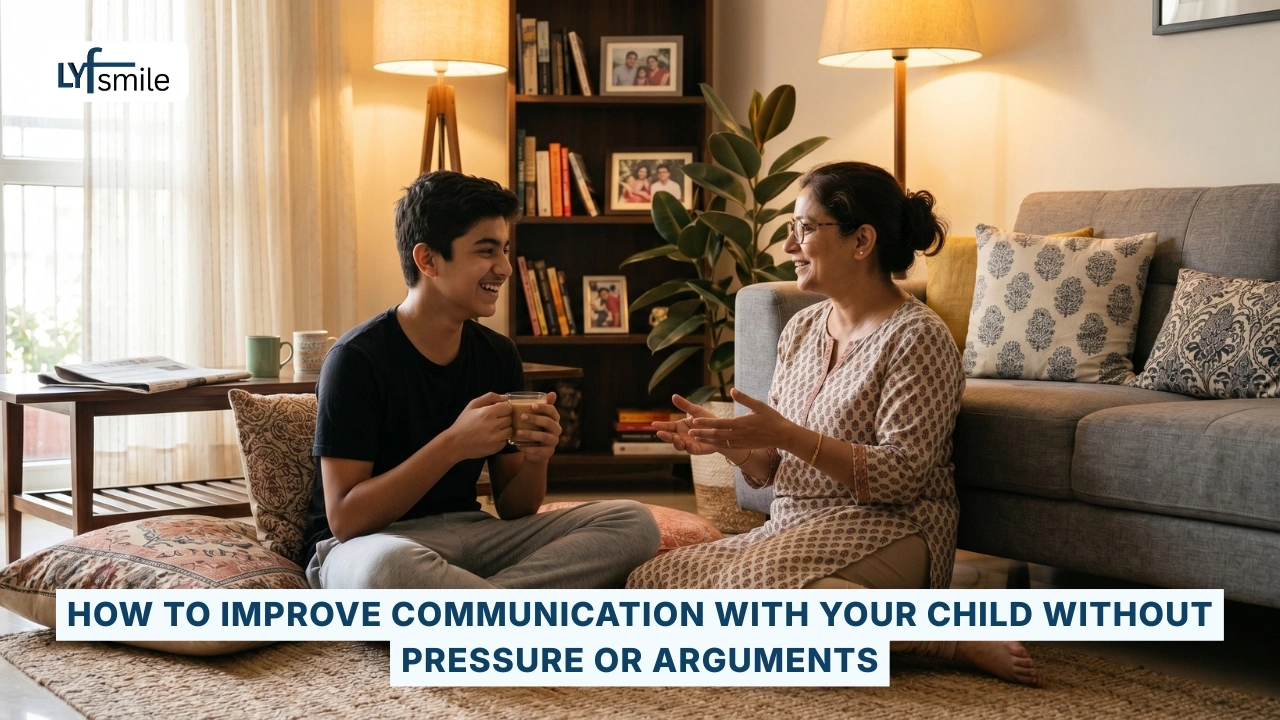 Improving communication with your child doesn’t always come from saying more, it often comes from changing how conversations are approached. When your child feels less pressure and more understanding, they are more likely to respond, engage, and gradually open up.
You can focus on:
Starting conversations calmly and neutrally instead of questioning or correcting
Listening fully without interrupting, even if you don’t agree immediately
Choosing the right time, when your child is more relaxed and not distracted
Keeping conversations short and natural instead of forcing long discussions
Avoiding repeated instructions or lectures during conversations
Showing interest in their perspective without reacting too quickly
These small changes can help reduce resistance and make communication feel easier over time. Instead of arguments, conversations begin to feel more balanced and comfortable for both of you.
If you’ve been wondering how to talk to your child without arguments or why communication feels difficult, adjusting your approach can make a noticeable difference. And if the gap still feels challenging, guidance from a licensed child counselor can help you understand what works best for your child and how to improve communication in a more effective way.
If communication with your child feels difficult or distant, early support can make a meaningful difference.
Start with a free 15-minute consultation at Lyfsmile, Gurgaon to understand what may be affecting your connection.
When Communication with Your Child Starts Affecting Your Relationship
It may be time to seek support if communication with your child starts feeling consistently difficult, stressful, or emotionally distant.
You may notice:
Conversations becoming limited or avoided
Frequent misunderstandings or arguments
Emotional distance increasing over time
Difficulty understanding your child’s thoughts or feelings
When these patterns continue, early guidance from a child counselor can help improve understanding and rebuild connection more comfortably and effectively.
How a child counselor helps improve communication and understanding between parent and child
When communication starts feeling difficult, it’s not always about what is being said—it’s often about what is not being understood. A child psychologist in Gurgaon helps both you and your child look beyond surface conversations and understand what is actually creating distance.
Instead of focusing on who is right or wrong, the process focuses on improving how both of you listen, respond, and connect in everyday situations.
How a child counselor supports both you and your child
Through structured guidance, you and your child are helped to:
Understand each other’s perspective without immediate reactions
Identify patterns that are creating misunderstandings or arguments
Improve the way conversations are started and carried forward
Reduce emotional reactions that block communication
Build a more comfortable and open space for regular interaction
What changes you may start noticing over time
With the right support, communication gradually becomes more balanced and less stressful.
You may notice:
Your child responding with more ease instead of avoiding conversations
Fewer arguments and better understanding during discussions
A more natural flow in everyday conversations
Feeling more connected instead of distant or misunderstood
Greater comfort in discussing even small day-to-day things
This kind of support is especially helpful when you feel “communication with my child is not improving” or “I don’t understand my child anymore.” Working with a licensed child counselor or an RCI registered child psychologistin Gurgaon helps bring clarity, structure, and practical ways to improve communication in a way that works for your child.
Getting clarity on what is affecting communication with your child
Understanding what is affecting communication with your child helps you respond more effectively instead of guessing or reacting. Changes in behaviour, reduced conversations, or repeated misunderstandings often have underlying patterns that are not always visible on the surface.
A child assessment with a licensed child counselor helps bring structure to this understanding by focusing on how your child communicates, responds, and interacts in different situations.
What this assessment helps you understand
What is creating gaps or difficulty in communication
Situations where conversations become limited or strained
Patterns like avoidance, short replies, or emotional reactions
How your child processes and responds during interaction
What you can expect after the assessment
Clear understanding of your child’s communication behaviour
Insight into what may be creating distance or misunderstanding
Guidance on whether support from a child counselor is needed
Practical direction on improving communication at home
At Lyfsmile, this assessment is available through both online and offline sessions in Gurgaon, so you can choose what works best for your child’s comfort and routine.
If your family needs Child Counseling, support from a Child Therapist, or Online Child Counseling, early professional guidance can help rebuild trust, strengthen communication, and create healthier parent–child relationships.
Book a ₹500 child assessment and take the next step with more clarity, confidence, and a better understanding of your child.
FAQs
1. Why does my child talk normally with others but not with me?
Children often communicate more easily when they feel less pressure or expectation. With parents, they may worry about being corrected, questioned, or misunderstood, which can make them hold back. This doesn’t mean your child doesn’t want to talk; it usually means they don’t feel fully comfortable or safe enough at that moment to express themselves openly.
2. Does strict parenting create a communication gap with a child?
A very strict or highly controlling approach can make a child more cautious about what they say. When conversations feel like instructions, corrections, or judgment, children may start avoiding sharing to prevent conflict. Over time, this can reduce openness and make communication feel limited or one-sided.
3. Can a communication gap affect my child’s emotional development?
Yes, communication plays a key role in emotional development. When a child is not able to express thoughts or feelings comfortably, they may struggle with understanding emotions, handling situations, or building strong connections with others. This can gradually increase emotional distance and affect confidence as well.
4. Can communication issues be resolved without forcing conversations?
Yes, forcing conversations often leads to resistance or withdrawal. A more effective approach is to create a comfortable environment where your child feels heard without pressure. When conversations happen naturally and without urgency, children are more likely to respond and engage over time.
5. How long does it take to improve communication with a child?
Improving communication is a gradual process. It depends on your child’s comfort level, the existing gap, and how consistently changes are made at home. Small improvements can start showing early, but building a more open and natural connection usually takes time and patience.