


Lakshika Kaushik
Child Losing Interest in Studies? Get Help from an RCI-Licensed Therapist IN GURGAON
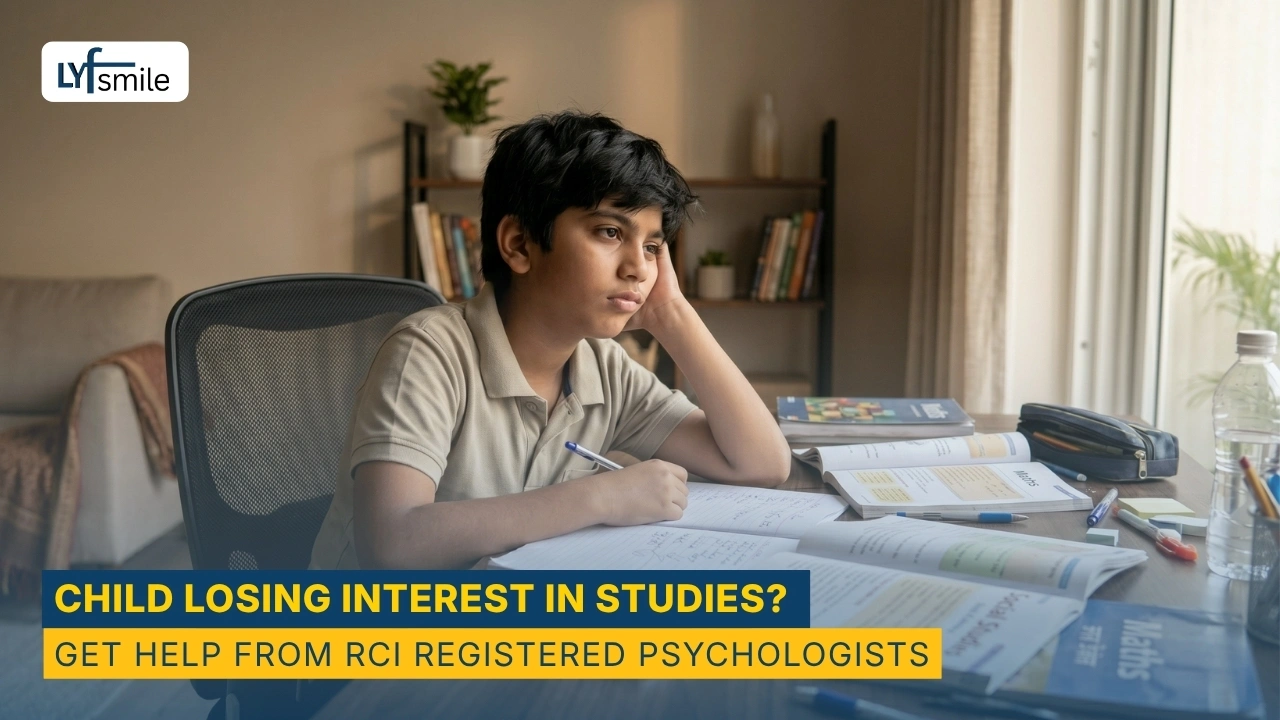
As a parent, you may have started noticing small changes in your child – less interest in studies, difficulty focusing, or avoiding schoolwork altogether. What once felt like a normal routine now seems like a struggle, and it leaves you wondering what changed.
When a child suddenly loses interest in studies, the issue is often deeper than academics. Professional Child Counseling, support from an experienced Child Therapist, and timely Counseling for School Stress can help children regain motivation, confidence, and emotional balance.
Often, this is not just about studies. It can be linked to academic pressure, fear of failure, low self-confidence, attention difficulties, or anxiety and overthinking. These emotional struggles can quietly affect your child’s ability to focus, stay consistent, and feel confident.
If you are looking for the right support in Gurgaon, working with RCI Registered Therapists in Gurgaon and nearby areas like Golf Course Road, DLF Phase 5, Sushant Lok, and Sohna Road can help your child feel understood, regain focus, and move forward with more confidence and clarity.
Why is your child losing interest in studies even after having everything?
It can feel confusing as a parent in Gurgaon; you’ve provided everything your child needs, yet their interest in studies keeps going down. The truth is, lack of interest is often not about laziness. It is usually connected to emotional, mental, or environmental factors that your child may not be able to express clearly. Seeking help from a child therapist in Gurgaon can provide insights into these underlying issues.
Signs of Disinterest in Studies:
Academic pressure and fear of failure
When expectations feel too high, your child may start avoiding studies to escape the fear of not doing well. This can slowly turn into complete loss of interest.
Low self-confidence in studies
If your child feels they are “not good enough,” they may stop trying altogether. This often shows up as lack of effort, but is actually linked to low self-esteem.
Difficulty focusing or attention problems
Many children, especially during their teenage years, struggle with concentration and focus issues, making it hard to sit and study for long.
Comparison with others
Constant comparison, either at school or through social media—can make your child feel demotivated and disconnected from studies.
Bullying or negative experiences at school
If your child feels uncomfortable, judged, or unsafe at school, they may begin to avoid studies.
Learning style mismatch
Sometimes, it’s not the child, it’s the method. If the learning style doesn’t suit them, they may lose interest quickly.
Emotional factors like anxiety or overthinking
Internal struggles can drain mental energy, leaving little motivation for studies.
Increased screen time and distractions
Digital distractions can reduce attention span and make studying feel less engaging.
Feeling mentally tired or disconnected
When your child feels emotionally drained, studies may start feeling meaningless.
Understanding these reasons is important because it shifts the focus from “why is my child not studying” to “what is my child going through internally.”
In many cases, parents in Gurgaon notice these changes but are unsure about the right way to support their child. Emotional struggles such as anxiety, fear of failure, or low confidence can often be addressed through Child Mental Health Counseling, helping children understand their emotions while improving focus and learning.
What changes are you seeing in your child’s studies and behaviour
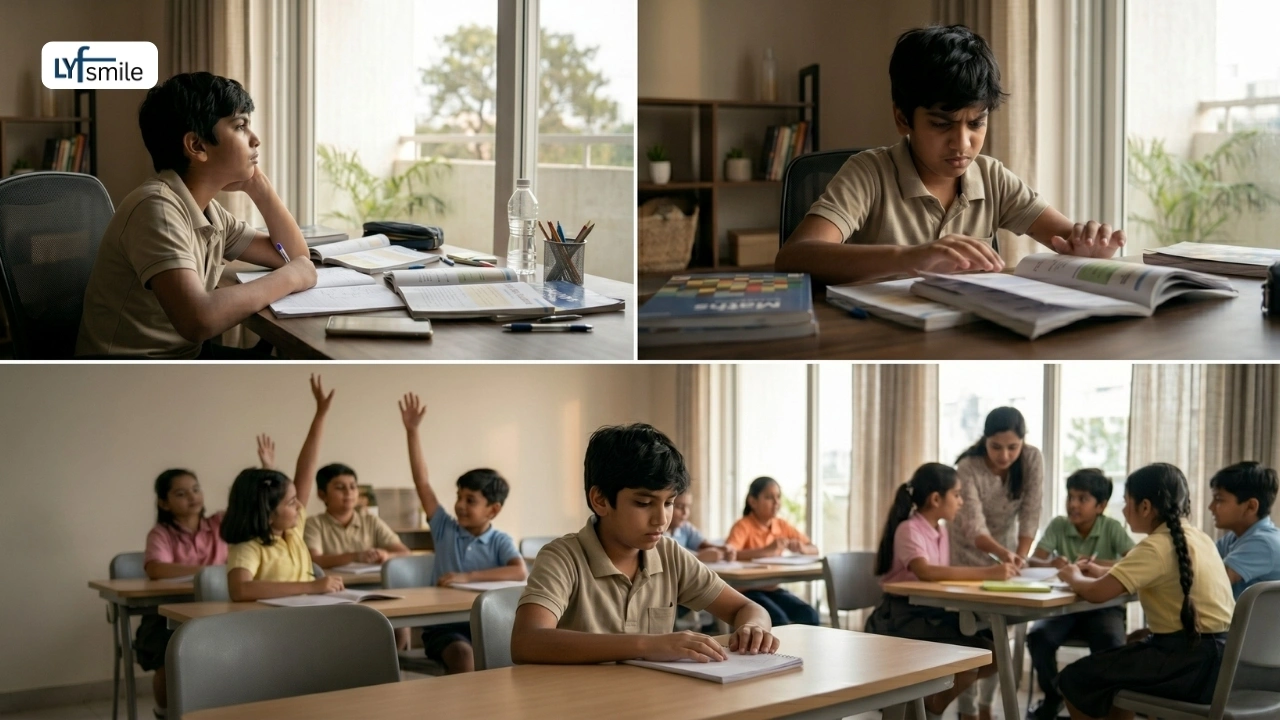 As a parent in Gurgaon, you may not always hear your child say what they’re going through, but you can start noticing changes in their daily behavior and study patterns. These shifts often happen gradually, making them easy to ignore at first. If these changes concern you, seeking academic support for children in Gurgaon can provide the necessary resources and strategies to help your child regain their focus
Some changes you may be seeing include:
Sitting with books but not actually studying: Your child may spend time at the table but struggle to stay mentally focused or engaged.
Taking longer to complete even simple tasks: Work that used to be quick may now feel tiring or delayed.
Avoiding study-related conversations: They may change the topic, get irritated, or show disinterest when studies are discussed.
Lack of initiative or self-motivation: You may find yourself constantly reminding or pushing them to study.
Drop in consistency rather than ability: It’s not that your child can’t do it—they just aren’t able to stay regular or interested.
Easily getting distracted during study time: Small interruptions or devices may quickly pull their attention away.
Showing frustration or giving up quickly: Tasks may feel overwhelming, leading to irritation or quitting midway.
Less involvement in school activities or participation: Your child may become passive in class or lose interest in school-related engagement.
Studying only under pressure (like exams or scolding): Effort may only come when there is urgency, not from internal motivation.
These changes often indicate that your child is not just “avoiding studies,” but struggling with something deeper. Whether it’s focus, confidence, stress, or emotional pressure.
Along with academic support, consistent Child Emotional Support from parents and therapists helps children feel understood and more willing to engage in learning again.
Taking that first step can help your child feel more confident, focused, and understood.
When you feel something is not right with your child’s studies
There are moments when, as a parent, you just feel that something isn’t right, even if you can’t clearly explain it. It’s not just about marks or performance, but a deeper sense that your child is not as engaged, motivated, or emotionally present as before.
You may start feeling concerned when:
Your child stops putting effort even when they are capable
There is a visible gap between their ability and their performance
They seem disconnected from goals or future plans
Study-related discussions often lead to tension or silence
You feel like your child is mentally somewhere else most of the time
Your usual ways of motivating or guiding them no longer seem to work
At this stage, it’s less about studies and more about understanding what your child might be going through internally. Ignoring these signs can make things more difficult over time, both for your child and for you as a parent.
What you can do when your child shows no interest in studies
When your child shows no interest, the first instinct is often to push harder, but what they need most at this point is understanding, not pressure.
Here are a few ways you can support your child:
Start with calm and open conversations: Try to understand their thoughts without interrupting or correcting immediately.
Focus on listening, not fixing everything at once: Sometimes your child needs to feel heard before they are ready to change anything.
Avoid constant reminders or comparisons: This can increase resistance and make them withdraw further.
Break expectations into small, manageable steps: Instead of big goals, help them focus on little progress.
Pay attention to emotional signs, not just academic ones: Their behaviour may be reflecting stress, confusion, or low confidence.
Create a supportive environment at home: A calm and non-judgmental space makes it easier for your child to open up.
If things still feel unclear or difficult to manage, seeking guidance from a licensed professional can help you understand your child better and take the right approach.
How child therapy helps improve focus, motivation and confidence
Once you start noticing that your child (during the teenage years) is struggling with studies, the next step is understanding how the right support can actually help. Child therapy focuses on guiding your child in a way that feels comfortable, not forced.
In therapy, your child slowly begins to organise their thoughts and build a clearer approach towards studies. This helps improve their focus and concentration, making it easier for them to sit with tasks without feeling distracted or stuck.
At the same time, therapy works on building motivation from within. Instead of studying only under pressure, your child starts developing a more natural interest and consistency in their routine.
Another important change happens in their confidence. As they start handling studies better, they feel more capable and less doubtful about themselves. This shift helps them stay more consistent and less avoidant.
With the support of an RCI Registered Therapist and child therapy in Gurgaon, your child can gradually feel more in control, focused, and confident, making it easier to move forward without constant pressure.
How RCI Registered Therapists in Gurgaon Help Your child
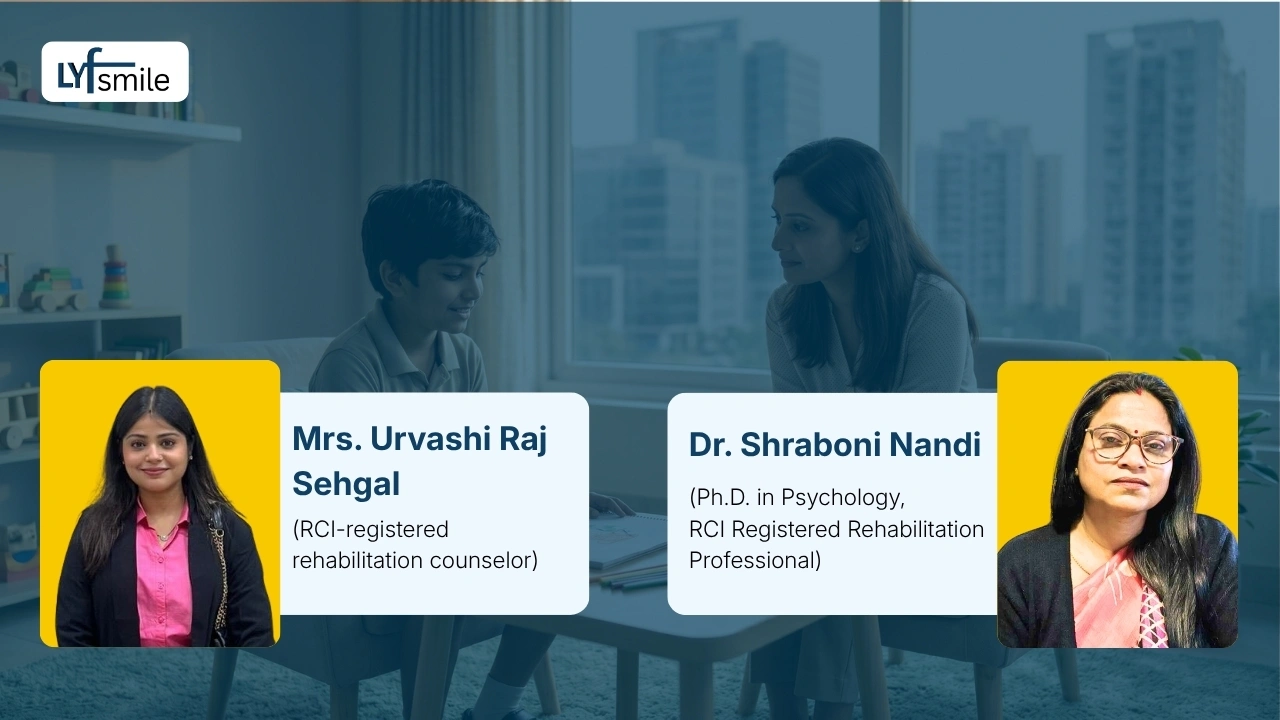 When your child is struggling with studies, focus, or motivation, getting the right professional support can make a real difference. At Lyfsmile in Gurgaon, your child is guided by experienced RCI-registered therapists who understand the emotional and academic challenges faced today.
Instead of just focusing on performance, they work closely with your teen to understand what is affecting their studies, whether it’s academic stress, low confidence, distractions, or difficulty managing routine. This approach helps your child feel understood, not judged.
At Lyfsmile, your child can receive support from:
Dr. Shraboni Nandi
RCI Registered Rehabilitation Professional – Child & Teen Therapist
She supports teens with academic stress, school adjustment, bullying, peer pressure, screen addiction, identity concerns, and parent–child relationship issues, helping them become more confident and emotionally balanced.Mrs. Urvashi Raj Sehgal
RCI Registered Rehabilitation Counsellor – Child & Adolescent Therapist
She uses mindfulness-based techniques to help teens improve focus, manage stress, and develop better emotional control.
With the right guidance, your child can gradually feel clearer, more confident, and motivated, making it easier to get back on track with studies.
What types of therapy did they use
At Lyfsmile, therapy is personalised based on your child’s needs and concerns. Some commonly used approaches include:
Cognitive Behavioural Therapy (CBT) to improve thinking patterns and reduce academic stress
Behavioural Therapy to build better study habits and daily consistency
Mindfulness-Based Therapy to improve focus and reduce distractions
Emotional and Confidence-Based Counseling to help children feel more secure and motivated
These approaches help your child during the teenage years manage both emotional and study-related challenges, leading to better focus, improved confidence, and a healthier routine over time.
Start with a free 15-minute consultation at Lyfsmile and understand how the right guidance can help your child regain focus, confidence, and consistency.
Conclusion
Seeing your child lose interest in studies can be stressful, especially when you know they are capable, but something still feels off. As a parent, it’s not always easy to understand what is going on or how to respond in the right way.
These changes are often a sign that your child needs support, not pressure. When the right help is given at the right time, it becomes easier for your child to regain focus, confidence, and consistency in their studies
With guidance from RCI-registered therapists and getting therapy in Gurgaon, Golf Course Road, DLF Phase 5, Sushant Lok, and Sohna Road are increasingly turning to counselling to let them engage and find fun in studies again.
FAQs
1. Is it normal for teens to suddenly lose interest in studies?
Yes, it can be normal to some extent. During the teenage years, children go through emotional, social, and behavioural changes, which can affect their priorities and interest in studies. However, if this lack of interest continues for a long time or starts affecting their routine and performance, it may need attention. Understanding the reason early can help prevent it from becoming a bigger concern.
2. Can bullying at school affect my teen’s interest in studies?
Yes, bullying or feeling uncomfortable at school can have a strong impact. When a child feels unsafe, judged, or excluded, their focus naturally shifts away from studies. They may start avoiding school-related work, lose motivation, or feel emotionally drained. In such cases, it’s important to address the emotional experience, not just the academic part.
3. How does screen time affect my teen’s focus on studies?
Excessive screen time, especially on mobile phones and social media, can reduce attention span. Quick and engaging digital content makes it harder for teens to sit with their studies for long periods. Over time, this can lead to distraction, procrastination, and reduced interest in studying. Setting healthy limits and creating a balanced routine can help improve focus.
4. What if my teen studies only before exams and not regularly?
This usually means your teen is depending on pressure rather than building a consistent habit. While they may manage during exams, it can increase stress and reduce long-term understanding. Helping your child create a simple and manageable routine can improve consistency and reduce last-minute pressure.
5. Can changing friend circles affect my teen’s studies?
Yes, peer influence plays a big role during the teenage years. Changes in friend circles can affect habits, priorities, and even motivation towards studies. If your teen is influenced by less focused peers, it may reflect in their own behaviour. Open communication and the right guidance can help your child make more balanced choices.
6. What role does therapy play in helping children with academic challenges?
Therapy can help children address emotional barriers that affect their studies, such as anxiety, low self-esteem, or stress. A licensed therapist can work with your child to develop coping strategies, improve focus, and foster a healthier attitude towards learning.
7. How can I motivate my child to focus on studies again?
Encourage open communication, set achievable goals, and create a supportive learning environment. Avoid comparisons with peers and offer positive reinforcement to help boost their confidence and interest in studies.
8. What signs should I look for if my child is struggling with studies?
Watch for signs such as lack of motivation, difficulty concentrating, increased frustration with schoolwork, avoidance of study-related conversations, and changes in behaviour or mood. These indicators can help you understand if your child needs support.
9. Why is my child suddenly losing interest in studies?
It's common for children, especially during their teenage years, to experience fluctuations in interest due to various factors like academic pressure, emotional challenges, or changes in their social environment. Identifying the underlying causes can help in addressing their needs effectively.