


Lakshika Kaushik
Low Self-Confidence in Your Child? Get Support from the Best Child Therapist Near You
Low self-confidence in children is when a child starts doubting their abilities, hesitates to express themselves, or avoids situations due to fear of judgment or making mistakes.
Low confidence in children doesn’t always show up clearly. It often begins in small ways, holding back, avoiding certain situations, or needing more reassurance than before. These patterns may be linked with low self-esteem, hesitation, or self-doubt, even when everything else seems normal.
Everything else may seem fine on the surface, but something feels different. A child who was earlier comfortable may start appearing unsure, especially in school, social situations, or while trying something new. Low confidence can affect how a child thinks, behaves, and participates in everyday situations over time.
When this continues, it usually means confidence is being affected at a deeper level. Understanding these early signs can help you support your child better, and if needed, connect with a child therapist near you to guide them in building confidence step by step.
Low confidence often develops gradually and may affect a child's emotional well-being before parents notice obvious changes. Professional Child Counseling, guidance from an experienced Child Therapist, and early Child Mental Health Counseling can help children build confidence, express themselves freely, and develop healthier coping skills.
Why Children Feel Shy, Nervous, or Low in Confidence in Daily Situations
Children with low confidence often feel shy, nervous, or unsure in everyday situations, especially in school or social environments.
These changes usually begin gradually and may not be obvious at first. Over time, they start affecting how your child communicates, participates, and responds in both familiar and new situations.
Hesitating to speak or express thoughts
Some children start holding back even when they know the answer or have something to say. Speaking in front of others can feel uncomfortable or stressful.
Staying silent instead of responding
Taking longer to speak or share ideas
Avoiding situations that require speaking
Becoming quiet, withdrawn, or socially uncomfortable
Your child may seem less engaged in conversations or group settings and prefer staying within their comfort zone.
Keeping to themselves during interactions
Avoiding conversations or social situations
Showing discomfort in group settings
Struggling with confidence in school or classroom participation
Low confidence can affect how your child approaches learning and classroom activities.
Doubting their answers or abilities
Avoiding participation in class
Losing interest in tasks they were earlier comfortable with
Feeling nervous in everyday or new situations
Earlier manageable situations may begin to feel overwhelming or uncomfortable.
Feeling uneasy in new places or situations
Getting anxious before routine activities
Preferring familiar environments over new ones
Experiencing self-doubt or feeling less capable than others
Your child may start comparing themselves with others and question their own abilities.
Comparing themselves with peers
Seeking reassurance more frequently
Feeling unsure despite knowing what to do
Fear of mistakes or failure holding your child back
Fear of doing something wrong can reduce your child’s willingness to try new things or take initiative.
Avoiding tasks where mistakes are possible
Giving up quickly when something feels difficult
Hesitating to try new activities
These patterns may seem small at first, but over time they can affect your child’s confidence, behaviour, and daily experiences.
If these signs continue, early support from a child therapist can help your child feel more confident and comfortable in different situations.
If these signs continue for several weeks, working with the Best Child Psychologist can help identify the underlying emotional challenges while creating personalised strategies to improve confidence and self-esteem.
If your child is feeling unsure, avoiding situations, or struggling with confidence, a free 15-minute consultation can help you understand what they may be experiencing and how to support them better.
How a child therapist helps build confidence and reduce hesitation in your child
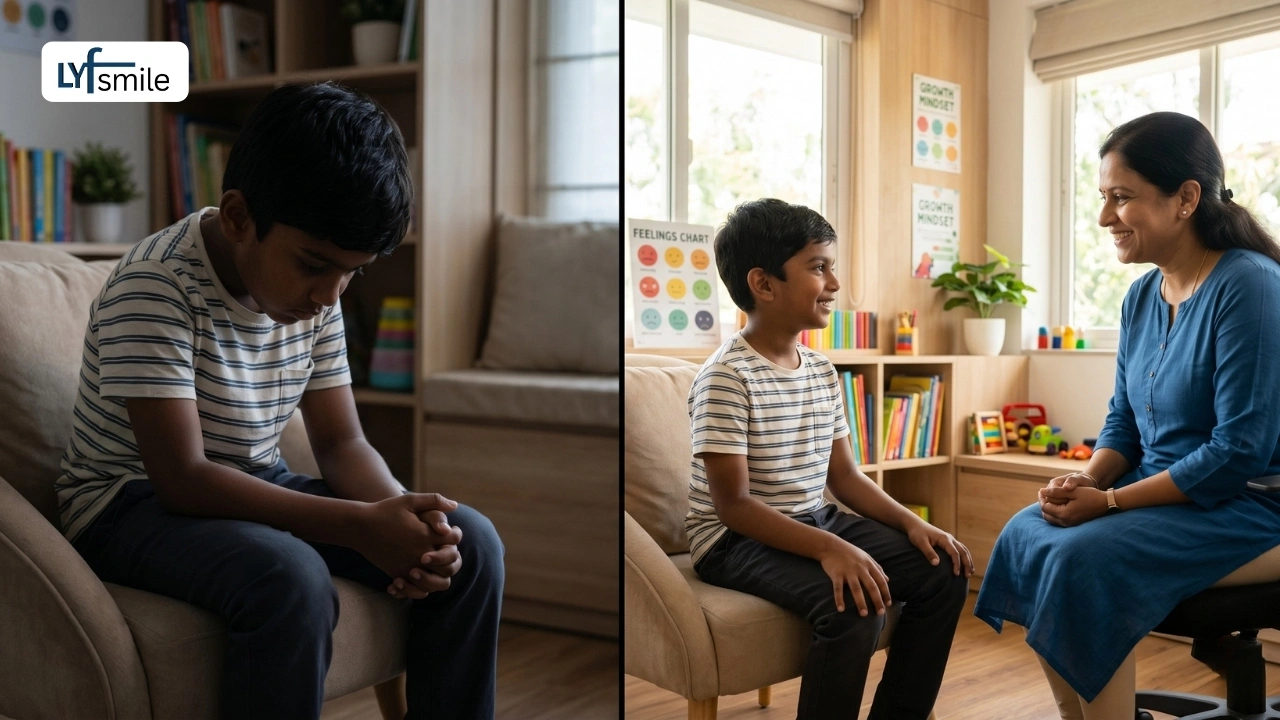 A child therapist helps improve low confidence by understanding your child’s thoughts, emotions, and behaviour, and guiding them to feel more comfortable, capable, and confident in everyday situations.
When confidence starts affecting your child’s daily life, it is important to understand what is happening beneath the surface. A child therapist looks beyond visible behaviour and works on underlying factors like self-doubt, fear of judgment, hesitation, or difficulty trusting their own abilities.
The focus is on helping your child feel safe, understood, and gradually more confident without pressure.
How support is provided during therapy sessions
Your child is supported in a structured and comfortable way through:
One-on-one conversations to understand thoughts, feelings, and reactions
Activities that help your child express themselves more freely
Practicing real-life situations in a simple and manageable way
Gradually building comfort in situations they usually avoid
Types of therapy used to improve confidence
The approach is tailored based on your child’s needs:
Cognitive Behavioural Therapy (CBT): Helps change negative thinking patterns and reduce self-doubt
Behaviour-based techniques: Focus on small actions that gradually improve confidence
Play-based therapy helps children express emotions naturally in a safe space
Emotion-focused techniques: Help manage nervousness and improve emotional control
With consistent support, your child can become more comfortable expressing themselves, more willing to try new things, and less held back by fear or hesitation.
If you’re looking for the right support, connecting with the best child psychologist near you or a trusted child therapist in Gurgaon can help you understand your child better and guide them in the right direction.
Not sure if therapy will help? Start with a ₹500 child assessment for better clarity
A child assessment helps you understand what may be affecting your child’s confidence, behaviour, and emotional responses before starting therapy.
Taking the first step can feel confusing, especially when you're unsure what your child is going through. An assessment gives you a clearer picture in a structured and pressure-free way.
What this assessment helps you understand
What may be affecting your child’s confidence and behaviour
Situations where your child feels hesitant, unsure, or uncomfortable
Patterns related to self-doubt, fear, or nervousness
How your child responds in school, social, and daily situations
What you can expect after the assessment
Clear insight into your child’s current challenges
Professional guidance on the next steps
Whether therapy is needed and which approach may help
Practical suggestions on how to support your child at home
Starting with a ₹500 child assessment gives you clarity without pressure, helping you make the right decision for your child with confidence.
Final Thought
Low self-confidence in children can affect how they think, behave, and respond to everyday situations over time. What may look like shyness or hesitation is often linked with deeper self-doubt, fear of judgment, or discomfort in expressing themselves. With the right understanding and timely support, your child can gradually feel more confident, express themselves more freely, and handle situations with greater ease.
If needed, guidance from an experienced child therapist in Gurgaon can help your child build confidence step by step in a safe and supportive environment. Families from Gurgaon, DLF Phase 1–5, Sushant Lok, South City, Sector 56, Golf Course Road, Sohna Road, and nearby areas can access personalised support in a safe and nurturing setting.
Families looking for a Child Therapist in India can also choose Online Child Counseling with a child psychologist online in India, making expert emotional support easily accessible from anywhere.
FAQs
1. Why does my child suddenly seem less confident than before?
A child’s confidence can change gradually due to school experiences, peer interactions, anxiety, or self-doubt. Even without a major event, children may become less confident, avoid social situations, and hesitate in activities they previously enjoyed, often benefiting from support through child counselling in Gurgaon or guidance from a child psychologist in Gurgaon.
2. Is it normal for children to feel nervous in simple situations?
Some level of nervousness is normal, especially in new or unfamiliar situations. However, if your child consistently feels uneasy while speaking, participating, or interacting, it may be linked with low self-confidence or hesitation that needs attention.
3. Can comparing my child with others affect their confidence?
Yes, regular comparison can make your child feel less capable or “not good enough.” Over time, it can lower self-esteem, increase self-doubt, trigger negative self-talk, and affect emotional development. Children who are constantly compared may become less confident, develop social anxiety, avoid challenges, and hesitate to express their thoughts or abilities.
4. Can low confidence make my child quieter or more withdrawn?
Yes, children with low confidence often become quieter or more withdrawn. They may avoid conversations, stay in their comfort zone, or hesitate to participate to avoid feeling judged or making mistakes.
5. Should I choose online or offline therapy for my child?
Both options can be effective. Some children feel more comfortable opening up in online sessions, while others benefit from face-to-face interaction. Through child counselling in Gurgaon, Lyfsmile offers both online and offline sessions, allowing you to choose the approach that best suits your child’s comfort, routine, and emotional needs.