

Lakshika Kaushik
Sudden Mood Swings in Teens: Therapy in Gurgaon
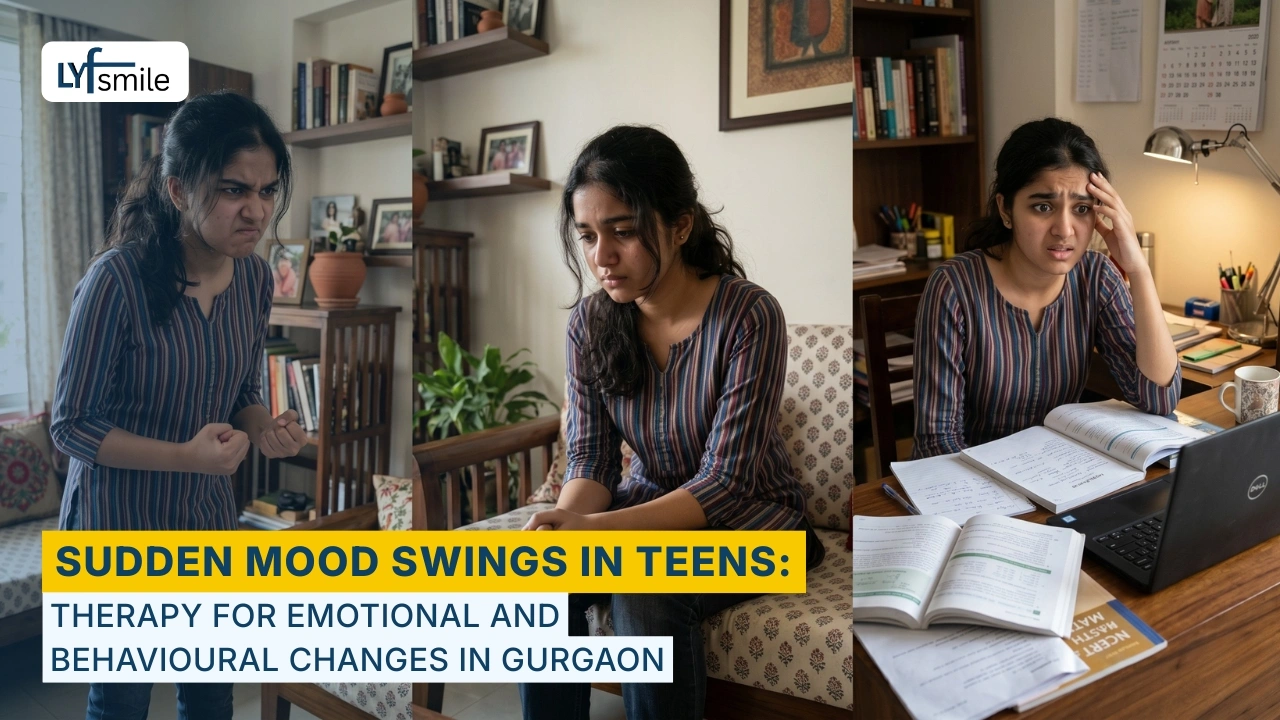
You may have noticed sudden changes in your teen’s mood, happy one moment, irritated or withdrawn the next. These mood swings can feel confusing, especially when there’s no clear reason.
Along with this, changes in behaviour, communication, or routine may also appear. Your teen may become distant, react strongly, or struggle to express feelings. In some cases, this may link with teen anxiety, low mood, or emotional stress.
Frequent mood swings can make teenagers feel confused, frustrated, and emotionally overwhelmed. Early Teen Counseling, guidance from an experienced Child Therapist, and Child Mental Health Counseling help teenagers understand their emotions, improve emotional regulation, and build healthier coping strategies before mood changes begin affecting daily life.
What sudden mood swings in teens actually look like in daily life
In everyday life, sudden mood swings in teens can feel confusing because the changes often happen quickly and without a clear reason. Your teen may not always be able to explain what they are feeling, which makes these shifts harder to understand from the outside.
You may notice:
Sudden changes in mood from cheerful to irritated or withdrawn
Strong reactions to small situations or everyday conversations
Becoming quieter, more distant, or less willing to share
Increased irritability or frustration without a clear trigger
Avoiding interaction with family or spending more time alone
Difficulty expressing feelings or explaining what they are going through
These patterns can sometimes be linked with teen anxiety, low mood, or emotional stress, even if your teen is not expressing it directly. When mood changes continue for several weeks, Child Anxiety Therapy and Child Counseling for Anxiety can help teenagers manage anxious thoughts, emotional stress, and overwhelming feelings more healthily.
Why your teen’s emotions may feel intense or unpredictable at times
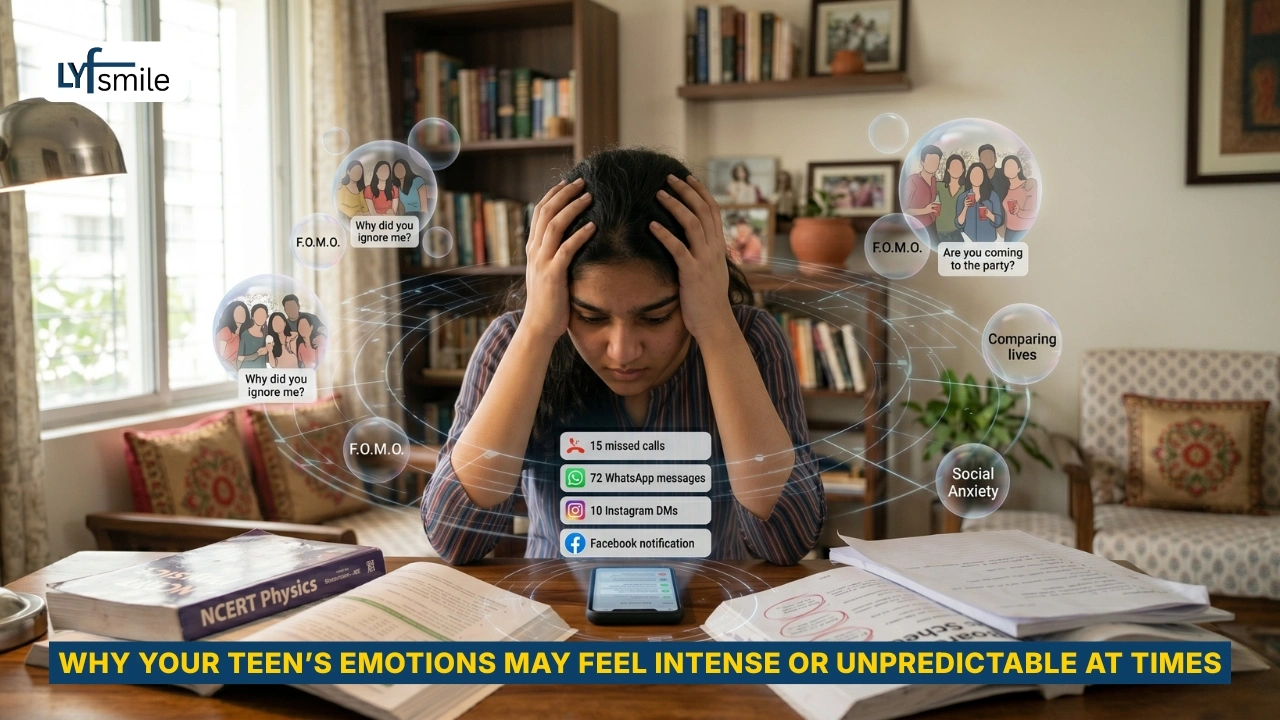 During the teenage years, emotional experiences often become stronger and more difficult to manage. Your teen may not always have the clarity or skills to understand what they are feeling, which can make their reactions seem sudden or unpredictable. These shifts are usually influenced by internal changes as well as external pressures around them.
Role of hormonal changes and teenage development
As your child moves through adolescence, physical and hormonal changes can directly affect emotional regulation and behaviour.
Faster mood changes without a clear reason
Difficulty controlling emotional reactions
Feeling overwhelmed by situations that seemed manageable before
Increased sensitivity to everyday experiences
Impact of social pressure, comparison and expectations
Along with internal changes, external influences like social media, peer groups, and expectations can also affect your teen’s emotional state.
Comparing themselves with others and feeling inadequate
Pressure to fit in or meet certain expectations
Increased concern about how they are perceived by others
Emotional ups and downs linked to social interactions
These factors together can make your teen’s emotions feel more intense, and at times, harder for both you and your child to understand.
If these emotional changes are consistently overlooked in the early stages, they can gradually become more intense and may develop into mood disorders in teens, making it harder for your child to manage their emotions over time.
How mood disorders in teens are different from normal mood changes
It’s common for teenagers to experience mood changes as part of growing up. However, not all emotional shifts are the same. While normal mood changes are temporary and situation-based, mood disorders in teens tend to be more intense, long-lasting, and start affecting everyday life.
Normal mood changes in teens
Occur occasionally and settle on their own
Usually linked to a specific situation or event
Do not affect daily routine for long
Your teen is still able to engage in studies and conversations
Emotions change but don’t stay for extended periods
Mood disorders in teens
Persist for days or even weeks without improvement
May not have a clear or identifiable trigger
Begin to affect sleep, studies, and daily functioning
Lead to withdrawal, low energy, or constant irritability
Often linked with teen anxiety, low mood, or emotional distress
Recognising these signs early can help you understand when your teen’s mood changes may need closer attention and support.
Understand what your teen may be going through and how to support them better.
Start with a free 15-minute consultation at Lyfsmile in Gurgaon and get the right direction.
What your teen may be feeling but not able to express clearly
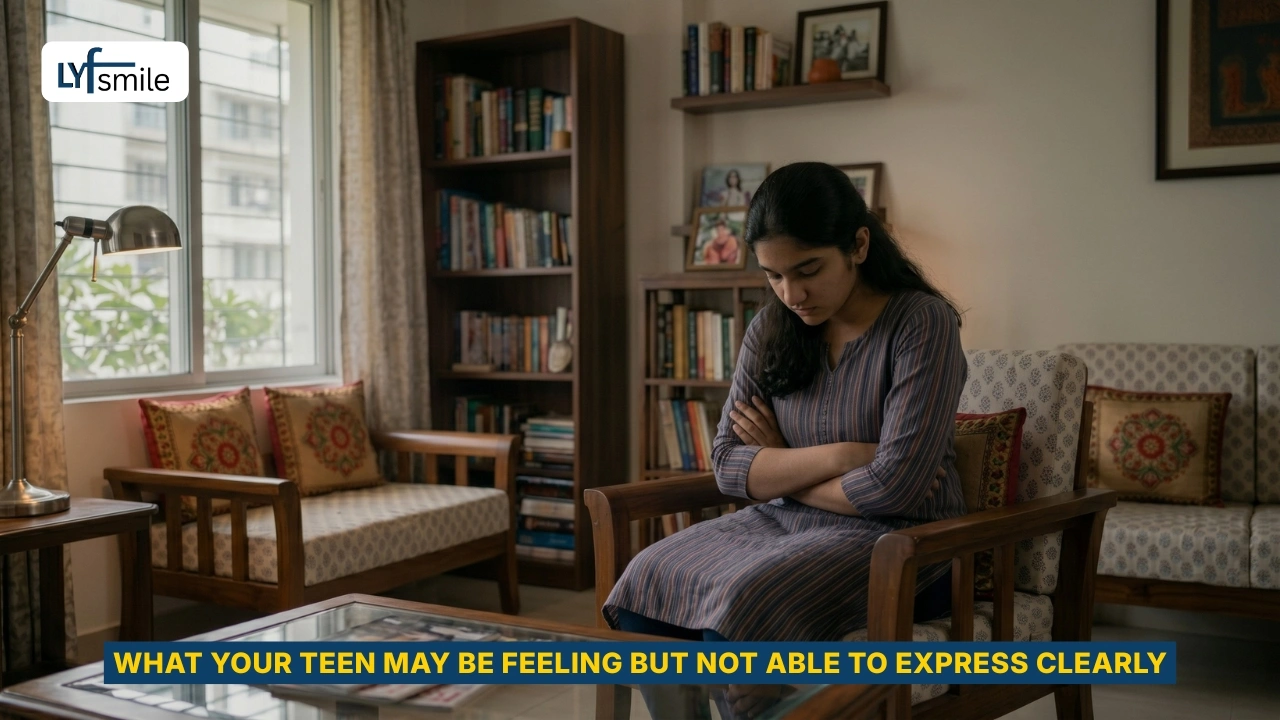 Teens may struggle to explain what they feel, so emotions show through behaviour.
You may notice:
Feeling overwhelmed but not being able to explain why
Internal confusion about their emotions or reactions
Fear of being judged or misunderstood when they try to open up
Bottling up feelings and then reacting suddenly
Experiencing low mood, emotional stress, or teen anxiety without expressing it clearly
Wanting support but not knowing how to ask for it
These unexpressed emotions can build up over time, leading to more noticeable mood changes and behavioural shifts if not understood early.
How your response as a parent can influence your teen’s behaviour
Your response plays a key role in how your teen manages emotions. You can support your teen by:
Staying calm during emotional reactions instead of reacting immediately
Listening without interrupting or judging their feelings
Giving them space when needed, while staying emotionally available
Avoiding harsh criticism or comparisons
Encouraging open conversations without forcing them to share
Acknowledging their feelings, even if you don’t fully understand them
Small changes in how you respond can gradually improve communication, reduce the parent–child communication gap, and help your teen feel more secure.
Along with supportive parenting, consistent Child Emotional Support helps teenagers feel emotionally secure, improving communication and making it easier for them to express difficult emotions.
If you feel that despite your efforts, things are still difficult to manage, you can consider taking support from a counselor or therapist in Gurgaon to better understand your teen and guide them effectively.
How therapy in Gurgaon supports teens with emotional and behavioural changes
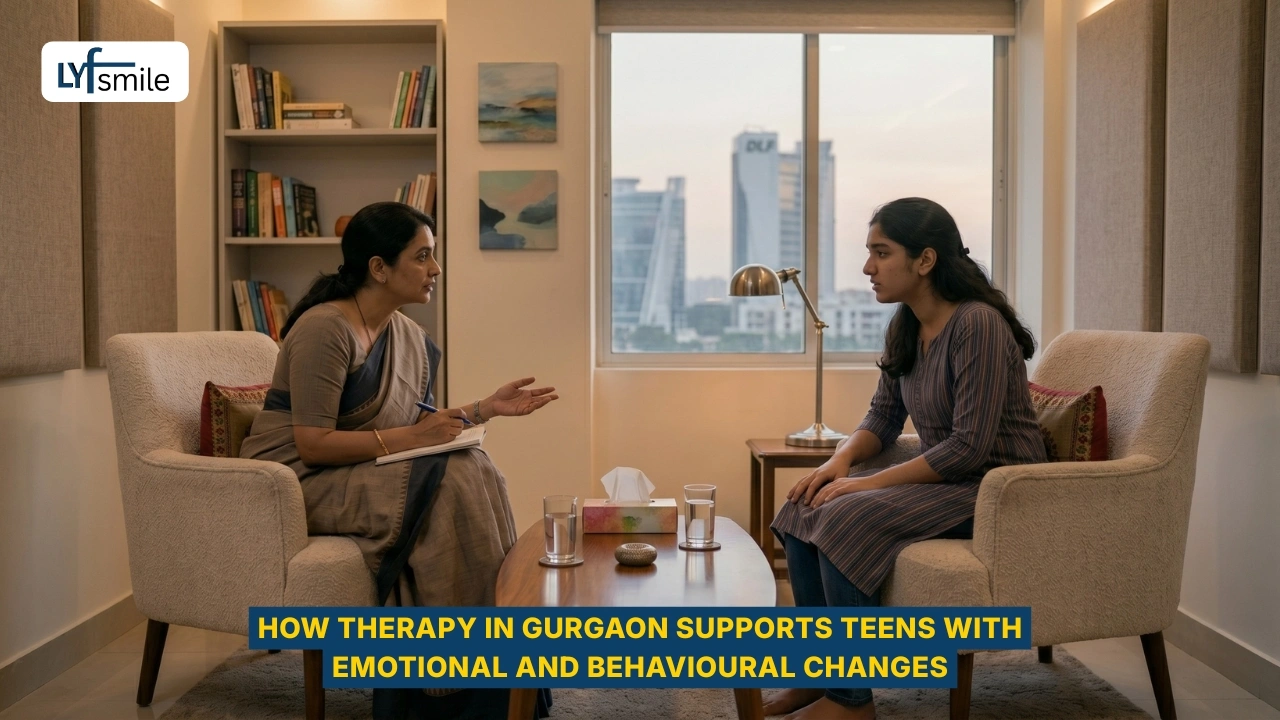 When emotions and behaviour feel difficult to manage, therapy can help. Therapy for children in Gurgaon, India, Lyfsmile provides support from an adolescent therapist or RCI-registered child psychologist in Gurgaon, helping your teen to:
Learn to recognise and understand intense emotions more clearly
Improve emotional regulation and reduce sudden reactions
Work through teen anxiety, low mood, or emotional stress
Build confidence and feel more secure in social situations
Improve communication and express feelings more clearly
Develop better coping strategies for daily situations
Over time, this support helps your teen feel more balanced, understood, and in control of their emotions, while also making it easier for you to support them at home.
How parents are guided to respond more effectively
Therapy also helps parents respond more effectively. You may be guided to:
Understand the reasons behind your teen’s behaviour and emotional reactions
Respond calmly instead of reacting impulsively
Set boundaries without increasing resistance
Improve communication and reduce the parent–child communication gap
Support your teen without putting pressure or dismissing their feelings
These changes can make a noticeable difference in how your teen feels at home and how situations are handled overall.
If you feel you need support, you can consider connecting with a counselor or adolescent therapist in Gurgaon, with guidance available through both online and offline sessions at Lyfsmile to suit your comfort and your child’s needs. Professional Child Counseling helps teenagers improve emotional awareness, strengthen communication, and build resilience while giving parents practical strategies to support emotional growth at home.
Conclusion
Sudden mood swings in teens can feel confusing and challenging for parents, especially when they begin to affect behaviour, daily routines, school performance, and relationships. While some emotional changes are a normal part of adolescence, frequent or intense mood swings, irritability, anger, or sudden behavioural changes may indicate underlying emotional or mental health concerns. Seeking timely support through teen counselling and therapy can help adolescents understand their emotions and develop healthier coping skills.
With the right support, your teen can manage emotions better, build confidence, and feel more balanced. If needed, guidance from a counselor or therapist in Gurgaon can help you support your child more effectively. Therapy for children in Gurgaon, India, Lyfsmile offers this kind of consistent, compassionate support for teens and their families.
Want a deeper understanding of your teen’s emotions and behaviour?
Book a ₹500 child assessment at Lyfsmile in Gurgaon and get clear insights into what your teen may be going through.
Frequently Asked Questions
1. Is it normal for teenagers to have mood swings even when nothing seems wrong?
Yes, it is quite common. During adolescence, emotional changes can happen even without a clear reason. Internal factors like hormonal shifts, overthinking, or stress can influence how your teen feels, even if the day appears normal.
2. At what age are mood swings most common in teenagers?
Mood swings are most commonly seen between the ages of 13 and 19. This stage involves rapid physical, emotional, and social changes, which can make emotions feel more intense and unpredictable.
3. What are the common causes of mood swings in teens?
Mood swings can be influenced by multiple factors such as hormonal changes, academic pressure, peer relationships, social comparison, and emotional stress. At times, difficulty expressing feelings can also lead to sudden changes in mood.
4. Are mood swings a normal part of development or a psychological issue?
Occasional mood swings are a normal part of growing up. However, if these changes are frequent, intense, or begin affecting daily life, they may be linked with deeper concerns such as mood disorders in teens.
5. Can attention difficulties or anxiety cause mood swings in teenagers?
Yes, emotional changes can sometimes be linked with attention-related challenges or anxiety. ADD (Attention Deficit Disorder) refers to difficulty in maintaining focus, staying organised, or managing tasks, which can lead to frustration and emotional ups and downs. Similarly, teen anxiety can cause feelings of restlessness, overthinking, or irritability, which may show up as sudden mood changes, even when your teen is not expressing what they are feeling.
6. When should parents consider therapy for sudden mood swings in teens in Gurgaon?
If your teen’s mood swings are becoming frequent, intense, or affecting school, relationships, sleep, or daily life, it may be helpful to seek professional support. At Lyfsmile in Gurgaon, conveniently accessible from South City, DLF Phase 1–5, Sushant Lok, Golf Course Road, and Sohna Road, adolescent therapy and counselling can help identify underlying emotional concerns and teach healthy coping skills.
7. Where can I find a therapist for teen mood swings and behavioural changes near me in Gurgaon?
If you are looking for a child psychologist or adolescent therapist for teen mood swings and behavioural changes in Gurgaon, Lyfsmile offers online and offline therapy sessions. Families from Sector 56, Sector 57, Palam Vihar, New Gurgaon, and nearby areas such as Manesar and Faridabad often seek support at Lyfsmile to help teenagers manage emotional changes and improve family communication.