


Lakshika Kaushik
Child Easily Distracted and Unable to Focus? Child Psychologist for Focus Problems in Gurgaon
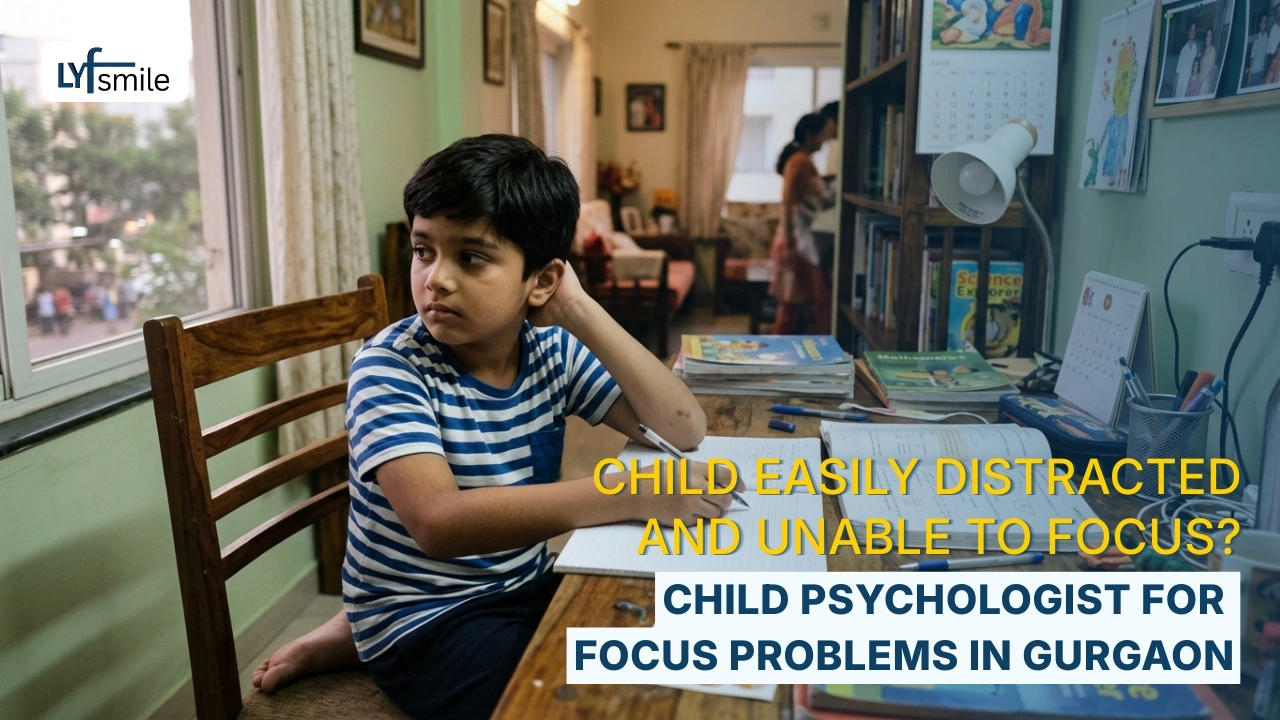
Books are open. Your child is sitting right there.
But you can see it they're not really present. The pencil isn't moving. The eyes are somewhere else. And no matter how many times you remind them, nothing changes.
You've tried everything you can think of. You've made charts. You've taken away the phone. You've sat beside them, explained things calmly, lost your patience, felt guilty about it, and tried again the next day.
And still the homework sits unfinished. The focus just isn't there.
Somewhere in the middle of all this, a thought you don't want to say out loud has started growing:
Is something wrong with my child? Or is it me am I doing something wrong?
You are not failing. And your child is not broken. What you are seeing a child easily distracted and unable to focus on studies is real, it has real reasons behind it, and there is real help available right here in Gurgaon.
When Your Child Gets Easily Distracted and Unable to Focus on Studies, Is It Normal or a Problem?
Every child loses focus sometimes that is completely normal. But when your child cannot focus while studying day after day, when the same patterns repeat every single evening, it stops being a phase and starts being a sign.
My child cannot sit and study. If that sentence describes your home right now, you already know how exhausting and worrying this feels.
What Parents Commonly Notice
Starts homework but leaves it incomplete every single time
Child gets distracted while studying even in a quiet room
Child forgets things while studying mid-sentence, mid-question
Takes far longer than expected to finish simple tasks
Child loses focus quickly, even in activities they once enjoyed
Teacher says child is not paying attention in class
Child avoids studies, gets irritable when reminded
These are not signs of a lazy or difficult child. These are distracted child symptoms that tell you something deeper may be going on and that your child needs understanding, not more pressure.
When It Stops Being Normal and Becomes a Problem
When a child is unable to concentrate on homework day after day, the effects quietly spread beyond the report card. Confidence drops. Frustration builds in your child, and in you. The child who was once curious starts saying "I'm just bad at studies."
That shift in self-belief is what hurts most as a parent. And it is exactly why early support from a child psychologist for focus problems in Gurgaon matters more than most parents realise.
What May Be Affecting Your Child's Ability to Focus : Reasons Most Parents Don't Know
Most parents assume their child is simply not trying hard enough. But study concentration problems in children are almost never about effort. They are about what is happening underneath emotionally, neurologically, and environmentally.
Why is your child unable to focus? More often than not, the answer is not one thing it is several things working together.
Common Causes of Attention Problems in Children
ADHD and attention difficulties the brain is genuinely wired to find sustained focus harder
Child anxiety and concentration a worried mind cannot settle into study; child anxiety and concentration are deeply connected
Academic stress in children fear of failure, fear of judgment, fear of getting it wrong
Excessive screen time fast, stimulating content trains the brain to resist slow tasks like reading
Poor sleep a tired brain simply cannot concentrate, no matter how much effort is made
Low self-confidence a child who feels "I can't do this" disengages before they begin
Learning difficulties when concepts feel too hard, child not interested in studies follows naturally
Why Difficulty Concentrating in Children Is Especially Common in Gurgaon
Children in Gurgaon face academic stress earlier than most. Competitive schools, high parental expectations, and heavy screen exposure create a combination that makes child concentration problems more likely and more intense. If your child is losing focus in school or struggling at home, the environment around them is very likely part of the reason.
When You Notice Your Child Struggling to Stay Focused More Often, Signs You Should Not Ignore
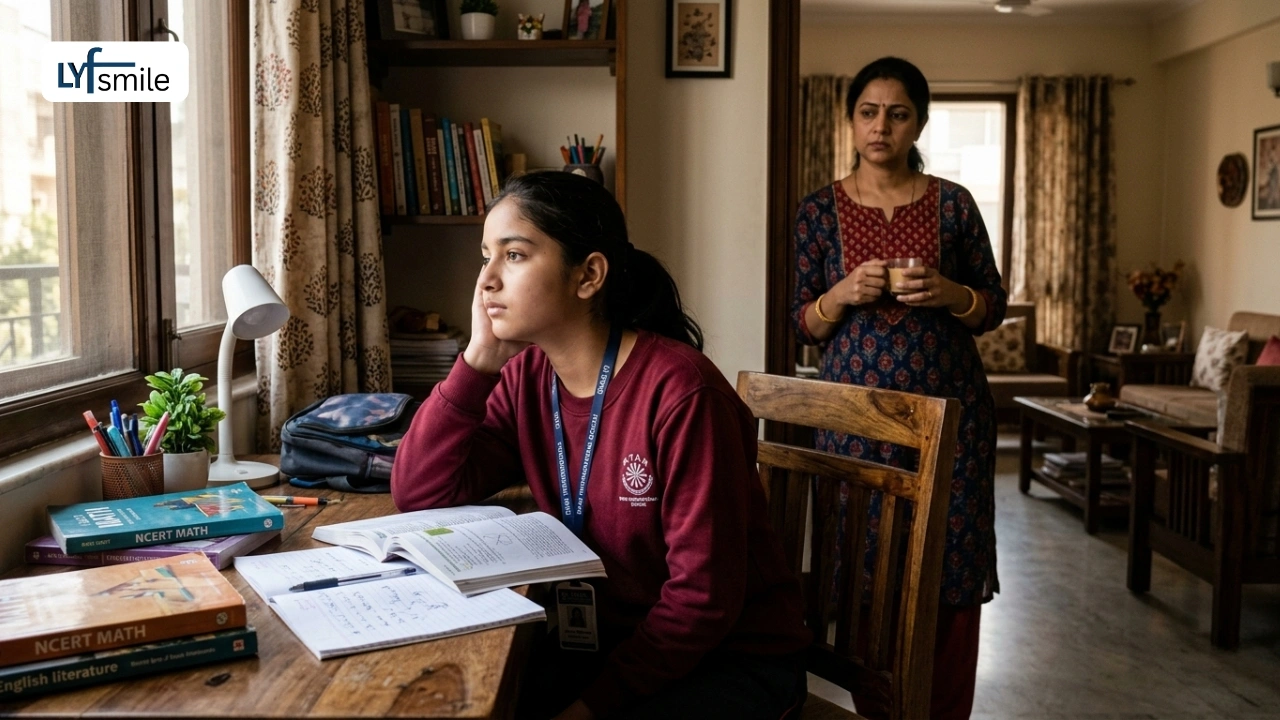 Occasional distraction is normal. But when a child gets distracted while studying becomes a daily pattern when it starts affecting school, confidence, and your relationship with your child it is time to pay closer attention.
Signs That Poor Concentration in Children Is Getting Bigger
Your child is avoiding studies due to stress more and more often
Child unable to concentrate on homework every single day, not just occasionally
Homework time has become a nightly conflict at home
Your child seems anxious, withdrawn, or easily overwhelmed
Teachers are regularly flagging that your child is not paying attention in class
Your child says things like "I'm stupid" or "I can't do anything right"
Focus issues in children are spilling into daily life not just studies
How Long Is Too Long to Wait?
If these patterns have been going on for 4 weeks or more, and home strategies are not working, it is worth speaking to a child therapist in Gurgaon. Many families in Gurgaon wait too long hoping it will pass on its own. Sometimes it does. Often, it doesn't. And the longer difficulty concentrating in children goes unaddressed, the harder it becomes to rebuild confidence and attention together.
Simple Ways You Can Help Your Child Focus Better Without Pressure : Tips Recommended by Child Therapist
You don't need to wait for professional support to begin making a difference. These therapist-recommended steps can gradually improve your child's concentration without turning every study session into a battle.
If you are wondering “how to make your child study”without daily arguments, start by making study time feel smaller, calmer, and easier to begin. A child who feels less pressured is more likely to sit, try, and slowly build focus.
Build a Routine That Actually Works
Fix one study time daily consistency signals to the brain: this is focus time
Break tasks into small steps "just the first 5 questions" works better than "finish everything"
Create a distraction-free study space quiet, clutter-free, with phones out of sight (yours too)
Use 20-minute study + 5-minute break cycles short focused bursts beat long exhausting sessions
Small Shifts That Make a Big Difference for Child Attention Issues
Praise effort, not marks a child who feels safe to try will focus better
Ensure 8–10 hours of sleep no focus strategy works on a sleep-deprived brain
Limit screens before study time this alone can noticeably reduce child attention issues
Ask, don't instruct "what felt hard today?" builds trust and reduces avoidance
What Most Parents Overlook According to Our Child Therapist in Gurgaon
Children who feel emotionally heard are far more willing to engage with difficult tasks. Before you fix the study routine, make sure your child knows you are on their side — not just focused on their performance. That emotional safety is often the missing piece behind a child not interested in studies and the child avoids studies due to stress.
How a Child Psychologist Can Help Improve Your Child's Focus And What to Expect
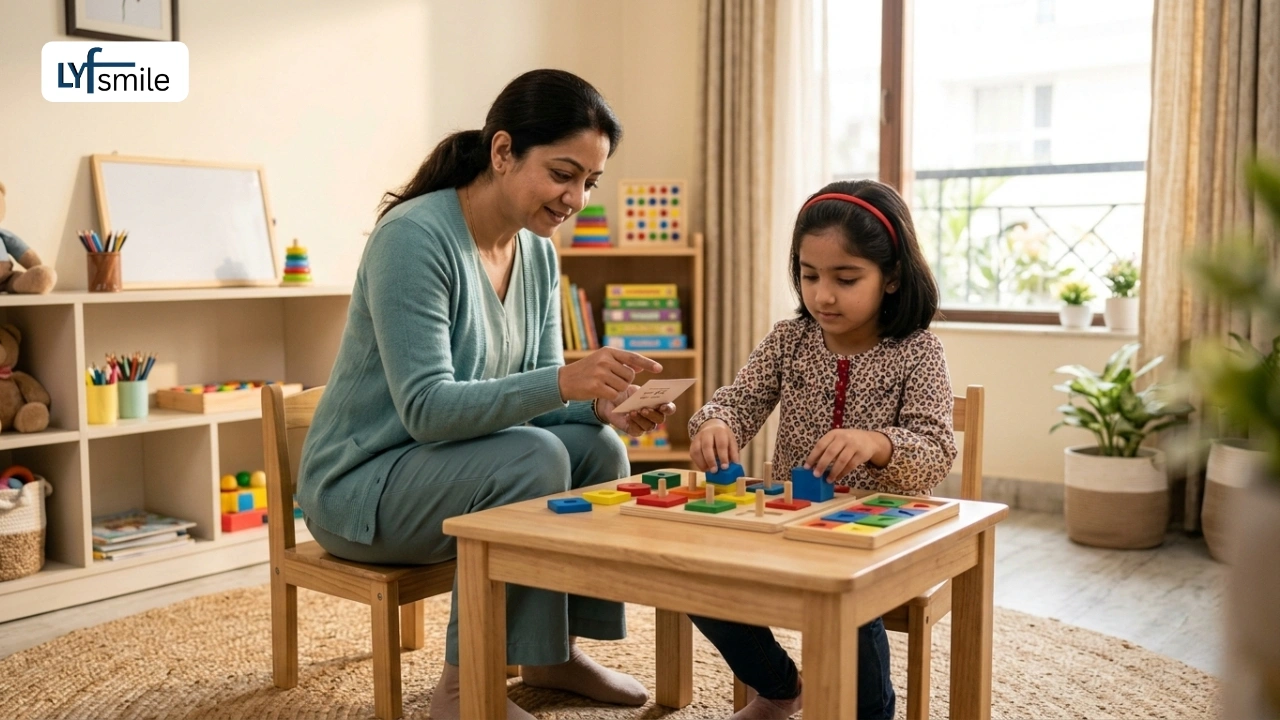 Home strategies help but when attention problems in children are rooted in anxiety, ADHD, academic stress in children, or low confidence, professional support is what creates lasting change.
What a Child Psychologist in Gurgaon Actually Does
A child psychologist for focus problems in Gurgaon doesn't just talk to your child for an hour and send them home with advice. They identify why your child is struggling the specific emotional, behavioural, or neurological factors behind poor concentration in children and work with both the child and the parent on a plan that actually works.
At Lyfsmile, Gurgaon, our attention issues child therapy Gurgaon approach includes:
Cognitive Behavioural Therapy (CBT) helps children manage anxious thoughts that disrupt focus
Behavioural Therapy builds routines, self-regulation, and attention skills
Play Therapy for younger children who struggle to express what they are feeling
Attention training techniques practical tools your child can use every day
Parent guidance sessions because you are a crucial part of your child's progress
What Changes After Therapy for Focus Problems in Gurgaon
With the right child counseling in Gurgaon, children typically:
✓ Improve attention span and ability to stay on task
✓ Manage distractions more independently
✓ Feel less anxious about school and studies
✓ Rebuild confidence and willingness to try
✓ Develop study habits that actually stick
Meet Our Child Psychology Team in Gurgaon
Mrs. Tanya Sachdev – Holistic Family Therapist
Specialization:
Clinical Child Psychology, Child & Teen Therapy, Behavioural and Developmental Concerns, Academic Stress and School Adjustment, Anxiety and Stress Management, Emotional Regulation
Approach:
She is a Clinical Child Psychologist who follows a client-centred and strength-based approach, helping children and parents better understand emotional and behavioural challenges in a supportive environment. Her sessions focus on identifying strengths, improving emotional regulation, and helping children gradually build healthier coping patterns, confidence, and focus.
Ritika Dhall – Certified CBT Expert
Specialization:
Child & Teen Therapy, Anxiety and Depression, Individual Counselling, Post-Traumatic Stress Disorder (PTSD)
Approach:
She uses Cognitive Behavioral Therapy (CBT)-based techniques to help children and teenagers manage anxious thoughts, emotional stress, and behavioural difficulties. Her approach focuses on helping children develop practical coping skills, emotional awareness, and healthier ways to manage academic pressure and everyday challenges.
Dr. Shraboni Nandi – RCI Registered Rehabilitation Professional
Specialization:
Child & Teen Psychology, Academic Stress and School Adjustment, Trauma Recovery, Bullying and Peer Pressure, Screen Addiction, Anxiety Management, Parent–Child Relationship Counselling
Approach:
She works with children, teenagers, and parents to better understand emotional struggles, behavioural concerns, and attention-related challenges. Her therapy approach focuses on building coping skills, emotional clarity, behavioural improvement, and healthier daily functioning in a safe and supportive environment.
Gunjan Bhatia – Certified Child and Adult Psychologist
Specialization:
Child Psychology, Behavioural Issues, Anxiety and Depression, Child & Teen Therapy, Dialectical Behaviour Therapy (DBT)
Approach:
She provides empathetic and supportive therapy focused on helping children and teenagers express emotions more comfortably, improve emotional balance, and manage behavioural challenges. Her sessions aim to create a safe space where children can gradually build self-confidence, emotional awareness, and healthier coping habits.
Each of our professionals has deep experience in child attention issues, ADHD, academic stress in children, and child concentration problems providing Gurgaon child mental health support that is warm, evidence-based, and parent-inclusive.
📍 Gurgaon | 💰 Sessions from ₹30/min | 🕐 Online & In-person available
📞Get a Free 15-Minute Consultation
Call or WhatsApp: +91 9804791047
No long waitlists. No judgment. Just an honest conversation about your child — and what might actually help.
Final Thoughts on Your Child's Focus and Attention
If your child is easily distracted, unable to focus on studies, or struggling with poor concentration in children please know this is not a permanent situation. Child concentration problems can be understood, and with the right support from a child therapist in Gurgaon, they can be genuinely improved.
What your child needs most right now is not more pressure. It is someone who understands what is getting in the way and a parent who is willing to find out.
You reached the end of this article. That already tells us something about the kind of parent you are.
If something here resonated with you, the next step is simple just one conversation with a child psychologist in Gurgaon who can help you make sense of what you're seeing at home.
📞 Call Lyfsmile Gurgaon: +91 9804791047Child counseling in Gurgaon | Attention issues child therapy Gurgaon | Sessions from ₹30/min
Frequently Asked Questions
1. Why is my child unable to focus even when they understand the topic?
Understanding a concept and sustaining attention are two different things. A child can know the answer and still struggle with child concentration problems due to anxiety, mental fatigue, or attention problems in children all of which are addressable with the right support from a child psychologist in Gurgaon.
2. Why does my child get distracted easily during homework?
Child attention issues during homework are often linked to anxiety, screen habits, low confidence, or an environment not set up for focus. It is rarely about attitude or effort. This is one of the most common distracted child symptoms we see at Lyfsmile.
3. My child cannot sit and study at all. Should I be worried?
If your child cannot focus while studying consistently and this is affecting their learning or confidence it is worth speaking to a child therapist in Gurgaon. This pattern is common and very treatable with early support.
4. How do I know if my child's poor concentration needs professional help?
If difficulty concentrating in children has lasted more than 4–6 weeks, is affecting school performance, or is causing distress at home, a child psychologist in Gurgaon can help identify the underlying cause and create a plan.
5. Is child counseling in Gurgaon easily accessible?
Yes. At Lyfsmile, child counseling in Gurgaon is available both online and in-person, starting at ₹30/min making professional therapy for focus problems Gurgaon accessible for most families.
6. Can anxiety cause focus problems in children?
Absolutely. Child anxiety and concentration are deeply connected. A child carrying worry into a study session cannot settle their mind enough to focus, no matter how hard they try.
7. How is Lyfsmile different from other child therapists in Gurgaon?
Lyfsmile combines RCI-registered professionals, affordable sessions, and a parent-inclusive approach. We don't just work with your child we work with you, because lasting change in poor concentration in children happens at home too