


Anupam Tripathi
Therapy for Adolescent Behavioural Issues in India (Ages 12–14)
Class 7 (typically ages 12–13) marks the beginning of early adolescence, a phase in which emotional development accelerates. At this stage, hormonal changes, brain restructuring, and social awareness increase simultaneously. The emotional brain becomes highly active, while the logical reasoning system is still developing. This imbalance often explains sudden mood swings, sensitivity, and impulsive reactions.
Children at this age begin to question their identity. They compare themselves with peers, seek independence, and become more aware of social acceptance. Even small events, like exclusion from a group or a teacher’s remark, can feel overwhelming.
Parents often notice:
Increased irritability
Argumentative tone
Withdrawal from family conversations
Strong reactions to small disappointments
These changes are not always “behaviour problems.” They are signs of emotional growth that need guidance.
Without support, however, emotional confusion can translate into disruptive behaviour. That is why therapy for adolescent behavioral issues during this stage helps children understand their feelings instead of acting them out.
Structured sessions, including online adolescent therapy options, provide safe spaces for children to express fears, frustrations, and social pressure without judgment. Early emotional support during Class 7 strengthens long-term resilience.
Many families also seek Child Counseling during early adolescence to help children manage emotional changes, peer pressure, and behavioural challenges before they become long-term concerns.
Common Behavioral Problems Seen in Middle School Children
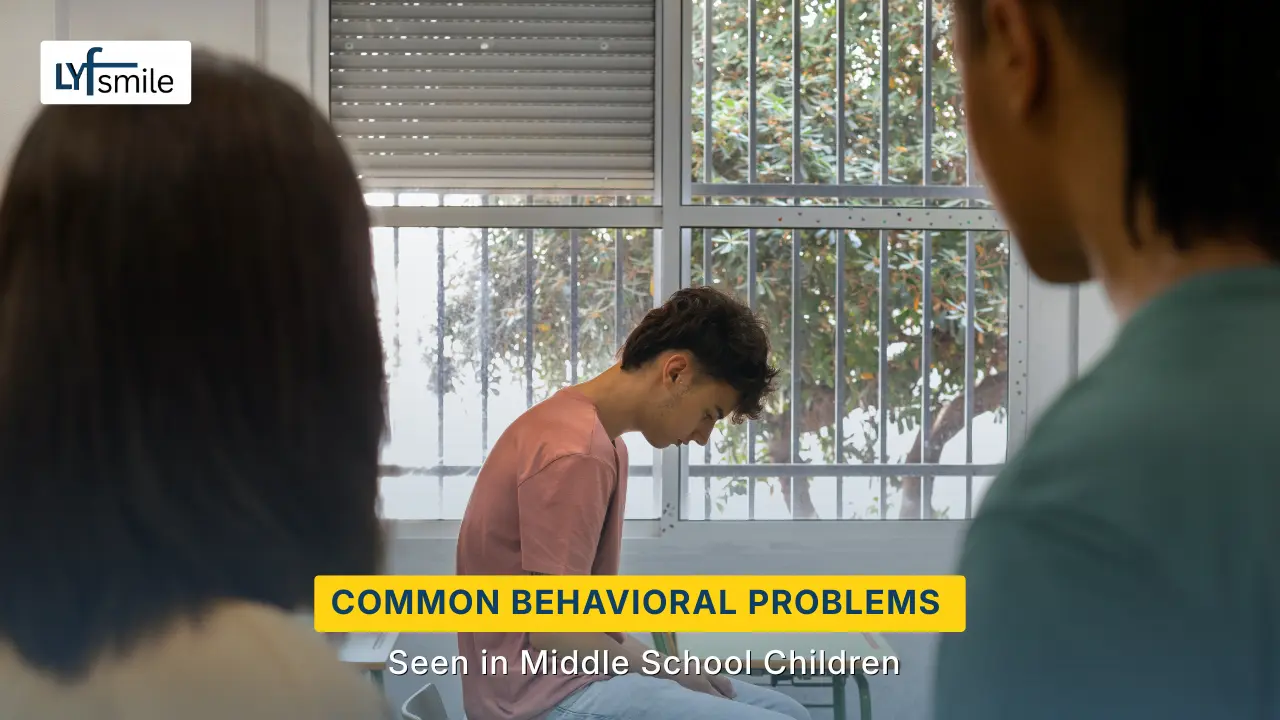 During middle school years, behavioral shifts often become more visible. While some changes are developmentally normal, certain patterns may indicate the need for structured therapy for adolescent behavioral issues.
At ages 12–14, children are navigating peer influence, academic expectations, and emotional identity formation. When they feel overwhelmed, behavior becomes the language through which distress is expressed.
Common Behavioral Problems and Their Emotional Causes
Behavioral Problem | Possible Emotional Cause |
|---|---|
Anger Outbursts | Stress and frustration |
Defiance | Need for independence |
Social Withdrawal | Anxiety or low confidence |
Academic Avoidance | Fear of failure |
Excessive Screen Time | Emotional escape |
Lying | Fear of punishment |
How Academic Pressure Influences Behavior Changes
Academic pressure intensifies significantly during middle school. In Class 7, expectations begin shifting from basic learning to performance comparison. Grades, rankings, competition, tuition, classes, and future career discussions slowly enter conversations. For many children, this creates internal stress that they may not know how to express.
When academic stress builds up, it rarely appears as “I am overwhelmed.” Instead, it shows up as behavior.
Parents may notice:
Avoidance of homework
Crying over small academic mistakes
Sudden lack of interest in studies
Complaints of stomach aches or headaches before school
In some cases, children become overly perfectionistic. In others, they disengage completely. Both extremes signal emotional overload.
The adolescent brain is still developing coping skills. When pressure exceeds emotional capacity, frustration leaks into behavior, anger, resistance, or withdrawal. This is where therapy for adolescents plays a preventive role. Instead of forcing performance, therapy helps children:
Build stress-management skills
Develop healthy study habits
Separate self-worth from grades
Communicate academic fears openly
Through structured child counseling online, children can express performance anxiety in a safe, confidential space. Many families also benefit from online adolescent therapy, especially when busy academic schedules limit in-person visits.
A qualified Child Counselor can also help adolescents cope with school-related stress, emotional overwhelm, and anxiety through personalised therapeutic support.
When academic stress is managed early, behavioral instability reduces naturally. Emotional regulation improves. And children learn that mistakes are part of growth, not failure.
Emotional Needs Hidden Behind Anger and Defiance
 Anger in adolescence is often misunderstood. When a 12- or 13-year-old slams a door, argues back, or refuses to listen, parents usually see disrespect. But very often, anger is not the core emotion — it is a protective layer.
Underneath defiance, there may be:
Fear of failure
Social insecurity
Feeling unheard
Low self-esteem
Confusion about changing identity
Emotional overwhelm
At this age, children struggle to articulate complex feelings. Saying “I’m stressed” or “I feel inadequate” is harder than showing irritation. So behavior becomes the outlet.
For example, a child who argues about small household rules may actually be seeking autonomy. A teen who reacts strongly to correction may be carrying academic pressure internally. When emotional needs remain unrecognised, behavior escalates.
This is where therapy for adolescent behavioral issues becomes transformative. Instead of suppressing anger, therapy explores what the anger is protecting.
In structured sessions, adolescents learn:
Emotional labelling skills
Healthy expression of frustration
Conflict resolution techniques
Self-awareness practices
Through parent-guided therapy, parents also learn how to respond to anger calmly rather than intensify it with strict discipline. When parents shift from “Why are you behaving like this?” to “What are you feeling right now?”, communication changes dramatically.
When anxiety becomes the underlying cause of behavioural changes, Child Counseling for Anxiety helps adolescents understand and manage their emotions in healthier ways.
Difference Between Discipline Issues and Emotional Distress
One of the biggest challenges parents face during early adolescence is identifying whether a behavior problem requires stricter discipline or emotional support. Misinterpreting emotional distress as indiscipline can unintentionally worsen the situation.
A discipline issue typically involves:
Testing limits knowingly
Repeated rule-breaking despite a clear understanding
Intentional boundary-pushing
Whereas emotional distress often presents as:
Sudden behavior change
Mood instability
Academic decline without prior pattern
Increased sensitivity
Social withdrawal
The difference lies in the root cause. Discipline issues are often about structure and boundaries. Emotional distress is about unmet psychological needs.
For example, a child who occasionally argues about screen time may be testing limits. But a child who suddenly refuses school, isolates socially, and becomes irritable may be struggling emotionally.
When parents respond to emotional distress with only punishment, the child may feel misunderstood. This can increase anger, shame, or secrecy.
This is why early assessment through therapy for adolescent behavioral issues helps clarify the root. A psychologist evaluates emotional triggers, environmental stressors, peer influence, and developmental factors before recommending intervention.
In some cases, classroom behavioral therapy may be recommended if patterns are visible in school settings. In others, structured online adolescent therapy helps explore internal emotional challenges.
Understanding the difference prevents overreaction and ensures the child receives appropriate support rather than excessive correction.
Role of Parents in Stabilising Behaviour among Children at This Age
 During early adolescence (ages 12–14), parents remain the most influential emotional anchors in a child’s life, even if teens appear distant. While peers gain importance, parental stability continues to shape emotional regulation and behavior patterns.
At this stage, children need two things simultaneously:
Independence and security.
When either becomes unbalanced, too much control or too little guidance, behavioural instability can increase.
Parents play a stabilising role by:
Maintaining consistent routines
Setting clear but reasonable boundaries
Listening without immediate judgment
Regulating their own emotional reactions
Offering reassurance during academic or social stress
Many behavioral escalations happen not because parents don’t care, but because reactions become emotionally charged. When a child shouts, and a parent shouts louder, conflict intensifies. When a child withdraws, and a parent responds with anger, distance increases. In many cases, underlying parental anxiety contributes to this escalation. Through parental overthinking counseling, parents learn how to regulate fear-driven reactions and respond with emotional steadiness instead of control.
This is where parent-guided therapy becomes helpful. Instead of focusing only on correcting the adolescent, therapy equips parents with:
Emotion coaching strategies
Conflict de-escalation tools
Age-appropriate boundary setting
Healthy communication techniques
Through structured therapy for adolescent behavioral issues, parents learn how to create an emotionally secure environment where teens feel understood rather than criticised.
Sometimes small changes, such as validating feelings before giving advice, can dramatically reduce oppositional behavior.
When parents respond calmly and consistently, children gradually mirror that emotional stability.
How Early Intervention Prevents Future Mental Health Issues among Children
Behavioral problems during early adolescence are often early signals, not outcomes. When addressed promptly, they can be reshaped before becoming long-term emotional patterns.
Ignoring persistent anger, withdrawal, academic decline, or defiance may increase the risk of deeper challenges later, such as anxiety disorders, chronic low self-esteem, academic avoidance, or depressive tendencies. Early adolescence is a highly adaptable stage. Neural pathways related to emotional regulation are still developing, which means intervention at this age is particularly effective.
Through structured therapy for adolescent behavioral issues, children learn:
Emotional regulation skills
Healthy coping strategies
Impulse control techniques
Constructive communication methods
Problem-solving abilities
Early Child Mental Health Counseling supports emotional development, improves coping skills, and reduces the risk of future mental health difficulties during adolescence.
Many families choose child counseling online for convenience and consistency, especially when schedules are demanding. Regular sessions through online adolescent therapy ensure that emotional concerns are addressed before they escalate.
In cases where behavior patterns extend into school settings, psychologists may coordinate with teachers or recommend structured classroom strategies to maintain consistency across environments.
Early intervention is not about labeling a child. It is about strengthening resilience before emotional stress becomes overwhelming.
Addressing behavioral concerns during middle school years protects long-term psychological well-being.
When Behavioral Problems Require Expert Help
Not every mood swing requires therapy. But when behavioral changes become intense, persistent, or disruptive across home and school environments, professional evaluation becomes important.
You should consider therapy for adolescent behavioral issues if you notice:
Aggression that feels disproportionate
Consistent academic decline
School refusal or frequent complaints about school
Social isolation lasting weeks
Excessive screen escape and emotional disengagement
Sudden personality shifts
Frequent emotional breakdowns
Lying, stealing, or risky behaviour patterns
Consulting an experienced Child Therapist or Child Counselor helps parents understand whether behavioural changes are developmentally normal or require professional intervention.
Online vs Offline Therapy for Class 7 Behavioral Problems at Lyfsmile
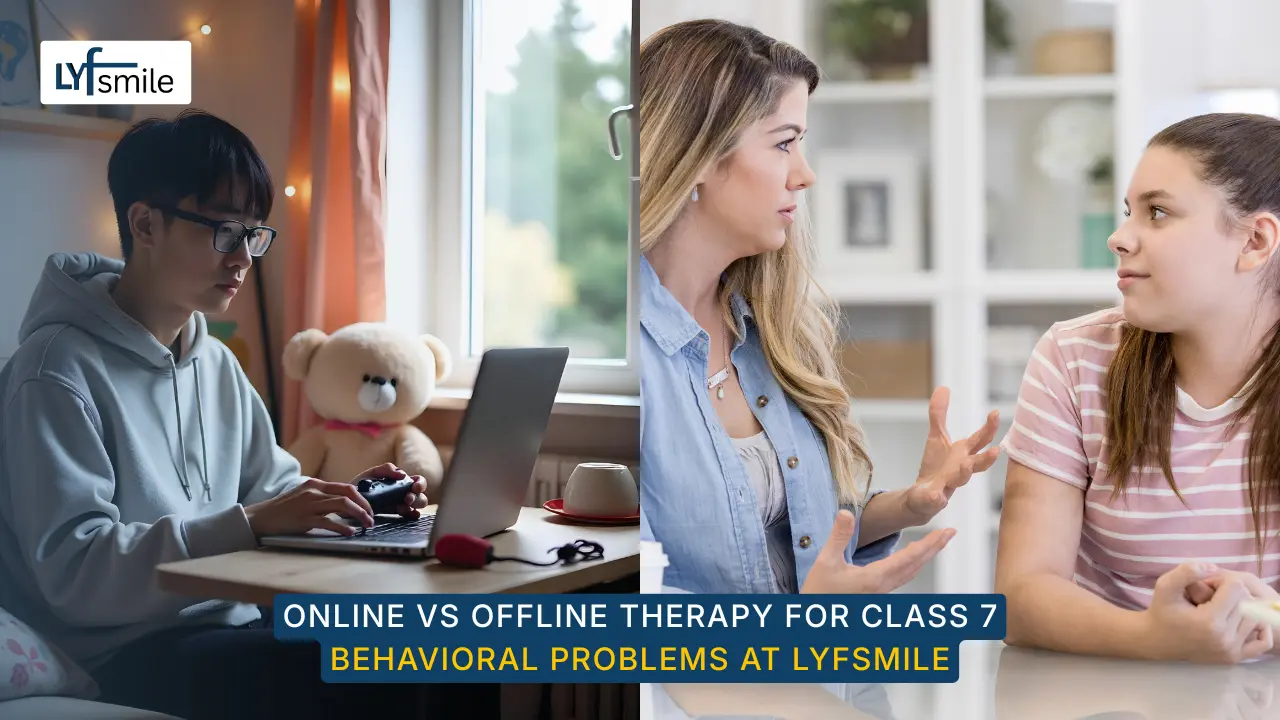 When parents decide to seek therapy for adolescent behavioral issues, one of the most common questions is whether online sessions or in-person therapy would be more effective. At Lyfsmile, experienced child and adolescent psychologists first assess the intensity of behavior, emotional triggers, school functioning, and family dynamics before recommending the appropriate format. The decision is always child-centered, not convenience-centered.
Online Therapy with Lyfsmile Psychologists
Online adolescent therapy at Lyfsmile is structured, confidential, and evidence-based. It is particularly effective for mild to moderate behavioral concerns such as irritability, academic stress, emotional withdrawal, low motivation, or screen dependency.
In online sessions, Lyfsmile psychologists focus on:
• Emotional regulation training
• Cognitive Behavioral Therapy (CBT)-based interventions
• Identifying negative thought patterns
• Building communication skills
• Parent-guided therapy discussions
• Structured progress tracking
Many Class 7 students feel more comfortable opening up from their home environment. Being in a familiar space often reduces defensiveness and allows adolescents to speak more freely about peer pressure, academic anxiety, or family conflicts.
Online therapy is usually recommended when:
• Behavioral concerns are emotionally driven
• There is no severe aggression or high-risk behavior
• Parents prefer flexibility around school and tuition schedules
• Privacy and consistent follow-ups are priorities
With regular sessions and parental involvement, online therapy can produce outcomes comparable to in-person treatment.
Offline (In-Person) Therapy at Lyfsmile
In some cases, Lyfsmile psychologists may recommend in-person sessions. Offline therapy is particularly helpful when behavioral intensity is higher or when structured physical observation becomes necessary.
In-person sessions are beneficial when:
• Aggression is physically disruptive
• Emotional breakdowns are severe or frequent
• Impulse control requires close behavioral observation
• School coordination needs structured collaboration
• Attention-related concerns need direct assessment
Face-to-face interaction allows therapists to observe body language, response patterns, and environmental triggers more closely. For certain adolescents, the physical setting of a clinic enhances accountability and focus during sessions.
How Lyfsmile Psychologists Help
Every Child Behavior Therapist at Lyfsmile follows evidence-based therapeutic approaches tailored to the child's emotional, behavioural, and developmental needs.
Therapeutic techniques may include:
1. Cognitive Behavioral Therapy (CBT)
Helps adolescents identify negative thought patterns driving anger, avoidance, or low motivation. CBT builds healthier thinking habits and emotional regulation skills.
2. Behavioral Modification Techniques
Used in both home and school coordination settings, these techniques reinforce positive behavior patterns gradually and consistently.
3. Emotional Regulation Training
Teens learn how to recognize triggers, manage impulses, and communicate feelings without aggression.
4. Parent-Guided Therapy Sessions
Parents receive structured coaching on response strategies, boundary-setting, and emotional validation techniques.
5. Classroom Behavioral Therapy Collaboration
When required, therapists coordinate structured behavioral strategies that support consistency between school and home environments.
Lyfsmile also offers structured child counseling online and confidential online adolescent therapy, making support accessible for families balancing academic schedules and extracurricular commitments.
The goal of therapy for adolescent behavioral issues is not to label the child; it is to identify emotional roots, strengthen coping skills, and restore family balance.
Speak with experienced child psychologists at Lyfsmile by calling +91 9804791047 to schedule a confidential consultation and get clarity on the right support for your child.
Conclusion
Behavior changes during ages 12–14 are often signals of emotional stress, not just indiscipline. When anger, withdrawal, or academic decline becomes persistent, early support becomes essential.
Structured psychological intervention helps adolescents regulate emotions, improve behavior, and rebuild healthy communication patterns. At the same time, parents learn how to respond with clarity instead of frustration.
Whether you choose Online Child Counseling or in-person therapy, early intervention helps adolescents build resilience, emotional balance, and healthier relationships with family and peers.
Frequently Asked Questions (FAQs)
What therapy works best for behavioral problems in adolescents?
Cognitive Behavioral Therapy (CBT), emotional regulation training, behavioral modification techniques, and parent-guided therapy are commonly used to treat adolescent behavioral issues.
How do I manage a 12-year-old with behavior problems?
Parents should set clear boundaries, validate emotions, maintain routines, and seek professional support when behavior becomes persistent or disruptive.
Why is my 13-year-old becoming angry and disrespectful?
Hormonal changes, academic pressure, peer relationships, and emotional stress can contribute to anger and oppositional behavior during adolescence.
Can puberty cause behavior problems?
Yes. Hormonal and neurological changes during puberty may increase irritability, impulsivity, and emotional sensitivity.
Is CBT effective for adolescent behavior issues?
Yes. Cognitive Behavioral Therapy helps adolescents understand thoughts, regulate emotions, and develop healthier coping mechanisms.