


Anupam Tripathi
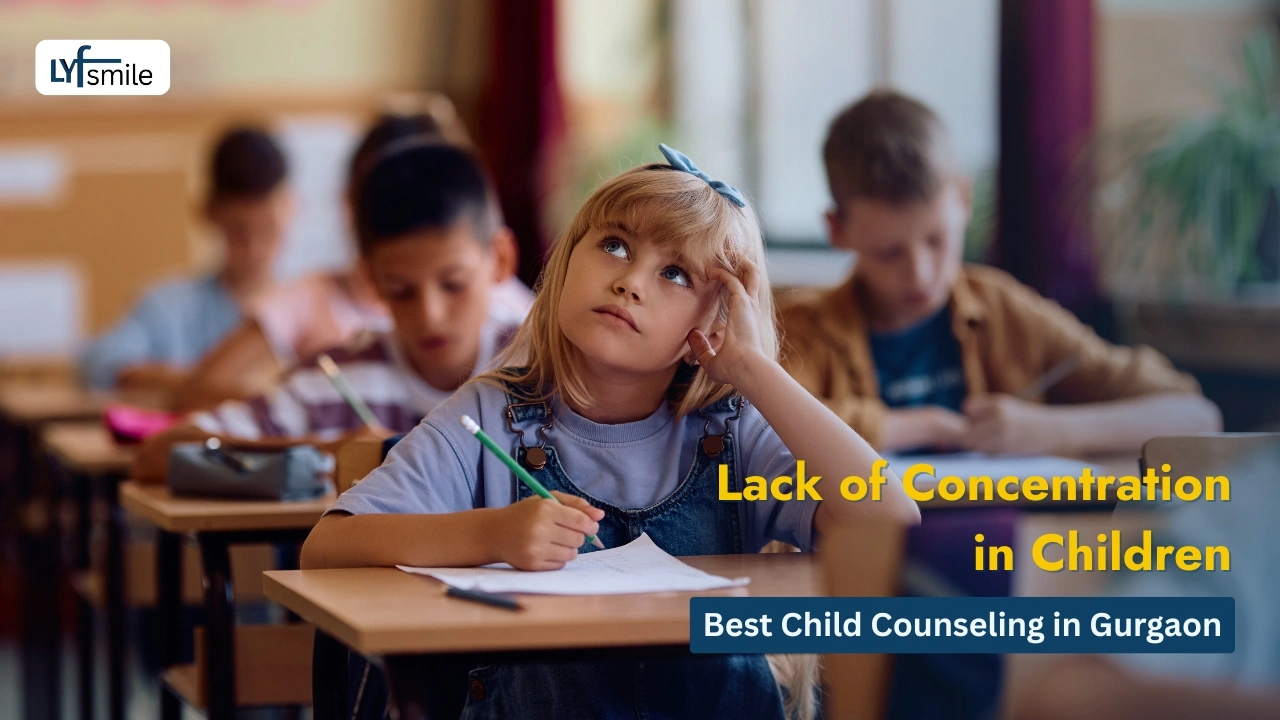
Lack of Concentration in Children: Child Counselling in Gurgaon
“My child just doesn’t sit still while studying.”
“My daughter starts homework but gets distracted within minutes.”
If these situations sound familiar, you're not alone. Many parents worry when their child struggles to pay attention, loses interest in studies quickly, or has difficulty completing everyday tasks. While occasional distraction is normal in childhood, persistent concentration problems can affect a child's learning, confidence, and emotional well-being.
A child who cannot focus on studies is not necessarily lazy or careless. Concentration difficulties can be linked to emotional stress, anxiety, academic pressure, excessive screen time, poor routines, attention-related challenges, or changes in a child's environment.
At Lyfsmile, experienced child psychologists and counsellors help families understand the underlying causes of concentration difficulties and create personalised strategies that support focus, learning, and emotional growth.
Difficulty concentrating is not always caused by poor study habits. Counseling for School Stress, Child Counseling, and Child Mental Health Counseling help children understand the emotional and behavioural factors affecting focus, improve attention, and regain confidence in learning.
Why Do Children Lose Concentration or Focus?
 Children are naturally curious and energetic. However, when attention difficulties become frequent and persistent, there is usually an underlying reason that needs to be understood rather than ignored.
1. Emotional and Psychological Reasons
Children often find it hard to concentrate when they’re emotionally unsettled. Stress about school, low self-esteem, bullying, or parental conflicts can quietly affect their mental state. Some children also have Attention Deficit Hyperactivity Disorder (ADHD)—a condition that makes it hard to stay still or complete tasks.
At Lyfsmile, child psychologists help parents identify whether the lack of concentration in children is emotional or clinical. Through attention deficit therapy for children in Gurgaon, the therapist teaches coping tools like breathing, mindfulness, and time management that slowly rebuild natural focus.
2. Impact of Environment and Study Pressure
Children thrive in a calm environment. But if there’s too much pressure at home or school—constant scolding, comparison with peers, or unrealistic expectations—they lose motivation and interest. Noise, irregular schedules, or lack of structure also contribute to distractions.
Counselling at Lyfsmile often helps parents design better routines. By balancing study hours with rest and positive reinforcement, child counselling for concentration in Gurgaon ensures that learning becomes stress-free again.
3. Technology and Screen Time
Phones, tablets, and online games are the biggest attention thieves today. They train the brain to expect quick stimulation, reducing patience for long tasks like reading or homework.
Too much screen time directly affects concentration in school children and can lead to irritability and mood swings.
Children who struggle with attention because of emotional stress or anxiety also benefit from consistent Child Emotional Support, helping them feel more secure, confident, and better able to focus on daily activities.
Signs That Your Child Needs Counseling for Focus Problems
Every child gets distracted sometimes, but persistent attention issues show clear patterns. If you notice any of these signs, it may be time to consider a child psychologist for attention problems in Gurgaon.
You may notice your child:
Gets distracted easily during studies
Frequently forgets instructions
Struggles to complete homework
Daydreams often
Loses belongings regularly
Avoids mentally demanding tasks
Makes careless mistakes
Finds it difficult to stay seated
Has trouble following conversations
Takes significantly longer to complete assignments
Shows declining academic performance
Appears frustrated while studying
These are early signals of lack of concentration in children, and they often worsen with pressure or punishment. The sooner parents address them through child concentration issues counselling in Gurgaon, the easier it becomes to rebuild attention and academic success. Find the best child counseling in Gurgaon.
How Lack of Concentration Affects a Child’s Life
 Lack of concentration in children affects them in several ways. A distracted mind affects far more than school grades. It slowly impacts emotions, relationships, and a child’s self-image.
Academic Challenges
Children may:
Fall behind in school
Forget important instructions
Miss deadlines
Perform below their potential
Reduced Confidence
Repeated struggles often lead children to believe that they are not capable, even when they have the ability to succeed.
Emotional Distress
Concentration problems can contribute to:
Frustration
Anxiety
Irritability
Emotional outbursts
Social Difficulties
Children who frequently receive criticism may withdraw from classmates, teachers, or family members. Early intervention can help prevent these challenges from affecting long-term development.
That’s why Lyfsmile’s child counselling for concentration in Gurgaon focuses not only on improving focus but also on healing the emotions behind inattention.
When Should Parents Seek Help from a Child Counselor in Gurgaon?
It’s completely normal for children to get distracted sometimes. However, when lack of concentration in children starts affecting school performance, daily routines, and emotional health, it’s a clear sign to act early. Most parents try adjusting routines or giving motivational talks at home, but when nothing seems to work, professional help becomes essential.
Recognising when to seek help is the first step towards real change. Here’s how you can tell the difference between a passing phase and something that needs attention.
1. Early Warning Signs You Shouldn’t Ignore
If you notice your child constantly:
Forgetting things even after repeated reminders
Struggling to complete simple homework or tasks
Daydreaming during study sessions
Losing interest in subjects they once enjoyed
Complaining about being “tired” or “bored” all the time
These are not signs of laziness: they’re indicators that the child’s mind is overloaded or emotionally disengaged. At Lyfsmile, counsellors often explain to parents that behind every behaviour is an emotion. Once that emotion is understood, focus naturally follows.
2. When Home Remedies Don’t Work
Many parents try helpful methods like fixed study schedules, removing distractions, or rewarding good behavior. But sometimes, despite genuine effort, children still struggle to focus. That’s when external support from a child psychologist for attention problems in Gurgaon can make all the difference.
At Lyfsmile, therapists work closely with both parents and children. They don’t just correct study habits, they explore why the child’s mind keeps drifting away. Through structured play therapy, concentration games, and emotion-focused techniques, the child learns how to build focus step by step.
3. How Professional Therapy Makes a Difference
Professional counselling goes beyond simple motivation. It helps children train their brains to manage distractions and emotions better. At Lyfsmile’s child counselling for concentration in Gurgaon, therapists use a variety of methods like:
Behavioral Therapy: Helps children form consistent study habits and positive routines.
Mindfulness Exercises: Teaches kids how to stay present and calm during tasks.
Cognitive Techniques: Improves memory, focus span, and attention flexibility.
Parental Counselling: Guides parents on how to support their child without scolding or pressure.
These structured sessions address the emotional and psychological roots of lack of concentration in children, giving them long-term results instead of temporary fixes.
How Lyfsmile Helps Children Improve Focus and Attention
 Our child concentration issues counselling program in Gurgaon combines compassion, structure, and science. It’s not about forcing discipline but about helping kids enjoy learning again.
Personalized One-on-One Counselling
Each child is different, some need help managing anxiety, while others need motivation or behavioral support.
Behavioral Therapy for Focus Issues
Children who face attention deficits in school or studies often respond well to structured routines and positive reinforcement. Behavioral therapy focuses on:
Breaking tasks into smaller, achievable goals
Rewarding focus, not just performance
Practicing self-discipline through games and stories
Replacing frustration with healthy problem-solving
Behavioural therapists ensure every session feels motivating, not like extra schoolwork. This is especially effective for poor concentration in school children who otherwise resist studying.
ADHD and Attention Deficit Therapy
Some children struggle with deeper attention challenges such as ADHD (Attention Deficit Hyperactivity Disorder). These kids may show signs of restlessness, impulsivity, or short attention spans.
Parental Guidance and Home Support
Therapy is most effective when parents are equally involved. Our counselors guide parents on how to:
Build distraction-free study zones
Encourage breaks and hobbies
Replace criticism with empathy
Celebrate effort over perfection
This approach ensures the child feels supported, not pressured, helping them focus better and grow emotionally stronger.
Real Case Story: A Gurgaon Parent’s Journey (Short Version)
Vivaan, a 10-year-old from DLF Phase 4, loved cricket but struggled badly with attention. During homework he would drift off and forget his notebook, and teachers often complained that he wasn’t focusing in class. His parents tried strict routines and removing distractions, but nothing worked.
In the first sessions, the therapist focused on trust-building instead of study pressure. Slowly, Vivaan opened up and shared that he felt scared of making mistakes, which made him give up easily. With child concentration counselling in Gurgaon, he learned focus-building games, visual-learning methods, and simple emotional strategies to stay calm.
Within a month, teachers noticed improvements; he was completing homework on time and taking interest in class. His parents also joined parental sessions where they learned how to guide him gently without comparisons, which created a more supportive environment at home.
Today, Vivaan is more confident, enjoys learning, and manages both studies and play better.
His mother says, “Lyfsmile didn’t just help Vivaan focus; they helped us understand him better.”
Parents searching for the Best Child Psychologist or an experienced Child Therapist in India should seek support early when concentration problems begin affecting confidence, school performance, or emotional well-being.
Tips for Parents to Improve Their Child’s Concentration at Home
 Not every child needs therapy right away. Many times, parents can make small but powerful changes at home to support better focus.
1. Create a Distraction-Free Environment
Set up a specific study area for your child, free from TV, phones, or noisy surroundings. Even simple things like a clean table, good lighting, and a few organised supplies help the brain feel calm and ready to focus. Children associate spaces with habits, so a fixed study spot signals the brain that “it’s time to concentrate.”
2. Give Small Breaks Between Studies
Kids’ attention spans are shorter than adults’. Instead of forcing them to study for hours, divide the time into short sessions like 25 minutes of study followed by a 5-minute break. During breaks, let them stretch, grab a snack, or do a quick fun task. This prevents mental fatigue and boosts focus for longer durations.
3. Reduce Screen Time Gradually
Phones, tablets, and video games flood the brain with instant rewards, which make regular studying seem boring. Reducing screen exposure, especially during evenings, can reset attention levels. Replace digital entertainment with board games, puzzles, or outdoor play, these activities improve concentration in subtle ways.
4. Encourage Physical Activities and Hobbies
Physical exercise increases blood flow to the brain and improves alertness. Encourage children to play outdoors, learn a sport, or take up activities like drawing or music. These creative outlets teach patience, discipline, and mindfulness, all of which directly improve attention span.
5. Appreciate Efforts, Not Just Results
One of the biggest focus-killers in children is fear of failure. When parents only reward grades, children feel anxious and avoid trying harder. Instead, praise your child for the effort they put in, finishing homework, revising lessons, or even sitting through a full study session without distraction. This builds inner motivation and confidence.
These small steps, when practiced regularly, help children slowly overcome poor concentration in school and develop a healthier relationship with learning.
Expert Advice from Lyfsmile’s Child Psychologists in Gurgaon
 When it comes to lack of concentration in children, parents often focus only on improving study habits. But Lyfsmile’s experts emphasize that focus begins with emotional connection. A child who feels understood and supported naturally pays more attention, both in school and at home.
According to Ms. Gunjan Bhatia, Child Psychologist at Lyfsmile: Understanding your child’s emotions improves focus
Ms. Gunjan Bhatia, a senior child psychologist in Gurgaon, explains that many children lose concentration because they are silently dealing with anxiety, self-doubt, or performance pressure. When parents rush to correct behavior without understanding emotions, it makes the child more restless.
She further adds,
When parents stop comparing and start connecting, children find their rhythm again. Focus grows naturally in an emotionally safe environment.
How Emotional Bonding Helps Children Learn Better
Many parents underestimate the power of bonding. Spending even 15 calm minutes daily with your child, without gadgets or scolding, can transform their concentration levels. Activities like storytelling, cooking together, or drawing help the brain relax, which in turn improves memory retention and learning capacity.
We encourage parents to become active participants in therapy. Their child counselling for concentration in Gurgaon includes family guidance sessions that teach simple yet powerful techniques like
Emotion labelling: Helping children identify and express their feelings.
Positive reinforcement: Encouraging effort instead of punishing mistakes.
Mindful communication: Listening without interrupting or judging.
These small shifts create a home environment where the child feels secure enough to focus and learn effectively.
With the right Counseling for School Stress, professional Child Counseling, and ongoing parental support, children can strengthen concentration, improve confidence, and enjoy learning with greater focus and motivation.
FAQs: Child Counseling and Concentration Issues in Gurgaon
Q1. What is the best therapy for poor concentration in kids?
The best therapy depends on the child’s specific needs. At Lyfsmile, counsellors often use a mix of behavioral therapy, play therapy, and mindfulness training to improve attention span. These sessions are designed to make learning enjoyable while addressing emotional and environmental causes behind the lack of focus.
Q2. How long does it take to improve attention?
Improvement time varies depending on the child’s condition and consistency of therapy. On average, parents begin noticing changes within 4–6 weeks of regular sessions.
Q3. Can counseling help children with ADHD and focus issues?
Absolutely. Attention Deficit Hyperactivity Disorder (ADHD) requires a structured approach that blends therapy, routine planning, and parental support. Lyfsmile’s attention deficit therapy in Gurgaon helps children regulate impulsivity, develop patience, and strengthen focus through fun, interactive methods.
Q4. Where can I find the best child counselor in Gurgaon?
If you’re searching for the best child counsellor for attention issues in Gurgaon. Our team of experienced therapists focuses on holistic growth, improving attention, emotional well-being, and confidence through child-friendly counselling sessions.
Q5. What are the common signs of lack of concentration in children?
Common signs of lack of concentration in children include difficulty completing tasks, getting easily distracted, forgetting instructions, and losing interest quickly in studies or daily activities.
Q6. How can parents help reduce lack of concentration in children at home?
Parents can reduce lack of concentration in children by creating a distraction-free study space, using short-break study routines, keeping a consistent schedule, and encouraging positive reinforcement.