Lakshika Kaushik
Separation and Emotional Detachment From Parents in Teenagers!
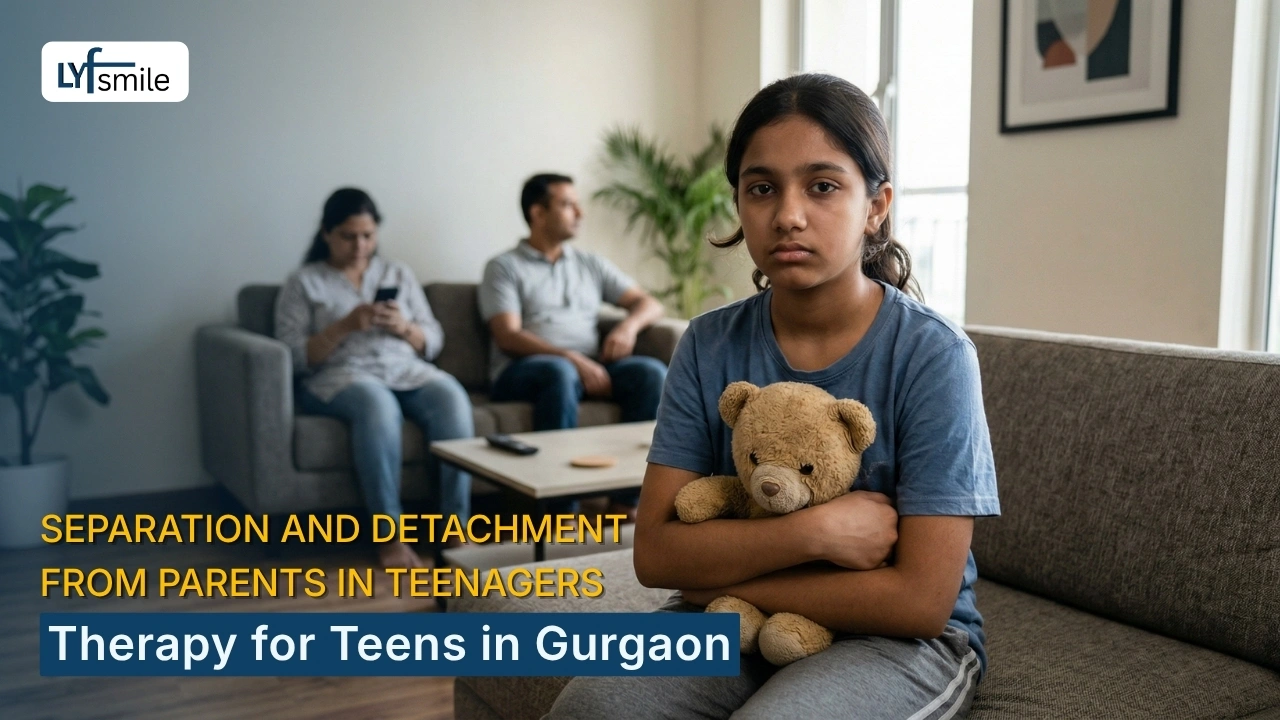
It can be difficult to understand why your teen is slowly becoming distant. You may notice they are not sharing their feelings, conversations feel limited, and there’s a growing parent–child communication gap. At times, this can even lead to parental overthinking and worry, wondering if something is wrong or if it’s just a phase.
Separation and detachment from parents in teenagers often begin with small changes. You might see sudden mood swings, a lack of interest in studies, or your child spending more time alone. In early teen years, especially around school stages, these behaviour changes in early teens can become more noticeable.
Along with this, factors like peer pressure, changes in friend circle, and the impact of social media can affect how your teen feels and behaves. Some teens may struggle with low confidence, overthinking, sleep problems, or academic stress and fear of failure, while others may show signs of teen anxiety, low mood, or emotional withdrawal.
While a certain level of independence is natural, ongoing emotional distance, social withdrawal, irritability, or feeling lonely even at home should not be ignored. These can sometimes be signs of deeper emotional struggles like child anxiety, constant worry, or difficulty coping with emotions.
Many teenagers find it difficult to express emotions during adolescence, even when they need support the most. Teen Counseling, guidance from an experienced Child Therapist, and Child Mental Health Counseling help teenagers understand their emotions, rebuild trust with their parents, and develop healthier ways to communicate.
Many parents in Gurgaon, especially in areas like Sector 56, Golf Course Road, DLF Phase 1–5, Sushant Lok, South City and Sohna Road, are noticing that their teenagers have become emotionally distant and less communicative.
Why is your child suddenly becoming distant from you?
It usually doesn’t happen suddenly; it just starts feeling that way. One day, your child is sharing everything, and slowly, those conversations become shorter and less frequent. You may notice they are not sharing their feelings, avoiding conversations, or spending more time alone. This growing separation and detachment from parents can feel confusing and emotionally difficult.
At the same time, you may find yourself overthinking, trying to understand what changed. This kind of parental overthinking and worry often increases when there’s a clear parent–child communication gap.
Emotional changes that often begin quietly
These changes are often subtle and easy to miss in the beginning, but they gradually become more noticeable over time. Your child may not express what they’re feeling directly, but their behaviour often reflects it.
You may observe:
Sudden mood swings or increased irritability
Feeling low, withdrawn, or emotionally distant
Changes in sleep patterns or constant tiredness
Feeling lonely even while being at home
These are often part of behaviour changes in early teens, where your child is trying to process emotions but may not know how to express them clearly.
Over time, this can lead to social withdrawal, lack of interest in studies, and emotional distance from parents. With the right support, including therapy for adolescent anxiety and structured therapy for teenagers, your child can slowly begin to feel safe enough to share again.
If these emotional changes continue for several weeks, Child Anxiety Therapy and Child Counseling for Anxiety can help teenagers manage worry, emotional overwhelm, and the fear of expressing their feelings openly.
Don’t wait for things to get harder.
Take the first step today.
Get a 15-minute free consultation for therapy for teenagers in Gurgaon
Why Are Parents in Gurgaon Seeking Teen Therapy for Emotional Detachment?
In recent years, many parents in Gurgaon have become increasingly concerned about the growing emotional distance they notice in their teenagers. Families living in areas such as DLF Phase 1–5, Sushant Lok, South City, Golf Course Road, Sohna Road, and Sector 56 often report that their teens have become quieter, spend more time alone, and are less willing to share their thoughts or feelings.
While some level of independence is a normal part of adolescence, persistent emotional withdrawal and a widening parent–child communication gap can sometimes indicate underlying concerns such as anxiety, academic stress, low self-esteem, peer pressure, or the impact of social media. As these challenges become more common, many families are choosing teen therapy in Gurgaon to better understand what their child may be experiencing.
Working with a qualified child psychologist in Gurgaon helps teenagers healthily express emotions, improve communication, and develop better coping skills. Therapy also supports parents by helping them understand their teen's emotional needs and rebuild trust within the relationship.
With both online and offline options available, therapy for teenagers in Gurgaon has become an important source of support for families dealing with emotional detachment, anxiety, anger, social withdrawal, and ongoing communication difficulties. Along with therapy for teenagers, Child Counseling helps improve emotional awareness, communication, and family relationships, making it easier for teenagers to reconnect with their parents.
How distance from parents leads to anger and negative feelings in teens
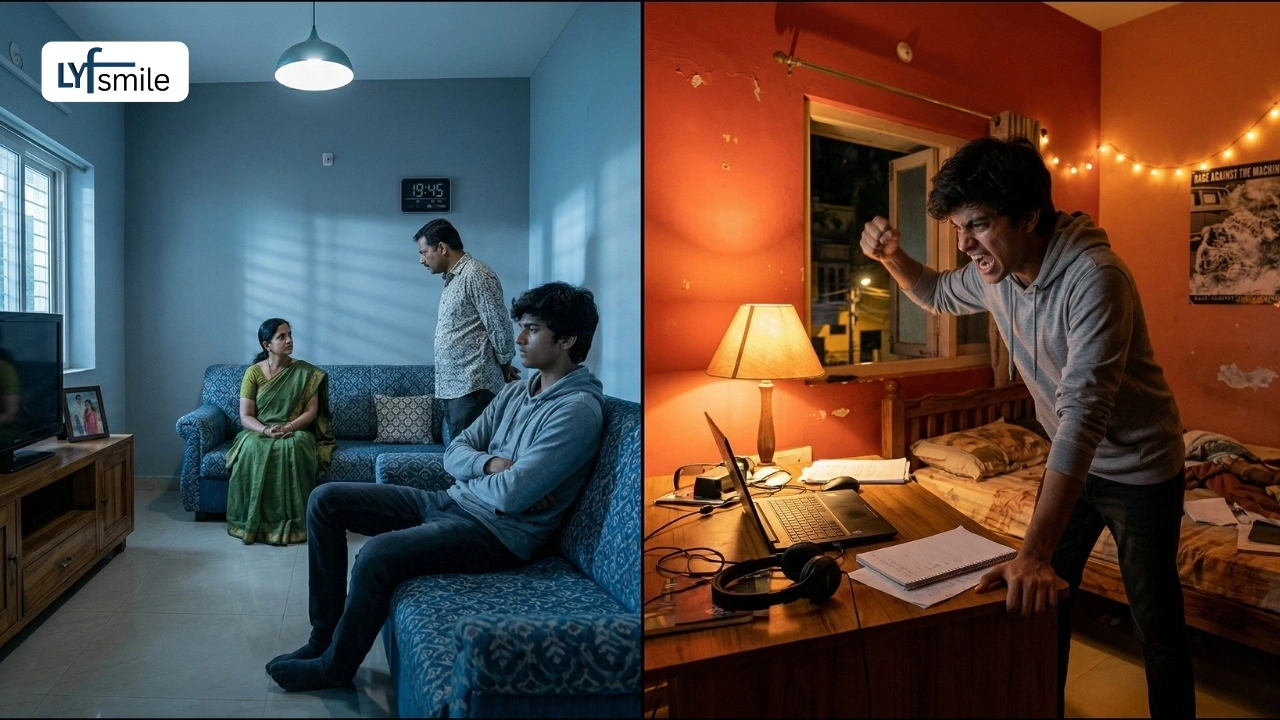 When emotional distance continues for a long time, it doesn’t just stay silent; it often starts changing how your teen feels and reacts. What begins as separation and detachment from parents can slowly turn into frustration, anger, or even resentment.
Your teen may not always understand what they are feeling. When emotions remain unexpressed, they can build up internally and come out as irritability, aggressive behaviour, or emotional outbursts. In many cases, this is linked to teen anxiety, low mood, or constant worry that hasn’t been addressed.
As a parent, this shift can feel sudden, but it usually develops gradually as the communication gap increases and emotional needs remain unmet.
Signs that go beyond normal teenage behaviour
While mood changes are a part of growing up, some patterns may indicate that your teen is struggling more than usual. You may notice:
Frequent anger, irritability, or aggressive reactions
Strong emotional responses to small situations
Increased social withdrawal or isolation
Ongoing low mood or signs of depression and sadness
Lack of interest in studies or daily activities
Attention and focus problems
Avoiding school or showing school-related fear or stress
These signs often go beyond typical behaviour and may point towards deeper concerns like adolescent anxiety, emotional distress, or difficulty coping.
When should parents start paying closer attention?
It becomes important to take these changes seriously when they start affecting your child’s daily life, behaviour, and emotional well-being.
You should consider taking action when:
Your teen remains distant for a long period
There is a clear parent–child communication gap
Emotional reactions (anger, sadness, withdrawal) become frequent
Your child shows low self-esteem or constant self-doubt
Academic performance drops due to a lack of focus or motivation
They seem lonely, even when surrounded by family
At this stage, early support can make a real difference. With the help of therapy for adolescent anxiety and the right therapy for teenagers, your child can learn to process their emotions more healthily.
Getting guidance from a top-rated child psychologist in India can help not only your teen but also improve understanding and connection within the family. In many teenagers, emotional withdrawal is also connected with Counseling for School Stress, especially when academic pressure, fear of failure, or performance anxiety begin affecting family relationships and emotional well-being.
How separation from parents starts affecting a teenager’s behaviour
When this separation from parents continues for a while, it doesn’t stay limited to silence or less communication. Slowly, it starts changing how your teen behaves, reacts, and connects not just with you, but with everything around them.
What may look like attitude, stubbornness, or disinterest is often something much deeper. Many teens who experience separation and detachment from parents are quietly dealing with child anxiety, constant worry, or emotional confusion that they don’t know how to express.
As a parent, this can feel painful. You may sense that your child is not the same anymore, but at the same time, you may not fully understand what they are going through.
Changes in mood, communication, and daily routine
These changes often begin in small ways, but over time, they become hard to ignore. You may start noticing:
Sudden mood swings, irritation, or emotional outbursts
Less communication and a growing parent–child communication gap
Avoiding conversations or clearly not sharing feelings
Spending more time alone or staying disconnected at home
Increased screen time and social media impact
Irregular sleep patterns or ongoing sleep problems in adolescents
Feeling lonely, even when surrounded by family
These are not just behaviour changes; they are often signs that your teen is struggling internally but doesn’t know how to open up.
Impact on studies, confidence, and social life
As this emotional separation grows, it starts affecting other areas of your teen’s life as well, sometimes more than we realise.
You may notice:
A clear lack of interest in studies or a drop in performance
Attention and focus problems, even in simple tasks
Increased academic stress and fear of failure
Low self-confidence and self-esteem
Changes in the friend circle or difficulty handling peer pressure
Social withdrawal, avoiding friends or social situations
Feeling disconnected, lost, or unsure of themselves
In some cases, this may also show up as teen anxiety, low mood, or emotional isolation, where your child feels stuck but unable to explain why.
For a parent, this can be the hardest part: watching your child struggle, but not knowing how to reach them. At this stage, the right support can make a real difference. With therapy for adolescent anxiety and guided therapy for teenagers, your child can slowly begin to understand their emotions and feel more in control.
Working with a child therapist or child psychologist in Gurgaon can also help rebuild that lost connection, not just within your child, but within your relationship as well.
How can teen therapy help rebuild a connection with your child?
When there is ongoing separation and detachment from parents, it can feel like the connection you once had with your child is slowly fading. Conversations become limited, emotions stay unexpressed, and misunderstandings increase.
But the important thing to understand is this connection is not lost; it just needs the right space and support to be rebuilt.
With the help of therapy for adolescent anxiety and structured therapy for teenagers, your child gets the opportunity to understand their emotions, while you begin to understand them better as well. Over time, this helps reduce emotional separation and rebuild trust within the relationship.
Creating a safe space for your teen to open up
One of the biggest challenges during this phase is that your child may not feel comfortable sharing their thoughts at home. This is where therapy plays an important role.
A trained child psychologist in Gurgaon creates a safe, non-judgmental space where your teen can express what they are feeling without fear.
In this environment, your child can:
Talk openly without feeling judged or misunderstood
Share the emotions they have been holding in
Understand their thoughts and feelings better
Feel heard, accepted, and supported
This safe space often becomes the first step in reducing emotional separation and helping your teen open up again.
Improving trust and communication between parent and child
As therapy progresses, it doesn’t just help your teen; it also improves the relationship between you and your child.
With the right guidance, your teen slowly becomes more comfortable expressing themselves, and you begin to understand their emotional needs better.
This leads to:
Better communication and fewer misunderstandings
Reduced anger, frustration, and emotional outbursts
A stronger sense of trust between parent and child
A more open and supportive home environment
Over time, the gap created by separation begins to reduce, and connection starts to feel more natural again.
Types of therapy that work best for teenagers
Different teens need different approaches, depending on what they are going through. In most cases, therapists use methods that are practical, supportive, and easy for teens to relate to.
Common approaches include:
CBT (Cognitive Behaviour Therapy) to manage negative thoughts and anxiety
Talk-based therapy to help teens express emotions
Emotional regulation techniques to handle mood swings and stress
Support for concerns like academic stress, low confidence, or social withdrawal
With the right therapy for teenagers, your child doesn’t just feel better in the moment; they learn skills that help them cope better in the long run.
Take the first step with a child assessment before the separation grows further
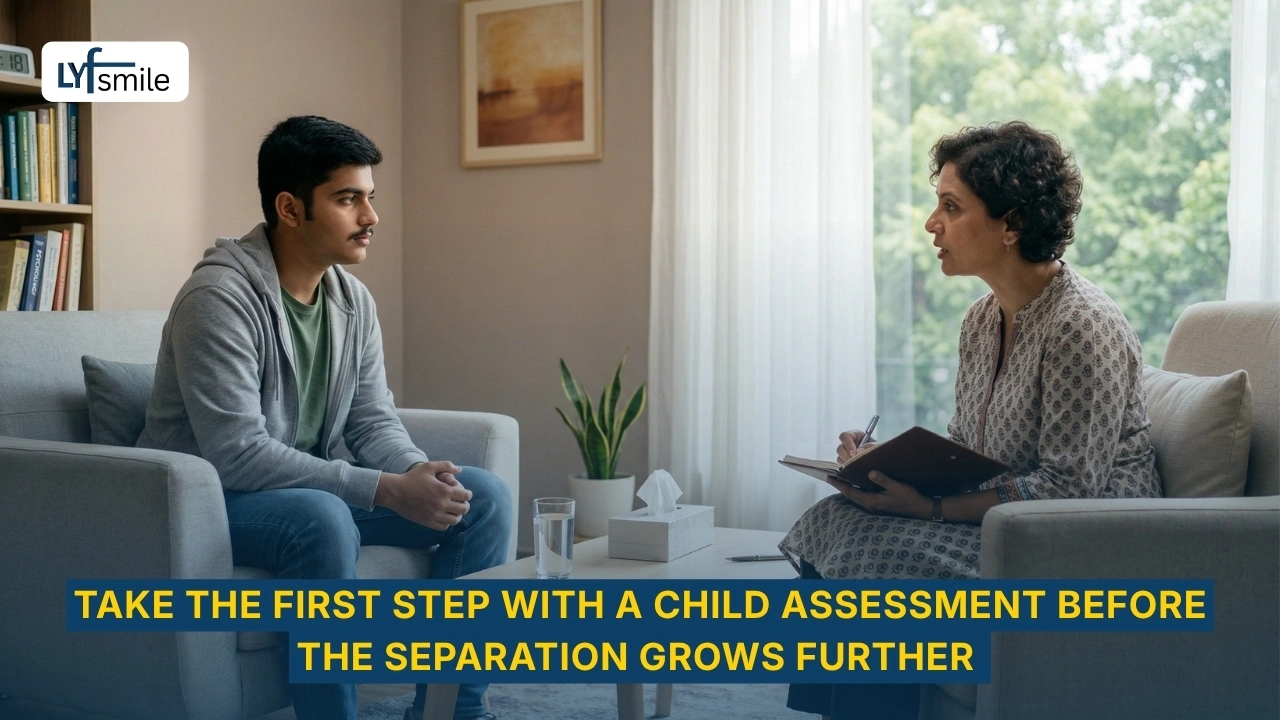 When your child starts becoming emotionally distant, it’s natural to hope that things will settle with time. But when separation and detachment from parents continue, it can slowly become harder for your teen to open up and reconnect.
Taking the first step doesn’t mean something is wrong; it means you’re choosing to understand your child better before things become more difficult.
A child assessment helps you get clarity on what your teen may be experiencing internally, whether it’s adolescent anxiety, low mood, academic stress, or emotional changes that are not visible on the surface.
Through this process, you can:
Understand your child’s emotional and behavioural patterns
Identify concerns like overthinking, low confidence, or social withdrawal
Recognise signs of teen anxiety, stress, or communication gaps
Get the right direction for therapy for teenagers
Starting with a structured child assessment (available at ₹500) also makes it easier to choose suitable therapy for adolescent anxiety, ensuring your child gets the support they actually need.
Flexible online and offline options based on your child’s comfort
Every child is different, and so is their comfort level when it comes to opening up. That’s why having flexible options can make a big difference.
With therapy for teenagers, you can choose between online and offline sessions based on what feels easier for your child.
Online sessions allow your teen to talk from a familiar, comfortable space
Offline sessions in Gurgaon provide a more direct and structured environment
Flexibility helps your child feel less pressured and more willing to engage
Choosing the right mode can make it easier for your teen to feel safe, open up, and benefit more from the process.
Conclusion
Understanding separation and detachment from parents in teenagers can be difficult, but ignoring it can make things harder over time. With the right support, including therapy for adolescent anxiety and therapy for teenagers, your child can learn to manage emotions and reconnect better.
Starting with a simple child assessment and guidance from a child psychologist in Gurgaon can make a meaningful difference.
Don’t wait for the separation to grow further.
Start with a child assessment (₹500) and get the right support for your teen.
Book a session for therapy for teenagers in Gurgaon
FAQs
Why does my teenager suddenly hate or avoid me?
In most cases, it’s not actual hate. Teens often go through emotional changes, stress, or adolescent anxiety that they don’t know how to express. This can come out as avoidance, irritation, or distance. When they feel misunderstood or overwhelmed, they may pull away instead of opening up.
Is it normal for my teen to prefer friends over family?
Yes, during teenage years, friends become an important part of identity and belonging. However, if your teen completely avoids family, stops communicating, or shows emotional detachment, it may indicate a deeper communication gap or emotional concern.
Can mobile addiction increase the distance between parents and teens?
Yes, excessive mobile use and social media can reduce real-life interaction, increase isolation, and limit emotional connection. Over time, this can make it harder for teens to communicate openly with parents and may increase withdrawal.
Should I give my teen space or try to talk more?
A balance of both works best. Give your teen space so they don’t feel pressured, but also stay available and approachable. Let them know you’re there to listen without judgment when they are ready.
Can school pressure cause emotional distance at home?
Yes, academic stress, fear of failure, and performance pressure can make teens feel overwhelmed. Instead of sharing, they may withdraw or avoid conversations, leading to emotional distance at home..
Can separation from parents affect my teen’s confidence?
Yes, ongoing emotional distance can impact a teen’s self-esteem and confidence. When they don’t feel understood or supported, they may start doubting themselves and struggle in both personal and academic areas.
Can I find a child psychologist near me in Gurgaon?
Yes. Parents across Gurgaon can access both online and offline sessions with experienced child psychologists and adolescent therapists for concerns such as emotional detachment, anxiety, anger issues and behavioural changes.
Is online teen therapy available in Gurgaon?
Yes. Online teen counselling in Gurgaon provides flexible support for adolescents experiencing anxiety, academic stress, social withdrawal, low confidence and communication difficulties.