

Lakshika Kaushik
Premarital Guidance: The Direction Every Couple Needs Before Marriage
Advice is everywhere before a wedding. Friends have opinions. The family has opinions. Social media has opinions. What most couples don't have is genuine guidance the kind that's professionally structured, individually focused, and specifically designed to prepare them for what marriage actually involves.
This distinction matters more than most people realise.
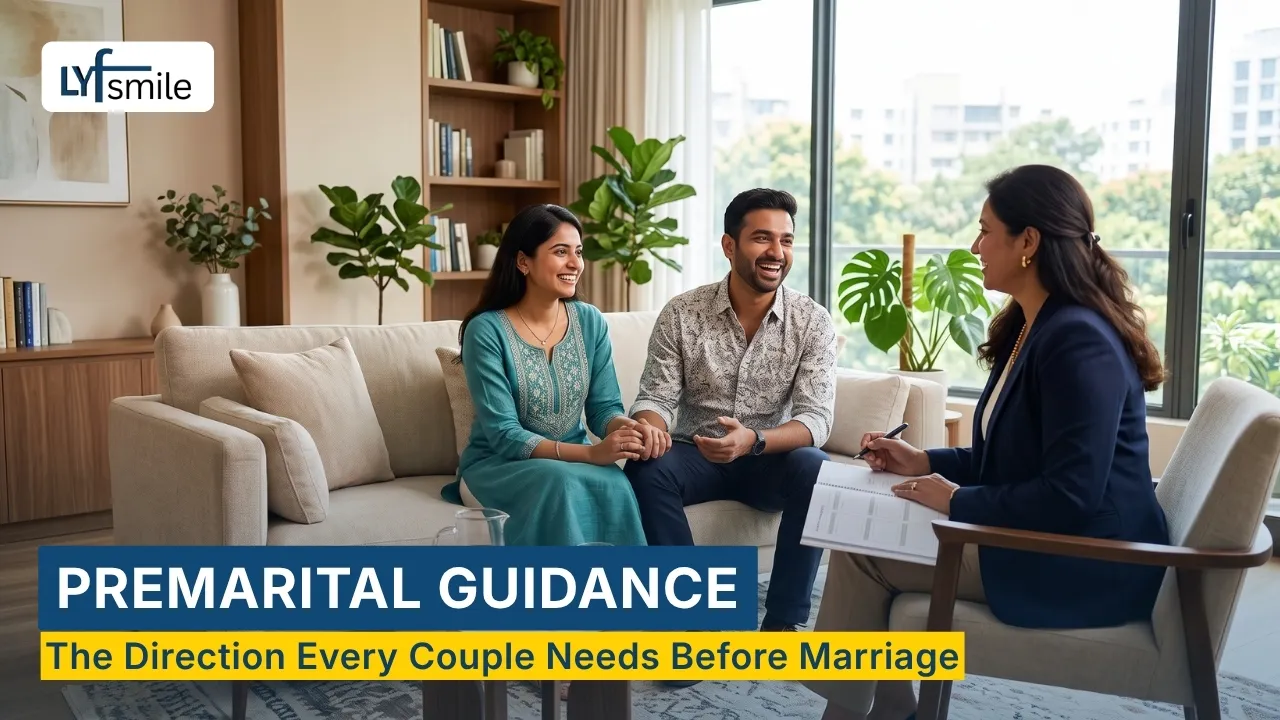
Premarital guidance is expert-led preparation that gives couples targeted direction not broad advice, but focused insight into the specific areas where their relationship needs clarity, honest conversation, or deeper understanding before the wedding.
It isn't about whether the couple is right for each other. It's about making sure they know how to be right for each other day in, day out, across everything that married life brings.
What Makes Premarital Guidance Different from Regular Counseling?
The word "counseling" can suggest that something is wrong. "Guidance" suggests something different: direction toward something better.
This isn't just a semantic distinction. Premarital guidance operates from a fundamentally proactive premise: it isn't treating a problem that already exists; it's equipping a couple with what they need before problems have a chance to take root.
Where regular counseling responds, guidance prepares. Where Premarital Counseling addresses existing pain, guidance works to prevent certain kinds of pain from developing at all.
In practice, the difference shows up in several ways:
Sessions are forward-looking rather than problem-focused. Rather than working through existing conflict, premarital guidance maps the territory ahead: the decisions, pressures, and transitions that marriage brings and helps both partners develop a clear, shared approach to each one.
The focus is on building, not repairing. Guidance creates communication tools, shared agreements, and mutual understanding at a point when the relationship is strong, making those tools far more effective than the same work done in the middle of a difficult period.
Guidance is shaped around each couple's specific situation. A couple entering an arranged marriage needs different preparation than one navigating a love marriage. An interfaith couple or an intercaste couple carries specific dynamics that require specific guidance. NRI couples face pressures that domestic couples don't. Effective premarital guidance addresses what that particular couple is actually facing, not a standard curriculum applied to everyone equally.
The Real Problems Couples Face Before Marriage: And How Guidance Solves Them
 Misaligned expectations about family roles Premarital counseling for family expectations is one of the most consistently valuable areas of premarital work because family dynamics are one of the most consistently underestimated sources of early marital conflict. Each partner arrives with unspoken assumptions about family involvement, household authority, and what "enough distance" from extended family actually looks like in practice. Guidance draws these out and aligns them before the wedding puts both partners in situations their assumptions never accounted for.
Communication patterns under pressure: Premarital counseling for communication issues addresses the specific ways each person communicates when stressed, hurt, or in disagreement instinctive responses that rarely show up during courtship but tend to dominate how a marriage handles its most difficult moments. Guidance gives couples practical frameworks for the conversations that matter most.
Cultural and identity differences Premarital counseling for interfaith couples and premarital counseling for intercaste marriage help partners navigate the genuine complexity of two different frameworks trying to coexist from religious practice and family rituals to deeply held assumptions about how life should be structured. Guidance opens the conversation before cultural difference quietly becomes a recurring source of tension.
Transition challenges unique to the relationship type Whether it's premarital counseling for arranged marriages helping two people build intimacy on a compressed timeline, premarital counseling for love marriages addressing the shift from dating to shared responsibility, or premarital guidance for NRI couples working through the realities of a relationship that exists across two countries and two cultural contexts guidance adapts its approach to what that couple is specifically navigating.
Unspoken financial, parenting, and lifestyle differences These conversations rarely happen spontaneously before a wedding. Relationship counseling before marriage deliberately makes time for them helping couples develop genuine agreement rather than assumed alignment on the decisions that will shape their daily life together.
Get Expert Premarital Guidance at Lyfsmile
Lyfsmile offers premarital guidance through qualified counselors whose training and experience are specifically matched to what each couple is working through.
Ms. Priyanka Sharma is a compassionate, dedicated Counselling Psychologist who specializes in pre-marital counseling bringing clinical precision and a genuine investment in helping couples navigate the life transition that marriage represents. Her sessions strike the balance between emotional support and practical preparation that this particular kind of work demands.
Online premarital counseling in India and internationally for NRI couples is available across every major city Delhi, Mumbai, Bangalore, Hyderabad, Chennai, Kolkata, Pune, Jaipur. For those who prefer face-to-face sessions, Lyfsmile's counseling centers are open in Delhi, Gurgaon, Panipat, and Noida.
The conversation starts with a 15-minute, no-charge, purposeful first session that helps both of you understand what premarital guidance involves before committing to anything further. Ongoing sessions are priced at ₹30 per minute, making professional, affordable premarital counseling genuinely accessible for every couple preparing to marry.
Marriage is a direction. Guidance helps you choose it clearly.
Schedule your first session with Lyfsmile and walk into your marriage with real direction.
FAQs
Q: Is premarital guidance the same as marriage counseling for engaged couples?
A: They're related but not identical. Marriage counseling for engaged couples often addresses specific concerns or conflicts already present. Premarital guidance is broader and more preventive; it's designed for any couple, with or without existing issues, who want structured preparation for married life.
Q: How is premarital guidance different from what a wedding planner or family elder might offer?
A: Wedding planners focus on the event itself. Family elders offer advice shaped by their own experiences and values. Premarital guidance is professionally structured, psychologically informed, and shaped specifically around your relationship, not general wisdom applied to every couple equally.
Q: Can premarital guidance help if we're already fairly aligned and don't expect major conflicts?
A: Yes, and this is actually one of the most valuable times to seek it. Couples who feel aligned often haven't tested that alignment against real-world pressures yet. Guidance helps confirm genuine agreement and catch blind spots before they surface later.
Q: How soon before the wedding should a couple start premarital guidance?
A: Ideally 3 to 6 months before the wedding, which allows time to explore topics without the pressure of an approaching date. That said, even a few sessions closer to the wedding can provide meaningful clarity.
Q: Does premarital guidance continue to be useful after the wedding, or is it only for the period before?
A: Many of the tools and frameworks developed in premarital guidance remain useful well into marriage. Some couples return for follow-up sessions during their first year to revisit and reinforce what they built before the wedding.