


Lakshika Kaushik
Best Divorce Counseling in India: Trusted Support at an Affordable Price
Nobody plans for divorce when they marry. It arrives through accumulated distance, through betrayal, through decisions made by two people who could no longer find a way forward together, and it changes everything.
Not just the relationship. The daily routine. The financial picture. The sense of self. The future that was once assumed.
Divorce counseling is professional psychological support specifically designed to help individuals navigate the emotional, mental, and practical weight of separation and divorce, providing structure, clarity, and healing when life feels most uncertain.
In India, where divorce still carries social stigma and family pressure can make the experience even more isolating, access to trusted, affordable support isn't just helpful. For many people, it's what makes the difference between barely surviving this transition and genuinely moving through it.
How Divorce Counseling Helps: And Why It Matters
Divorce counseling is not about relitigating the marriage. It is not a space where someone decides whether you made the right decision, or tells you what you should have done differently.
What it actually does is far more practical than most people expect.
A skilled divorce counselor helps you process the grief that comes with the end of a relationship, which is real grief, even when the divorce was the right choice. They help you identify the emotional patterns that keep pulling you back into pain when you're trying to move forward. They work with you on coping with divorce practically managing anxiety, rebuilding routine, re-establishing a sense of identity outside of the relationship.
Separation counseling also addresses the decisions that divorce demands: how to handle co-parenting, how to manage relationships with shared social circles, how to deal with family members who have strong opinions, and how to begin thinking about what comes next without feeling overwhelmed by everything that needs to happen at once.
For those still in the process of separating, separation counseling online provides immediate, accessible support without requiring you to physically leave your home or face anyone during what is often the most vulnerable period.
The Emotional and Psychological Impact of Divorce
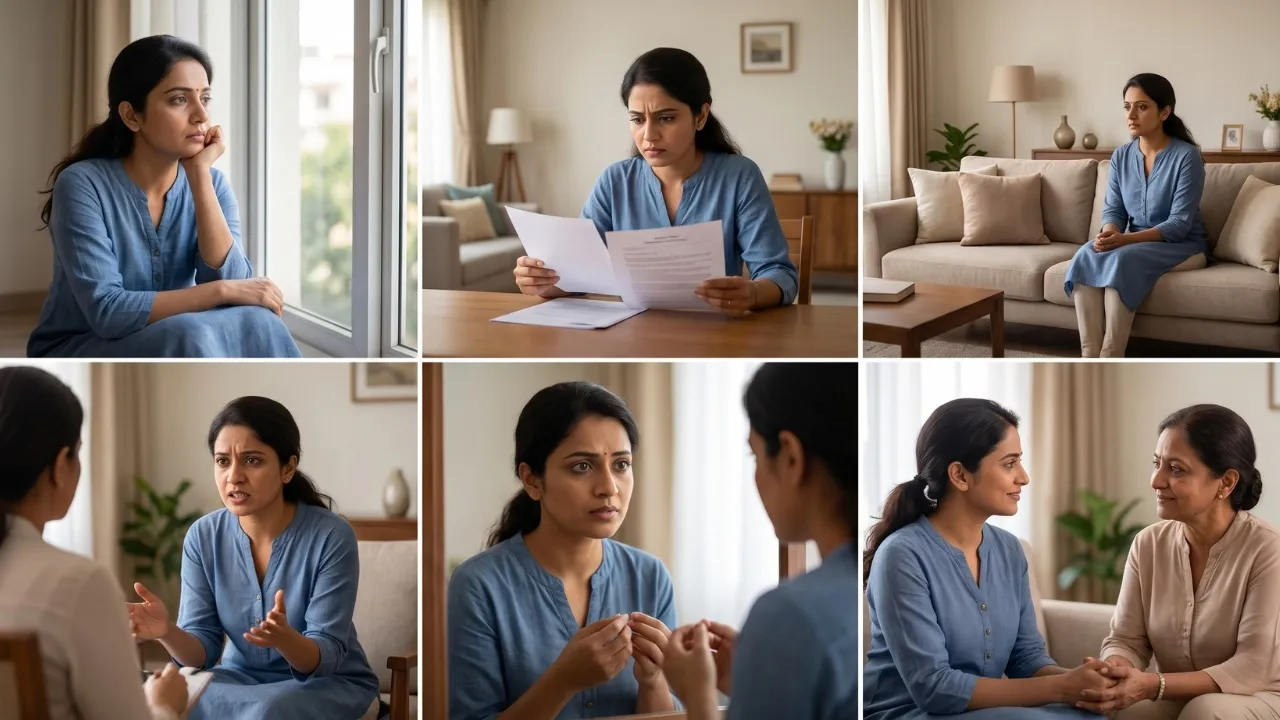 The psychological impact of divorce is consistently underestimated by the people going through it, by their families, and sometimes by the broader support systems around them.
Grief and loss are the most immediate responses. Even in divorces that were mutual or necessary, there is a profound sense of loss of the relationship, the shared life, the identity of being someone's partner, and the future that was once assumed to be certain.
Divorce anxiety therapy addresses the specific anxiety that separation brings: the fear of what comes next, the fear of being alone, the fear of financial instability, the fear of judgment from family and community.
Divorce stress counseling works with the chronic stress that prolonged legal and emotional processes create: the physical tension, the sleep disruption, the difficulty concentrating, the emotional exhaustion that makes even ordinary daily tasks feel heavy.
Divorce grief counseling helps individuals move through the specific stages of loss that divorce triggers stages that don't follow a neat sequence and often resurface unexpectedly, especially around key dates, shared memories, or significant life events.
Beyond grief and anxiety, divorce frequently affects:
Self-esteem and identity: particularly for those whose sense of self was deeply intertwined with the marriage
Trust: in relationships, in judgment, and sometimes in the person's own perception of what is real
Parenting capacity: when the emotional weight of divorce begins to affect presence and engagement with children
Social connection: when divorce changes friendship groups, family dynamics, and a person's willingness to engage socially
For divorce counseling for NRIs navigating separation from abroad, managing family expectations across countries, or handling the complexity of cross-border divorce the isolation is often even more pronounced. Online divorce counseling India makes professional support accessible regardless of location.
What Divorce Counseling Can Do for Your Healing
Divorce recovery counseling works differently for every person because no two divorces, and no two people, are the same.
For some, the most important work is post-divorce counseling that helps rebuild identity, confidence, and a sense of direction after the relationship ends. For others, it's divorce recovery therapy that specifically addresses the trauma responses hypervigilance, emotional numbing, and intrusive thoughts that some divorces leave behind.
Emotional support after divorce provides what friends and family often can't: consistent, non-judgmental presence that doesn't come with its own opinions about the marriage, the ex-partner, or what the person should do next.
Online psychologists for divorce recovery sessions specifically address the psychological dimension of healing not just processing feelings, but understanding the deeper patterns that the divorce revealed, and working to ensure they don't unconsciously shape the next chapter.
Healing after divorce is rarely linear. There are good periods and difficult ones, progress and setbacks. What counseling provides is the structure and professional support that keeps a person moving through rather than getting stuck, helping them arrive, eventually, at a life that is genuinely their own.
Start Your Affordable Counselling with Lyfsmile at Just ₹30/Min
Lyfsmile offers trusted divorce counseling through qualified, degree-holding counselors with specific experience in separation, divorce recovery, and the emotional complexity that this life transition brings.
The first 15 minutes are yours, free of charge: a direct first conversation where you can share what you're going through and understand how Lyfsmile can help, without any financial commitment upfront.
Sessions after that are priced at ₹30 per minute, making affordable divorce counseling genuinely accessible, whether you're in the middle of the process or finding your footing afterward.
Online divorce counseling India is available across every major city: Delhi, Mumbai, Bangalore, Hyderabad, Chennai, Kolkata, Pune, Jaipur and for NRI clients anywhere in the world. In-person sessions are available at Lyfsmile's centres in Delhi, Gurgaon, Panipat, and Noida.
Divorce is one chapter. What you build after it is the rest of the book.
Talk to Lyfsmile's expert counselors today : and take the first step toward what comes next.
FAQs
1. Is divorce counseling useful if the divorce was my decision?
Yes. Choosing divorce does not necessarily remove grief, uncertainty, guilt, or emotional stress. Counseling can help you process these feelings and adjust to the changes that follow the decision.
2. Can divorce counseling help when my ex-partner refuses to participate?
Yes. Individual divorce counseling can still be helpful even when your former partner does not want counseling. You can work on your own emotional responses, boundaries, communication, and adjustment to life after separation.
3. Can I start divorce counseling before the divorce is finalized?
Yes. Counseling does not have to wait until the legal process is complete. Starting earlier can help you manage emotional stress, uncertainty, difficult conversations, and major life changes while the divorce is still underway.
4. How do I know when I need professional help during a divorce?
If emotional distress is making it difficult to manage everyday responsibilities, relationships, work, parenting, or important decisions, professional support may be worth considering. You don't have to wait until things become overwhelming to seek counseling.
5. Can divorce counseling help me avoid repeating unhealthy relationship patterns?
Yes. Counseling can help you reflect on patterns from the previous relationship, recognize unhealthy behaviors or boundaries, and develop greater self-awareness so that these patterns are less likely to carry into future relationships.