Yakshi
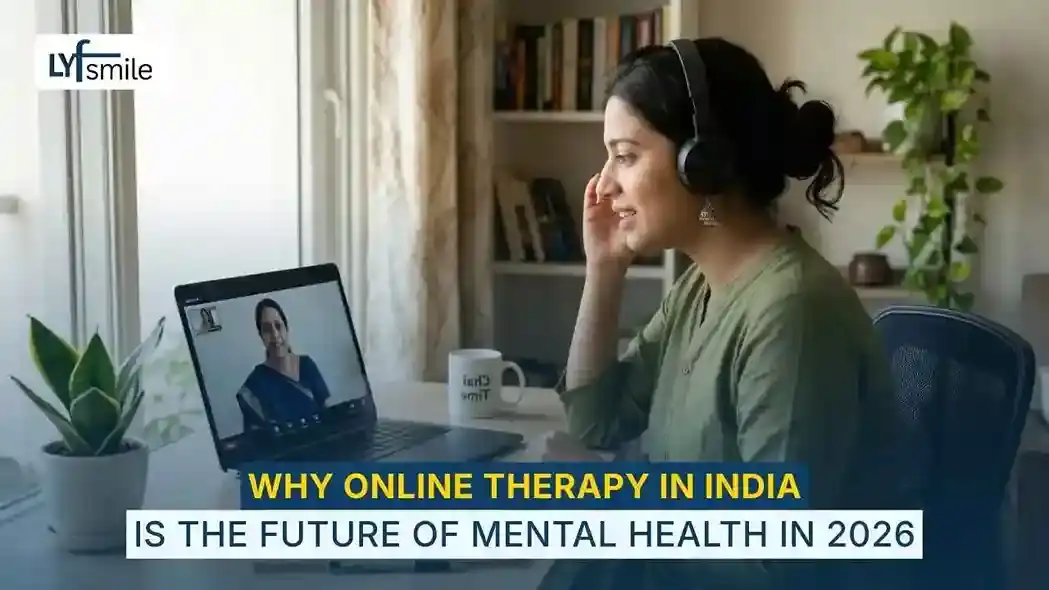
Why Online Therapy in India Is the Future of Mental Health in 2026
Imagine needing a therapist. You search online, ask around, and maybe even call a clinic. The good ones are booked for weeks. The nearest one is expensive, far away, and somehow still doesn't feel like the right fit. You close the tab and tell yourself you'll figure it out later. You don't.
For most Indians today, online therapy in India isn't just a convenient alternative — it's becoming the only option that actually reaches people where they are.
Whether you're in Gurugram, Guwahati, or anywhere in between, finding real and reliable mental health support the traditional way has quietly become a near-impossible task. That's exactly the gap Lyfsmile - one of India's most trusted online counselling platforms was built to close.
But before we talk about the solution, let's understand just how large and urgent the problem really is.
The Core Issue: India faces a severe shortage of mental health professionals, with only 0.75 psychiatrists available per 100,000 people.
The Solution: Online therapy makes counselling more affordable, completely private, and accessible from anywhere in India.
Proven Results: Clinical studies report 85%+ patient satisfaction rates, showing outcomes similar to traditional face-to-face therapy sessions.
How India Views Mental Health And Why That’s Finally Changing
For years, mental health in India wasn’t openly discussed. It was seen as a weakness, “overthinking,” “drama,” or only for “serious cases.” Therapy was heavily stigmatized. That mindset is changing.
But awareness isn’t enough. Access remains a major issue. India carries nearly 15% of the global mental health burden, with around 10% of people facing diagnosable conditions. Yet, over 70% still don’t receive treatment. This gap isn’t about willingness; it’s about limited access. That’s why online therapy in India is no longer optional; it’s becoming essential.
Why Online Therapy in India Is a Need Right Now, Not a Luxury
 India’s traditional mental health system faces three major problems: limited availability, high costs, and poor accessibility.
India currently has only 0.75 psychiatrists per 100,000 people, while the WHO recommends at least 3. Additionally, more than 80% of mental health professionals are concentrated in metro cities, leaving people in Tier-2 and Tier-3 towns with very limited access to support.
The Cost Wall: Traditional in-person therapy in India can cost between ₹1,500–₹5,000 per session, excluding travel expenses. Affordable online therapy reduces these extra costs and makes long-term mental health support more accessible.
The Stigma Wall: Nearly 47% of Indians feel uncomfortable if family members or neighbours know they are seeking therapy. Online counselling offers greater privacy and allows users to access support discreetly from home.
The Time Wall: With many professionals working 50–60-hour workweeks, visiting a clinic regularly becomes difficult. Online therapy for working professionals provides flexible scheduling and easier access from any location.
The Availability Wall: Many experienced therapists have long waiting periods for appointments. Online counselling platforms help users connect with verified mental health professionals faster without extended delays.
How Much Has Online Therapy in India Grown?
India's online therapy market grew by 320% between 2020 and 2023, according to RedSeer Consulting. What began as a pandemic-era workaround has become the default mode of care for a rapidly growing segment of the population. The global online therapy services market, valued at USD 3.8 billion in 2024, is projected to reach USD 10.1 billion by 2031 — growing at over 14% annually. India is one of the fastest-moving markets within that growth.
Driving this: smartphone penetration is expected to reach 1.1 billion users in India by 2030, improving internet connectivity in Tier 2 and 3 cities, and a generation far more comfortable opening up via a screen than in an unfamiliar clinic.
The government recognized this shift in 2022 with the launch of the National Tele Mental Health Programme - a formal acknowledgement that online therapy in India is not a compromise but a necessity at scale.
How Online Therapy Actually Works in India
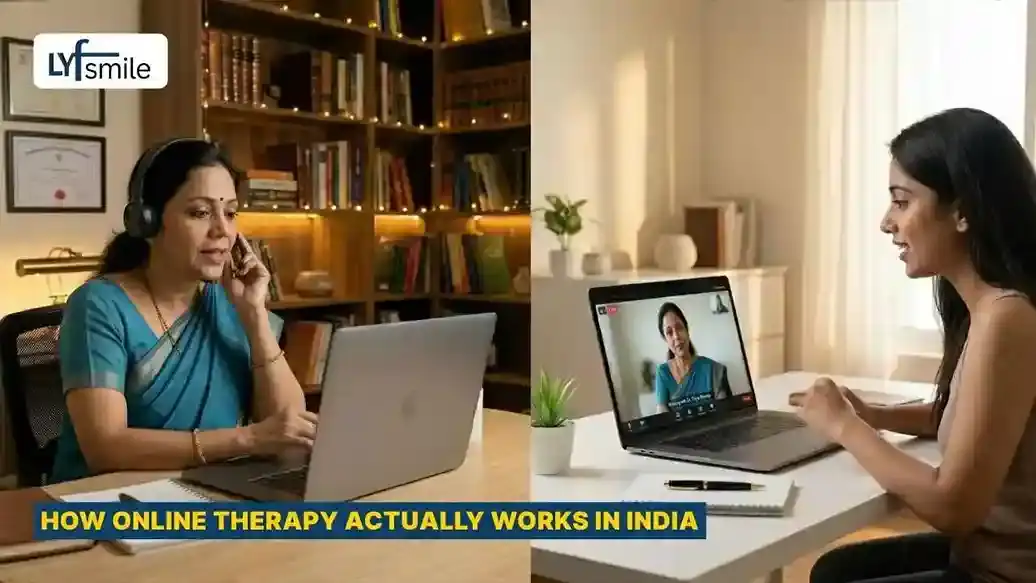 Online therapy in India is simple, structured, and built around your comfort. From choosing a therapist to attending sessions, the entire process is flexible, private, and easy to follow.
Step 1 — Choose a therapist
Browse profiles on platforms like Lyfsmile. Filter by issue, language, or therapy type, and pick what suits you.
Step 2 — Book a session
Select a time that works for you. Sessions happen via video, phone, or chat—no travel needed.
Step 3 — Attend sessions
Your online psychologist in India understands your concerns and uses proven methods. You may also get exercises to practice between sessions.
Step 4 — Track progress
Therapy is ongoing. Each session builds on the last, and most people start noticing improvements within weeks.
Why Online Therapy Is Gaining Ground in India | Reasons That Actually Matter
Shortage of professionals : India lacks enough therapists, especially outside cities—making online therapy the only option for many.
Geographic barriers : Traveling for therapy isn’t practical. Online sessions make support accessible from anywhere.
Social stigma : Fear of judgment still exists. Online therapy offers privacy, making it easier to start.
Time constraints : Busy schedules and long commutes make clinic visits hard. Online therapy fits into daily life.
Cost & accessibility : In-person therapy is expensive. Online options are more affordable and flexible.
Digital access : With smartphones and cheap internet, online therapy is easier to access than ever.
Post-pandemic shift : COVID-19 normalized online care—and people continue because it works.
Comfort for beginners : Online therapy feels less intimidating, making it easier for first-time users.
Is Online Therapy in India as Effective as In-Person?
 Yes—with some nuance. A 2021 meta-analysis (Journal of Medical Internet Research, 2,000+ participants) found no significant difference between online and in-person therapy for depression, anxiety, and PTSD. The American Psychological Association also found CBT to be equally effective online, with even higher completion rates in some cases.
The key factor is the therapist’s skill, the relationship, and client engagement—not the format. A licensed online therapist in India can provide the same level of care.
A 2020 study (Indian Journal of Psychiatry) showed online therapy in India for depression and anxiety had comparable outcomes, with over 85% patient satisfaction.
For most mild to moderate conditions, it works just as well.
However, it’s not suitable for severe crises, psychosis, or active suicidal thoughts—where in-person or emergency care is necessary.
The Mediums of Online Therapy in India | What Your Options Actually Are
Video Sessions : The closest to in-person therapy. You and your therapist can see each other, making it more personal and interactive.
Phone / Audio Sessions : Great if video isn’t possible. Works well with low internet or when you need more privacy.
Text / Chat Therapy : You write, your therapist replies. Best for people who prefer writing or feel uncomfortable speaking.
Hybrid Approach: Mix different formats—like video sessions with chat check-ins in between.
The medium is secondary. What matters is showing up consistently with the right online psychologist in India for you.
When Is Online Therapy Most Effective?
 Online therapy in India delivers its strongest outcomes when:
You have a private, reasonably quiet space - even a car during lunch works
You're dealing with mild to moderate concerns: anxiety, stress, depression, relationship issues, grief, self-esteem, burnout, or life transitions
You have basic internet or phone access
You're motivated to engage - you don't need to be "ready" in any profound sense, but willingness to try matters
You're looking for continuity - the same online counsellor in India over multiple sessions, building real understanding over time
It is less suited for acute crises, severe psychiatric conditions requiring hospitalization, and situations needing immediate in-person clinical assessment. A good therapist or platform will always be honest about this and guide you toward the right level of care.
Affordable and Effective: What Online Therapy in India Actually Offers
Lyfsmile has served over 120,000 clients across 70+ countries and built a team of India's most qualified and compassionate mental health professionals. Here's what you get access to:
Individual Therapy: Personalized one-on-one online therapy sessions in India using evidence-based techniques. Helps with anxiety, stress, depression, burnout, and more — with clear goals and progress tracking.
Couples Counselling: Online couples therapy in India focused on better communication, conflict resolution, and stronger relationships—accessible from anywhere.
Child Therapy: Online child therapy in India with specialists supporting emotional, behavioural, and developmental needs in a safe, age-appropriate way.
Corporate and Business Wellness: Online mental health support in India for teams — helping employees manage stress, improve performance, and feel supported at work.
Gift Therapy: A meaningful way to support someone — gift therapy sessions to a loved one who may need help but finds it hard to ask.
All services are delivered through a secure, encrypted platform — ensuring complete privacy and confidentiality.
What to Look for in an Online Therapy Platform in India
Not all online therapy in India platforms are equal. Before you commit to one, here's what actually matters:
Verified therapist credentials: Look for recognized Indian qualifications — M.Phil or MA in Clinical Psychology, MD Psychiatry, or equivalent — along with registration with RCI or IACP.
Clear data privacy and security: Online therapy privacy in India matters. Choose platforms with encrypted sessions, a clear privacy policy, and strict confidentiality — your data should never be shared without consent.
Flexibility in session format: A good platform offers video, phone, and chat options. Online counselling in India should adapt to your schedule, not the other way around.
Therapist matching, not random assignment: You should be able to choose your therapist based on their specialisation, approach, and overall fit — not be assigned one randomly.
Specialist coverage across issues : A strong online therapy platform in India covers everything — individual therapy, couples, child therapy, trauma, anxiety, relationships, and more — with real specialists.
Responsive support : Quick, reliable help matters. For example, support via WhatsApp at +91 9804791047 with fast responses (often within 60 seconds).
Credibility and track record : Choose platforms with years of experience and thousands of clients — a strong sign of trust and consistent care.
Common Misconceptions About Online Therapy in India
 "It's not real therapy — it's just chatting online." Online therapy in India follows the same evidence-based protocols as in-person therapy. The techniques, the structure, the therapeutic relationship — all real. NIMHANS has published formal guidelines for tele-psychotherapy in India precisely because it is a legitimate, structured form of clinical care.
"My therapist can't really understand me through a screen." The therapeutic relationship develops just as meaningfully in online counselling in India. Many clients report opening up more easily from the privacy of their own space than they would in an unfamiliar clinic.
"Online therapy is only for mild problems." Online therapy in India is effective for a wide range of conditions — anxiety disorders, depression, OCD, grief, trauma, relationship issues, and burnout. The boundary is severe acute crises, not severity of the underlying condition.
"My data will be shared or leaked." Reputable platforms use end-to-end encryption and comply with India's data protection laws. Is online therapy safe in India? Answer : yes, Your sessions and your information are protected and never disclosed without your consent.
"Anyone can call themselves an online therapist." On legitimate platforms, therapists must hold verified credentials. Lyfsmile's team includes Mrs. Ritika Dhall (Counselling Psychologist), Dr. Shraboni Nandi (RCI Registered Rehabilitation Professional), Mrs. Tanya Sachdev (Clinical Child Psychologist), and Ms. Gunjan Bhatia (Certified Child and Adult Psychologist) — all qualified, credentialed, and experienced.
"I'll have to commit to sessions for years." Therapy duration depends entirely on what you're working through. Some people find significant relief in 6–8 sessions.
Who Can Take Online Therapy in India?
Working professionals in metros who need flexible timing and complete privacy — online therapy for working professionals in India is one of the most used services.
Students dealing with academic pressure, loneliness, identity, or being far from home
Couples navigating conflict or life transitions , online couples therapy in India with qualified counsellors
Children and teenagers needing age-appropriate expert support
People in Tier 2 and 3 cities who've never had real access to quality mental health care
NRIs and Indians abroad — online therapy for NRIs with culturally aware Indian psychologists
Businesses and HR teams investing in employee mental wellness
Anyone who's been putting it off — because they thought it was too complicated, too expensive, or simply not for someone like them
How to Get Started With Lyfsmile
 Step 1 — Name what you'd like to work on. You don't need a diagnosis. "I've been anxious lately" is enough. "Work is consuming me" is enough. Start there.
Step 2 — Browse and choose your therapist. Visit lyfsmile counsellor to explore Lyfsmile's team. Read profiles, understand specializations, and choose someone who feels right.
Step 3 — Book your first appointment. Pick a slot — morning, evening, or weekend. The first online therapy session in India with your therapist is about understanding you, your situation, and your goals.
Step 4 — Show up consistently. Clients consistently report real changes — better emotional regulation, clearer thinking, calmer responses, stronger relationships — as sessions progress.
The Bigger Picture
India's mental health conversation is changing. Younger generations are more open, more informed, and less willing to suffer in silence. Government programmes are expanding digital delivery. Corporations are taking employee wellness seriously. The stigma is eroding — not fast enough, but visibly.
What hasn't changed fast enough is access. And online therapy in India is what's fixing that — not just for people in Gurugram or Delhi, but for anyone, anywhere, who is ready to take their mental wellbeing seriously.
You don't need to be in crisis. You don't need to live in a metro. You just need one moment of deciding that you deserve support — and one small action that follows it.
Frequently Asked Questions
How do I know if online counselling is right for me?
If you feel anxious, stressed, emotionally overwhelmed, low, or mentally stuck, and it is affecting your daily life, it may be the right time to start therapy. You do not need a clinical diagnosis to seek help. Many people begin online therapy for work stress, relationship problems, burnout, anxiety, or emotional support.
Can virtual therapy sessions really deliver results?
Yes. Research shows that online therapy sessions can be as effective as traditional face-to-face counselling for conditions like anxiety, stress, depression, and relationship challenges. A strong connection with a qualified psychologist or therapist plays the biggest role in successful outcomes.
How is data privacy maintained during online counselling?
Trusted online counselling platforms use secure and encrypted communication systems to protect user privacy. Personal details, therapy conversations, and mental health records remain confidential and are not shared without consent.
What if I need psychiatric medication along with online therapy?
Licensed therapists and counsellors provide talk therapy but cannot prescribe medication. If medication is needed, users are usually referred to a certified psychiatrist for medical evaluation and prescription support alongside therapy.
Can I switch to traditional in-person therapy later if needed?
Yes. Mental health treatment is flexible and personalized. Many people begin with online counselling for convenience and later transition to hybrid or in-person therapy depending on their comfort level, treatment needs, or personal preferences.