

Lakshika Kaushik
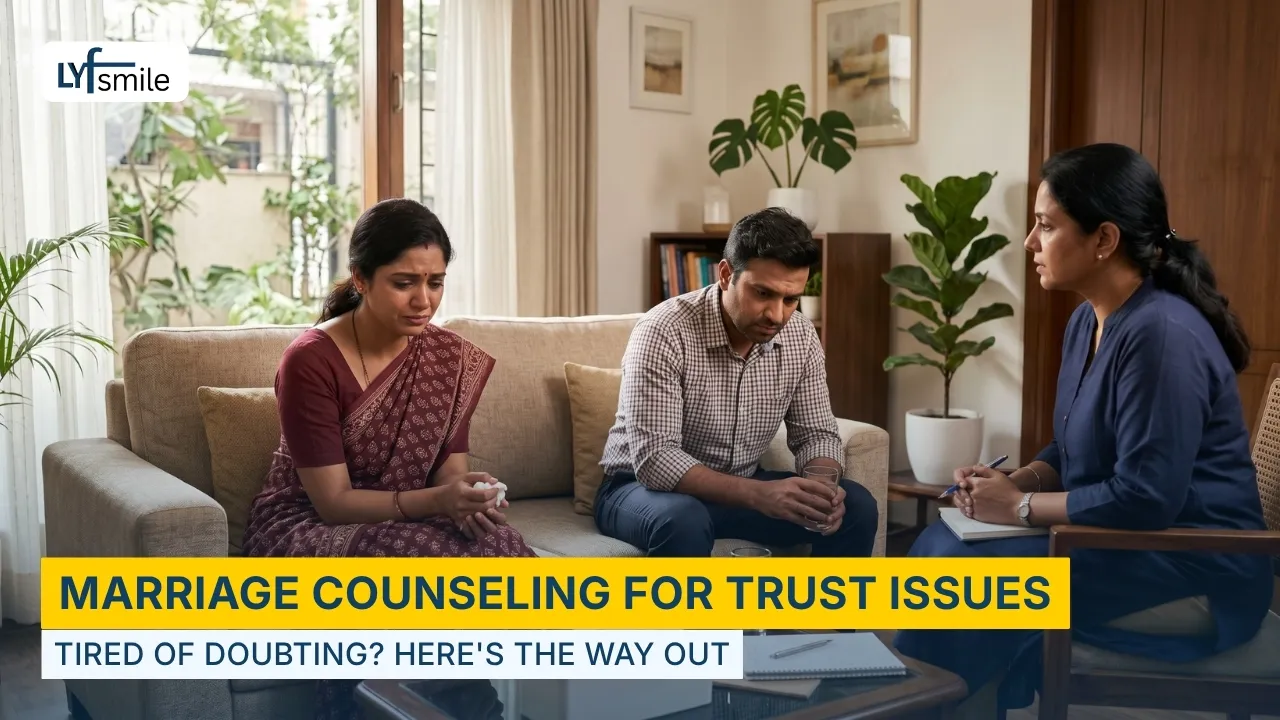
Marriage Counseling for Trust Issues: Tired of Doubting? Here's the Way Out
Checking their phone. Reading between the lines of every text. Feeling your stomach drop when they're five minutes late and don't explain why.
If this sounds familiar, you already know how exhausting trust issues can be. They don't just sit quietly in the background - they take up space in every conversation, every silence, every plan you make together.
The good news is that broken trust isn't the end of a marriage. With the right support, it can actually become the starting point for something stronger than what existed before.
It's Not Just Infidelity: Trust Breaks in More Ways Than You Think
When people think of trust issues in a marriage, infidelity is usually the first thing that comes to mind. But trust breaks down in far more ways than just an affair – and most of them happen quietly, without anyone naming what's actually going wrong.
Financial secrecy: hidden spending, undisclosed debts, or one partner controlling money without transparency erodes trust just as deeply as betrayal does. Emotional affairs, where closeness with someone outside the marriage isn't physical but is still hidden, often leave partners feeling more confused and hurt than they expect. Constant lying about small things, where someone said they were, what they were really doing, builds a pattern that's hard to unlearn, even after it stops. And for many couples, trust issues stem from family interference and in-laws conflict, where one partner feels their spouse consistently sides with their family over them.
Some couples carry trust issues from elsewhere entirely – a previous relationship, childhood experiences, or attachment patterns that make it difficult to feel secure in any relationship. In more complex situations, trust breaks down because of a partner's manipulative or controlling behaviour, which is why narcissist husband-wife counseling and personality disorder counseling for spouses exist as specialised paths, addressing patterns that go beyond ordinary relationship friction. In the most serious cases, where safety itself feels uncertain, domestic violence recovery counseling provides the structured, sensitive support survivors need to heal and rebuild on their own terms.
Signs Your Marriage May Be Struggling With Trust Issues
Trust issues rarely appear overnight. They often develop gradually through repeated misunderstandings, broken promises, or emotional distance. While every relationship experiences occasional disagreements, persistent feelings of doubt can indicate a deeper issue that deserves attention.
Some common signs include:
Constantly checking your partner's phone or social media.
Feeling anxious when they don't respond quickly.
Assuming the worst without clear evidence.
Repeated arguments over honesty or transparency.
Difficulty expressing emotions because of fear of being hurt.
Feeling emotionally disconnected despite living together.
Frequently seeking reassurance about your relationship.
If these patterns continue for weeks or months, they can slowly weaken communication and emotional intimacy. Recognising these signs early and seeking marriage counseling for trust issues can help couples address the underlying causes before resentment grows stronger.
This is exactly where marriage counseling for trust issues becomes essential. Whether the root is infidelity counseling, rebuilding trust in marriage after years of small lies, or working through jealousy and insecurity that has nothing to do with anything your partner actually did, naming the real cause is the first step toward fixing it
How Does Marriage Counseling Helps Rebuild Trust in a Relationship?
 Most couples try to solve trust issues by talking more. But talking without the right structure often makes things worse: old hurts resurface, defensiveness kicks in, and the same argument repeats with no resolution.
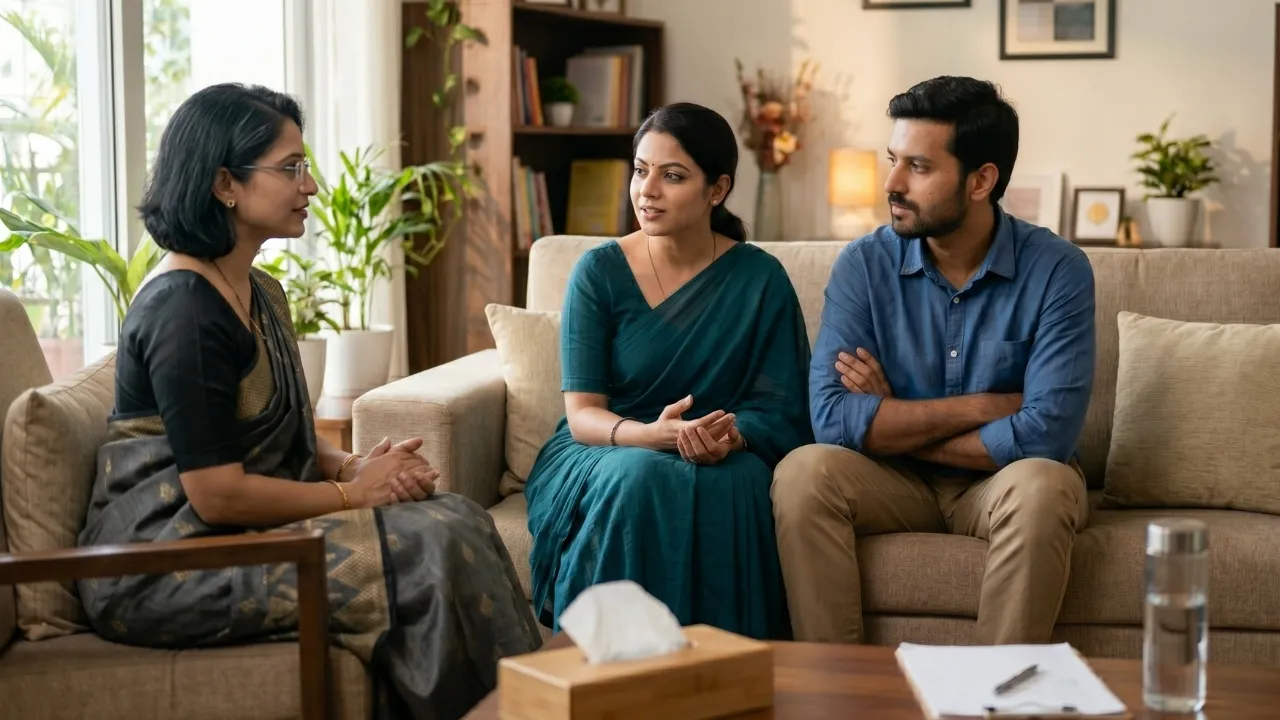
Marriage therapy works differently because it slows the process down. A trained therapist helps both partners understand what's driving the doubt: is it something the relationship caused, or something one partner brought into it? This distinction changes everything about how healing happens.
Through structured sessions, couples learn to rebuild trust in marriage in layers starting with small, consistent honesty, moving toward deeper vulnerability, and eventually arriving at a place where doubt no longer controls every interaction. This isn't about forcing trust to return overnight. It's about creating new patterns that replace the old ones patterns built on transparency rather than suspicion, and reassurance rather than silence.
For couples recovering from marriage counseling after an affair, this process also involves processing grief, anger, and betrayal, not skipping past them, but working through them with guidance. For couples where trust issues stem from anxiety or past trauma rather than anything their partner did, marriage counseling often focuses on helping the anxious partner feel secure again, while helping the other partner understand what their spouse is actually experiencing. Marriage conflict resolution becomes less about who's wrong and more about untangling the pattern together and for couples wondering how to save a marriage that's been running on suspicion for too long, this structured approach is often what finally creates real movement.
This is the work behind marriage repair and marriage restoration – not a single breakthrough conversation, but a consistent, guided process through regular marital stress therapy sessions. Whether you're looking for general marriage help or facing a specific marriage crisis, this kind of marriage problem help addresses the doubt at its root, not just its symptoms.
Slowly, the constant checking stops. The assumptions soften. And doubt, instead of controlling the relationship, becomes something both partners learned to work through together.
You Don't Have to Carry This Doubt Alone: Talk with Loveleen Malhotra
Trust issues feel incredibly isolating, like you're the only one carrying the weight of constant doubt, or the only one trying to prove you're trustworthy.
Lovleen Malhotra, a certified Counselling Psychologist with 9 years of experience at Lyfsmile, has guided countless couples through exactly this. Trained in Cognitive Behavioural Therapy and trauma-focused approaches, she understands that trust issues rarely have a single, simple cause – and she works with both partners to find clarity, without judgment on either side.
Getting started is simple. Your first 15 minutes are completely free – a real conversation to talk through what's happening, with zero pressure to commit to anything further. After that, sessions are available at just ₹30 per minute, making consistent, professional support genuinely affordable.
Distance isn't a barrier either. Couples log in for private online sessions from any city in India – and for NRI couples managing a marriage across time zones, video sessions fit into your schedule no matter where in the world you're based. Prefer meeting face to face instead? You'll find Lyfsmile centres in Delhi, Gurgaon, Panipat, and Noida.
Trust may take time to rebuild, but every healthy relationship begins with one honest conversation. Whether you're dealing with the effects of betrayal, emotional distance, or ongoing suspicion, seeking professional support can help you move toward a stronger and healthier marriage.
Book your session with Lovleen Malhotra at Lyfsmile : and start finding your way back to trust.
FAQ
Can trust ever be fully restored after it's broken, or does some doubt always remain?
Yes, trust can be genuinely rebuilt though it looks different from before. Most couples don't return to "blind trust" but instead build something based on consistent, demonstrated reliability over time, which many describe as even stronger than what existed originally.
How long does it typically take to rebuild trust through counseling?
This varies widely depending on the cause and depth of the betrayal. Some couples notice meaningful shifts within 8-10 sessions, while deeper trust issues especially those tied to infidelity or past trauma, may need several months of consistent work.
Is it normal to still feel suspicious even after starting counseling?
Completely normal. Healing isn't linear old patterns of doubt often resurface even after progress. Counseling helps you recognize these moments and respond differently, rather than expecting suspicion to disappear instantly.
Can one partner attend trust-issue counseling alone if the other refuses?
Yes. Individual sessions can still be valuable helping the willing partner understand their own patterns, manage anxiety, and sometimes shift the relationship dynamic enough that the other partner becomes open to joining later.
Will the counselor decide who's at fault for the trust issues?
No. Loveleen Malhotra's approach is intentionally neutral the goal isn't to assign blame but to help both partners understand the root cause and build a path forward together.
Can marriage counseling help even if there was no affair?
Yes. Trust issues don't always result from infidelity. They can develop because of repeated dishonesty, emotional neglect, financial secrecy, broken promises, or unresolved past experiences. Marriage counseling helps couples identify these underlying issues and rebuild trust together.
What happens during marriage counseling for trust issues?
During counseling, both partners work with a trained therapist to understand the causes of distrust, improve communication, manage emotional reactions, and develop practical strategies to rebuild trust. Sessions are conducted in a safe and non-judgmental environment where both individuals are encouraged to express their feelings openly