

Lakshika Kaushik
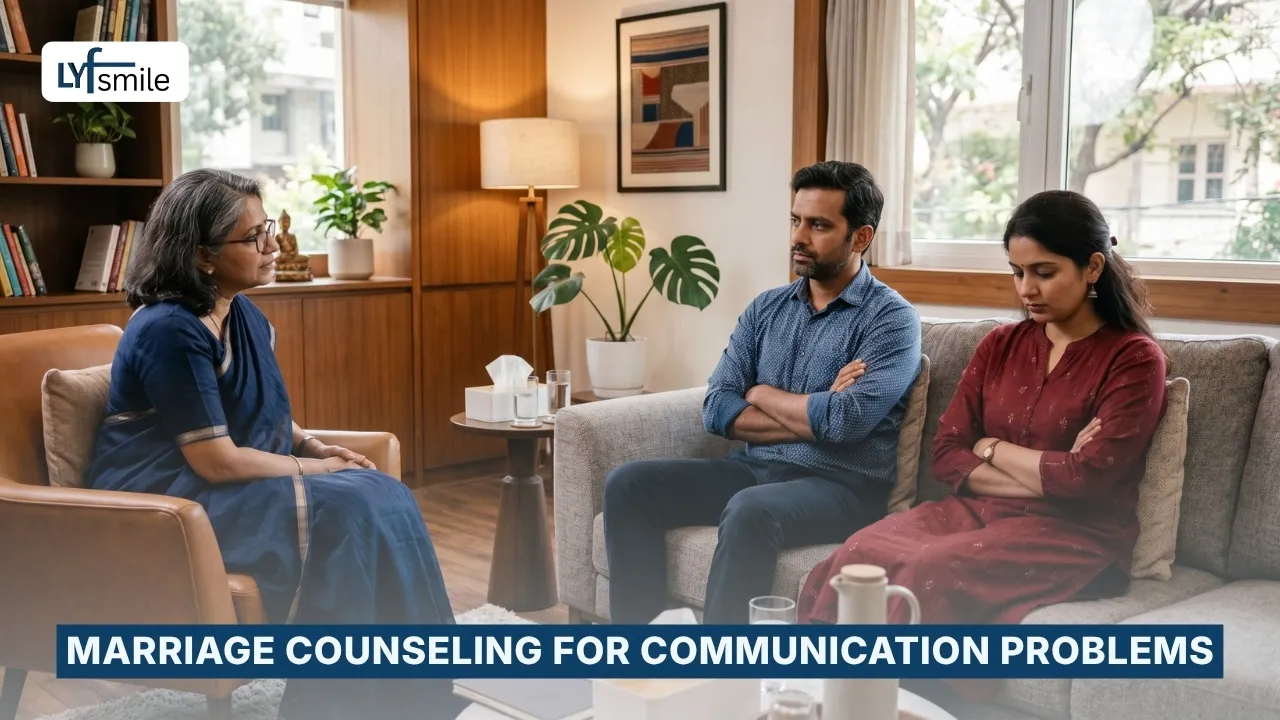
Marriage Counseling for Communication Problems
"You never listen to me." "That's not what I said." "Why do we always end up fighting about this?"
If these lines sound like a broken record in your home, you're dealing with something incredibly common and incredibly fixable. Communication problems rarely mean two people stopped caring. More often, it means they stopped knowing how to actually reach each other.
The words are still there. What's missing is the connection underneath them.
Common Signs of Communication Problems in Marriage
When people imagine communication problems, they often picture loud arguments. But the quietest marriages are sometimes the ones struggling the most.
Stonewalling, going silent, shutting down, or physically walking away mid-conversation can feel like protection, but it leaves the other partner feeling shut out. Criticism disguised as honesty, phrases like "you always" or "you never" put the other person on the defensive before the actual issue is even discussed. Assuming instead of asking means partners react to what they think the other meant, not what was actually said. And avoiding hard topics altogether, such as finances, intimacy, and family decisions, lets small disagreements pile up into resentment that has nowhere to go.
For many couples, especially those managing cross-cultural marriage problems, communication breakdowns are made worse by differing expectations around directness, emotional expression, or even how disagreements should be handled. What feels like normal venting to one partner can feel like an attack to the other.
Here's what it often looks like day to day:
Conversations that start calm and end in an argument neither of you wanted
One partner overexplaining while the other tunes out
Bringing up old issues because the new one never got properly addressed
Feeling unheard even when you're clearly speaking
Choosing silence because talking has stopped feeling safe
This pattern doesn't fix itself with more talking. It needs a different approach, which is exactly what relationship counseling and family therapy for marital issues are built to provide.
What Causes Communication Problems in a Marriage?
Communication problems rarely develop because couples stop caring about each other. In many marriages, they arise due to stress, busy schedules, unresolved conflicts, unrealistic expectations, differences in communication styles, or emotional distance. Past relationship experiences, childhood family dynamics, financial pressures, and parenting responsibilities can also affect how partners communicate.
Over time, these small misunderstandings can build resentment if they are left unresolved. One partner may begin avoiding conversations, while the other may become increasingly frustrated about not feeling heard. Recognising the root cause is important because effective marriage counseling focuses on solving the underlying issue rather than simply improving conversation techniques.
How Counseling Improves Communication Between Partners
 Most couples assume communication problems mean they need to talk more. In reality, what's usually missing isn't quantity; it's structure.
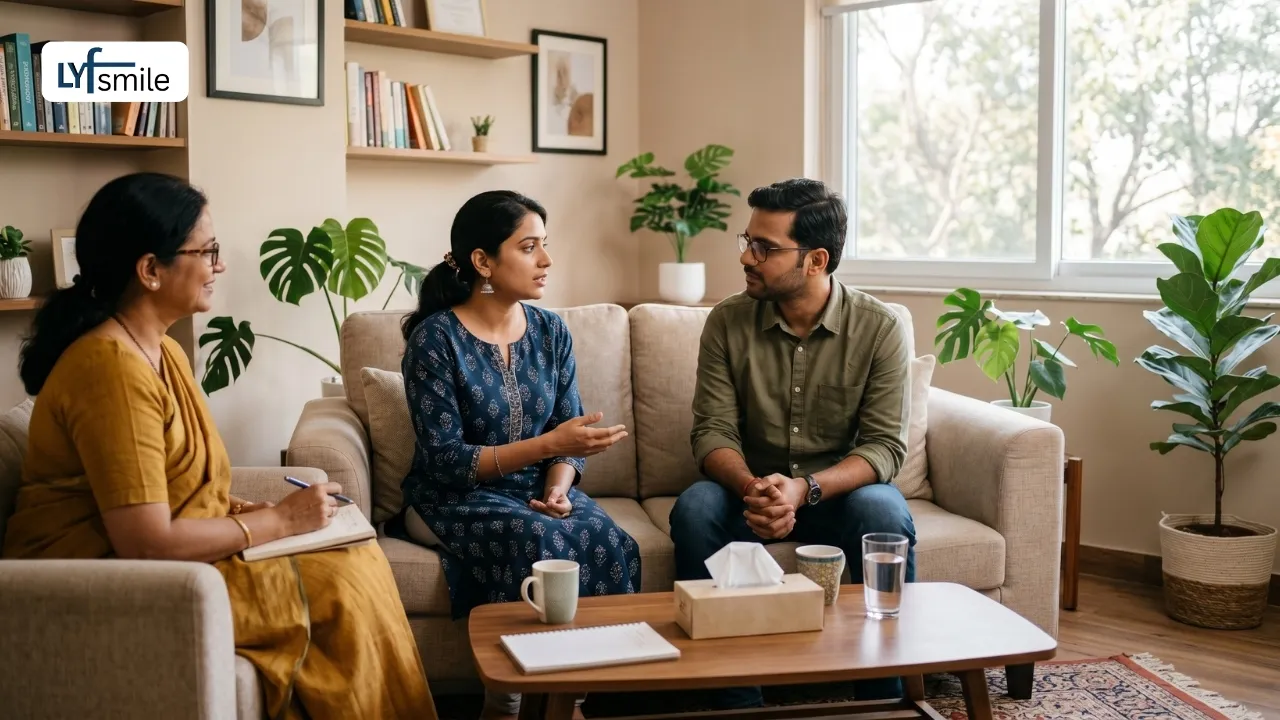
A trained relationship therapist helps couples slow down enough to notice what's actually happening in a conversation, the tone, the assumptions, the moment defensiveness kicks in before the real point gets made. Through guided practice, partners learn to say what they mean without it landing as an attack, and to listen without immediately preparing a rebuttal.
This work also tends to surface what's underneath the communication problems themselves. Sometimes it's emotional abuse in marriage counseling territory, where one partner has learned to stay quiet out of fear rather than respect. Sometimes it's fear of marriage anxiety, where one partner avoids honest conversations because conflict itself feels threatening. Other times, it's simply two people who were never taught how to express needs without blame.
Marriage counseling addresses all of this with practical tools, naming feelings without accusation, taking breaks before conversations escalate, and checking understanding instead of assuming it. Over time, couples notice the same disagreements stop spiralling the way they used to. Not because the issues disappeared, but because both partners finally know how to talk about them.
Better Communication Starts with One Conversation
Ironically, the hardest conversation is often the first one, the one where you admit communication itself has become the problem.
At Lyfsmile, this is where Lovleen Malhotra comes in. With training in Person-Centred Therapy and Psychoeducation, she has a particular gift for helping couples spot communication patterns neither of them realised they had built patterns that, once named, become surprisingly easy to change.
It begins with a 15-minute call that costs nothing, no scripts, no pressure, just a chance to see if this is the right direction for you both. From there, ongoing sessions are priced at ₹30 a minute, a number small enough that money never becomes the reason you put this off.
It works the same way no matter where you're calling from. NRI couples join sessions across time zones without rearranging their day, and partners anywhere in India connect just as easily through secure online sessions. Prefer face-to-face instead? Walk into one of four Lyfsmile locations: Delhi, Gurgaon, Panipat, or Noida.
You don't need the perfect words to start. You just need to start.
Reach out to Loveleen at Lyfsmile : sometimes one good conversation is all it takes to find your way back to each other.
FAQs
Q: Can communication problems be fixed if they've been going on for years?
A: Yes. While longer-standing patterns may take more time to shift, communication habits are learned behaviors which means they can be unlearned and replaced with healthier ones, regardless of how long they've been in place.
Q: What if my partner refuses to acknowledge there's a communication problem?
A: This is common, especially when one partner feels blamed. Starting with an individual session can help you express your own needs more clearly, which often opens the door for your partner to engage without feeling attacked.
Q: Are communication problems usually a symptom of a deeper issue, or are they the actual problem?
A: It can be either. Sometimes communication itself is the core issue neither partner learned healthy patterns growing up. Other times, poor communication is a symptom of unresolved resentment, trust issues, or unmet needs underneath.
Q: How is communication-focused counseling different from general marriage counseling?
A: While there's overlap, communication-focused sessions concentrate specifically on how you talk, listen, and respond to each other using practical exercises and real-time feedback, rather than broadly exploring every aspect of the relationship.
Q: Can better communication really prevent future arguments, or will we just learn to argue "nicer"?
A: Both, in a sense. You won't stop disagreeing entirely; that's normal in any marriage. But you'll learn to disagree without it escalating into hurt, defensiveness, or the same unresolved fight repeating itself.