

Sarvesh Kumari
Health Anxiety Symptoms: 10 Signs and How to Stop Worrying
Health anxiety symptoms can make normal body sensations feel frightening and overwhelming. People with illness anxiety disorder or hypochondria often worry excessively about serious diseases, even when medical tests are normal. Understanding the signs of health anxiety and its physical symptoms can help you recognise the problem and seek the right support.
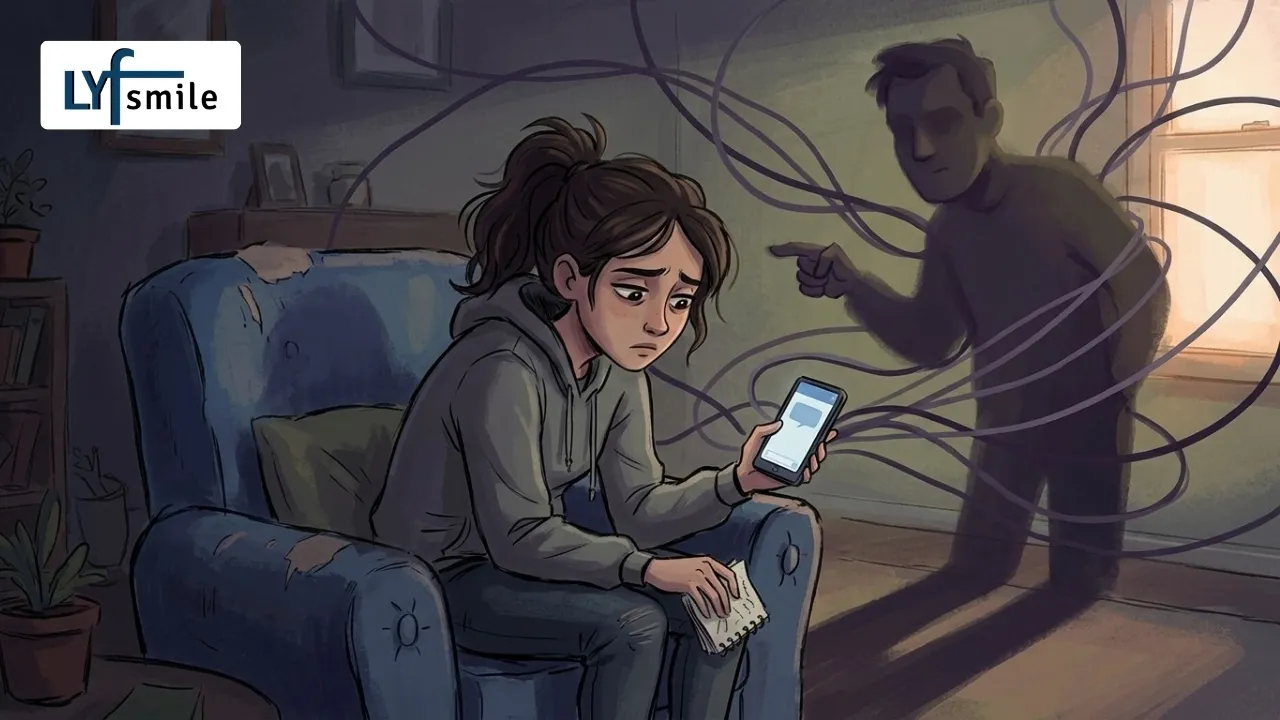
We've all been there: You're going about your day when you suddenly notice a tiny bump on your arm or a random muscle twitch in your leg. In an instant, your mind jumps to the worst-case scenario. Before you know it, you're down a Google rabbit hole at 2 AM, convinced that a minor sensation is a medical emergency.
The physical sensations you feel are very real. You are not making them up. Your brain's internal alarm system is simply over-responding, turning a whisper into a scream. Living this way is exhausting but understanding your health anxiety symptoms is the first step toward reclaiming your life.
If you are looking for online anxiety therapy in India, expert therapists at lyfsmile are here to help.
What Are the Symptoms of Health Anxiety?
Physical Symptoms of Health Anxiety
People with health anxiety may notice symptoms such as heart palpitations, dizziness, tingling sensations, muscle tension, and headaches. These physical symptoms of health anxiety are caused by the body's stress response and can become more noticeable when a person is constantly focused on their health
Emotional Symptoms of Health Anxiety
The emotional side of illness anxiety disorder can be equally overwhelming. Many people experience a constant fear of illness and excessive worrying about minor bodily changes. Feelings of panic and anxiety may arise after reading about diseases or noticing normal sensations. Recognizing these signs of health anxiety early can make it easier to seek support and learn healthy ways to manage anxious thoughts and physical symptoms.
The Health Anxiety Loop: Why Small Aches Feel Like Big Threats
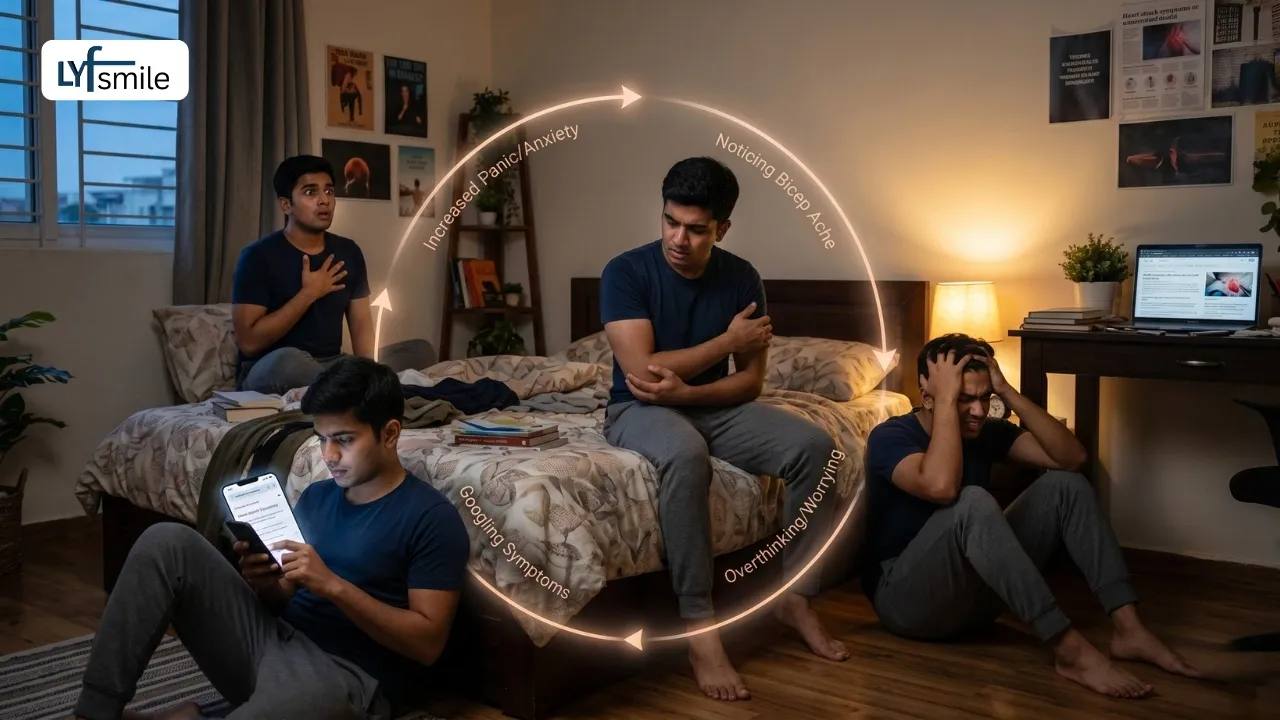 Living with health anxiety means your brain is constantly on high alert, turning the volume up on every minor physical sensation. This is often why people seek illness anxiety treatment or hypochondria treatment online, not because they are weak, but because the cycle feels impossible to break alone.
It's not that the feelings aren't real, it's that your "threat detector" is over-responding. When you're stuck in this loop, the more you scan your body for trouble, the more "symptoms" you seem to find. This creates a cycle of health-related stress that feels impossible to escape.
To break free, you first have to understand the four stages of the Anxiety Cycle:
Step 1: The Spark: You notice a normal body "noise," like a muscle twitch, a dull ache, or a skin spot.
Step 2: The "What If" Thought : Your mind skips the logical explanation and jumps to the scariest possible medical diagnosis.
Step 3: The Body Scan: You start checking, touching, or Googling symptoms. This focus actually makes the area feel more sensitive and painful.
Step 4: The Panic: The increased focus makes the symptom feel worse, "confirming" your fear and keeping the spiral moving.
Why Do People Develop Health Anxiety?
The causes of health anxiety can vary from person to person. In many cases, a combination of life experiences, stress, and personality factors contributes to the development of illness anxiety disorder.
Stressful Life Events
Major life changes such as work pressure, relationship problems, financial difficulties, or the loss of a loved one can increase anxiety levels. During stressful periods, people may become more focused on their physical sensations, which can trigger health anxiety symptoms.
Previous Illness Experience
Experiencing a serious illness in the past or seeing a family member struggle with a medical condition can make a person more fearful about their own health.
Family History of Anxiety
People with a family history of anxiety disorders may be more likely to develop illness anxiety disorder. Genetics and learned behaviours can both play a role in how a person responds to health-related concerns.
Traumatic Experiences
Traumatic events, including medical emergencies, accidents, or the unexpected loss of someone close, can contribute to excessive fear about illnesses. S
Excessive Internet Searches
Frequently searching symptoms online, often called "cyberchondria," can make health-related fears worse. Reading about serious diseases and comparing normal sensations with medical conditions may increase anxiety and reinforce negative thought patterns
Recognising these causes of health anxiety can help individuals understand their fears better and seek appropriate support. With the right anxiety, counselling can be effectively managed.
Why Your Mind Turns Small Symptoms Into Huge Worries?
Have you ever noticed that a tiny headache feels much scarier at 6 AM than it does at noon? This happens because morning anxiety often catches us when our defences are down.
When the house is quiet, and your brain is just waking up, your nervous system experiences a natural cortisol spike, the stress hormone. This chemical surge makes your mind hyper-vigilant, causing it to zoom in on a small muscle twitch or a dry throat and interpret it as a major threat. It's not that you're being dramatic. It's just your brain's survival instinct working overtime.
Why Your Brain Magnifies Small Signals:
The Quiet Room Effect: Without the distractions of your workday, your brain has nothing to do but scan your body for potential problems.
The Survival Glitch: Your brain thinks it's protecting you by assuming the worst. It would be better to be wrong about a serious illness than to miss one.
The Cortisol Spike: High morning cortisol primes your body to feel more physical sensations — which your brain then tries to explain with scary logic.
The Focus Effect: Once you focus on a specific body part, you actually start to feel more sensations there. Your mind uses this as "proof" that something is wrong.
The Reassurance Trap (And Why It Never Feels Like Enough)
 It usually starts with a frantic 3 AM Google search or a desperate question to your partner: "Does this look weird to you?"
You're looking for that one sentence that will finally let you breathe again. But even when you get a "you're fine," the relief doesn't last. Five minutes later, that tiny voice whispers: "But what if they're wrong? What if they missed something?"
This is the Reassurance Trap. It is why so many people find themselves searching for anxiety treatment not because they lack facts, but because they have no way to handle uncertainty. Temporary fixes leave you more exhausted than before.
Why Reassurance Keeps You Stuck:
The Hunger for Certainty: Seeking reassurance temporarily kills the fear, but it also feeds it. Your brain learns it cannot handle a "what if" without outside help, keeping you in a state of constant high alert.
The Google Rabbit Hole: Searching for medical facts online feels like research, but it's a trap. Your mind skips 99 healthy explanations and latches onto the one scary possibility every single time.
The Safety Burnout: Eventually, no amount of "you're okay" feels like enough. You lose the ability to trust your own body and you are left exhausted.
The internet can give you a million facts. It cannot give you peace. Professional anxiety counselling is not about finding a 100% guarantee that you'll never be sick. It's about learning to sit with a minor ache without letting it ruin your entire week.
10 Common Health Anxiety Symptoms (The "Anxiety Echoes")
Reclaiming your peace starts with one simple realisation: many of the physical sensations you feel every day are not signs of illness. At Lyfsmile, we call them "anxiety echoes", real physical ripples of stress that your brain has mistaken for a medical crisis.
Under the guidance of Mrs Ritika Dhall, a counselling psychologist with over 10 years of experience, here are the 10 most common physical symptoms of health anxiety to watch for:
Tingling or Numbness: Often felt in the hands, feet, or face due to rapid or shallow breathing.
Heart Palpitations: A racing or pounding heart, even while resting.
Dizziness: Feeling lightheaded or unsteady during moments of high stress.
Chest Tightness: Shallow breathing or a heavy, pressured feeling in the chest.
Digestive Issues: A knot in the stomach, nausea, or general digestive upset.
Muscle Twitches: Random spasms in the eyelids, arms, or legs.
Temperature Spikes: Sudden hot flashes or unexplained sweating.
Globus Sensation: A dry mouth or the persistent feeling of a lump in the throat.
Tension Headaches: Persistent pressure or brain fog that makes concentration difficult.
Chronic Fatigue: Feeling constantly drained from living in a fight-or-flight survival state.
How to Quiet the Noise: Techniques That Actually Work
Understanding your symptoms is step one. Learning to respond to them differently is step two. Here are the most effective tools used in health anxiety therapy:
The "Postpone the Worry" Technique
The next time you feel the urge to Google a symptom or check your body, tell yourself: "I will allow myself to worry about this in two hours." Set a timer and move on. When the timer goes off, you will find the urge has significantly reduced, because anxiety is a wave. It rises, peaks, and falls on its own if you do not feed it.
This small delay does something powerful: it proves to your brain that the "emergency" was never actually urgent.
Work With a CBT Therapist
The Postpone technique is one of many tools that Mrs Ritika Dhall, certified CBT therapist and health anxiety specialist at Lyfsmile, uses with her clients. Through structured one-on-one sessions, she helps you replace fearful habits with mindfulness, build tolerance for uncertainty, and reclaim a life defined by your strength, not your stress.
The goal is not to find a 100% guarantee that you will never be sick. The goal is to reach a place where a minor ache does not ruin your entire week.
Frequently Asked Questions
1. What kind of therapy is best for managing health anxiety?
Cognitive Behavioural Therapy (CBT) is the gold standard for treating health anxiety. It focuses on identifying the fearful thoughts that lead to body checking and symptom Googling and teaches you how to interrupt that pattern.
2. How can I stop health anxiety and break the worry cycle?
Recovery starts with pattern interrupting. Instead of seeking immediate reassurance, try the Postpone the Worry technique or the 3-3-3 rule: name 3 things you see, 3 things you hear, and slowly move 3 parts of your body. These tools help you sit with uncertainty until the anxiety wave passes naturally, proving to your brain that you are safe.
3. Why is my health anxiety so bad lately?
Health anxiety typically flares up during periods of high stress or after a trigger event like hearing about someone else's illness or a difficult medical appointment. When your nervous system is already on edge, your brain becomes hypervigilant, turning minor sensations like a muscle twitch or a headache into perceived emergencies.
4. What does a panic attack feel like compared to a medical emergency?
A panic attack often mimics a medical crisis, such as chest tightness, racing heart, dizziness, and shortness of breath. The key difference is that panic peaks within 10 minutes and subsides as you slow your breathing. A genuine medical emergency typically does not respond to breathing techniques alone. If you are ever unsure, seeking medical attention is always the right call.
5. What should I look for in a therapist for health anxiety?
Look for a therapist with CBT certification and specific experience treating anxiety disorders. They should offer a safe, non-judgmental space and give you practical tools you can use between sessions — not just someone to talk to. Evidence-based approaches like CBT and Mindfulness-Based Stress Reduction (MBSR) are the most effective for long-term recovery.
6. What are the first signs of health anxiety?
Early signs of health anxiety include constant worry about illnesses, repeatedly checking the body for symptoms, searching for medical conditions online, and seeking frequent reassurance from doctors or loved ones.