Sarvesh Kumari
India’s Trusted Panic Attack Therapist Online for NRIs Worldwide
A panic attack can happen suddenly and feel very uncomfortable. Your heart may beat fast, breathing may feel difficult, and you may feel scared without knowing the reason. Even when there is no real danger, the body reacts as if something is wrong.
Panic and anxiety are natural reactions meant to protect us. Still, long-term stress, emotional pressure, past experiences, or living far from home can trigger these reactions to occur again. When panic attacks are ignored or not managed, they can start occurring more often and may slowly turn into panic disorder, where fear of the next attack becomes a constant worry.
Panic attack therapy online helps people recognize these symptoms early and learn healthy ways to manage them. At Lyfsmile, experienced therapist Mrs. Tanya Sachdev supports NRIs worldwide through safe, understanding, and quick-to-use online sessions. With the right guidance, panic attacks and panic disorder can be handled step by step, no matter where you live.
Meet Our Panic Attack Specialist Therapist
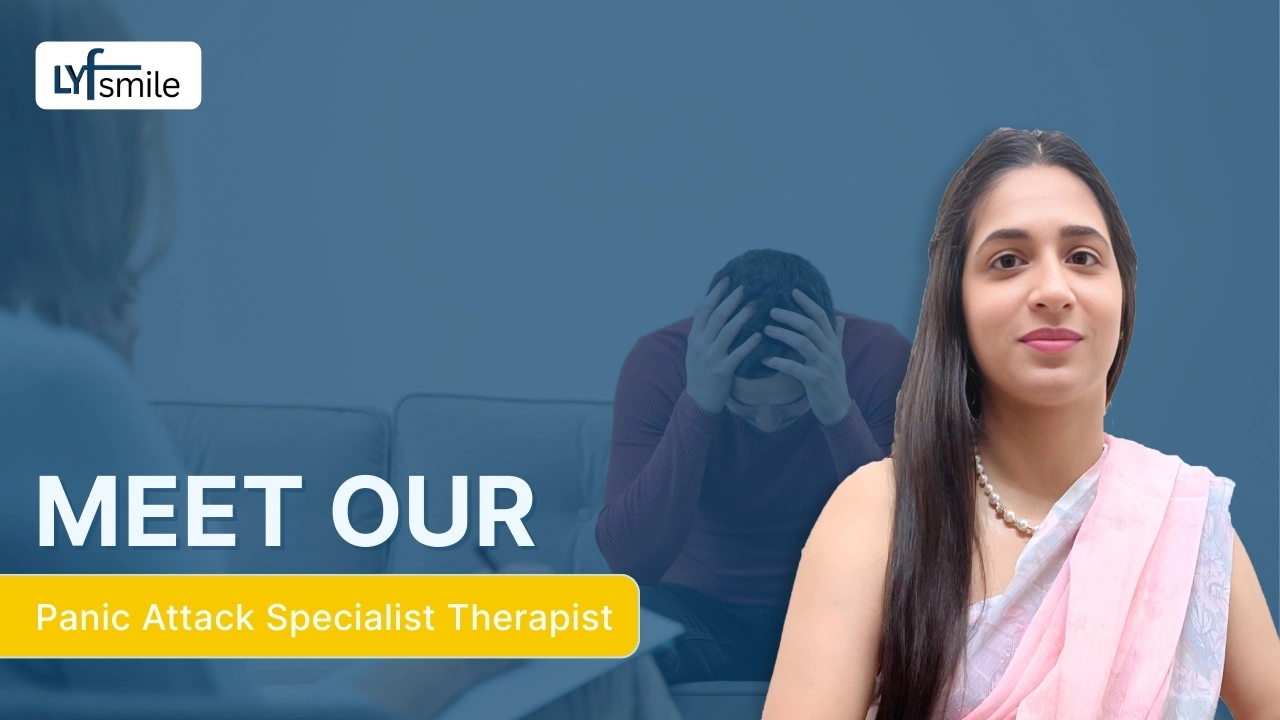 Mrs. Tanya Sachdev is a trained mental health professional with an MSc in Clinical Psychology from the University of Cambridge, UK. She has worked with people in India and abroad, which helps her understand the emotional and mental health challenges faced by NRIs. Her calm, supportive approach makes online panic attack therapy feel safe and easy to begin. Her wide clinical experience allows her to treat panic attacks from multiple angles, not just symptoms.
How her expertise helps in panic attack therapy:
Anxiety and panic attack management
She helps clients understand why panic attacks happen and how fear builds in the body, reducing the fear of future attacks.Breathing techniques for panic attacks
Simple and effective breathing methods are used to calm the body during panic episodes and regain control.Emotional intelligence and stress regulation
Panic attacks often come from emotional overload. She helps clients recognize and manage emotions in healthier ways.Work-life stress and lifestyle balance
Many NRIs experience panic due to work pressure and life changes. Therapy focuses on reducing these triggers.Identity and self-exploration support
Panic can affect confidence and self-image. Her experience helps clients feel more grounded and secure.Adolescent and young adult support
Panic linked to academic stress, peer pressure, or self-image is controlled with age-appropriate care.Relationship and family-related stress
Emotional stress from relationships or family issues is addressed, as it often worsens panic symptoms.
Mrs. Tanya’s experience across different age groups and emotional concerns allows her to provide panic attack therapy that is practical, understanding, and suited for people living abroad.
“Simply fill up the form to connect with a trusted panic attack therapist online and take the first step toward lasting relief and control. 📝
Why Panic Attacks Happen and What Triggers
Panic attacks often happen when the mind and body feel overwhelmed, even when there is no real danger. The brain incorrectly senses a threat and activates the body’s fight-or-flight response. This sudden reaction can feel intense and frightening because the symptoms are very real. When panic attacks start happening again and again, and the fear of having another attack stays in the mind, this pattern can slowly turn into panic disorder.
Common Reasons and Triggers That Lead to Panic Disorder
Stress and long-term pressure
Continuous stress from work, studies, relationships, or money problems overloads the nervous system. At first, this may cause occasional panic attacks. Over time, if stress continues and attacks repeat, the body stays on constant alert, which can lead to panic disorder.Past trauma or emotional distress
Painful experiences such as loss, abuse, accidents, or major life changes can leave the brain feeling unsafe. Panic attacks may start as a response to these memories, and repeated attacks can train the brain to expect danger even in safe situations.Fear of physical sensations
A fast heartbeat, shortness of breath, dizziness, or chest tightness are common stress symptoms. When a person begins to fear these sensations and constantly checks their body, anxiety increases. This fear cycle is one of the main reasons panic disorder starts.Overthinking and constant worry
Repeated negative thoughts like “What if this happens again?” Keep the brain in survival mode. The fear of future panic becomes a cause itself, making attacks more frequent.Avoidance and loss of confidence
After panic attacks, many people start avoiding places or situations where they previously felt panic. This avoidance strengthens fear and can lead to panic disorder.
Lack of rest and self-care
Poor sleep, exhaustion, too much caffeine, or irregular eating can make the nervous system more sensitive, increasing both the frequency and intensity of panic attacks.
Modern lifestyle overload
Constant screen time, noise, social pressure, and information overload do not give the brain enough rest time. This ongoing stimulation can confuse the brain and increase panic responses.
The good news is that panic disorder is treatable and reversible
Understanding panic is the first step. Therapy, especially cognitive behavioral therapy (CBT), helps retrain the brain to stop fearing panic sensations. Breathing techniques, grounding exercises, and gradual exposure to feared situations calm the nervous system. Healthy routines like regular sleep, balanced meals, exercise, and reduced caffeine support recovery. In some cases, medication may also help when guided by a professional.
How Online Therapy Helps with Panic Disorder
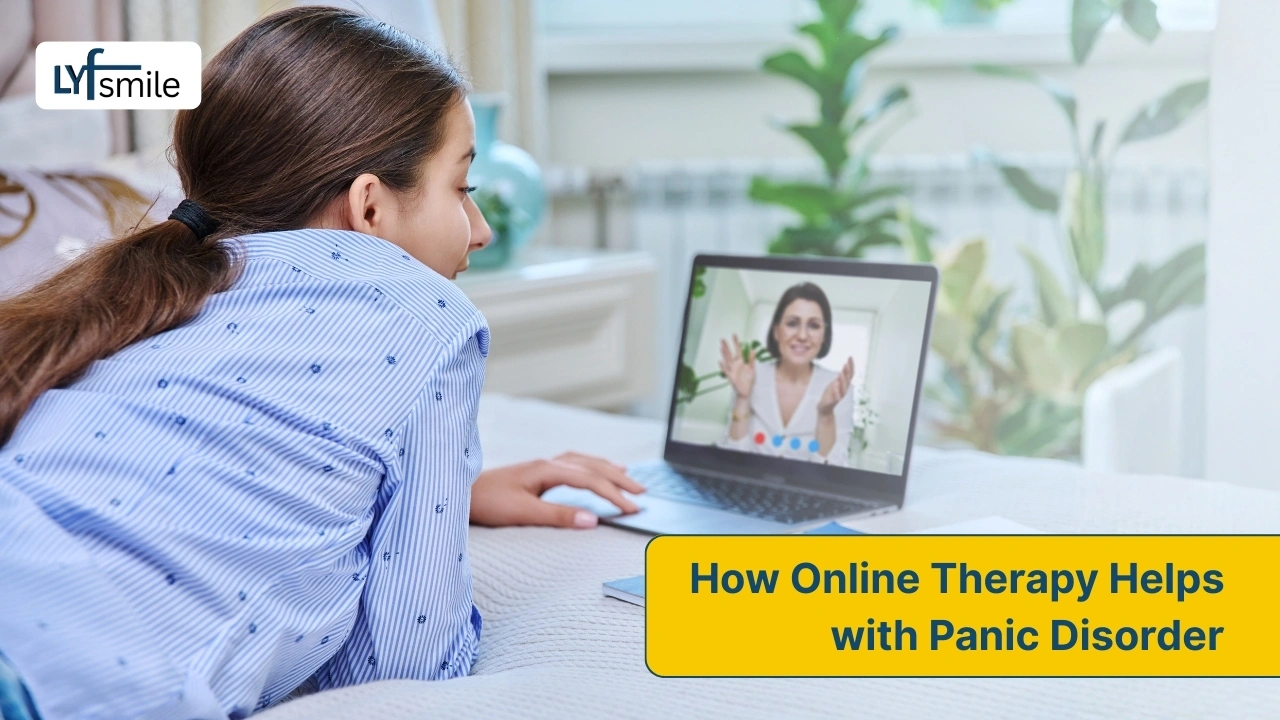 Online therapy helps people with panic disorder by teaching them how to change their relationship with fear instead of fighting it. Panic disorder grows stronger when fear is avoided or resisted. Online treatment for panic disorder focuses on understanding panic, allowing uncomfortable feelings, and slowly reducing the fear of fear. It provides support, guidance, and practical tools that help the brain feel safe again, all from the comfort of your own space.
Here is how online therapy supports recovery from panic disorder:
1. Teaches acceptance instead of resistance
Online therapy helps you learn that panic attacks are not dangerous. You learn to allow fear. anxiety, and body sensations instead of trying to escape them. When you stop resisting panic, its power slowly fades.
2. Helps you face fear in a controlled way
Therapists guide you through safe exposure exercises, where you experience anxiety on purpose and stay with it until it passes. This trains the brain to stop treating panic as a threat.
3. Reduces fear of bodily sensations
You learn why symptoms like a fast heartbeat, dizziness, or breathlessness cannot harm you. Understanding it removes the fear that causes panic disorder.
4. Supports patience during setbacks
Panic recovery is not instant. Online therapy prepares you for ups and downs and helps you stay calm during setbacks instead of feeling hopeless. This patience is a key part of healing.
5. Gives practical tools you can use daily
Online sessions teach simple breathing, grounding, and mindset techniques that you can practice anytime, especially when panic starts to rise.
6. Flexible and comfortable environment
Being in your personal home makes it easier to open up and face anxiety without added pressure. Regular sessions build consistency, which is important for long-term recovery.
7. Combines guidance with self-help learning
Many online therapy programs also include videos, exercises, and reading material. It allows you to learn at your own pace while still having professional support.
Online therapy does not promise instant relief, but it builds real and lasting change. By learning to allow fear, staying patient, and facing anxiety instead of avoiding it, many people slowly regain control and confidence in their daily lives.
If panic attacks are starting to control your life, online therapy can help you respond with calm and confidence. Start with a 15-minute free consultation.
How Indian Therapists Help NRIs Manage Panic Attacks
Panic attacks can feel sudden, intense, and confusing—especially when you are living away from home. Many NRIs experience panic attacks due to work pressure, loneliness, cultural adjustment, or being far from family support. Indian therapists understand both the emotional and cultural side of this experience. They focus on how to stop panic attacks naturally by guiding NRIs with calm, practical, and supportive methods.
Here is how Indian therapists help NRIs manage panic attacks:
Helping you stay calm during a panic attack
Therapists teach simple ways to remain calm when panic begins. You learn how to slow your breathing, relax your body, and remind yourself that the panic will pass and is not dangerous.Teaching you to recognize early warning signs
You are guided to notice early symptoms like fear, shortness of breath, a racing heart, or dizziness. Recognizing these signs early helps stop panic from becoming intense.Using words and thoughts that reduce fear
Indian therapists help you replace fearful thoughts with calming ones. You learn to gently remind yourself that you are safe and that the panic attack will not last long.Natural grounding techniques
Therapists teach grounding methods such as focusing on touch, movement, or surroundings. These techniques help bring attention back to the present moment and reduce panic easily.Encouraging acceptance, not fear
Instead of fighting panic, therapists help you allow the sensations to pass. This reduces the fear of panic itself, which is a key step in recovery.Culturally sensitive emotional support
Indian therapists understand family values, cultural expectations, and emotional challenges NRIs face. This makes it easier to open up and feel understood.Practical lifestyle guidance
You receive advice on sleep, routine, screen time, and stress management to support long-term recovery without over-dependence on medication.
Indian therapists help NRIs understand that panic attacks are temporary and manageable. With the right guidance, patience, and natural techniques, it is possible to regain control, confidence, and peace of mind—even while living far from home.
Why NRIs Trust Indian Panic Attack Therapists at Lyfsmile
Living abroad can look comfortable from the outside, but emotionally, it can feel very lonely. Many NRIs struggle not because of culture shock alone, but because they cannot openly talk about stress, fear, or panic within their own community. When emotions are ignored or dismissed, anxiety and panic quietly grow. This is why many NRIs trust Indian panic attack therapists at Lyfsmile—they feel heard, understood, and supported without judgment.
Here are the main reasons NRIs choose Indian panic attack therapists at Lyfsmile:
They understand cultural pressure and silence
Indian therapists understand how NRIs are often expected to appear “successful” and grateful, even when they are struggling inside. At Lyfsmile, you are allowed to speak honestly about fear, panic, or depression without being told to ignore it.No judgment, only understanding
Many NRIs fear being judged by their own community. Lyfsmile therapists create a safe space where your feelings are taken seriously, not minimized or compared.They understand education, family, and social stress
Indian therapists naturally understand pressures around education, career, family expectations, and responsibility. This shared understanding helps build trust faster.Comfort of familiar language and thinking
Talking familiarly, with shared cultural references, makes it easier to explain emotions. This comfort helps panic attack therapy feel more natural and effective.Support for isolation and emotional loneliness
Living abroad often means being physically comfortable but emotionally disconnected. Lyfsmile therapists help NRIs deal with loneliness, suppressed emotions, and panic that comes from feeling unheard.Focus on practical and natural healing
Indian panic attack therapists at Lyfsmile focus on understanding panic, reducing fear naturally, and building emotional strength rather than quick fixes.Flexible online access from anywhere
NRIs can connect with trusted Indian therapists online, no matter which country they live in. This makes consistent support possible without changing time zones or routines.
NRIs trust Indian panic attack therapists at Lyfsmile because they don’t just treat symptoms—they understand the life behind them. When you are finally heard and supported, panic loses its power, and healing becomes possible.
When It’s Time to Start Online Therapy for Panic Attacks
 Panic attacks can be frightening, but when they start happening often or begin to control your daily life, it is a clear sign that you need support. Panic attacks themselves are not dangerous, but the constant fear of having another one can slowly take over your thoughts, routines, and confidence. Online therapy helps you understand what is really happening in your body and mind and teaches you how to respond more healthily instead of avoiding fear.
Here are clear signs that it’s time to start online therapy for panic attacks:
Panic attacks are happening again and again
If you are experiencing panic attacks frequently or worrying about them for months, online therapy can help stop this cycle before it develops into panic disorder.Fear of panic is controlling your life
Avoiding places, people, travel, or daily activities because you are afraid of a panic attack is a strong sign that professional help is needed.You are constantly monitoring your body
If normal sensations like a fast heartbeat, sweating, or shortness of breath feel scary and trigger panic, online therapy can help you understand and reduce this fear.You try to escape or suppress panic quickly
Panic often stays strong when people rush to stop symptoms through avoidance or safety behaviors. Online therapy teaches safer and more effective ways to cope.Medication alone doesn’t feel right for you
Medication is not always the first choice for panic disorder. Online therapy, especially CBT-based approaches, is proven to help reduce panic attacks and prevent relapse naturally.Panic is affecting work, relationships, or sleep
When panic starts interfering with your personal or professional life, early therapy can prevent long-term emotional exhaustion.You want long-term relief, not temporary fixes
Online therapy focuses on understanding panic, changing fear-based thinking, and helping your brain learn that panic sensations are not dangerous.
Take the next step toward calm and control
You don’t have to manage panic attacks alone. Starting online therapy gives you access to experienced professionals who can guide you step by step toward recovery—safely, privately, and from wherever you are.
If panic attacks are holding you back, now is the right time to seek help. Begin online therapy today and regain control of your life with confidence and support.
Reach out at +91 9804791047.
Conclusion
Anxiety, stress, and panic attacks can affect both your mental and physical well-being, but they are not permanent. With the right understanding and support, it is possible to break the cycle of fear and regain control over your life. Learning how your body reacts to stress is an important step toward healing.
Reaching out to the best psychologist for anxiety and stress can help you manage symptoms in a healthy and long-lasting way. A skilled psychologist provides guidance, practical tools, and emotional support tailored to your needs. Remember, seeking help is a sign of strength, and with the right care, a calmer and more balanced life is within reach.
FAQ’s
1. What are the signs and symptoms of panic disorder?
Panic disorder involves repeated panic attacks along with constant fear of having another one. People may avoid certain places or situations, feel on edge most of the time, and worry excessively about their health. Over time, this fear can start affecting daily life, work, and relationships.
2. How do you prevent a panic attack from becoming severe?
When you notice early signs, try not to fight the feeling. Accepting the sensations instead of fearing them often prevents the attack from escalating. Controlled breathing, relaxing your muscles, and staying present can stop it from turning into a full-blown panic episode.
3. What helps someone who suffers from panic attacks?
Professional therapy, especially CBT for panic and anxiety, helps people understand triggers and change fear-based thought patterns. Along with therapy, lifestyle changes like regular sleep, limiting caffeine, and practicing relaxation techniques can make a big difference.
4. How can you tell the difference between an anxiety attack and a panic attack?
Panic attacks usually come on suddenly and feel intense, even without a clear reason. Anxiety attacks build up gradually and are often linked to ongoing stress or worry. Both feel uncomfortable, but panic attacks tend to be shorter and more overwhelming.
5. Are there any unconventional tips for managing anxiety and panic?
One helpful but less talked-about approach is to allow anxiety instead of resisting it. When you stop fighting the sensations and observe them calmly, the fear loop weakens. This mindset shift is often used in modern therapy approaches.
6. What can people with anxiety disorders do to relax daily?
Simple habits like deep breathing, mindfulness, light exercise, journaling, and limiting screen time can help calm the nervous system. Regular therapy also teaches long-term skills that help the mind and body feel safer and more balanced.