


Sarvesh Kumari
Pain During Intimacy in Couples: Get Budget-Friendly Therapy Support
Sometimes relationships don’t break suddenly; they slowly drift apart. Busy lives, raising children, work pressure, and unresolved misunderstandings can create emotional distance between partners. When couples stop nurturing their connection, intimacy is often the first thing to suffer. What once felt natural may begin to feel tense, uncomfortable, or emotionally disconnected.
Many couples silently struggle with pain during intimacy in couples, avoiding conversations out of shame or fear of conflict. Others may experience difficulty reaching orgasm, reduced desire, or a sense of emotional emptiness during physical closeness. These challenges are rarely just physical; they are often deeply linked to emotional hurt, stress, or unresolved relationship issues.
Affordable counselling in India offers couples a safe space to understand what is really happening beneath the surface and begin rebuilding emotional and physical connection before the distance grows further.
Emotional Factors That Make Intimacy Painful for Couples
Intimacy is not just physical; it is deeply emotional. When emotions feel heavy, stressed, or unsafe, the body also reacts. Many couples who experience pain during intimacy in couples are surprised to learn that emotional factors can play a major role in their discomfort.
Below are some common emotional reasons that can lead to discomfort during sexual activity:
1. Anxiety and Depression
When someone is dealing with anxiety or a low mood, sexual desire and arousal naturally decrease. The body may not relax fully, which can lead to dryness or muscle tightening. Over time, anxiety and physical tension can make intimacy uncomfortable or even painful.
2. Chronic Stress
Daily stress from work, family, or responsibilities often causes the pelvic muscles to tighten without you even realising it. When the body stays tense, it becomes harder to relax during intimacy, increasing sensitivity and discomfort.
3. Fear of Intimacy or Body Image Concerns
Feeling self-conscious about your body or emotionally distant from your partner can reduce arousal. When there is a lack of emotional safety in relationships, the body may struggle to feel secure enough to enjoy closeness.
4. Past Trauma or Difficult Experiences
Previous sexual trauma or negative experiences can create lasting physical reactions. Even if the event happened long ago, the body may still respond with fear or muscle tightening. With the right support, these responses can be gently unlearned.
5. Relationship Conflicts
Unresolved arguments, poor communication, or emotional distance can increase tension between partners. When couples are not emotionally connected, physical closeness can feel forced or uncomfortable instead of loving and natural.
The Pain: Anxiety Cycle
One painful experience can create fear of it happening again. That fear increases tension, reduces arousal, and leads to more pain. Gradually, couples may begin avoiding intimacy altogether. This cycle is common, but it is also treatable.
Through therapy for intimacy discomfort, couples can understand the emotional triggers behind their pain, improve communication, and rebuild trust and comfort. At Lyfsmile, we provide a safe and confidential space where couples can talk openly about sensitive concerns without shame or judgment.
With the right guidance, emotional healing can reduce physical discomfort, helping couples reconnect in a healthier and more fulfilling way.
If intimacy has started to feel painful or distant, you’re not alone.
Start your healing journey by booking your session today.
Understanding Pain in Intimacy and How Counselling Supports Healing
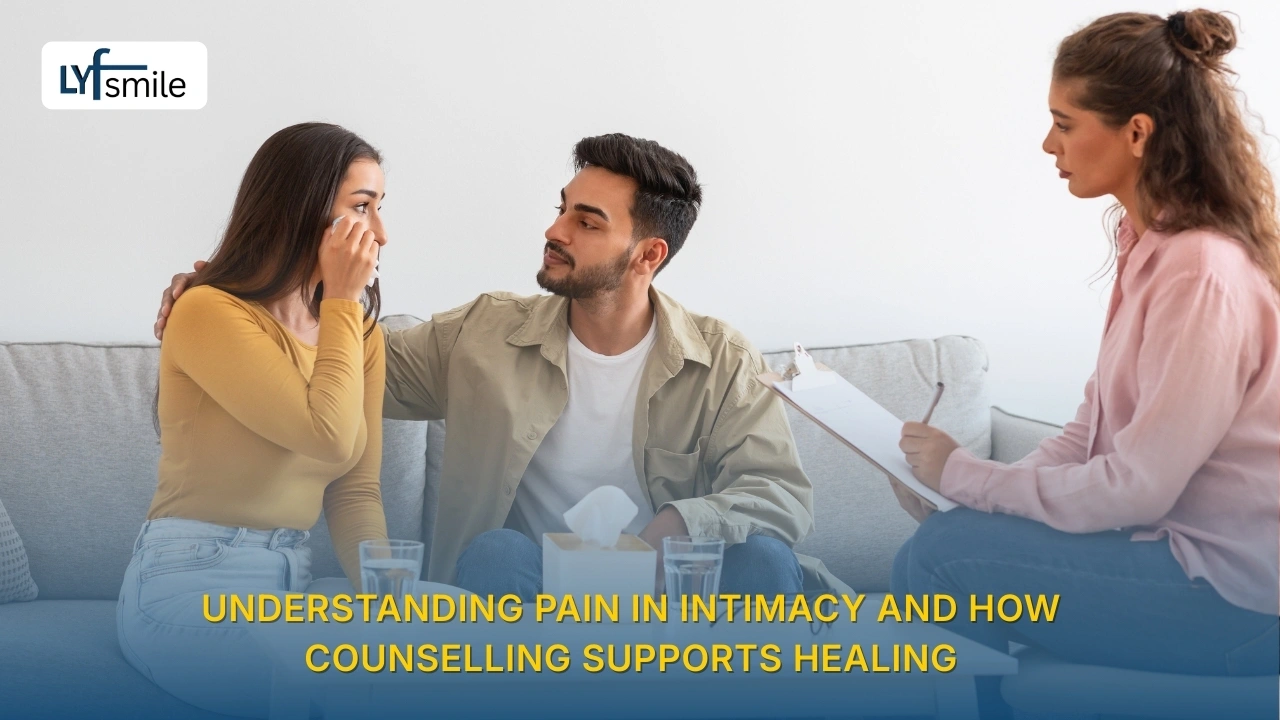 Pain during intimacy can feel confusing and frustrating. Even after medical treatment, some couples continue to experience discomfort during sexual activity. This often happens because the body has learned to expect pain. When that expectation builds, muscles tighten automatically, arousal decreases, and fear slowly replaces comfort.
For many couples, pain during intimacy in couples is not just physical; it has emotional roots as well. Stress, past hurt, relationship tension, or betrayal can create deep emotional blocks. Without emotional safety in relationships, the body may struggle to relax during closeness.
How Counselling Helps Break the Cycle
When pain repeats, a “pain–anxiety cycle” develops. One painful experience leads to fear. Fear creates anxiety and physical tension. Tension reduces arousal, which leads to more pain. Over time, couples may avoid intimacy completely.
The good news is that this cycle can be broken with the right care.
1. Counselling or Sex Therapy
Through therapy for intimacy discomfort, couples can explore emotional triggers, improve communication, and rebuild trust. Therapy helps partners express fears without blame and gradually restore comfort.
2. Cognitive Behavioural Therapy (CBT)
CBT helps reframe negative thoughts about sex and pain. Instead of expecting discomfort, individuals learn to replace fear-based thinking with calm, supportive beliefs.
3. Desensitisation and Relaxation Techniques
Gentle exercises can reduce involuntary muscle tightening and help the body relearn relaxation during intimacy.
4. Pelvic Floor Physiotherapy
Guided exercises strengthen and relax pelvic muscles, improving control and reducing tension.
Lifestyle Changes That Support Healing
Along with therapy, small daily changes can make a big difference:
Taking more time with foreplay to allow natural arousal
Using lubricants to reduce friction
Practising Kegel exercises for pelvic strength
Trying positions that allow more comfort and control
Managing stress through breathing exercises or mindfulness
Communicating openly about comfort levels and boundaries
Medical treatments such as topical creams, medications, or treating infections may also be recommended depending on the cause. A proper medical evaluation is always important.
When Trust and Emotional Hurt Are Involved
In some relationships, emotional or physical infidelity creates deep pain. Emotional disconnection can increase tension during intimacy. Evidence-based approaches, like structured couples therapy methods that focus on rebuilding trust and emotional bonding, can help partners move from hurt toward healing.
At Lyfsmile, we understand how sensitive this topic can be. Many couples feel embarrassed to talk about intimacy issues. But ongoing pain is not something you should ignore. With the right emotional support, guided therapy, and professional care, couples can rebuild comfort, trust, and closeness.
Conclusion
Pain during intimacy should never be ignored or silently endured. Many couples feel confused, ashamed, or alone when physical closeness becomes uncomfortable, but the truth is that these struggles are more common than people realise. Emotional stress, past hurt, relationship tension, and physical factors can all contribute to pain during intimacy in couples.
With the right guidance, open communication, and professional support, healing is absolutely possible. Addressing both emotional and physical aspects together helps restore comfort, rebuild trust, and strengthen connection. Couples do not have to navigate this journey alone. Support at the right time can make all the difference in creating a healthier, more fulfilling relationship.
If intimacy has started to feel painful or distant, you don’t have to handle it alone.
Reach out at +91 98047 91047 and take the first step toward comfort and connection.
FAQ’s
1. Is it normal to experience physical symptoms like muscle tension and fatigue during stress or anxiety?
Yes. Stress and anxiety often show up in the body as headaches, tight muscles, low energy, sleep disturbances, or digestive issues. Managing stress through relaxation techniques, proper rest, and therapy can ease these symptoms.
2. What are healthy ways to overcome depression and anxiety?
A combination of professional therapy, regular physical activity, balanced nutrition, supportive relationships, mindfulness practices, and structured daily routines can significantly improve emotional well-being over time.
3. Can passion flower help with anxiety and stress relief?
Passion flower is known for its calming properties and may help promote relaxation and better sleep for some people. However, it should be used under medical guidance, especially if you are taking other medications.
4. Which daily habits can improve both mental well-being and overall appearance?
Quality sleep, hydration, regular exercise, stress management, a balanced diet, skincare, and limiting screen time contribute to a better mood, higher confidence, and a healthier physical appearance.
5. How can you create emotional safety in a relationship?
Emotional safety develops through honest communication, active listening, non-judgmental responses, consistent behaviour, respecting boundaries, and making your partner feel valued and understood.
6. What does emotional safety in a relationship really mean?
It means feeling secure enough to express your thoughts, emotions, and vulnerabilities without fear of criticism, rejection, or being ignored. It forms the foundation for trust and long-term intimacy.
7. How does commitment, such as marriage vows, strengthen emotional security between partners?
Commitment creates reassurance, stability, and a sense of belonging. It helps partners feel chosen, valued, and supported, which encourages openness and deeper emotional connection.
8. Is emotional safety more important than attraction in marriage?
While attraction is important, emotional safety sustains long-term relationships. Feeling respected, heard, and secure allows love, intimacy, and attraction to grow naturally over time.
9. How can someone build a healthy relationship with an avoidant partner?
Patience, clear communication, respecting their need for space, avoiding pressure, and encouraging gradual emotional openness can help. Couples therapy can also support both partners in understanding each other’s attachment styles.
10. How should you respond if your spouse is emotionally involved with someone else?
Stay calm, express your feelings honestly, set clear boundaries, and try to understand the root cause of the disconnection. Professional counselling can help rebuild trust and decide the future of the relationship.