

Sarvesh Kumari
Anxiety Treatment in Gurgaon | Therapy for Stress, Overthinking & Panic Attacks
Living in Gurgaon means constant pressure, back-to-back meetings, long commutes, performance targets, and a pace of life that rarely slows down. For many people, this pressure quietly builds into chronic stress, constant overthinking, and panic attacks that become impossible to switch off — even when nothing specific is wrong.
Stress that does not go away after the weekend. Thoughts that loop endlessly at night. Panic attacks that hit without warning, before a meeting, in a crowded place, or sometimes for no clear reason at all.
If anxiety, constant worrying, panic attacks, or overthinking are affecting your daily life, professional anxiety therapy in Gurgaon can help. At Lyfsmile, experienced psychologists provide personalised anxiety treatment in Gurgaon through both online and offline sessions. Our RCI-licensed psychologists provide evidence-based anxiety treatment in Gurgaon, online and in-person, helping you manage stress, overthinking, and panic attacks so you can move toward a calmer, steadier way of living.
Common Signs of Stress, Overthinking and Panic Attacks You Should Not Ignore
Stress, overthinking, and panic attacks rarely arrive all at once. They creep in gradually — until one day you realise they have been quietly shaping your decisions, your sleep, and your relationships for months. In a city like Gurgaon, where work-life balance is a daily challenge, these signs are easy to dismiss. But ignoring them allows the pattern to deepen.
Chronic Stress That Does Not Switch Off: Feeling constantly overwhelmed, irritable, or on edge — even during weekends or holidays. Work pressure that follows you home. A body that feels permanently tense, tired, and wired at the same time. Chronic stress left unaddressed becomes the foundation on which overthinking and panic attacks grow.
Persistent Overthinking and Racing Thoughts: Stuck in loops of replaying past conversations, second-guessing decisions, or imagining worst-case scenarios. Left unaddressed, overthinking becomes the brain's default setting, making even simple decisions feel exhausting and draining.
Physical Symptoms Without a Clear Cause: A racing heart, chest tightness, sweaty palms, or a knot in the stomach before meetings or social situations. These are not imagined — they are your body responding to psychological pressure as if it were a physical threat.
Sleep Disturbances : The mind is active long after going to bed. Falling asleep feels difficult. Staying asleep feels impossible. Chronic sleep disruption then makes stress and overthinking worse the next day, creating a cycle that is hard to break without support.
Panic Attacks: Sudden, intense episodes of fear, pounding heart, breathlessness, dizziness, a feeling of losing control, that appear without warning. Panic attacks are not a sign of weakness. They are a sign that the nervous system is overloaded and needs structured support.
Avoidance Behaviour: Stepping back from responsibilities, declining social events, or postponing difficult conversations. Each avoidance feels like relief in the moment, but over time, quietly shrinks your world and strengthens the patterns driving your stress and anxiety.
This pattern is especially common in people experiencing generalised anxiety disorder (GAD), chronic work stress, or panic disorder, all of which are highly treatable with structured anxiety therapy in Gurgaon.
Why Stress, Overthinking and Panic Attacks Feel Impossible to Control
Chronic stress is not the same as temporary pressure. Temporary pressure has a source and an endpoint. Chronic stress stays; it accumulates quietly until your nervous system is running at maximum capacity all the time. At that point, even small triggers feel overwhelming.
Overthinking builds on top of that stress. It is not a habit you can simply decide to stop. It is driven by underlying anxiety patterns that keep your brain continuously scanning for threats, real or imagined. The more you try to stop, the louder the thoughts become. This is not a personal failing. It is how an overloaded nervous system behaves.
Panic attacks follow the same logic. They are not random. They are your brain misfiring its threat-detection system, treating a meeting, a social situation, or even a quiet moment as a physical emergency. Without addressing the root pattern, they continue and often increase in frequency over time.
This is why willpower alone does not work. Stress, overthinking, and panic attacks are learned patterns in how your nervous system responds to pressure, and learned patterns can be changed with the right professional support.
What Changes With Professional Anxiety Therapy
Stress, overthinking, and panic attacks do not respond to pushing through. They respond to the right tools, applied consistently, with professional guidance.
At Lyfsmile, therapy is a structured, evidence-based process that changes how your brain responds to pressure. According to the American Psychological Association, Cognitive Behavioural Therapy (CBT) is one of the most extensively researched and effective treatments for stress, anxiety, and panic disorder, with significant improvement seen in the majority of patients who complete a structured course of treatment.
Identifying Triggers and Breaking the Overthinking Loop
Using CBT, your therapist helps you identify the specific patterns driving your stress, overthinking, and panic attacks, not just the surface worry, but the deeper belief underneath it. Once you can see the loop clearly, you can begin to interrupt it before it spirals out of control.
Calming Your Nervous System With Science-Backed Techniques
Stress and panic attacks are physical as much as they are mental. Your therapist works with you on somatic tools, including deep breathing, grounding techniques, and mindfulness that directly regulate your nervous system, reducing the physical intensity of stress and stopping panic attacks before they escalate. These are not temporary fixes. They are skills that become more effective the more you use them.
Building Resilience That Holds Under Real Pressure
The goal is not just to feel better this week. It is to build mental steadiness that holds up under the real pressures of life in Gurgaon, demanding careers, difficult relationships, and constant change. This means learning to set healthy boundaries, improving sleep patterns, and developing a relationship with stress and your own thoughts that is grounded rather than reactive.
Online Anxiety Therapy in Gurgaon
Seeking professional help for anxiety has become more convenient than ever. With online anxiety therapy in Gurgaon, individuals can receive expert support from the comfort and privacy of their homes. Whether you are dealing with excessive worry, panic attacks, stress, or social anxiety, virtual counselling offers a flexible and effective way to begin your healing journey.
Convenient Video Sessions
Access to a Virtual Anxiety Psychologist in Gurgaon
Flexible Timings to Suit Your Schedule
Complete Privacy and Confidentiality
Effective Teletherapy for Anxiety Treatment
Whether you are looking for a virtual anxiety psychologist in Gurgaon, need flexible counselling options, or prefer the convenience of teletherapy, online anxiety therapy provides a practical and effective way to receive professional support and work towards lasting emotional wellness.
Meet Our Anxiety Therapists in Gurgaon
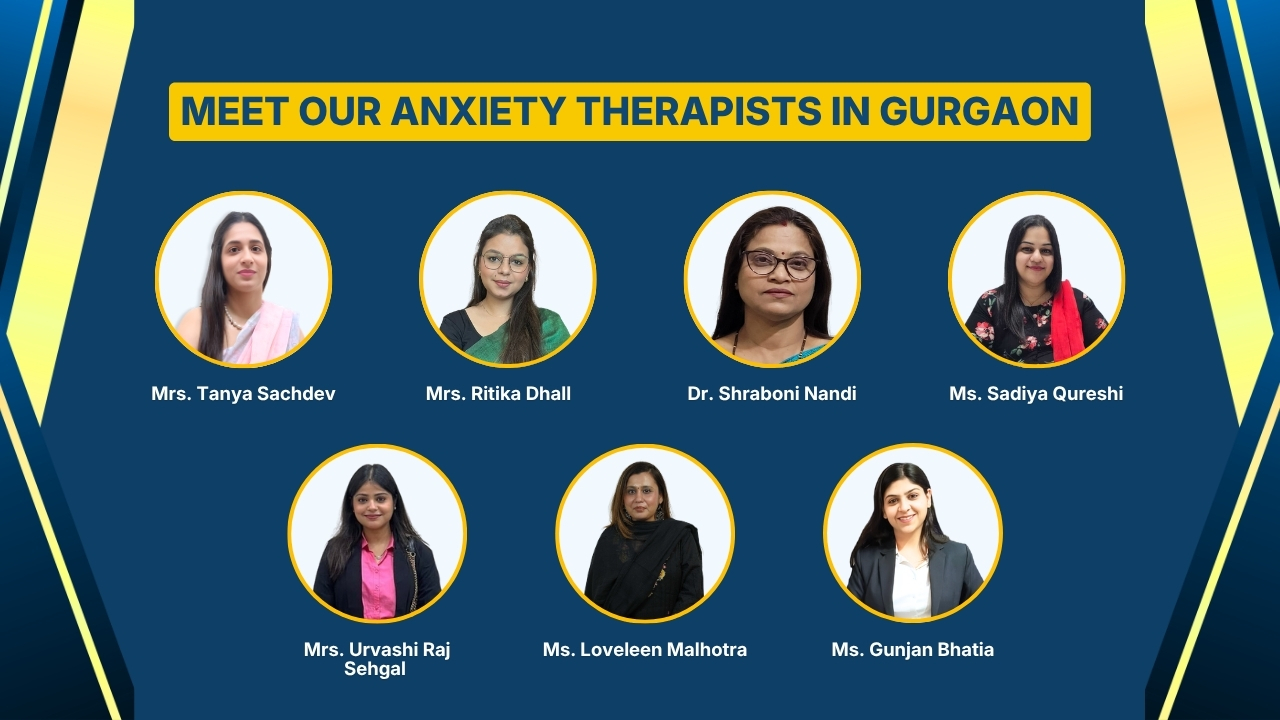 At Lyfsmile, you are supported by a team of verified, experienced professionals, each bringing a specific approach to stress, overthinking, and panic attack treatment in Gurgaon.
Mrs Tanya Sachdev: Holistic Therapist | Stress & Anxiety Management
Mrs Tanya Sachdev holds an MSc in Clinical Child Psychology from Cambridge University and brings international clinical experience to her work with adults dealing with chronic stress and anxiety. Her whole-person approach addresses not just the symptoms but the wider patterns in work, relationships, and lifestyle that keep stress chronically high and overthinking in place. Best choice if stress and anxiety are affecting multiple areas of your life.
Mrs Ritika Dhall : Senior Consultant | CBT Expert | Anxiety & Depression
Mrs Ritika Dhall is a senior counselling psychologist specialising in Cognitive Behavioural Therapy (CBT). She works with professionals dealing with chronic stress, overthinking, performance anxiety, and the persistent low mood that develops alongside long-term pressure. Her sessions are practical and structured, focused on tools that work in real daily situations. Best choice if overthinking and negative thought cycles are your primary concern.
Dr Shraboni Nandi : RCI Registered | PhD Psychology | 20+ Years Experience
Dr Shraboni Nandi brings over two decades of clinical experience with RCI Registration and a PhD in Psychology. She works with adults dealing with complex, long-standing stress, anxiety, and emotional regulation challenges that have not responded to other approaches. Best choice if you have been managing chronic stress or anxiety for a long time without lasting relief.
Mrs Urvashi Raj Sehgal: RCI Registered Counsellor | Mindfulness Expert
Mrs Urvashi Raj Sehgal combines psychodynamic understanding with mindfulness-based techniques to help clients build deeper self-awareness and emotional steadiness. Her approach is warm, structured, and focused on sustainable stress management within the real demands of daily life in Gurgaon. Best choice if you are dealing with both anxiety and low mood together.
Ms Loveleen Malhotra: Counselling Psychologist | Anxiety & Burnout
Ms Lovleen Malhotra has 9+ years of experience working with individuals dealing with chronic stress, anxiety, and burnout. Her approach focuses on the deeper patterns that keep stress and overthinking in place, identity, self-worth, and long-standing emotional habits. Best choice if your stress feels connected to deeper questions about who you are and what you want.
Ms Gunjan Bhatia: Certified Adult Psychologist | DBT Specialist
Ms Gunjan Bhatia uses Dialectical Behaviour Therapy (DBT) alongside CBT to help clients build lasting emotional regulation skills, especially for those whose stress and anxiety have started significantly changing their behaviour at work or in relationships. Best choice if stress and anxiety have begun affecting your daily functioning and behaviour.
Anxiety Therapy vs Medication: Which Is Better?
Both anxiety therapy and medication can help manage anxiety symptoms, but they work in different ways. Medication mainly helps control symptoms and may require medical supervision, while therapy focuses on understanding the root causes of anxiety and developing long-term coping skills.
Approaches such as Cognitive Behavioural Therapy (CBT) can provide lasting benefits by helping individuals change negative thought patterns and manage anxiety more effectively. In some cases, a combination of therapy and medication may be recommended depending on the severity of symptoms and individual needs.
Sessions are available in Hindi and English, online and in-person, with flexible timing including early mornings, evenings, and weekends. No large upfront packages. No hidden costs. Sessions start at ₹30/minute, pay per session, at a pace that works for you.
Anxiety Therapy Across Gurgaon: Online & In-Person
Lyfsmile supports clients from across Gurgaon and Delhi NCR, including professionals and residents in DLF Phase 1, 2, 3, 4 and 5, Cyber City, Golf Course Road, Sohna Road, MG Road, Sector 14, Sector 15, Sector 56, HUDA City Centre, Udyog Vihar, South City, Manesar, and surrounding areas.
In-person sessions are available at our Gurgaon centre, and same-day appointments are available.
Online therapy for stress, overthinking, and panic attacks is available across India, including Noida, Faridabad, Dwarka, and beyond, on secure platforms with flexible scheduling around your work routine.
If anxiety is interfering with your work, relationships, or daily life, seeking help early can make a difference. Lyfsmile offers confidential online and offline therapy sessions with experienced psychologists.
Reach us on WhatsApp at +91 98047 91047 or book at lyfsmile.com
Frequently Asked Questions
1. What is the difference between stress, anxiety, and a panic attack?
Stress is a response to an external pressure; it eases when the situation resolves. Anxiety persists even when the stressor is gone; it is your nervous system staying in alert mode. A panic attack is a sudden, intense surge of that anxiety: a physical episode of fear that peaks within minutes. All three are connected, and all three respond well to structured CBT-based therapy.
2. Why do I get panic attacks even when nothing is obviously wrong?
Panic attacks happen when your brain's threat-detection system misfires, treating a perceived pressure as a physical emergency. They are not random, and they are not dangerous. With structured CBT therapy, the specific triggers can be identified, and the pattern can be permanently reduced.
3. Why can't I stop overthinking even when I try?
Overthinking is driven by underlying stress and anxiety patterns, keeping your brain in constant threat-scanning mode. The harder you try to stop, the more your brain resists. Professional overthinking therapy works by addressing the root pattern, not just managing surface thoughts, but changing how your nervous system responds to uncertainty.
4. Why do I feel stressed and anxious for no reason?
Chronic stress accumulates over time until the nervous system is running at maximum capacity, at which point anxiety and overthinking become the default state, even without a specific trigger. This is one of the most common presentations at Lyfsmile and one of the most effectively treated with CBT-based therapy.
5. How much does anxiety therapy cost in Gurgaon?
At Lyfsmile, sessions start at ₹30/minute. Students and unemployed individuals can access sessions at ₹10/minute. No large upfront packages, you pay per session at your own pace.
6. Can stress, overthinking, and panic attacks be treated without medication?
Yes. Chronic stress, overthinking, generalised anxiety, and panic attacks all respond well to therapy alone, particularly CBT, mindfulness, and DBT-based approaches. For more complex cases, a combination of therapy and psychiatric support may be recommended.
7. How many sessions will I need?
Some people notice meaningful improvement within 4 to 6 sessions. A structured course for long-term change typically takes 8 to 12 sessions. Your therapist will discuss a personalised plan after your first assessment.
8. Is online therapy as effective as in-person sessions?
Yes. Research consistently shows online CBT is equally effective as face-to-face therapy for stress, anxiety, and panic attacks. For Gurgaon professionals, online therapy also removes the barrier of commute time and offers greater scheduling flexibility.
9. What is the most effective treatment for chronic stress and overthinking?
CBT (Cognitive Behavioural Therapy) is the most extensively researched treatment for stress, overthinking, and panic attacks, changing the underlying thought patterns driving mental overload, not just managing symptoms temporarily.
10. Are sessions completely confidential?
Yes. All sessions at Lyfsmile are fully confidential. Nothing you share is disclosed without your consent. Our therapists follow strict professional and ethical guidelines.
11. Can I choose a female therapist?
Yes. Lyfsmile has a full team of experienced female therapists in Gurgaon: Mrs Ritika Dhall, Mrs Tanya Sachdev, Dr Shraboni Nandi, Mrs Urvashi Raj Sehgal, Ms Loveleen Malhotra, Ms Gunjan Bhatia, and Ms Sadiya Qureshi. Simply mention your preference when booking.
12. Do you provide therapy for work-related stress in Gurgaon?
Yes. Many clients are corporate professionals from Cyber City, Golf Course Road, and Udyog Vihar. Lyfsmile specialises in work-related stress, burnout, performance anxiety, and the constant overthinking that comes from managing demanding careers in Gurgaon.
13. Can I start therapy if I am not sure I need it?
You do not need a diagnosis or a crisis to reach out. If stress, overthinking, or panic attacks have been affecting your daily life, that is reason enough to begin.