

Sarvesh Kumari
Anxiety and Breathing Problems: Why It Feels Like You Can't Breathe and What Actually Helps
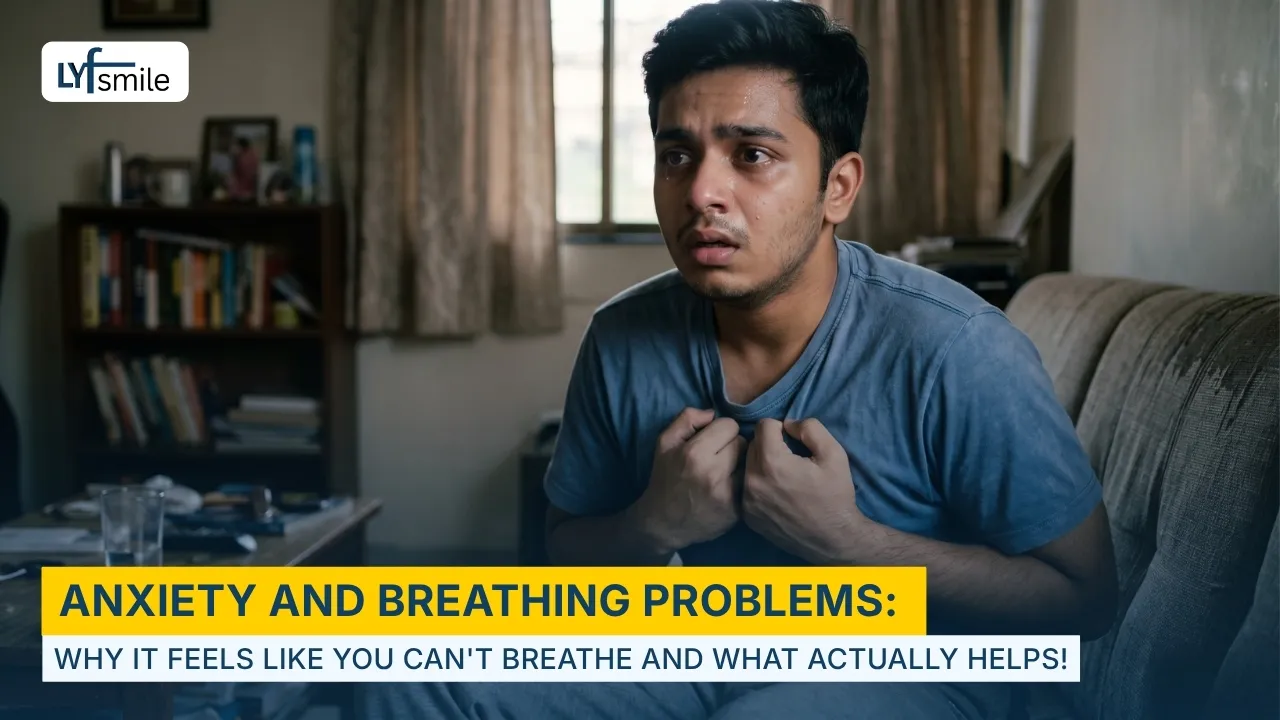
If you have ever felt unable to breathe due to anxiety, you know how terrifying and overwhelming these moments can be. A sudden tightness in your chest. Your breath is coming fast and shallow. The terrifying feeling that you cannot get enough air, even though nothing around you has changed.
If you ever felt short of breath, you already know how frightening anxiety breathing problems can feel. The good news is this: your body is not in danger. Your nervous system is simply reacting to stress, and once you understand why, you can learn to stop it.
If anxiety and breathing problems are affecting your daily life, professional support can make a real difference. At Lyfsmile, we help individuals across India understand the root causes of anxiety, manage physical symptoms, and develop healthier coping strategies through personalised online anxiety counselling.
I Can Breathe but Feel Like I Can't: Is This Anxiety?
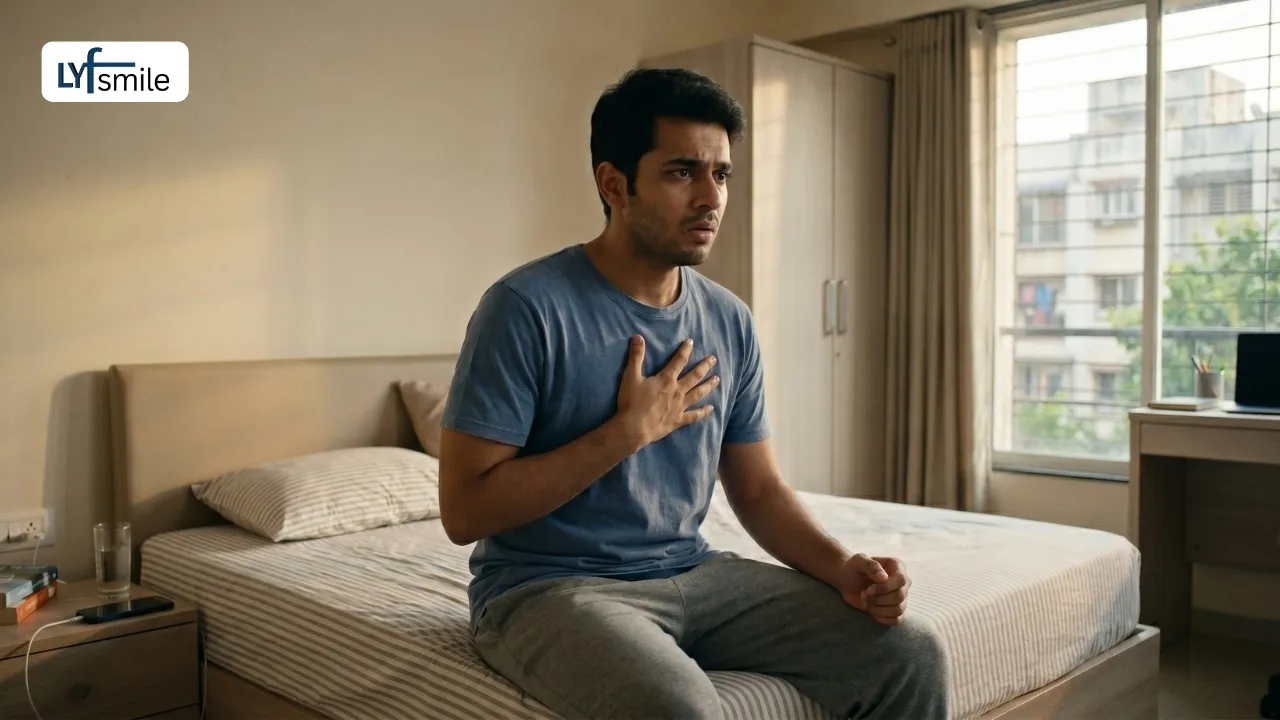 We've all been there, at a stage where we feel unable to breathe due to anxiety
That terrifying moment when you're breathing just fine, but it somehow doesn't feel like enough. You know air is moving in and out, but something feels wrong, and you feel like you can breathe, but feel like you can't. Like you're stuck with half a lung or something. It's scary, and honestly, it can make you feel like something is seriously wrong with your body. Here's the thing: it's probably not your lungs at all.
What "Air Hunger" Actually Is
This sensation has a name: air hunger, and it's way more common than you'd think, especially during anxiety or panic attacks. The scary part is how real it feels. Your brain is basically running a false alarm, but your body can't tell the difference between a real threat and an anxious thought.
When anxiety kicks in, your fight-or-flight response activates without you even realising it. Your breathing naturally shifts, and you start taking quicker, shallower breaths. And here's the cruel part: the more you focus on your breathing, the worse it feels. Your brain notices the sensation, gets worried about it, and then becomes unable to breathe due to anxiety, breathing even more shallowly. It's a cycle that feeds itself.
These Are 5 Signs Anxiety Is Behind It:
That tight, heavy feeling in your chest
Constant yawning or sighing (like your body is desperately trying to get a full breath)
Dizziness or lightheadedness
Tingling in your hands or face
Symptoms that ramp up during stressful moments
This sensation, as frightening as it is, is usually temporary. It fades as your nervous system calms down. Once you understand that anxiety is behind it and that your lungs are actually doing just fine, you can start to break that cycle. The goal is to shift your focus away from controlling your breath and instead teach your body that it's safe to relax.
How to Tell if Shortness of Breath Is From Anxiety
If you've ever felt chest tightness, anxiety and out of breath for no obvious reason, you know how scary it can be. Your mind jumps to the worst-case scenario, heart problems, lung issues, something serious. And honestly, that's completely understandable. Shortness of breath can come from so many different things that it's natural to worry. But here's the thing: anxiety is actually one of the most common culprits, and it doesn't mean something is physically wrong with you.
However, many people who feel unable to breathe due to anxiety are surprised to learn that anxiety is actually one of the most common causes of breathing difficulties. Although the sensation can feel overwhelming, it does not necessarily mean something is physically wrong with you. Understanding why anxiety affects your breathing can help you break the cycle of fear and find relief.
How to Slow Your Breathing Right Now: 4 Steps That Work
Step 1: Box Breathing (4-4-4-4)
This is the single most effective technique for stopping anxiety and breathlessness fast. It works by directly interrupting the fast, shallow breathing pattern that is driving your panic.
How to do it:
1. Breathe IN slowly for 4 counts
2. HOLD for 4 counts
3. Breathe OUT slowly for 4 counts
4. HOLD for 4 counts
5. Repeat 3 to 4 times
Most people feel significantly calmer within 2 minutes. This technique is a core part of breathing anxiety therapy because it directly signals to your nervous system that the danger has passed.
Step 2: Shift Your Focus Outward
When you are focused on your breathing, you make it worse. Every anxious brain does this — the more attention you give a sensation, the more intense it feels.
The moment you feel breathless, look up from whatever you are doing and notice:
3 things you can SEE right now
3 sounds you can HEAR right now
3 parts of your body that are touching a surface: the chair beneath you, your feet on the floor, your hands in your lap
This grounding technique pulls your attention away from your internal panic and back into the room you are actually sitting in. It does not require any special training. It works immediately — and the more you practise it, the faster it brings relief.
Step 3: Release Muscle Tension
Anxiety does not just affect your breathing; it tightens your entire body. Tight shoulders, a clenched jaw, a stiff neck; all of this physical tension makes it harder to breathe deeply and naturally.
Try this simple release:
1. Take a slow breath in and tighten your shoulders up toward your ears
2. Hold for 3 seconds
3. Exhale and let everything drop and release completely
4. Repeat with your hands clench them into fists, then release
5. Finally, gently open and close your jaw, then let it relax
When your muscles release, your breathing naturally deepens. This is because your diaphragm, the main muscle you breathe with, works much better when the surrounding muscles are not tensed.
Step 4: Use a Small Distraction Deliberately
This technique feels too simple to work. But it does. Put on a familiar song you like. Watch three minutes of something light on your phone. Pick up something with an interesting texture and focus on how it feels in your hand.
A small distraction breaks the panic cycle long enough for your nervous system to reset. When your mind is no longer locked onto the breathlessness, your body stops receiving the danger signal—and your breathing naturally starts to slow.
What Anxiety-Related Breathlessness Feels Like
When anxiety is the cause, there's usually a pattern. The trouble breathing due to anxiety tends to show up during stressful moments, maybe right before a big meeting, during an argument, or when you're worrying about something you can't control. It often comes on suddenly and might fade just as quickly once you calm down. Unlike a medical condition that progressively gets worse, anxiety-induced breathlessness tends to come and go.
You might notice other symptoms along with it: tingling in your fingers or lips, dizziness, tightness in your chest, or racing thoughts. Your heart might feel like it's pounding even though you're just sitting still, but in this case, an anxiety counsellor can help you the most
People experiencing anxiety and breathing problems often notice that the sensation becomes less intense once their body and mind begin to relax. Unlike a medical condition that progressively gets worse, anxiety-induced breathlessness tends to come and go.
Anxiety triggers your body's "fight or flight" response, preparing you for danger even when nothing is threatening nearby. Your breathing gets faster and shallower, which can leave you feeling like you can't get enough air.
Why It Feels So Terrifying
Let's be real, feeling like you are unable to breathe due to anxiety is terrifying, no matter what's causing it. Your body is sounding an alarm, and of course, you pay attention. But here's the reassurance: anxiety symptoms, while uncomfortable, aren't dangerous.
When to Get Help Right Away
Of course, not all breathlessness is anxiety. You know your body best, and it's always smart to rule out physical causes. Seek immediate medical attention if you experience:
Severe or crushing chest pain
Fainting or losing consciousness
Blue lips or fingertips
Sudden, severe breathing problems that feel different from usual
Symptoms that are new or rapidly getting worse
A quick checkup with your therapist can give you peace of mind and confirm that everything looks good physically, and this is why many people are going for anxiety treatment in India.
Moving Forward
Once you understand that anxiety might be behind your symptoms, you can start to approach them differently. Breathing techniques, grounding exercises, and simply reminding yourself that "this is anxiety, not an emergency" can make a big difference. You're not alone in this; lots of people experience exactly what you're going through. Professional help for anxiety can help you tackle this issue. The fact that you're paying attention to your body and trying to understand what's happening is already a great first step.
When Anxiety Breathing Problems Keep Coming Back
If the chest tightness and breathlessness keep returning, especially more frequently or more intensely, it is a sign that your body has become hypersensitive to anxiety triggers. This is not a character flaw. It is a pattern. And patterns can be changed.
Recurring anxiety and breathing problems almost always mean the underlying anxiety has not yet been fully addressed. The techniques above will give you relief in the moment, but they will not resolve the root cause on their own.
Three things make a real long-term difference:
1. Identifying your specific triggers
Most people with recurring anxiety breathlessness have specific patterns in certain situations, times of day, thoughts, or physical sensations that consistently bring on episodes. A good therapist will help you map these patterns precisely, so you can see them coming before they escalate.
2. Changing how your brain responds to the trigger
This is the core of Cognitive Behavioural Therapy, or CBT. In CBT, you learn to identify the automatic thought that fires when you notice a sensation ("that twitch means something is wrong") and practise replacing it with an accurate response ("that is a normal muscle sensation, my body is safe"). Over time, the trigger loses its power, and the breathlessness episodes become rarer.
3. Regular professional support
Working with a trained anxiety therapist gives you a structured, consistent space to practise these skills. Most people who complete a full course of CBT for anxiety and breathing problems see dramatic improvement and go months or years without an episode.
At Lyfsmile, our certified therapists provide one-on-one anxiety therapy online across India. Sessions are available in English and Hindi. Appointments can be booked the same day through WhatsApp.
Anxiety Trouble Breathing All Day: Can It Last for Hours?
Honestly, yes, anxiety-related breathing problems can hang around for hours. They can even pop up and fade away multiple times throughout the day, which is pretty exhausting.
For many people who feel unable to breathe due to anxiety, the symptoms seem to come and go without warning. Here's the thing: when your nervous system stays keyed up, your body stays in that ready-to-react mode even when there's nothing actually threatening. It's like your system is stuck in "wait mode," constantly scanning for danger. And that means you stay hyper-aware of every breath you take, which only makes the problem feel worse.
Online anxiety counselling at Lyfsmile provides a safe and convenient way to understand your triggers, learn healthy coping strategies, and manage symptoms more effectively. At Lyfsmile, experienced anxiety counsellors offer evidence-based support, including Cognitive Behavioural Therapy (CBT), to help you overcome persistent anxiety and regain a sense of calm and control.
What Keeps This Cycle Going?
A few different things can make this worse:
Chronic stress: when life's pressures just keep building
Health anxiety: constantly worrying that something is physically wrong
Tension: tight muscles in your chest and shoulders
Hypervigilance: paying way too much attention to every sensation
Checking your breathing: the more you watch it, the weirder it feels
Poor sleep or too much caffeine: these fuel the anxiety fire
Interestingly, most people notice that symptoms get worse when they're sitting still or trying to relax. In fact, many people who feel unable to breathe due to anxiety find that the sensation becomes much more noticeable when they focus on their breathing
The Reassuring Part
Just because you feel like you can't breathe well doesn't mean your lungs are actually failing. If you feel unable to breathe due to anxiety, it can be reassuring to know that the sensation is caused by your nervous system being stuck in overdrive, not by a lack of oxygen. While the symptoms can feel frightening, they are temporary and usually improve as your body and mind begin to calm down.
When to Get Help
If you frequently feel unable to breathe due to anxiety, professional support can make a real difference. At Lyfsmile, you can connect with experienced anxiety counsellors and licensed therapists who provide online anxiety counselling across India. Through evidence-based approaches like CBT, therapy can help you understand your triggers, manage anxiety and breathing problems, and regain confidence in your daily life.
You're not broken, you just need the right support to help your nervous system return to balance
Frequently Asked Questions
Can anxiety really cause breathing problems?
Yes, completely. Anxiety triggers your body's fight-or-flight response, which immediately changes your breathing pattern. Your breaths become fast and shallow, which creates the feeling that you are not getting enough air, even though your body is taking in enough oxygen.
How do I stop anxiety breathlessness fast?
Box breathing is the most effective immediate technique. Breathe in for 4 counts, hold for 4, breathe out for 4, hold for 4. Repeat 3 to 4 times. Most people feel significantly calmer within 2 minutes.
Is chest tightness from anxiety dangerous?
No. Chest tightness caused by anxiety is not medically dangerous. It happens because your muscles tense up during the stress response, and your diaphragm tightens. It feels alarming, but passes as your breathing slows and your muscles release.
How long does anxiety breathlessness last?
Most anxiety breathing episodes peak within 5 to 10 minutes and reduce significantly as you slow your breathing. With regular practice of breathing techniques and structured professional therapy, episodes become less frequent and less intense over time.
What does a panic attack feel like compared to normal anxiety breathlessness?
Normal anxiety breathlessness builds gradually in response to stress or worry. A panic attack is more sudden and intense, with chest tightness, racing heart, dizziness, numbness, and a strong feeling of losing control, all arrive together and typically peak within 10 minutes. Both are treatable with professional support.
When should I see a therapist for anxiety and breathing problems?
If breathlessness from anxiety is happening more than once a week, affecting your sleep, your work, or your relationships, or making you avoid situations you used to handle easily, it is time to speak to a professional. CBT therapy is the most evidence-supported treatment for anxiety-related breathing symptoms and is available online across India at Lyfsmile, starting from ₹30 per minute.
Why do I feel like I can't breathe even though I can?
Many people with anxiety describe the sensation as, I can breathe, but it feels like I can't."This feeling, sometimes called air hunger, happens because anxiety changes your breathing pattern and makes you hyperaware of every breath.