


Yakshi
What Actually Happens in Your First Therapy Session?
You've finally made the decision. You've done the research, found a therapist, and booked the appointment. Now comes the part nobody really prepares you for: the anxious hours before your first therapy session, wondering what on earth is actually going to happen. Will you be made to lie on a couch? Will they immediately dig into your childhood? Will you cry? Will you even know what to say?
These are completely valid questions. The good news is that a first therapy session is far less daunting than most people expect. This guide walks you through everything from busting common myths to what happens minute by minute to how to know if your therapist is truly the right fit for you.
Before you even step into your first session, many therapists begin with a short, 15-minute assessment test, a simple, structured way to understand your current emotional state, stress levels, and key concerns. It’s not a test you can pass or fail, but rather a helpful starting point that allows your therapist to get a clearer picture of where you are, so your first conversation feels more focused, comfortable, and truly about you.
Common Myths About the First Therapy Session
Before we get into what actually happens, let's clear up a few things that tend to hold people back.
1. "You have to lie on a couch and talk about your childhood."
Modern therapy is simply a conversation usually face-to-face or online. Most therapists focus on what’s bringing you in now, not your entire childhood.
2. "Therapy is only for people with serious mental illness."
Not true. People seek therapy for stress, relationships, career concerns, or self-growth—you don’t need a diagnosis.
3. "All therapists do the same thing."
Therapists use different approaches and styles. Finding the right fit for you is what really matters.
4. "You have to share everything in the first session."
You share at your own pace. There’s no pressure to open up about everything right away.
5. "If therapy doesn’t feel amazing from day one, it’s not working."
First sessions are about building a foundation. Feeling unsure or drained initially is completely normal.
6. "Therapy is always expensive."
Not true. Affordable options like online therapy and flexible pricing make it more accessible than ever.
What Should You Know Before Your First Therapy Session?
 Here are the key things to keep in mind before you walk in:
Sessions typically last 45 to 60 minutes: Your first therapy session may run slightly longer due to intake and paperwork.
The first session is an assessment, not treatment: Think of it as a getting-to-know-you conversation. The deeper work starts from the second session onwards.
You're under no obligation to continue: If after your first therapy session you feel the therapist isn't the right fit, you're free to look elsewhere. There's no pressure.
Nervousness is completely normal: Even people who've been in therapy before feel nervous with a new therapist. Showing up is the hard part; everything else follows.
Confidentiality is protected: What you say stays private, with only a small number of legal exceptions (such as if there's a serious risk of harm to yourself or others).
You don't need a clear problem statement: A general feeling that something is off is enough of a reason to be there.
How to Prepare for Your First Therapy Session
A little preparation can make a huge difference in how grounded and focused you feel when you arrive. You don't need to have everything figured out, but these simple steps help.
Reflect on your goals: Think about why you’re starting therapy and what you’d like to change, even if it’s not fully clear yet.
Write down what’s on your mind: Jotting a few thoughts can help you express yourself better if you feel nervous.
Complete any paperwork in advance: Filling out forms beforehand saves time and lets you focus more on the conversation.
Sort the practical details: Know the location or video setup and payment process, and choose a quiet space so you can be fully present.
What to Expect From Your First Therapy Session | Step by Step
 Here’s exactly how a typical first therapy session unfolds from start to finish: gently easing you in, building trust step by step, and helping you move from uncertainty to clarity in a safe, judgment-free space.
How a Therapy Session Typically Starts
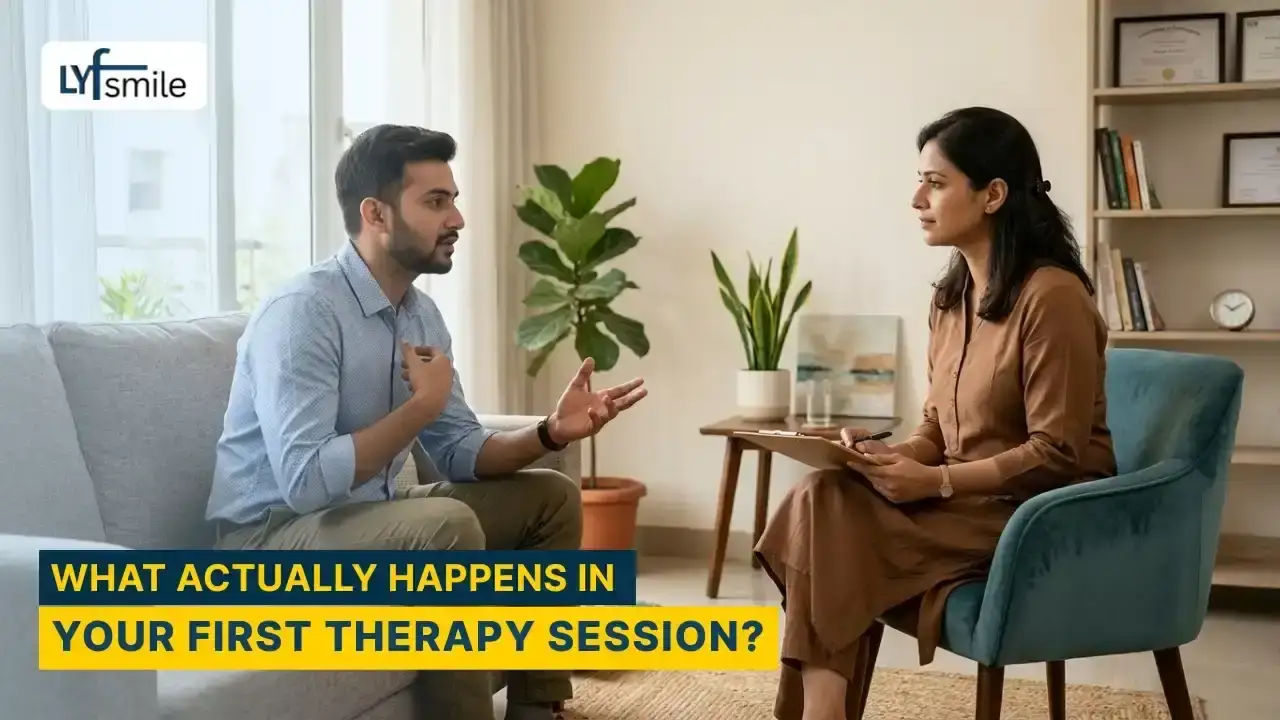
Your therapist will welcome you, help you settle in, and check how you’re feeling before easing into the conversation. They’ll also go over key basics like confidentiality, privacy, and session policies important details that help you understand the process and feel safe to open up.
It’s okay to feel nervous before your first therapy session.
You don’t need to have the right words just showing up is enough.
You'll likely be asked a simple opening question such as "What brings you here today?" or "What made you decide to reach out now?" There's no right answer. Whatever comes to mind is a perfectly good place to start your first therapy session.
The Initial Assessment Getting to Know You
The bulk of your first therapy session is dedicated to what therapists call the initial assessment. This is your therapist building a picture of who you are, what you're dealing with, and what kind of support would help most.
This is a conversation, not an interrogation. Your therapist will guide the discussion naturally, and you'll find it far less formal than the phrase "assessment" might suggest. They're listening not just for facts but for patterns - what's affecting you, how long it's been going on, and what you've already tried.
Goal Setting What Are You Working Towards?
During the session, your therapist will explore what you’d like to change or improve in your life. This could be anything from managing stress to building confidence or improving relationships. You don’t need clear or perfect answers. Even a rough idea is enough, and your therapist will help you turn it into meaningful goals over time.
How Your First Therapy Session Might End
As the session ends, your therapist will briefly summarize key points and suggest areas to focus on. They may share a small reflection or exercise to try before the next session. You’ll also discuss next steps like scheduling, frequency, and logistics. Weekly sessions are common, but you can decide what works best, with no pressure to continue immediately.
Questions Your Therapist Will Ask You in the First Therapy Session
During your first session, expect your therapist to ask a range of questions to understand your background and situation. Here's a typical mix:
What brings you to therapy today?
How long have you been feeling this way?
Have you been in therapy before? If so, what was helpful or not?
What does your support network look like (friends, family, community)?
Are you currently taking any medication or receiving other treatment?
What does a typical day look like for you?
What are the biggest challenges or stressors in your life right now?
Is there anything specific you're hoping to achieve through therapy?
You don't need perfectly polished answers. These questions are conversation starters, not a test. Answer as honestly as you can - and know that "I'm not sure" or "I haven't thought about that yet" are completely valid responses.
Questions You Can Ask Your Therapist in the First Session
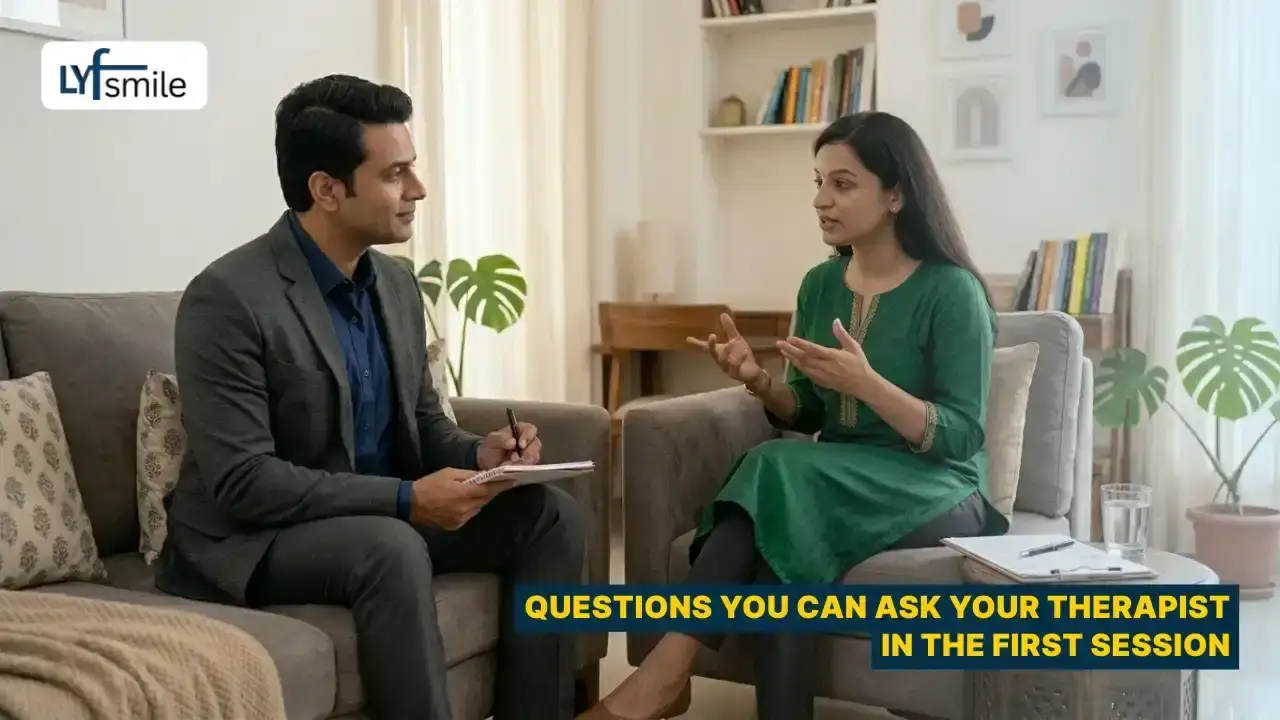 This is a two-way process. You're also evaluating whether this therapist is right for you - and asking questions is not just acceptable; it's encouraged.
About their approach:
What therapy method do you use, and how does it work?
How will you tailor your approach to my specific situation?
What does a typical session look like after the first one?
About their experience:
How long have you been practising?
Have you worked with people dealing with issues similar to mine?
About the process:
How long does treatment typically last?
How will we measure progress?
What happens if I feel like therapy isn't working?
About practicalities:
How do I reach you if something urgent comes up between sessions?
What's your cancellation policy?
Is what I share with you completely confidential?
There are no wrong questions. In fact, coming into your first therapy session with a few questions ready is one of the best ways to feel more in control of the process.
Common Therapy Methods - What Your Therapist Might Use
Different therapists use different approaches depending on your needs, background, and goals. Here's a plain-language breakdown of the most widely used methods:
Cognitive Behavioral Therapy (CBT): One of the most researched and widely used approaches. CBT focuses on identifying unhelpful thought patterns and the behaviors that follow from them and replacing them with more helpful ones. Particularly effective for anxiety, depression, and phobias.
Psychodynamic Therapy: explores how past experiences, especially from childhood or formative relationships, shape how you think, feel, and behave today. Tends to be more open-ended and longer-term.
Humanistic / Person-Centered Therapy: Focuses on your personal growth and self-understanding. The therapist creates a non-judgmental, empathetic space for you to explore your feelings and arrive at your own insights.
Mindfulness-Based Therapy: Uses present-moment awareness and mindfulness practices to help manage stress, anxiety, and low mood. Often combined with CBT (called MBCT, Mindfulness-Based Cognitive Therapy).
Dialectical Behavior Therapy (DBT): Originally developed for borderline personality disorder, DBT is now used across a wide range of challenges. It builds skills in emotional regulation, distress tolerance, and healthy relationships.
EMDR (Eye Movement Desensitization and Reprocessing): A specialized approach most commonly used for trauma and PTSD. It uses guided eye movements to help the brain process and integrate distressing memories.
Your therapist may explain which of these approaches they use during your first therapy session and why it might suit your situation.
The Emotional Reality | What You Might Feel
 First sessions can bring up a wide range of emotions, and all of them are normal. You might feel relief, awkwardness, tearfulness, lightness, or even drained after your first therapy session.
Sharing personal things can feel vulnerable, but that’s part of the process. Many people feel a sense of release simply from being heard in a safe, non-judgmental space. If you feel overwhelmed, you can always say so; your therapist will support you through it.
Is Your Therapist Right for You?
Not every therapist will be the right fit for every person, and that's completely normal. After your first therapy session, take a few quiet moments to check in with yourself honestly.
Ask yourself:
Did I feel heard and respected throughout the session?
Did I feel safe enough to speak openly or at least like I could over time?
Did their communication style make sense to me?
Did they seem genuinely interested in understanding my situation?
Did I feel judged at any point?
Can I imagine doing real, honest work with this person?
A good therapist doesn't have to be someone you click with instantly. Some initial awkwardness is entirely normal. What matters most is that you feel respected, not judged, and that the therapist seems genuinely present with you.
Signs it might not be the right fit:
You felt dismissed, rushed, or talked-over
The therapist made assumptions without asking
You felt judged in a way that went beyond ordinary nerves
They seemed more focused on filling the session than on understanding you
If after two or three sessions something still feels fundamentally off, it's completely acceptable and important to look for someone else. The right therapist can make all the difference to how valuable your first therapy session and every session after it actually is.
Also Read : Who Is the No.1 Psychologist in India 2026? Top Experts & How to Choose
Tips for Making the Most Out of Therapy
 Therapy works best when you're an active participant, not a passive one. Here's how to get the most out of every session:
Be as honest as you can: Your therapist can only work with what you share. You don't have to open up about everything at once, but the more honest you are over time, the more effective therapy becomes.
Show up consistently: Progress in therapy is rarely linear. Some sessions feel transformative; others feel unremarkable. Both kinds are valuable. Showing up regularly, especially when you don't feel like it, is often when the most meaningful shifts happen.
Do the work between sessions: If your therapist suggests a reflection exercise, a breathing practice, or a behavioral experiment to try, give it a genuine go. The real change tends to happen in daily life, not just in the therapy room.
Speak up when something isn't working: If a particular approach doesn't resonate, say so. Therapy is a collaboration. Your feedback helps your therapist adjust and tailor the work to what actually helps you.
Keep a simple therapy journal: After each session, jot down what came up, what felt useful, and what you're still carrying. This helps you see progress over time even when growth feels slow.
Be patient with yourself: Healing isn't instant. There will be sessions where you feel stuck, or weeks where old patterns resurface. That doesn't mean you're failing. It means you're in the process.
Post-Session Reflection - What to Do After Your First Therapy Session
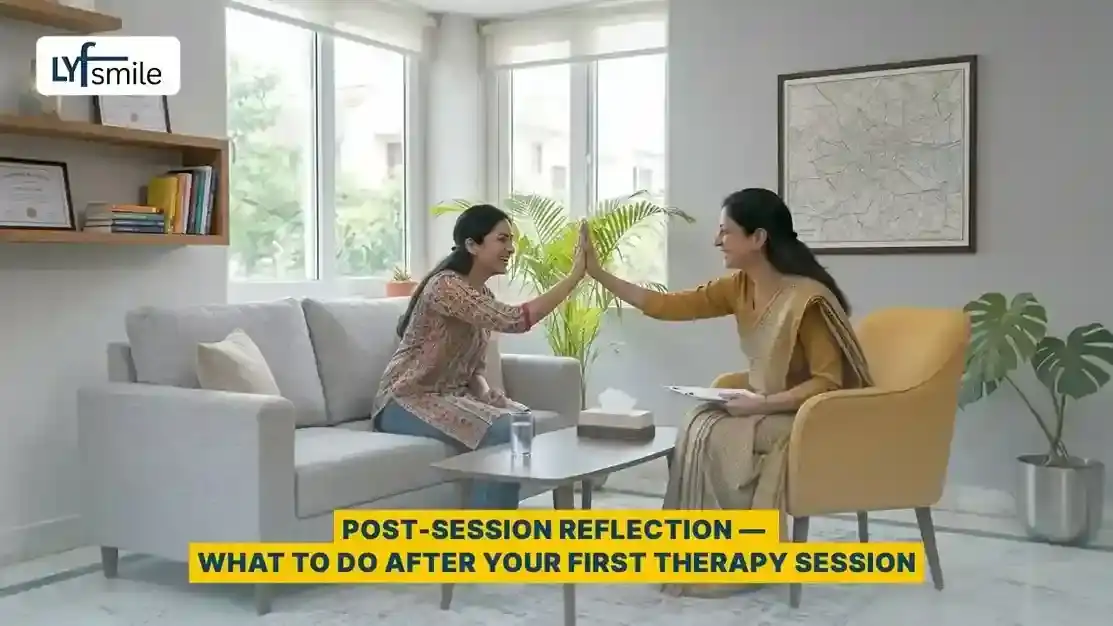 The time immediately after your first therapy session matters more than most people realize. The conversation may have stirred up emotions you weren't expecting or left you feeling mentally tired in a way that's hard to explain. Don't rush straight back into a full schedule. Give yourself a little time to decompress: a short walk, a quiet cup of tea, or simply sitting with your thoughts before moving on with the day.
Useful things to reflect on after your first therapy session:
What came up that surprised me?
What felt useful or resonant?
What do I wish I'd said or asked?
How do I feel about the therapist? Did I feel comfortable?
What would I like to explore more next time?
Jotting these down, even just a few lines, means you won't lose the thread between sessions and helps your next appointment feel more intentional and focused.
What You Should Remember
Your first therapy session isn't a test, a performance, or a diagnosis. It's a conversation, the beginning of a relationship that, with the right person and genuine commitment from you, can be genuinely life-changing.
You don't need to have all the answers. You don't need to know exactly what's wrong or what you want. You don't need to be articulate, composed, or certain of anything at all. You just need to show up.
That, as it turns out, is the hardest and most important step, and you've already decided to take it.
Ready to take the next step? Whether you're looking for in-person support or the flexibility of online therapy, the right therapist is out there for you. Book your first therapy session today; the most important thing is making a start.
Frequently Asked Questions
1. Is it normal to feel anxious for the first session?
Yes, completely normal. Starting therapy is a new experience, and it’s okay to feel nervous, unsure, or even overwhelmed. Most people feel more comfortable after the first session.
2. Is it normal to cry during therapy?
Absolutely. Crying is a natural emotional release and a sign that you’re processing your feelings. Therapists expect it and create a safe space for it.
3. Do I need to know my family mental health history in the first session?
No, it’s not necessary. If you know some details, you can share them, but it’s okay if you don’t. Your therapist will guide you through what’s important.
4. How do you know that your therapist is a good fit?
A good therapist makes you feel heard, respected, and comfortable. You should feel safe opening up, even if it takes a few sessions. Trust your instincts.
5. What should I know before the first therapy session?
You don’t need to prepare perfectly. Just be open and honest. It’s okay if you don’t know what to say your therapist will help guide the conversation.
6. How long does therapy last?
It depends on your needs. Some people go for a few weeks, while others continue for months or longer. Sessions are usually 45–60 minutes each.
7. Can I switch therapists if it doesn’t feel like the right fit?
Yes, absolutely. Finding the right therapist is important, and it’s okay to switch if you don’t feel comfortable or understood.