

Lakshika Kaushik
Best Relationship Therapist: Trusted Help for Every Kind of Couple
There's a difference between talking to someone who loves you and talking to someone trained to help.
Friends and family offer comfort and familiarity but they also bring their own opinions, their own history with you, and their own idea of what the "right" outcome looks like. A relationship therapist brings none of that. What they bring instead is training, neutrality, and a specific set of tools designed for the kind of work relationships actually require.
A relationship therapist is a trained mental health professional who specializes in helping couples navigate challenges identifying patterns, rebuilding communication, and guiding both people toward healthier, more connected ways of being with each other.
For couples who need this kind of support, that difference is everything.
No Sides. No Judgment. Here's What a Therapist Is Actually There For
Most people expect a therapist to eventually tell them who was right. That's not what happens.
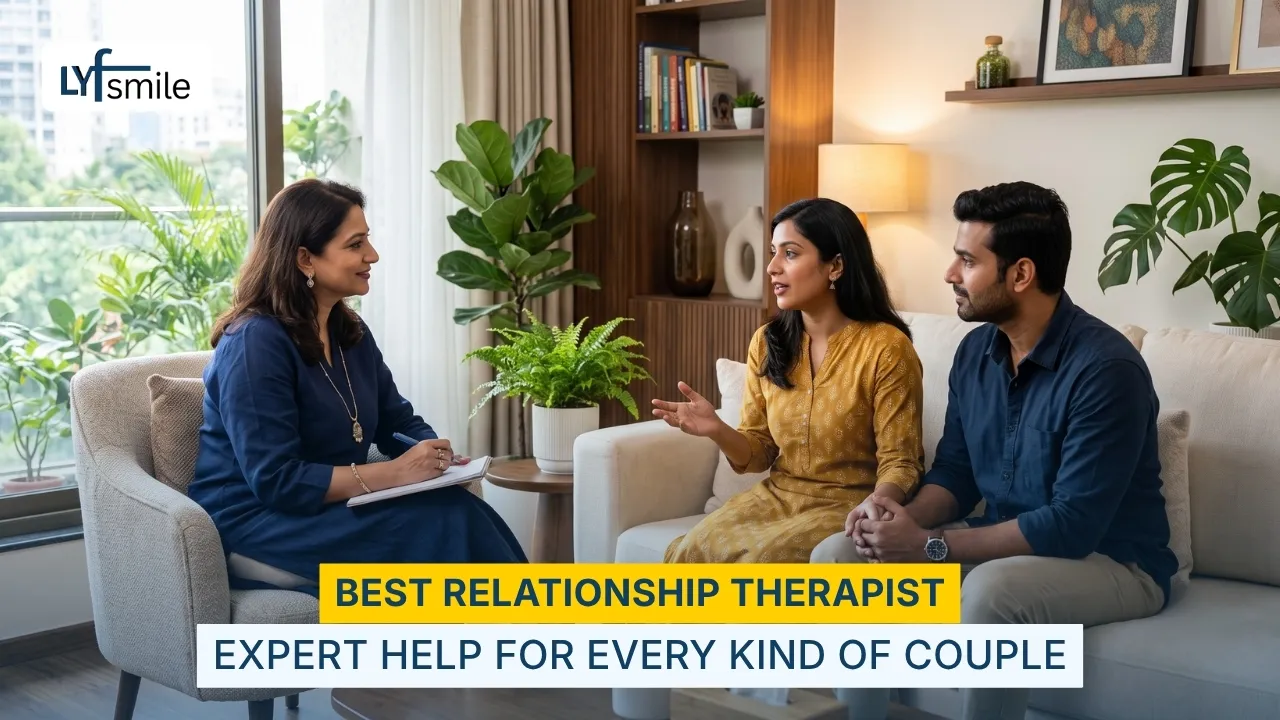
A relationship therapist's role isn't to referee or decide where blame belongs. It's to build a space where both partners can speak and be genuinely heard, without the other immediately reacting, defending, or shutting down. This alone is something most couples cannot create by themselves, regardless of how mature or well-intentioned they both are.
Beyond that space, a skilled therapist does three things consistently:
Sees what neither partner can see from inside the relationship. The same argument keeps happening because neither person can spot the dynamic that keeps triggering it. A therapist identifies it from the outside, names it clearly, and helps both partners understand their own role in keeping it going.
Teaches practical skills not just general advice. "Communicate better" means little without knowing specifically how. A therapist introduces tools for de-escalating before conversations spiral, expressing needs directly without blame, and listening to understand rather than to respond.
Holds both people accountable without judgment. The consistent professional presence keeps both partners honest and engaged, which is something even the most motivated couple struggles to maintain on their own.
This is the core of what a relationship therapist does. And it's why the outcomes tend to be different from anything a couple achieves without this kind of support.
Meet the Therapist Who Has Guided Thousands of Couples
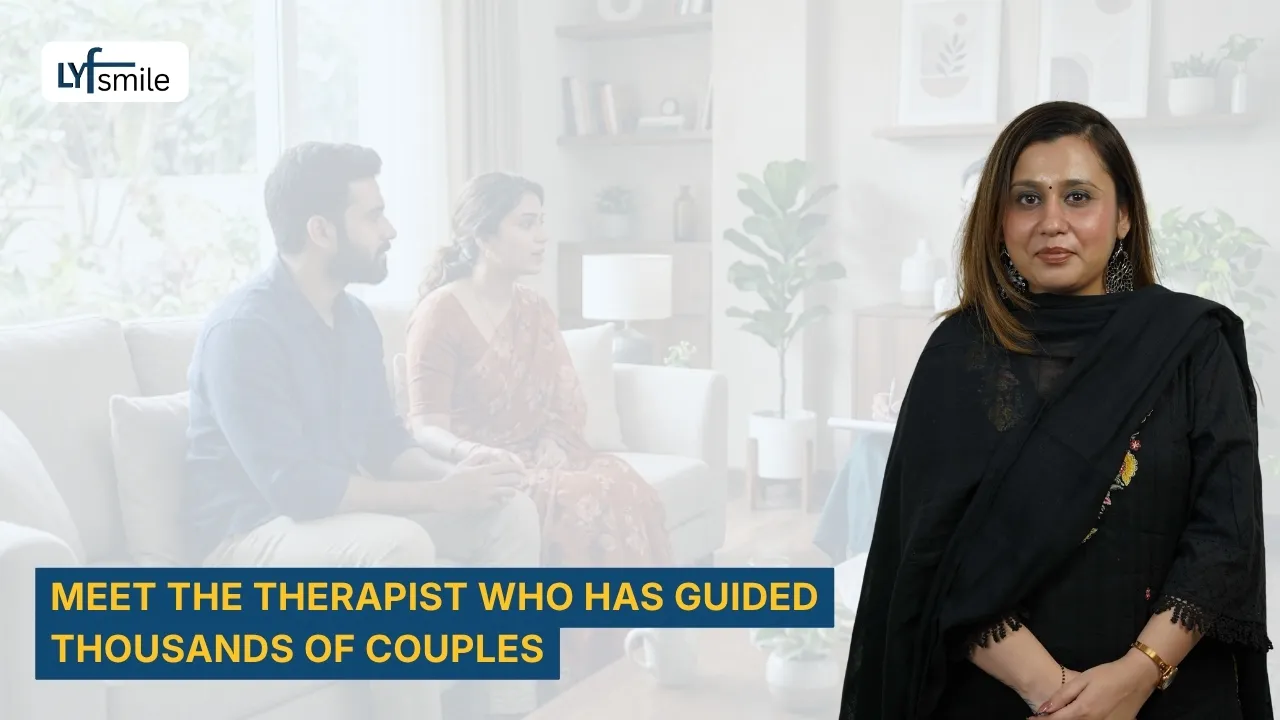 At Lyfsmile, Lovleen Malhotra brings this expertise to every session.
Over 9 years of clinical practice, she has guided couples through situations spanning the full range of what relationships face trust issues, infidelity, jealousy insecurity, intimacy issues, post-wedding depression, in-laws conflict, infertility stress, and cases requiring the careful handling of narcissist husband wife counseling and domestic violence recovery.
Her effectiveness comes from both depth of training Cognitive Behavioural Therapy, Person-Centred Therapy, trauma-informed approaches and something harder to teach: the ability to make both partners feel genuinely seen at the same time. Couples who've worked with her describe sessions as the first time they felt both sides of their relationship were being held simultaneously, rather than taking turns being heard.
For NRI couples managing a relationship across countries and time zones, Loveleen's availability for online sessions means consistent expert support without geography becoming an obstacle.
Real Relationship Therapy, Real Therapist- Just ₹30 a Minute
Professional support at this level doesn't demand a long waitlist or an upfront financial commitment that feels impossible.
At Lyfsmile, the opening 15 minutes cost nothing, a genuine first conversation where both of you can assess the approach, get a real sense of how sessions work, and decide together whether to continue. No pressure in either direction.
After that, sessions are priced at ₹30 per minute designed so that returning week after week is financially realistic, not a luxury reserved for the few.
Online sessions connect couples anywhere across India, Delhi, Mumbai, Bangalore, Hyderabad, Chennai, Kolkata, Pune, Jaipur and internationally for couples living abroad. Those who prefer meeting face to face will find Lyfsmile's counseling rooms open in Delhi, Gurgaon, Panipat, and Noida.
A relationship therapist doesn't repair your relationship on your behalf. They give you the understanding, the tools, and the guided space to repair it yourselves together.
Start with a 15 min free session at Lyfsmile and find the expert who guides you back to each other.
FAQs
Q: How is a relationship therapist different from a life coach or marriage counselor?
A: A relationship therapist is a licensed mental health professional trained in evidence-based therapeutic approaches. A life coach is not clinically trained. A marriage counselor focuses specifically on couples, while a relationship therapist works with individuals, couples, and complex relational dynamics. Lyfsmile's therapists bring clinical expertise specifically to relationship challenges.
Q: How do I know if Loveleen Malhotra is the right therapist for my situation?
A: The free 15-minute session is designed exactly for this. It gives both of you a real sense of her approach before committing to anything further, making the fit assessment simple and low-pressure.
Q: Can a relationship therapist help even if only one partner is willing to attend?
A: Yes. Individual sessions with a relationship therapist can produce meaningful shifts, one partner understanding their own patterns often changes the dynamic enough that the other becomes open to joining.
Q: How long does it typically take to see results with a relationship therapist?
A: Many couples notice meaningful shifts within 4-6 sessions. Deeper or longer-standing issues may take more time. Lyfsmile's approach is always paced around what the couple or individual actually needs.
Q: Is everything shared with a relationship therapist kept confidential?
A: Yes. All sessions at Lyfsmile are completely confidential, nothing shared with your therapist is disclosed to anyone outside the session, in line with professional ethical standards.