


Sarvesh Kumari
Sexual Performance Anxiety: Professional Therapy Support Worldwide
Sexual performance anxiety is a common but deeply personal concern one that quietly affects both the mind and body during intimacy. For many people, it shows up as fear, self-doubt, or an unspoken pressure to perform. That pressure isn't always visible, but it is felt: a tightness in the chest, a knot in the stomach, a breath that grows shallow exactly when ease is needed most.
When left unaddressed, this anxiety does not simply fade. It repeats, creating a quiet cycle of stress, avoidance, and shrinking confidence that can affect not just intimacy but the relationship itself.
One of the most important things to understand early is this: noticing anxiety rather than fighting it is often where things begin to shift. Learning where fear sits in the body, how strong it feels, and how it responds to slow, conscious breathing helps the nervous system begin to settle. Over time, this mindful awareness helps release stored fear and reduces the emotional weight past difficult experiences can carry into the present.
At Lyfsmile, therapy for sexual performance anxiety, affordable and accessible across India and online for NRIs worldwide, is built around exactly this kind of support. Clients learn to understand their fear patterns, work through them with guided techniques, and gradually rebuild comfort and confidence in intimacy. With the right help, closeness can feel natural, relaxed, and emotionally safe again.
Anxiety, Fear, and Overthinking During Sex: What Is Actually Happening?
Anxiety during intimacy is one of the most common and least talked about reasons individuals and couples struggle with sexual closeness. Fear of failure, constant self-monitoring, and the quiet pressure to perform can take over the mind during intimate moments without a person even fully realising it. When this pattern repeats, it tends to lead to lowered confidence, increased avoidance, and in many cases, psychological erectile concerns.
Understanding how anxiety operates in these moments is the first step. Here is what is typically happening:
Overthinking during sex: Worry about erection, ejaculation, or whether things are going 'right' pulls attention away from pleasure and connection the exact things that allow intimacy to work naturally.
Fear of sexual failure: Thoughts like 'What if I lose my erection?' or 'What if I disappoint my partner?' increase stress and physical tension, making the feared outcome more likely.
Stress and sexual confidence: Anxiety activates the body's stress response making it harder to relax, feel aroused, or stay present with a partner.
Mind–body disconnect: When the mind is occupied with worry, the body often struggles to respond naturally and the gap between the two can feel confusing and frustrating.
One effective path forward is shifting the focus away from performance entirely. Therapy encourages a mindset that values connection, shared experience, and presence rather than outcomes. This shift alone can meaningfully reduce pressure over time.
Mindful focus is another approach that helps teaching individuals to:
Relax the body through slow, intentional breathing
Notice and release areas of muscle tension
Bring attention toward sensation rather than thought
Treat anxious thoughts as background noise not commands
This practice can begin in solo experiences and gradually extend to moments with a partner rebuilding ease and connection without pressure. For those navigating sexual performance anxiety or intimacy-related anxiety, it offers a grounded, practical way back.
At Lyfsmile, therapy addresses both the emotional and psychological roots of these concerns through CBT-based techniques, mindfulness approaches, and couple-friendly support in a space that is safe, private, and entirely non-judgmental.
Stress and fear during intimacy are common. And help is closer than most people think.
Book a free 15-minute session with Lyfsmile and take the first step toward confidence with your partner.
How Therapy Helps Overcome Sexual Performance Anxiety
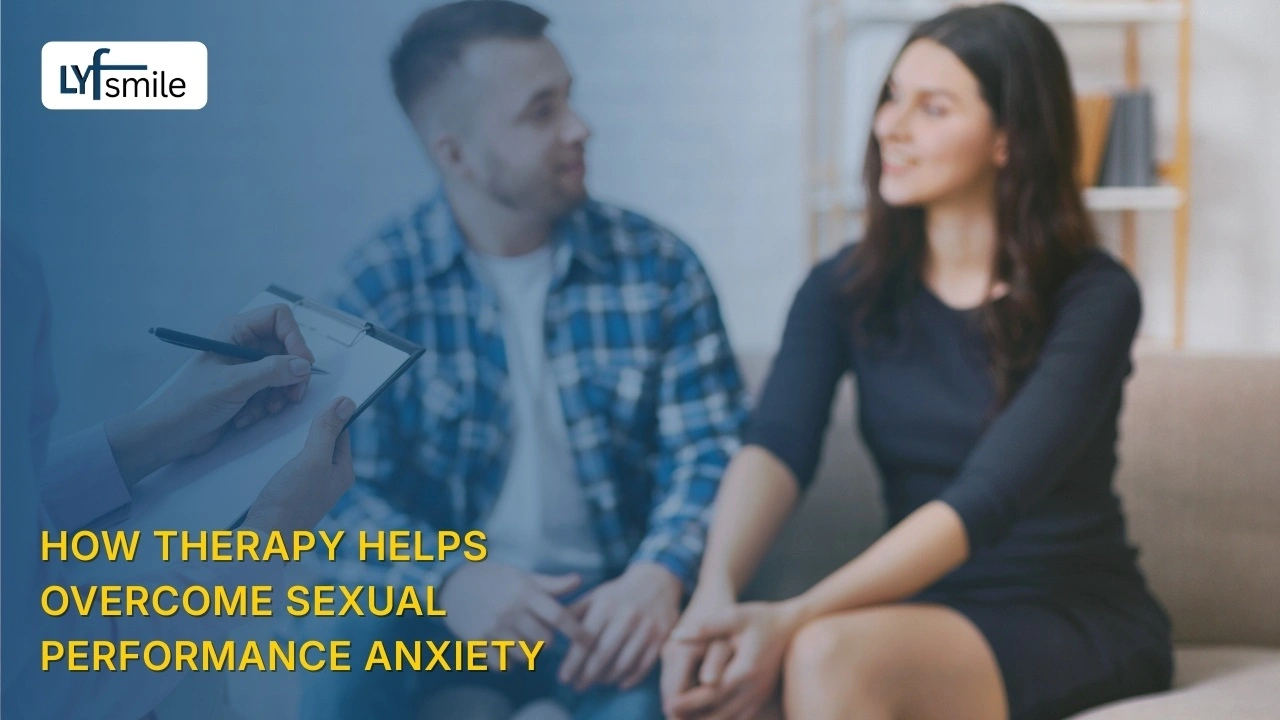 When anxiety, fear, and repeated stress become part of intimate moments, confidence tends to drop quietly not all at once, but gradually. Therapy helps slow that process down, understand what is driving it emotionally, and rebuild a sense of safety in the body and in the relationship.
Rather than focusing on sexual performance, the therapeutic process gently redirects attention toward comfort, connection, and shared pleasure, reducing pressure and restoring ease in intimacy. At Lyfsmile, this work is guided by Mrs Ritika Dhall, a counseling psychologist and Certified CBT Expert.
Here is how therapy supports real, lasting change:
Reduces anxiety during intimacy: Therapy identifies fear-based thought patterns and teaches the nervous system to calm through breathing, relaxation, and mindful awareness, drawing on CBT and mindfulness-based cognitive techniques.
Builds emotional safety: Feeling genuinely heard and understood without judgment makes it easier to relax and be present with a partner.
Improves sexual confidence: By removing the constant weight of self-judgment, therapy helps rebuild trust in one's own natural responses and develop a healthier self-image over time.
Addresses fear of failure: Counselors guide individuals to examine fear-driven thinking and gradually replace it with realistic, supportive beliefs and practical coping strategies.
Strengthens communication between partners: Couples learn how to speak openly about needs, comfort levels, and boundaries without blame, shame, or pressure.
Supports healing from past experiences: Earlier painful or difficult sexual experiences often shape how a person approaches intimacy today. Therapy helps process those experiences so they no longer carry the same weight.
Mrs Ritika Dhall's approach is grounded in evidence and shaped around each person. She integrates Mindfulness-based Cognitive Behavioural Therapy, Humanistic Therapy, Existential Therapy, Narrative Therapy, Acceptance and Commitment Therapy, and Client-Centred Therapy combining methods based on what each individual or couple genuinely needs.
Sessions are designed to be exploratory and non-pressured, a space where thoughts, emotions, and behaviours can be examined without judgment. Over time, this builds emotional regulation, self-awareness, and relational confidence that extends well beyond the therapy room.
With consistent, compassionate support at Lyfsmile, intimacy begins to feel safer and more natural again not all at once, but step by step, at a pace that actually holds.
Online Therapy for Sexual Performance Anxiety For India and NRI Clients Worldwide
One of the most significant barriers to seeking help is the belief that the right support is either unavailable or out of reach. For people across India, particularly outside major metros, this can feel especially true. For NRIs living abroad, the challenge is different but equally real: distance, time zones, and the difficulty of finding a therapist who genuinely understands their cultural background.
Lyfsmile removes these barriers. Sessions are held online privately, flexibly, and on a schedule that fits around real life. For something as personal as sexual performance anxiety, the added discretion of online therapy often makes people more comfortable, more open, and ultimately more able to benefit from the work.
For NRIs in the US, UK, Canada, Australia, or elsewhere, working with a therapist who shares cultural context is something that cannot easily be replaced. The nuances of family expectation, relationship dynamics shaped by a particular upbringing, and the specific pressures of navigating two cultures simultaneously all of this is part of the picture, and all of it is held within the sessions.
Affordable therapy options are available across India, and flexible scheduling supports NRI clients across all major time zones. Wherever you are, consistent, culturally informed support is genuinely within reach.
A Final Word:This Is Manageable, With the Right Support
Sexual performance anxiety can feel overwhelming. But it is not permanent, and it is not something a person has to carry alone. By understanding its roots fear of failure, overthinking, stress, past experiences individuals and couples can begin to move through it, rather than around it.
Techniques like mindful focus, cognitive restructuring, and open communication between partners have strong evidence behind them. They reduce anxiety, rebuild confidence, and strengthen the emotional connection that makes intimacy feel safe again.
At Lyfsmile, affordable therapy in India and online support for NRIs worldwide create a space where this work can happen gently, consistently, and without judgment. With expert guidance from Mrs Ritika Dhall and a process built around each person's actual needs, the cycle of fear and self-doubt can be broken.
The first step is simply deciding that this is worth addressing. If you have reached this point, you have already taken it. Book a free 15-minute introductory session at Lyfsmile and begin finding your way back to intimacy that feels calm, connected, and genuinely yours.
Frequently Asked Questions About Sexual Performance Anxiety
1. What is sexual performance anxiety?
Sexual performance anxiety is fear or self-doubt that surfaces during intimate moments, affecting both the mind and the body. It can show up as overthinking, physical tension, or an inability to stay present, and it is one of the most common concerns brought to therapy by individuals and couples.
2. Can sexual performance anxiety cause erectile dysfunction?
Yes. When anxiety activates the body's stress response, it directly interferes with the physiological process of arousal. This is called psychological erectile dysfunction, and in many cases it is highly treatable through therapy, without medication.
3. What role does emotional safety play in overcoming sexual anxiety?
Emotional safety is central. When both partners feel understood, respected, and free to express their needs without fear of judgment, the nervous system begins to relax and intimacy becomes possible in a way that performance-focused thinking rarely allows.
4. How long does therapy take to make a difference?
This varies by person and how long the anxiety has been present. Some people notice meaningful shifts within a few sessions. Others benefit from a longer process that works through deeper patterns. A clearer picture emerges after an initial assessment with the therapist.
5. Is sexual performance anxiety treatable without medication?
In many cases, yes, particularly when the cause is psychological rather than physical. CBT, mindfulness-based therapy, and couples counseling have strong evidence behind them and can create lasting change without medical intervention.
6. Why does insecurity affect intimacy and sexual confidence?
Insecurity tends to fuel overthinking, reassurance-seeking, and a quiet fear of not being enough, all of which create emotional pressure during intimate moments. Therapy helps build genuine self-worth and open communication, so partners can feel relaxed and connected rather than guarded.
7. Is hypnotherapy effective for sexual performance anxiety?
Hypnotherapy can support some individuals by promoting deep relaxation and reducing automatic negative thought patterns. It tends to work best when combined with evidence-based approaches like CBT rather than as a standalone treatment.
8. Which therapy approaches are most effective for sexual anxiety?
Cognitive Behavioural Therapy, Mindfulness-based Cognitive Therapy, Acceptance and Commitment Therapy, and couples counseling are among the most evidence-supported approaches. At LyfSmile, these are integrated based on each individual's specific needs and emotional history.
9. Can couples attend therapy together for sexual performance anxiety?
Yes and for many people this is the most effective path. When both partners are part of the process, the dynamic between them can shift in ways that individual therapy alone cannot achieve. LyfSmile offers sessions for individuals and couples alike.
10. Is online therapy as effective as in-person sessions for this concern?
Research consistently supports online therapy as equally effective for anxiety-related concerns. For something as personal as sexual performance anxiety, the added privacy of online sessions often helps people feel safer and more open, which directly supports the quality of the therapeutic work.