

Anupam Tripathi
Performance Anxiety at Work: Causes, Signs & Therapy That Actually Helps
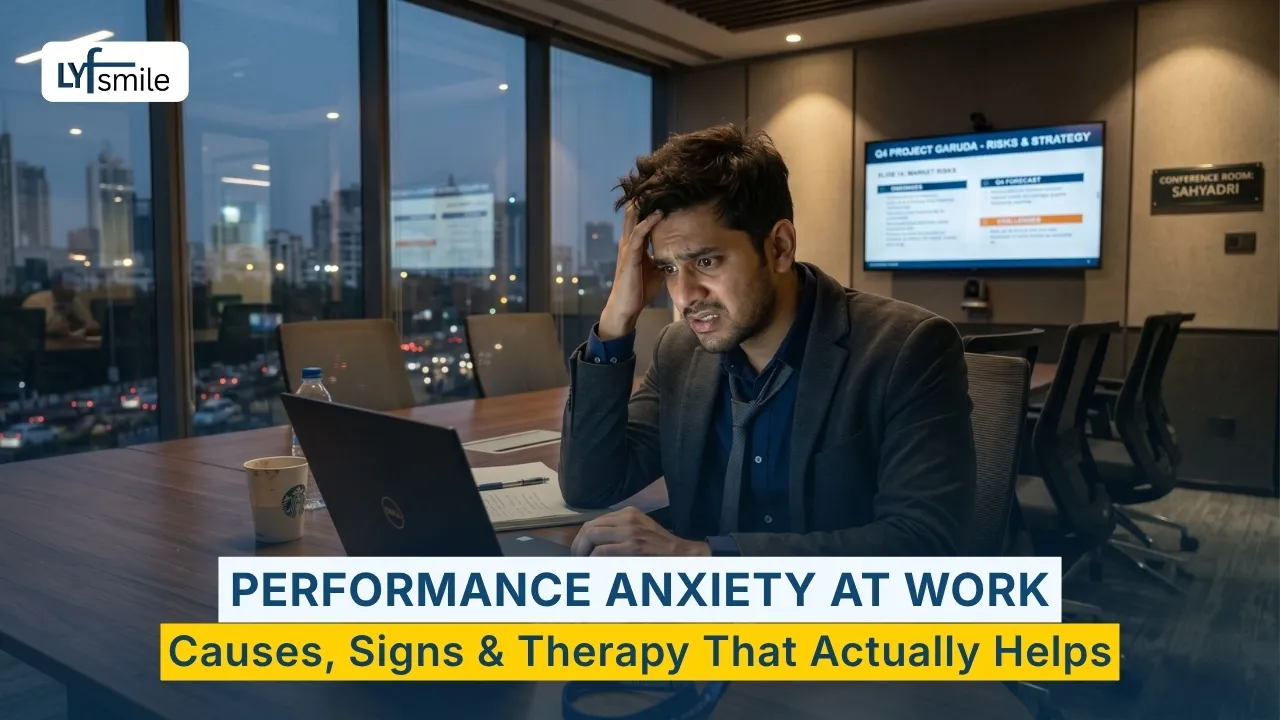
Performance anxiety at work is a real, diagnosable pattern of fear and stress that affects how you think, feel, and function on the job. It is not simply "being nervous" it is an ongoing cycle of self-doubt, overthinking, and fear of judgment that quietly erodes your confidence and career. The good news? With the right support, it is entirely treatable.
What Is Performance Anxiety at Work?
Workplace anxiety triggered by job performance is known as performance anxiety at work. It shows up as a persistent fear of making mistakes, being judged, or failing to meet expectations — even when you are clearly capable.
It affects professionals at every level, from freshers to senior leaders
It is different from normal pre-meeting nerves - it is chronic, recurring, and disruptive
Research from the American Institute of Stress suggests that 83% of workers experience work-related stress, with performance fears being one of the top triggers
It is treatable with therapy, particularly Cognitive Behavioral Therapy (CBT) and mindfulness-based approaches
Why Does Performance Anxiety at Work Happen?
Work-related anxiety does not appear out of nowhere. Several overlapping factors cause it, and understanding them is the first step toward addressing it.
The most common reasons professionals develop anxiety about work performance include:
High-pressure environments: Tight deadlines, frequent appraisals, and demanding managers create chronic stress
Perfectionism: When you hold yourself to impossible standards, even small errors feel catastrophic
Fear of failure at work: Past criticism, public embarrassment, or a difficult manager can condition your brain to expect failure
Imposter syndrome at work: Many professionals secretly believe they are not as competent as others think and live in fear of being "found out"
Social anxiety at work: Fear of speaking in meetings, being watched, or being evaluated by peers amplifies everyday tasks
Lack of psychological safety: Workplaces that punish mistakes or discourage open dialogue create fertile ground for anxiety
Real example: Priya, a 29-year-old marketing executive in Bengaluru, was consistently praised by her manager yet she spent every Sunday night in a state of dread about the week ahead. She avoided speaking in team meetings and obsessively re-checked every email before sending. What she was experiencing was textbook professional performance anxiety, driven by perfectionism and fear of judgment at work.
Key Signs and Symptoms of Performance Anxiety at Work
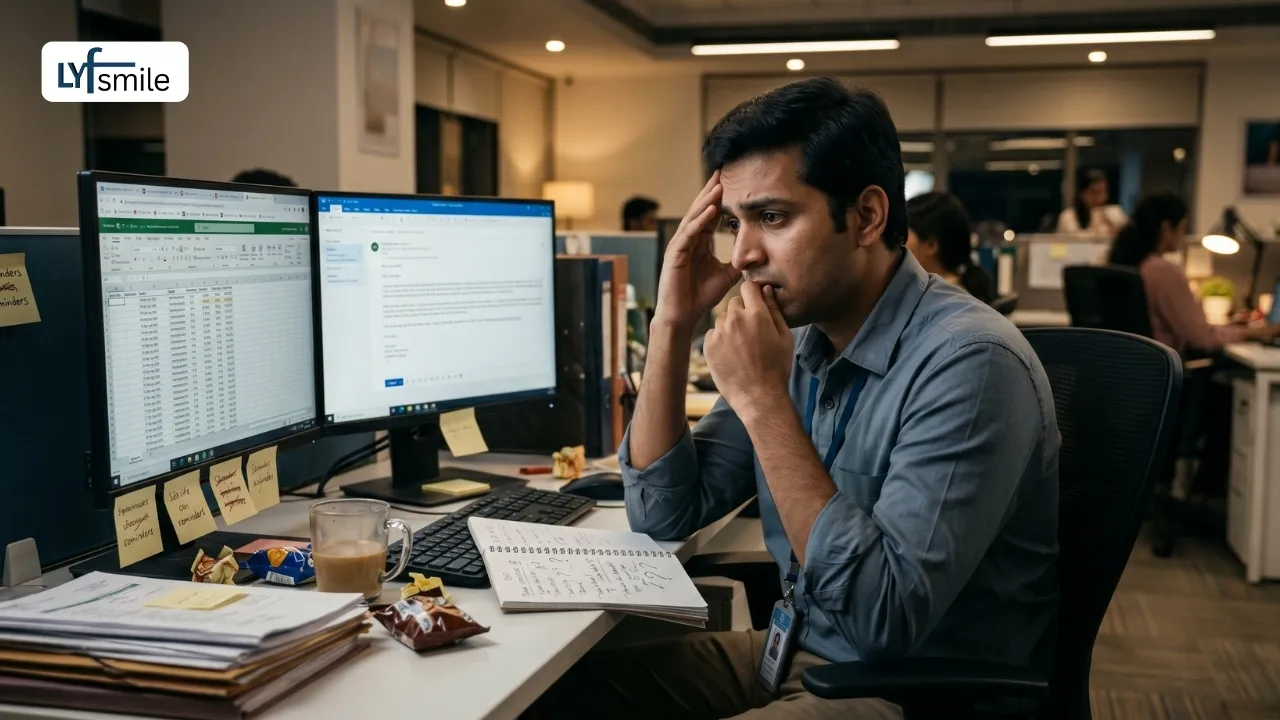 How do you know if what you are feeling is performance anxiety? Here are the most common signs — across the physical, emotional, and behavioural spectrum.
Emotional Signs
Constant self-doubt, even after positive feedback
Overthinking at work replaying conversations or decisions repeatedly
Fear of making mistakes at work, even minor ones
Feeling like you are "not good enough" despite evidence to the contrary
Anxiety before presentations at work or important meetings
Physical Signs
Racing heart or shallow breathing before work tasks
Trouble sleeping due to work-related worry
Fatigue, headaches, or stomach issues on work days
Sweating or trembling when presenting or speaking to senior colleagues
Behavioural Signs
Avoiding responsibilities, projects, or leadership roles
Procrastinating on tasks out of fear of doing them wrong
Over-preparing beyond what is necessary
Seeking excessive reassurance from colleagues or managers
Difficulty making decisions due to decision-making anxiety
At A Glance: Normal Stress vs Performance Anxiety
Normal Work Stress | Performance Anxiety at Work |
Occasional, situation-specific | Frequent, often unpredictable |
Fades after the task is done | Lingers before, during, and after |
Motivates you to prepare | Paralyses or overwhelms you |
Proportionate to the challenge | Disproportionate to the actual risk |
No significant impact on confidence | Erodes self-worth over time |
The Psychology Behind Work Performance Anxiety
Understanding the psychological causes of anxiety in the workplace helps you see why this is not a character flaw, it is a learned pattern.
1. The Amygdala Hijack Your brain's threat-detection system (the amygdala) cannot always distinguish between a physical threat and social/professional threat. When you fear being criticised in a meeting, your body can activate a stress response just as if you were in physical danger. This is why job anxiety can feel so physical and uncontrollable.
2. Cognitive Distortions People with work anxiety affecting performance often engage in thinking patterns like:
Catastrophising: "If I make one mistake in this presentation, my career is over"
Mind reading: "Everyone in that meeting thinks I am incompetent"
All-or-nothing thinking: "If it is not perfect, it is a failure"
3. Perfectionism and Low Self-Esteem at Work Perfectionism is not about high standards, it is about tying your self-worth to your output. When things go wrong (as they inevitably do), low self-esteem at work deepens and confidence issues at work grow harder to reverse.
4. Imposter Syndrome Research by Pauline Clance and Suzanne Imes, who first described imposter syndrome, found that high-achieving individuals often dismiss their accomplishments and attribute success to luck rather than skill. This is extremely common in competitive professional settings and strongly linked to performance anxiety.
Examples of Performance Anxiety at Work in Real Life
 Performance anxiety does not look the same for everyone. Here are some common scenarios:
The reluctant presenter: Rahul is technically brilliant but avoids volunteering for presentations. He rehearses for days, then blanks out mid-sentence when it is his turn. His anxiety before presentations at work has limited his visibility and promotion prospects.
The over-checker: Sneha re-reads every report five times and still worries it is not good enough. She struggles to meet deadlines because she cannot stop revising. This is perfectionism and work anxiety operating together.
The meeting avoider: Arjun contributes strong ideas via email but freezes in live team discussions. His social anxiety at work means his voice is rarely heard, and he feels unseen despite putting in long hours.
The new promotion fear: Meera just got promoted but feels she does not deserve it. She is waiting to be exposed as incompetent a classic case of imposter syndrome at work following a career milestone.
Expert Insights on Workplace Anxiety
Mental health professionals who work with professionals on workplace stress and anxiety consistently observe a few important patterns:
Performance anxiety at work is almost always connected to a deeper narrative about self-worth not just about job skills
CBT (Cognitive Behavioral Therapy) is widely considered one of the most evidence-backed treatments for anxiety about work performance, helping individuals identify and challenge distorted thought patterns
Therapists also note that workplace anxiety counselling is most effective when it combines cognitive work with practical behavioural experiments, like gradually facing avoided situations
Mindfulness-based approaches help break the cycle of overthinking at work by training attention away from worst-case scenarios
Many professionals wait years before seeking help, assuming anxiety is just part of "working hard" which delays recovery and deepens the pattern
According to a 2022 survey by ASSOCHAM India, nearly 42.5% of Indian corporate employees suffer from depression or general anxiety, with workplace performance being a primary trigger. Yet fewer than 10% seek professional help.
How to Overcome Performance Anxiety at Work: Practical Solutions
 Immediate Coping Strategies
Grounding technique (5-4-3-2-1): Name 5 things you see, 4 you can touch, 3 you hear, 2 you smell, 1 you taste. This interrupts the anxiety spiral
Box breathing: Inhale for 4 counts, hold for 4, exhale for 4, hold for 4. Research shows controlled breathing activates the parasympathetic nervous system and reduces cortisol
Prepare, then limit preparation: Over-preparing feeds anxiety. Set a firm cut-off time for prep and commit to it
Reframe failure: Ask yourself, "what is the realistic worst case, and could I handle it?" Often, the answer is yes
Managing Confidence Issues at Work Day-to-Day
Keep a "wins log" a private record of tasks you completed well, feedback received, problems you solved
Set micro-goals: break tasks into small achievable steps to build momentum
Practise speaking up in low-stakes situations to gradually reduce social anxiety at work
Reduce avoidance: the more you avoid feared tasks, the more your brain registers them as dangerous
Work Stress Management at the Organisational Level
Advocate for clear expectations with your manager ambiguity feeds anxiety
Discuss workload concerns early rather than silently over-committing
Build a support network at work isolation deepens workplace burnout and anxiety
Consider disclosing your anxiety to HR or a trusted manager if it is impacting your work significantly
Therapy for Performance Anxiety at Work: What Works
If work anxiety affecting performance is persistent and disrupting your daily functioning, professional support is the most effective route.
Cognitive Behavioral Therapy (CBT)
CBT is the most extensively researched therapy for workplace anxiety. It helps you:
Identify the specific thought patterns driving your anxiety
Test whether your fears are realistic
Gradually face avoided situations with structured support
Acceptance and Commitment Therapy (ACT)
ACT helps professionals stop fighting anxiety and instead focus on value-driven action. It is particularly useful for overthinking at work and perfectionism and work anxiety.
Mindfulness-Based Cognitive Therapy (MBCT)
MBCT combines mindfulness with cognitive techniques and is well-suited for professionals who experience recurring anxiety cycles. Studies show it reduces relapse in anxiety and depression.
What to Expect from Workplace Anxiety Counselling
In a typical therapy journey for professional performance anxiety, a therapist will:
Help you map the triggers, thoughts, and behaviours linked to your anxiety
Work on restructuring negative core beliefs about performance and self-worth
Use gradual exposure techniques to reduce avoidance
Build long-term skills for work stress management
At Lyfsmile, RCI-registered therapists and experienced clinical psychologists offer online sessions specifically for working professionals. Sessions start at ₹30 per minute, making workplace anxiety counselling accessible whether you are based in India or are an NRI navigating career pressures abroad.
Conclusion
Performance anxiety at work is far more common than most professionals admit — and far more treatable than most realise. It is not a sign of weakness, and it is not simply something you push through. It is a recognisable psychological pattern with clear causes and effective solutions.
Whether you are dealing with fear of failure at work, imposter syndrome, social anxiety at work, or persistent overthinking at work, the path forward begins with understanding what is happening and then taking one deliberate step toward addressing it.
If your anxiety about work performance is affecting your confidence, relationships, or career, speaking with an RCI-registered therapist is one of the most practical decisions you can make. At Lyfsmile, experienced psychologists offer flexible online sessions tailored to working professionals in India and abroad, starting at ₹30 per minute.
Frequently Asked Questions (FAQs)
What is the difference between workplace stress and performance anxiety?
Workplace stress is a normal response to pressure that tends to ease once the stressor passes. Performance anxiety at work is a recurring, disproportionate fear about how you are performing or being evaluated, it often persists even when things are going well.
Can performance anxiety cause physical symptoms?
Yes. Work-related anxiety commonly produces physical symptoms including rapid heartbeat, sweating, trouble breathing, insomnia, headaches, and gastrointestinal issues. These are the body's stress response, not a sign of physical illness.
Is imposter syndrome the same as performance anxiety?
They often coexist, but are not the same. Imposter syndrome at work is specifically the belief that you are a fraud who does not deserve your success. Performance anxiety is the fear of failing or being judged in the moment. Many professionals experience both simultaneously.
How long does it take to recover from work anxiety with therapy?
It varies. Many people notice meaningful improvement within 8–12 sessions of CBT. The timeline depends on the severity of anxiety, how long it has been present, and individual factors. Most therapists will give you a clearer estimate after the first 2–3 sessions.
What should I do if anxiety is making me avoid work entirely?
This is a sign that professional support is needed urgently. Avoidance reinforces anxiety, the more you avoid, the worse it gets. Speaking to a therapist for performance anxiety at work can help you break this cycle safely.
Can my employer find out if I see a therapist for work anxiety?
No. Therapy is entirely confidential. Platforms like Lyfsmile operate under strict confidentiality policies. Your employer has no access to your therapy sessions or records.
Is online therapy effective for workplace anxiety?
Yes. Multiple studies confirm that online CBT and counselling produce outcomes comparable to in-person therapy for anxiety disorders. Online therapy is also more accessible for working professionals due to scheduling flexibility.
What if my anxiety is connected to a toxic workplace, not just my thinking?
Both the environment and your response to it matter. A good therapist will help you distinguish between what can be changed internally (thought patterns, coping skills) and what might require external decisions, such as addressing a difficult manager or reconsidering your role.