


Sarvesh Kumari
How to Deal with Panic Attacks at Work - Symptoms and Causes Explained
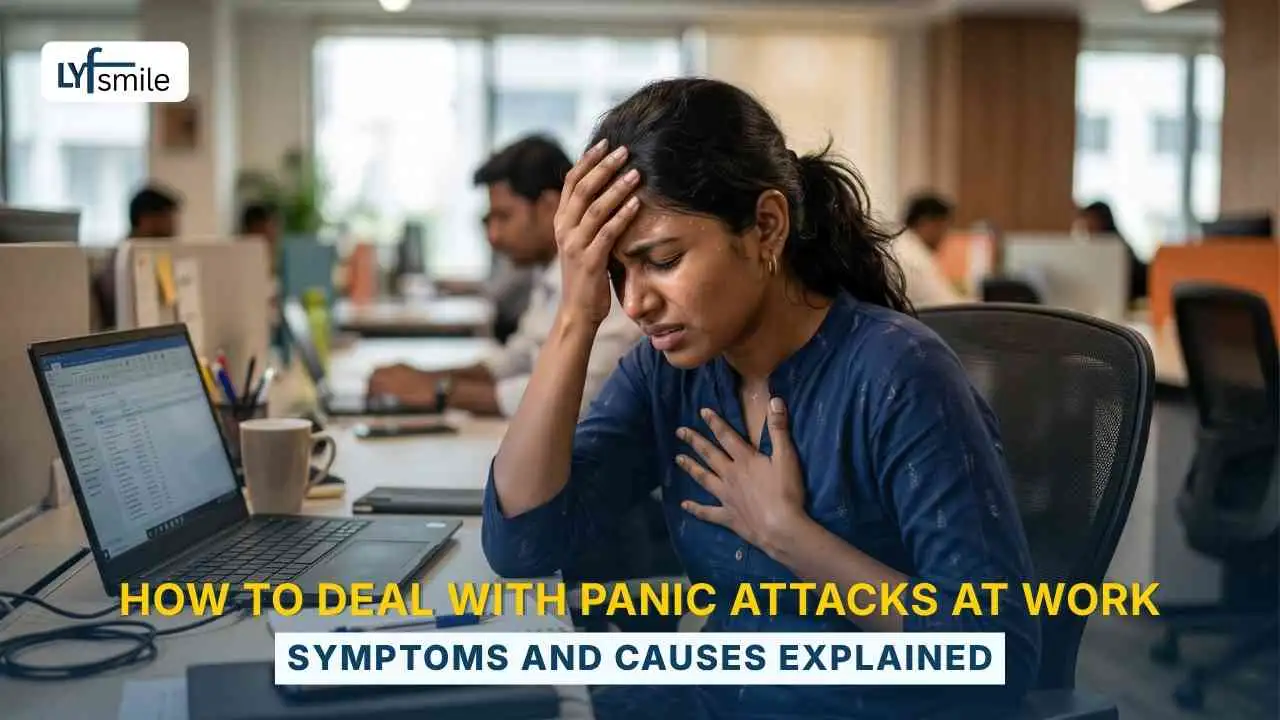
One minute you’re staring at a spreadsheet or prepping for a meeting, and the next, the room feels like it’s closing in. Your heart starts racing, your palms are sweating, and there’s an overwhelming urge to just run. If this sounds familiar, you aren’t "failing" at your job; you’re experiencing a panic attack, and you are far from alone.
The workplace can be a pressure cooker of deadlines, social dynamics, and high expectations, making it a common stage for anxiety to take center stage. But when "work stress" crosses the line into a physical crisis, it’s vital to understand what’s actually happening in your body. In this guide on how to deal with panic attacks at work, symptoms and causes explained, we’re going to strip away the clinical jargon and look at why these attacks happen in the office, how to spot the early warning signs, and most importantly, how to reclaim your sense of calm so you can get through your shift with confidence.
What Is a Panic Attack?
A panic attack is a sudden episode of intense fear or discomfort that can affect both your mind and body. It may happen during a stressful situation or without an obvious trigger.
During a panic attack, you may experience a racing heartbeat, sweating, shaking, dizziness, shortness of breath or a feeling that you are losing control. Some people may also experience chest discomfort or feel as though something terrible is about to happen.
At work, a panic attack may occur during a meeting, while speaking to a manager, when facing a tight deadline or even while sitting quietly at your desk. The physical sensations can feel frightening and may make it difficult to concentrate on your responsibilities.
Panic attacks often reach their peak within minutes, although the overall experience can vary from person to person. Having a panic attack does not automatically mean you have panic disorder. If the episodes happen repeatedly or begin affecting your daily life, a qualified healthcare professional can help assess your symptoms.
What Triggers a Panic Attack at Work?
Panic attacks can happen unexpectedly, but certain situations may contribute to them. Workplace pressure, ongoing stress and fear of negative evaluation can be possible triggers for some people.
1. Heavy Workloads and Tight Deadlines
Managing several tasks at once can leave you feeling overwhelmed. When deadlines keep approaching and you feel there is little time to rest, stress may build up and become harder to manage.
2. Fear of Making Mistakes
Worrying about disappointing your manager, receiving criticism or making a mistake in front of colleagues can increase anxiety. If you constantly feel that your work must be perfect, even small challenges may seem much bigger than they are.
3. Meetings and Public Speaking
Presentations, interviews and important meetings can feel intimidating, particularly when you are worried about being judged. For some people, the anticipation of these situations can create intense anxiety.
4. Workplace Conflict and Lack of Support
Difficult relationships with colleagues, repeated criticism, bullying or uncertainty about job security can affect your sense of safety at work. When these problems continue, they may contribute to ongoing emotional stress.
5. Poor Sleep and Prolonged Stress
Long working hours, inadequate rest and difficulty switching off after work may make it harder to manage everyday pressures. These factors can contribute to anxiety and may increase vulnerability to panic for some people.
6. Previous Difficult Experiences
If you have experienced a panic attack during a particular meeting or work situation, returning to a similar environment may make you worry about experiencing another episode.
However, panic attacks do not always have an identifiable trigger. Physical health conditions and certain substances can also cause symptoms that resemble panic, so it is important not to assume that every episode is caused by workplace stress.
Why Panic Attacks Can Suddenly Happen in a Work Setting
The modern office is often a "pressure cooker" of high-stakes meetings, tight deadlines, and complex social dynamics. When you’re constantly juggling these demands, your nervous system can become over-sensitised, leaving you on high alert. This is why you might experience a sudden wave of panic at your desk even when there isn't an immediate "threat"; your body has simply reached its limit and triggered a fight-or-flight response at the wrong time.
What makes this especially tricky are the “health anxiety symptoms” that often follow. When your heart starts thumping in the middle of a business meeting, it’s incredibly easy to misinterpret that sensation as a serious medical crisis, like a heart attack. This misunderstanding creates a cycle of fear: the physical sensation scares you, which releases more adrenaline, which then makes the physical symptoms even stronger. Understanding that this is a stress response rather than a physical illness is the first step toward breaking that loop and regaining your composure.
What You Can Do Right Away When a Panic Attack Starts at Work
If you feel a surge of panic while on the clock, your immediate goal isn't to "fix" your anxiety; it’s simply to manage the physical intensity so you can feel safe again. The pressure to stay perfectly composed in a professional setting can often make the symptoms feel worse, but remember that you are allowed to prioritize your health. Taking a few minutes to step away isn't a sign of being unprofessional; it is a necessary "reset" for your nervous system. If these moments are becoming a regular struggle, connecting with a therapist for work stress can help you understand these triggers and build a long-term plan to stay steady.
The "Water Break" Excuse: If you’re in a meeting or at your desk, simply excuse yourself to get a glass of water. This gives you a valid reason to find a private space like a restroom.
Temperature Shock: Once you’re in private, splash ice-cold water on your face. This physical "shock" can help snap your brain out of the panic loop.
Controlled Disconnection: Permit yourself to go "offline" for five minutes. Close your eyes and focus entirely on your physical surroundings rather than your to-do list.
Acknowledge the Adrenaline: Remind yourself that this is just a surge of adrenaline. It is uncomfortable, but it is temporary, and it will pass, just like every time before.
The key is to act quickly before the "fear of the fear" takes over. By giving your body a few minutes of physical distance from your desk, you allow the peak of the adrenaline wave to crash safely. Once the intensity drops, you’ll find it much easier to re-enter your workspace with a clearer head and a steadier pulse.
How Long-Term Support Can Help You Manage Panic Attacks at Work
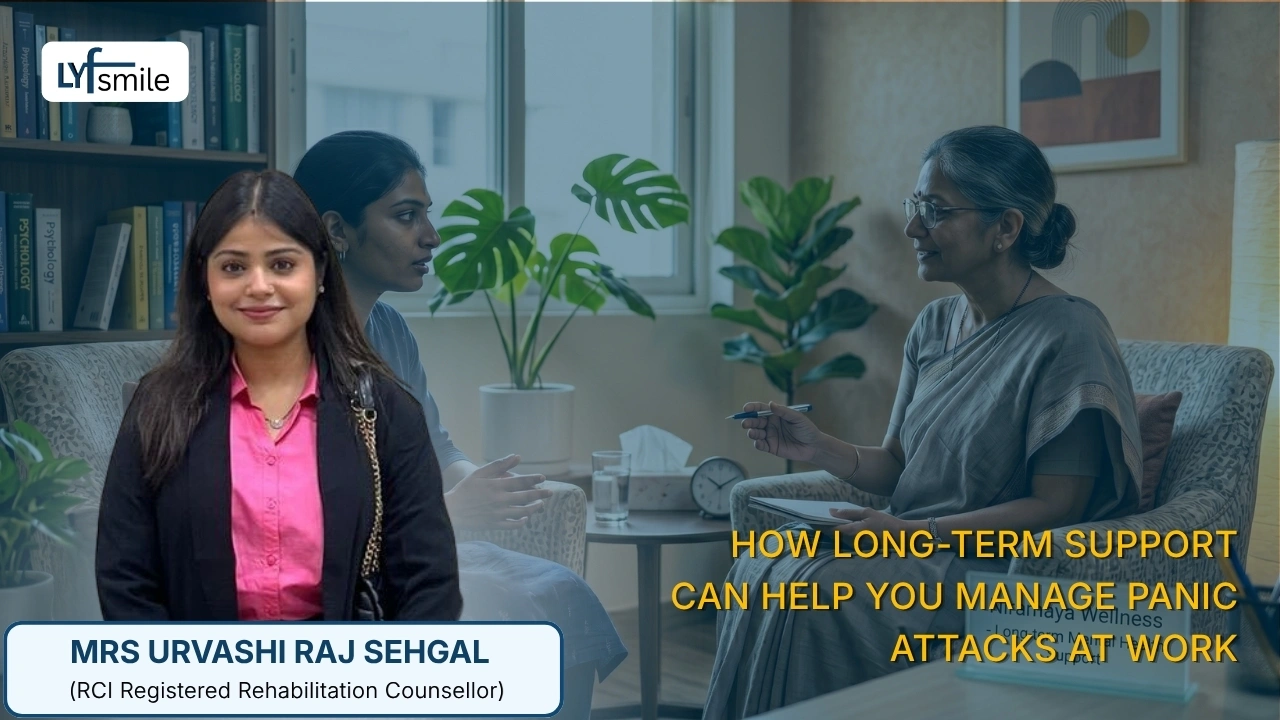 While breathing exercises help you survive the moment, they don't always address the root cause of why your body is stuck in high gear. To truly reclaim your career, looking into anxiety treatment for professionals is a vital step. At Lyfsmile, we move you from "crisis mode" to long-term stability under the expert guidance of Mrs. Urvashi Raj Sehgal, an RCI-registered rehabilitation psychologist. With over 6.5 years of experience, Urvashi specializes in understanding how our environment shapes our emotions and behaviors. By working with an anxiety disorder therapist in Gurgaon like her, you can begin to unpick the specific corporate triggers that lead to these episodes, ensuring your professional life is defined by your talent rather than your anxiety.
Pragmatic & Customized Care: Mrs. Urvashi uses her expertise in psychodynamic and holistic psychotherapy to help you overcome negative self-image and unhelpful behaviors that fuel panic attacks at work.
A Scientific Approach to Growth: By integrating cognitive and emotional development, she provides tools to enhance your mental well-being, helping you move from "survival mode" to a satisfying, fully developed life.
Proven Impact: Having supported over 200+ clients through impactful one-on-one sessions and workshops, she focuses on building new, healthy behaviors that stick.
Healing Environments: Through corporate stress counselling, she helps you create a lifestyle and mindset that brings out your "softness" and strength, rather than just your stress response.
Ultimately, the goal of long-term support is to give you back your sense of freedom. Under the care of professionals like Mrs. Urvashi Raj Sehgal, therapy becomes a spiritual and insightful journey that redefines your life. When you aren't constantly scanning for the next sign of panic, you can finally put that energy back into your professional goals. At Lyfsmile, we believe that managing your mental health should be as standard as managing your career path, providing you with the resilience needed to thrive in any corporate setting.
Stop surviving your workday and start living it. Let’s bring the calm back to your career together.
[Begin your journey with Lyfsmile]
How Much Does Therapy Cost at Lyfsmile, and How Long Does It Take?
If panic attacks are affecting your work or everyday life, you may be considering professional support but wondering about the cost and time involved.
Lyfsmile advertises a free initial 15-minute consultation, with therapy sessions starting at ₹30 per minute. The actual cost may depend on the service and booking arrangements, so confirm the current rate and payment terms before starting.
How Long Does Therapy Take?
There is no single timeline for managing panic attacks. Some people may benefit from short-term support, while others may need longer-term therapy, depending on how frequently the episodes occur, what contributes to them and how they affect daily life.
During an initial consultation, you can discuss your concerns and understand the available options. Your therapist can work with you to establish goals and review your progress over time.
The number and frequency of sessions will depend on your individual needs and the approach recommended by your professional. Be cautious of anyone promising that panic attacks will disappear within a fixed number of sessions.
The goal is not simply to get through one difficult workday. It is to develop a better understanding of your experiences and build strategies that support your well-being over time.
Conclusion: You Don't Have to Face Panic Attacks at Work Alone
Experiencing a panic attack at work can feel frightening, especially when you are trying to meet deadlines, attend meetings or maintain your focus around colleagues. Understanding the symptoms, recognising possible triggers and knowing how to respond can help you navigate these moments.
Work pressure can affect mental health, but you do not have to ignore your difficulties or wait until they become overwhelming. If panic attacks keep returning or begin affecting your confidence, relationships or ability to work, consider speaking with a qualified professional.
With appropriate support, you can work towards understanding your anxiety, managing difficult situations and finding strategies that fit your everyday life.
Frequently Asked Questions
1. What kind of therapy can help with panic attacks?
Cognitive Behavioural Therapy (CBT) is one approach that may help people understand and manage panic-related thoughts and behaviours. A qualified professional can recommend an approach based on your individual needs.
2. What is the 3-3-3 rule for panic attacks?
The 3-3-3 rule is a grounding technique in which you identify three things you can see, three sounds you can hear and move three parts of your body. Some people find it helpful for bringing their attention back to the present.
3. How long can a panic attack last?
Panic attacks often reach their peak within minutes, although the overall experience varies. Feeling tired or unsettled afterwards can last longer.
4. Can work stress cause panic attacks?
Work stress may contribute to panic attacks in some people, but it is not the only possible trigger. Panic attacks can also occur unexpectedly or alongside other concerns.
5. Can a psychologist help with work-related anxiety?
A qualified psychologist can help you understand patterns of worry, explore possible triggers and develop coping strategies. The type of support will depend on your circumstances and goals.
6. How much does therapy at Lyfsmile cost?
Lyfsmile advertises a free 15-minute initial consultation and therapy sessions starting at ₹30 per minute. Confirm the current rate and terms before booking.
7. How many therapy sessions will I need?
The number of sessions depends on your symptoms, goals and response to therapy. Your therapist can discuss a suitable plan with you and review it as you progress.