Sarvesh Kumari
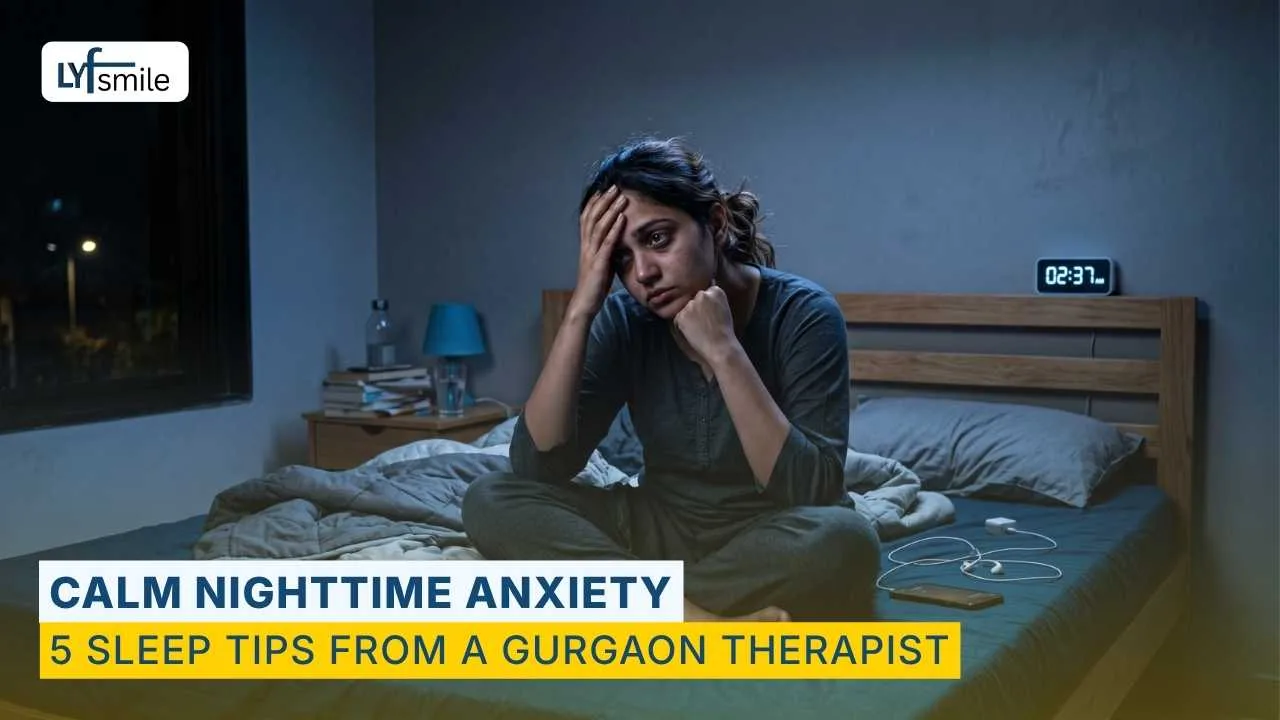
Calm Nighttime Anxiety: 5 Sleep Tips from a Gurgaon Therapist
Ever notice how your brain starts racing the second your head hits the pillow? You’re not alone. Living in a busy hub like ours, bedtime anxiety in adults is a real struggle. As a provider of anxiety therapy in Gurgaon, I’ve helped many people manage that sudden rush of anxiety when falling asleep. Often, when people look for a therapist for anxiety near me, it’s because the physical symptoms of anxiety, like a pounding heart or restless legs, make sleep feel impossible.
Quick Tip: Nighttime anxiety is just your "fight or flight" response kicking in as the day’s distractions fade. If you're struggling with overthinking at night, the goal isn't to force sleep but to calm your nervous system first.
In my work with anxiety counselling in Gurgaon, I’ve found that small, natural shifts can break this cycle. Here is how to handle it.
How Anxiety Counselling in Gurgaon Supports Better Sleep
A common mistake people make is thinking that sleep anxiety treatment is just about taking a pill to "knock you out." But if you’ve ever taken a sleep aid and still woken up with your heart racing at 3 AM, you know that doesn’t solve the root cause.
In my sessions for anxiety counselling in Gurgaon, we focus on why your “physical symptoms of anxiety” feel so much worse at night. Usually, it's because your body is finally still enough to notice the tension it's been carrying all day.
Professional support helps you manage these specific sensations:
Taming the "Physical Alarm": Learning how to calm heart palpitations and that "tight chest" feeling without panicking.
Releasing Muscle Tension: Identifying where you hold stress, like a clenched jaw or hunched shoulders, that keeps your body from falling into deep sleep.
Ending the "Alert" State: Shifting your nervous system from "fight or flight" mode into "rest and digest" mode naturally.
The Mind-Body Bridge: Understanding that when your body feels safe, your mind will naturally stop overthinking at night.
Instead of just treating the symptom, we work on teaching your body how to feel safe again. It’s about bridging the gap between a tired body and a wired mind so you can finally get the rest you deserve.
Figuring Out Why Your Mind Is Racing
Have you ever noticed how your brain suddenly decides to replay a conversation from three years ago right when you’re trying to sleep? During our busy days in Gurgaon, we don't have the space to process stress, so the moment the lights go out, everything rushes in at once.
If you’re looking for help with overthinking at night, it’s often because your brain is stuck in one of these cycles:
The "Replay" Mode: Reviewing every mistake or conversation from the day.
The "What-If" Loop: Imagining worst-case scenarios about the future.
The Physical Escalation: Intense mental spirals that lead to nocturnal panic attacks.
Waking up in terror is incredibly scary, but it’s essentially your body’s way of saying its "stress bucket" is overflowing. In therapy, we focus on "emptying" that bucket before bed. By learning to de-escalate that fear response, you teach your brain that it’s okay to let go. You don't have to figure everything out at 2 AM; most things look much better in the morning light anyway.
Learning Simple Ways to Relax Your Body
When that sudden rush of anxiety when falling asleep hits, your body is essentially stuck in "high alert" mode. To get past this, you need to speak your body's language, which isn't words but physical sensations.
If you want to know how to calm anxiety at night naturally, try these simple techniques to signal to your nervous system that you are safe:
Box Breathing: A simple 4-count breath to slow your heart rate instantly.
The "Ice" Trick: Splashing cold water on your face to "reset" your vagus nerve.
Progressive Relaxation: Tensing and releasing each muscle group, starting from your toes.
The 5-4-3-2-1 Method: Naming things around the room to pull your mind out of the future and back into the present.
These aren't just "distractions"; they are tools that help you physically lower your stress levels so sleep can happen on its own.
Planning for Peaceful Sleep Every Night
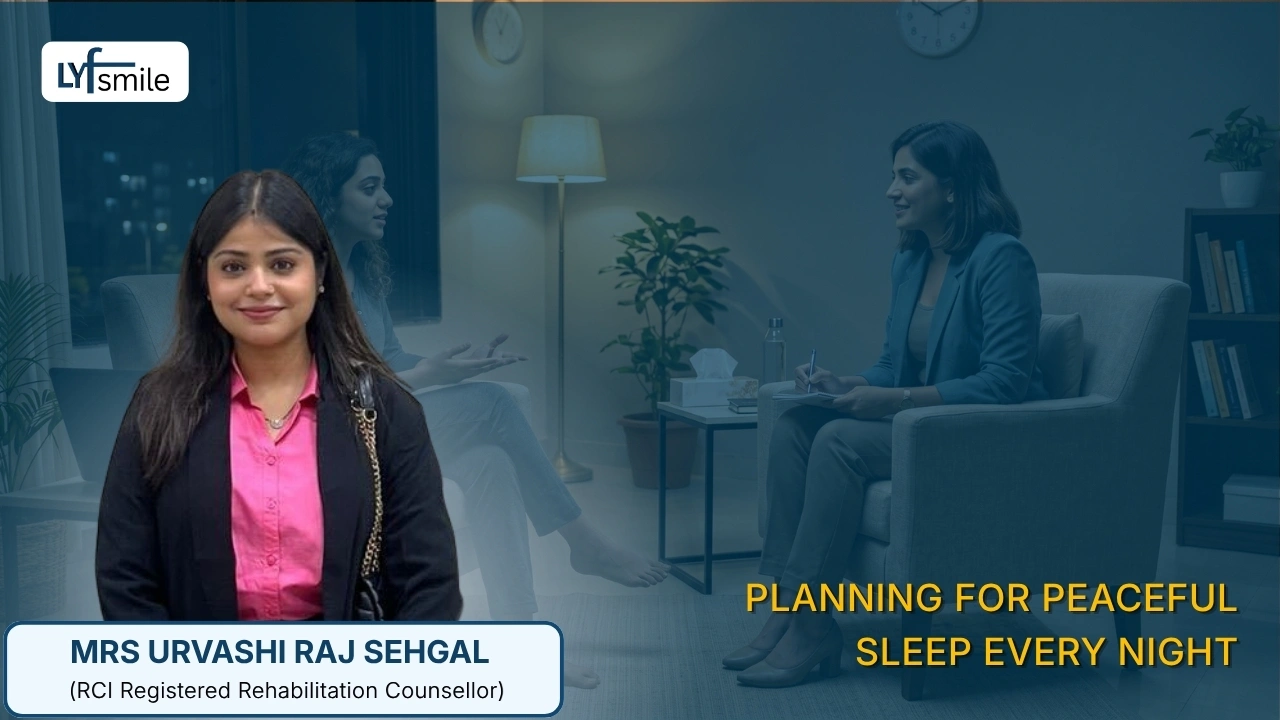 Creating a night that feels safe isn’t just about what you do five minutes before bed; it’s about a long-term routine that respects your mental health. Whether you are dealing with a temporary stressful patch or navigating how to sleep with anxiety and depression, the goal is to move your body from "survival mode" to a place of "softness" and rest.
At Lyfsmile, our approach, led by RCI-registered counselor Urvashi Raj Sehgal, is built on 6.5 years of experience helping over 200+ clients find this peace. Having grown up in a household that understood mental health battles firsthand, Urvashi created this space to ensure no one has to fight these "invisible battles" alone.
To build a routine that actually works, we focus on:
Environmental Cues: Adjusting your surroundings to change how you perceive and feel in your bedroom.
Inclusive Support: Addressing specific needs, such as managing nighttime anxiety in elderly loved ones who may feel more vulnerable after dark.
Emotional Safety: Using holistic tools to overcome negative self-image and unhelpful bedtime behaviors.
Skill Building: Arming you with cognitive skills so you can live a satisfying life, not just a "tired" one.
"How I Cured My Sleep Anxiety": A Path Forward
Many clients come to us asking the same question: "Is it actually possible to sleep soundly again?" The answer is a resounding yes. One of the most powerful ways to "cure" sleep anxiety is through a healing relationship with a therapist who understands that your environment and psychosocial behaviors are linked. By integrating therapeutic and rehabilitation services, we help you build new, healthy behaviors that redefine your relationship with the night.
Therapy isn't just about talk; it’s a spiritual and insightful journey that helps you move from just surviving the night to actually enjoying your rest.
You don’t have to face these invisible battles alone. If you're ready to quiet the overthinking at night and reclaim your sleep, Mrs. Urvashi Raj Sehgal is here to help you move from "survival mode" back to peace. To get started, [click here to book your session at Lyfsmile] for expert anxiety counselling in Gurgaon or online.
Frequently Asked Questions
1. Why do I experience a sudden rush of anxiety when falling asleep?
That sudden rush of anxiety when falling asleep is often your body’s "fight or flight" response kicking in. During the day, you are busy with work and distractions, but the moment you lie down, your brain finally has space to process suppressed stress, causing a spike in adrenaline.
2. What are the most common nighttime anxiety symptoms?
Common nighttime anxiety symptoms include a racing heart, shallow breathing, muscle tension (like a clenched jaw), and persistent overthinking at night. You might also experience "sleep starts" or a feeling of dread that makes it hard to transition into deep sleep.
3. How can I calm anxiety at night naturally?
To calm anxiety at night naturally, focus on grounding your nervous system. Techniques like 4-7-8 breathing, progressive muscle relaxation, or splashing cold water on your face can reset your vagus nerve and signal to your brain that you are safe to sleep.
4. What should I do if I have nocturnal panic attacks?
If you experience nocturnal panic attacks, it is important to remember they are not dangerous, even though they feel terrifying. Ground yourself by naming five things you can see in the room and remind yourself that the feeling will pass. Seeking sleep anxiety treatment from a professional can help reduce the frequency of these attacks.
5. Is it normal for physical anxiety symptoms to be worse at night?
Yes, it is very common for physical anxiety symptoms to be worse at night. Without the noise and activity of the day to distract you, your brain becomes hyper-aware of your body. This makes sensations like heart palpitations or restlessness feel much more intense than they do during the day.
6. Where can I find a therapist for anxiety near me in Gurgaon?
If you are looking for a therapist for anxiety near me in Gurgaon, Lyfsmile offers specialized support. Our expert, Mrs. Urvashi Raj Sehgal, provides customized anxiety counselling in Gurgaon to help you address the root causes of sleep anxiety and reclaim your nights.