

Lakshika Kaushik
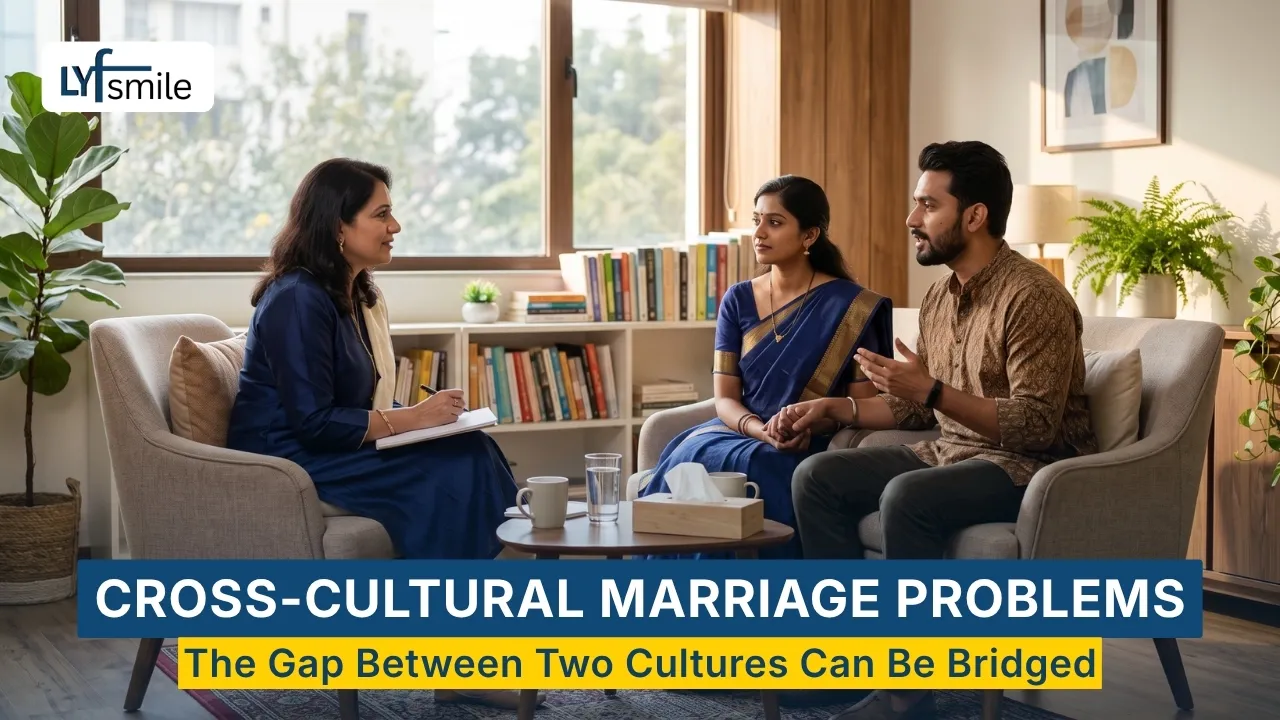
Cross-Cultural Marriage Problems: The Gap Between Two Cultures Can Be Bridged
Falling in love across cultures tends to feel effortless. Two people from different backgrounds find each other. For a while, the differences feel exciting and interesting rather than divisive, something that makes the relationship richer than it might otherwise be.
Then marriage begins. And with it, the daily reality of two different sets of values, expectations, family dynamics, and definitions of what a good marriage looks like, all living inside the same home, often with very little room to negotiate.
Cross-cultural marriage therapy is a specialised therapeutic approach that helps couples from different cultural, religious, regional, or national backgrounds identify, understand, and work through the specific conflicts that arise when two genuinely different cultural frameworks try to coexist within one relationship.
For many couples, this kind of targeted support is the difference between a marriage that survives its cultural differences and one that thrives despite them.
What Makes Cross-Cultural Marriages Uniquely Challenging
Cross-cultural marriages carry a specific kind of pressure that even the most well-meaning outside support tends to miss because the conflicts that emerge often don't look like "marriage problems" on the surface. They look like disagreements about small things: food, rituals, how a birthday is celebrated, how much time is spent with whose family. But beneath those small things are deeply held values that neither partner has ever had to articulate before, because they were always simply assumed.
Different family expectations: what "good" family involvement looks like, how much say in-laws should have, how decisions get made create friction that can feel inexplicable, because both partners believe they're simply behaving the way a good spouse would. The problem is that their definitions of "good spouse" were written in two different cultural languages.
Religious and ritual differences in interfaith marriages Hindu-Muslim, Hindu-Christian, Sikh-Hindu, and others extend into parenting decisions, festivals, food, and everyday customs. What feels like a practical negotiation to one partner often feels like an identity compromise to the other.
Regional differences within India, particularly in inter-caste or inter-state marriages, bring their own pressures: different mother tongues, different food cultures, different assumptions about gender roles and family hierarchy that feel deeply personal precisely because they've been absorbed over a lifetime.
NRI and resident Indian marriages face a particular version of cross-cultural pressure where one partner has grown up within a Western context and the other within an Indian one, creating gaps in expectations about independence, social life, career, and the role of extended family that neither partner fully anticipated.
Communication style differences cultures differ significantly in how directly feelings are expressed, how conflict is typically handled, and how much silence is comfortable. What reads as "cold" to one partner may simply be how their partner's family has always operated.
None of these conflicts means the love isn't real. They mean the relationship needs support that understands both sides of it equally.
How the Right Therapy Bridges the Cultural Gap
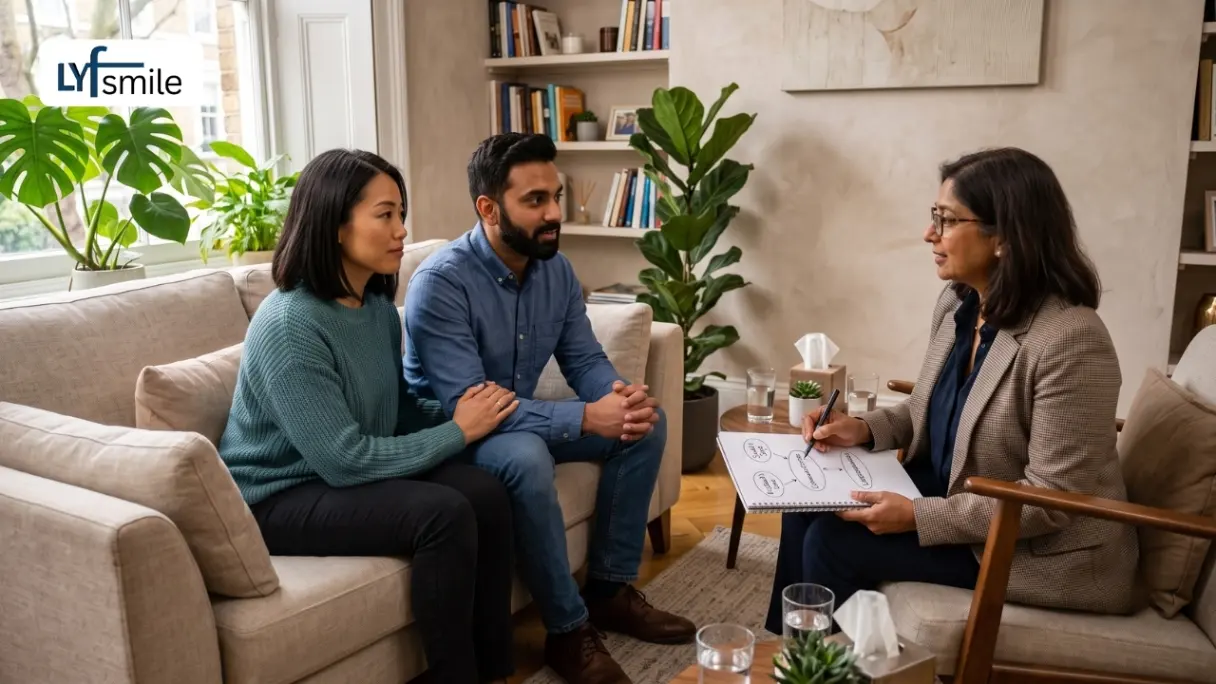 Most conventional marriage counseling works from a framework shaped by one cultural context. For cross-cultural couples, that often means one partner's worldview is implicitly centred, and the other is treated as the deviation that needs to be adjusted.
The right cross-cultural marriage therapy starts from a different premise: that both frameworks are valid, and that the work is to help the couple build something genuinely shared between them, rather than having one partner adapt entirely to the other's cultural default.
In practice, this means:
Naming the cultural assumptions that both partners have been operating from without realising it, the invisible rules each person assumed the other also knew, and the confusion that happens when they don't.
Separating cultural differences from personal incompatibility. Much of what cross-cultural couples interpret as fundamental incompatibility is actually cultural misalignment different, but workable, once both people understand what they're actually navigating.
Building shared agreements around the areas of highest friction parenting, family boundaries, religious practice, financial management that reflect both partners' values rather than defaulting entirely to one.
Supporting the ongoing process of cultural negotiation that cross-cultural marriages require throughout their life, not just in the beginning. Culture isn't a one-time conversation. It shows up again with every new stage, every new family event, every new stress.
Start Your Cross-Cultural Marriage Therapy at Lyfsmile
At Lyfsmile, cross-cultural marriage therapy is handled by qualified, degree-holding therapists with hands-on experience in exactly this kind of work. Our team has trained and practised across diverse cultural contexts, including different religious backgrounds, regional dynamics, NRI-resident situations, and interfaith marriages, which means they bring real, practised understanding to these sessions, not just textbook awareness.
Every couple is matched with a therapist whose background genuinely fits what their marriage is navigating. Because cross-cultural problems are specific, the support that addresses them needs to be too
Online sessions are available across India and internationally, making this support accessible to NRI couples in any country, at a time that suits their schedule. For those based nearby, face-to-face sessions are held at Lyfsmile's offices in Delhi, Gurgaon, Panipat, and Noida.
A free 15-minute consultation opens the conversation no pressure, no obligation, just a first exchange to understand what your marriage is navigating and how Lyfsmile can help. Beyond that, sessions are available at ₹30 per minute, keeping expert cross-cultural therapy accessible regardless of where you're starting from.
Your marriage doesn't need to choose between two cultures. It needs help building its own.
Reach out to Lyfsmile and begin navigating your cross-cultural marriage with the support that genuinely understands both sides.
FAQs
Q: Can cross-cultural marriage therapy help even if only one partner wants to attend?
A: Yes. Individual sessions can still produce meaningful shifts; one partner developing greater cultural self-awareness and communication skills often changes the dynamic enough that the other becomes more open to participating over time.
Q: How long does it take to see results from cross-cultural marriage therapy?
A: Most couples notice meaningful shifts within 4-6 sessions. Deeper cultural differences, particularly those involving family values, religious practice, or identity, may require longer-term work. Lyfsmile's approach is always paced around what the couple actually needs.
Q: Can NRI couples access cross-cultural marriage therapy at Lyfsmile?
A: Yes. Lyfsmile's online sessions are available internationally; couples can join from any country, at a time that works across their time zone. Cross-cultural dynamics for NRI couples are well understood by Lyfsmile's therapists.
Q: Does cross-cultural therapy mean one partner has to give up their cultural identity?
A: Not at all. The goal of cross-cultural marriage therapy is never to erase one background in favour of another. It's to help both partners build a shared life that genuinely honours both through honest conversation, mutual understanding, and practical agreements.
Q: Can Lyfsmile help with interfaith or intercaste marriages specifically?
A: Yes. Lyfsmile's therapists have specific experience with interfaith and intercaste couples, addressing the family pressure, identity questions, and cultural differences these marriages carry with particular sensitivity and expertise.