


Sarvesh Kumari
Racing Thoughts Anxiety: Causes, Symptoms and How to Calm a Racing Mind!
Racing thoughts and anxiety can make it difficult to relax, focus, or sleep. Many people experience a racing mind and constant worry during periods of stress or anxiety. These fast and repetitive thoughts may feel overwhelming, but understanding their causes and learning healthy coping strategies can help you regain control.
There are moments when your mind feels too busy to handle, like it won’t give you a break. Thoughts keep repeating or moving too fast, making it hard to stay calm or focus on anything else. This is often linked with racing thoughts and anxiety, where even small worries can start to feel bigger and more intense.
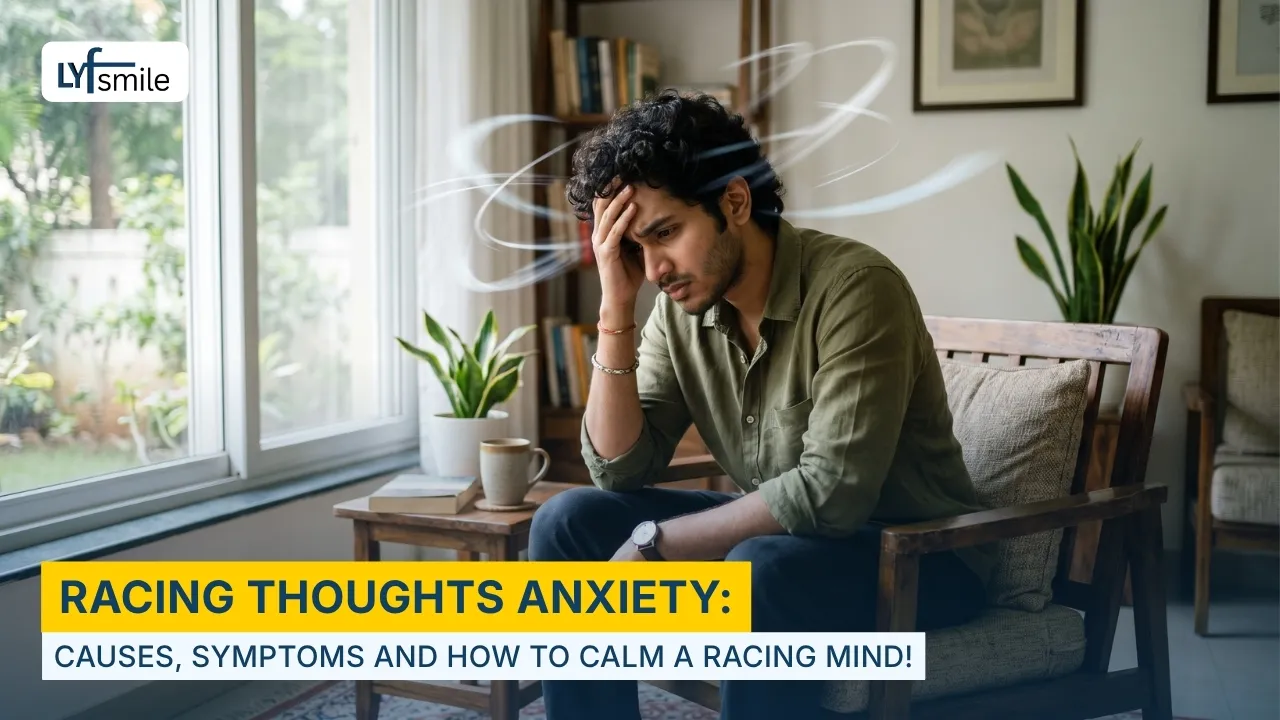
Racing thoughts are rapid, hard-to-control thinking patterns that can leave you feeling overwhelmed. They often appear during stressful situations or at night when you’re trying to rest, making it difficult to relax or sleep. With simple techniques like deep breathing, grounding, or gently shifting your focus, it is possible to slow your mind down and feel more at ease.
What It Feels Like When Your Thoughts Won’t Stop
At times, it may feel like your mind just doesn’t pause. Thoughts keep repeating, small things feel bigger, and “what if” situations play again and again. Even at night, your mind may stay active, making it hard to relax or sleep. This is often how anxiety affecting daily life starts to show up.
Over time, this can feel mentally exhausting and make it hard to stay present or enjoy simple moments.
You might notice it like this:
Thoughts repeating again and again
Trouble relaxing or sleeping
Feeling mentally tired without much work
Difficulty staying present in conversations
Body tension or discomfort
Pulling away from people at times
It can feel overwhelming, but many people experience this, and it can be managed with the right steps.
Why Your Brain Keeps Racing During Anxiety
It can feel confusing when your mind keeps speeding up without a clear reason. During anxiety, your brain goes into a kind of alert mode, where it keeps thinking about problems, past situations, or future worries again and again. This is why thoughts start moving fast and feel hard to control, especially during stressful times or at night.
Racing thoughts can be linked to different reasons. Sometimes it’s due to daily stress or pressure, and other times it may be connected to ongoing anxiety or sleep issues. When your mind doesn’t get enough rest, it becomes even harder to slow these thoughts down. In some cases, mental restlessness or habits of overthinking can also make your brain stay active for longer than usual. Talking to a therapist for intrusive thoughts can help you understand these patterns and learn ways to manage them better.
Some common reasons behind racing thoughts include:
• Ongoing stress or pressure from daily life
• Anxiety that keeps your mind in a constant “alert” state
• Overthinking past events or worrying about the future
• Poor sleep or staying awake with too many thoughts
• Mental restlessness or difficulty slowing down
Understanding what triggers your thoughts is the first step, because once you notice the pattern, it becomes easier to manage it.
Racing Thoughts vs Overthinking: What Is the Difference?
People throw these terms around like they mean the same thing, but they don't. If you've ever lain awake at night with your brain in chaos mode, it helps to know which one you're actually dealing with, because the way you handle them isn't the same.
Racing thoughts feel like your mind hit the gas pedal and the brakes stopped working. Thoughts jump from topic to topic, your job, a conversation from three days ago, what you forgot at the grocery store, then suddenly something totally unrelated, all in a matter of seconds. There's no real thread connecting them. This is something a lot of people with anxiety experience, especially at night when things finally get quiet enough for the brain to take over. The hallmark feeling is simple: "My brain won't shut up, and I can't slow it down even if I try."
Overthinking is a different beast. It's less about speed and more about getting stuck. You're not bouncing between fifty different things; you're circling the same one thing over and over. Replaying a conversation. Wondering if you said something wrong. Running through every possible outcome of a decision before you've even made it.
Both can leave you feeling drained, anxious, and unable to relax, but knowing which one you're dealing with matters. If your mind feels like a browser with forty tabs open, that's racing thoughts. If you're stuck rereading the same tab forty times, that's overthinking.
Quick Ways to Slow Down Your Racing Mind
There are moments when your mind just keeps going, even when you want it to pause. Thoughts may repeat, jump from one thing to another, or feel stronger at night when everything is quiet. Instead of trying to stop them completely, small and simple steps can help you slowly regain control. These are often part of techniques used in overthinking treatment methods, where the focus is on calming your mind step by step.
Here are a few things you can try:
• Let the thoughts pass: Don’t fight them; just notice them and let them come and go
• Slow your breathing: Gentle, steady breaths can help your body relax
• Shift your focus: Do something light like music, reading, or a simple task
• Get some movement: Even a short walk can help break the cycle
• Wind down before sleep: Give your mind time to settle without screens or stress
If these thoughts keep coming back and start affecting your sleep or daily routine, getting help through counselling for anxiety disorders can support you in understanding your patterns and managing them better over time.
Getting Support in Gurgaon When Anxiety Feels Overwhelming
 There are times when anxiety feels too much to handle on your own, and that’s when the right support can really help. Instead of trying to manage everything alone, talking to someone who understands can make things feel lighter. Many people begin by looking for anxiety therapy in Gurgaon to find a safe space where they can open up without fear or pressure.
At Lyfsmile, our experienced therapist offers a calm and understanding approach to therapy. With experience working with people from different backgrounds and age groups, she supports individuals dealing with anxiety, stress, depression, and personal struggles. She focuses on listening without judgment and helps you understand your thoughts in a simple way. Her approach is more about guiding you at your own pace, helping you build confidence, and finding practical ways to handle situations in daily life.
If you reach out to a mental health therapist in Gurgaon, it can help you:
• Understand what’s really causing your anxiety
•Talk freely in a safe and comfortable space
• Learn simple ways to manage thoughts and emotions
• Feel more confident in everyday situations
• Stop feeling alone in what you’re going through
Taking that first step might feel difficult, but the right support can help you feel more in control and less overwhelmed over time.
Frequently Asked Questions
1. What kind of therapy helps with anxiety and racing thoughts?
Therapies like CBT are often used to help manage anxiety and racing thoughts by changing negative thinking patterns and improving coping skills.
2. How can I stop overthinking and calm my mind?
Simple techniques like breathing exercises, grounding methods, and focusing on the present can help reduce overthinking and calm your mind.
3. What is the 3-3-3 rule for anxiety or overthinking?
The 3-3-3 rule is a grounding technique where you notice 3 things you see, 3 sounds you hear, and move 3 parts of your body to feel present.
4. Can a therapist help with intrusive or racing thoughts?
Yes, a therapist can help you understand why these thoughts happen and teach practical ways to manage and reduce them over time.
5. Is it possible to manage anxiety without medication?
Yes, many people manage anxiety with therapy, lifestyle changes, and coping techniques, depending on the severity of symptoms.
6. What type of professional should I talk to for anxiety problems?
A trained mental health therapist or counselor who specializes in anxiety can help you understand your symptoms and guide you with proper support.