


Sarvesh Kumari
Living with Constant Fear and Anxiety: Tips from a Mental Wellness Specialist
There are times when you start overthinking everything and feel stuck in your own thoughts, trying to understand what’s going on in your life. Living with constant fear and anxiety can make even small situations feel heavy, and these thoughts don’t just stay in your mind; they start affecting how you feel every day. It’s important to remember that you don’t have to figure everything out at once; taking small steps and understanding your feelings can slowly make things easier.
While occasional fear is normal, persistent feelings of worry, dread, and nervousness can interfere with daily life. Understanding the causes behind constant fear can help you find healthier ways to cope and regain a sense of control.
Living in a state of "high alert" is exhausting. When fear and anxiety become your constant companions, it feels like you're waiting for a storm that never arrives. As a mental wellness specialist, I want you to know that this isn't just "in your head"; it’s a physical state of your nervous system that can be retrained.
What Constant Fear and Anxiety Feel Like and How They Affect You
Constant fear and anxiety can affect both your mind and body, leading to symptoms like dizziness, a fast heartbeat, sweating, and social discomfort. Over time, these feelings can impact your daily life and make even small situations feel overwhelming.
Living with constant worry can feel draining, especially when it doesn’t go away easily. It’s not just in your thoughts; your body also reacts. You may notice fast breathing, a racing heart, dizziness, stomach discomfort, or trouble sleeping. These ongoing fear and anxiety symptoms can make it challenging to feel calm even in normal situations.
Often, this condition also shows up around people. You might feel uncomfortable speaking, avoid social situations, or keep thinking about what others might think of you. These are common “social anxiety symptoms,” and they can slowly affect your confidence.
At first, anxiety is your body’s way of handling stress, but when it stays for too long, it starts to feel overwhelming. Even small triggers can make your body react strongly. Simple techniques like grounding and focusing on what you can see, hear, or feel can help bring your mind back to the present.
When Constant Fear and Anxiety Start Affecting You
Fear is a natural response to danger, but sometimes it becomes stronger than the actual situation. When such an event happens, anxiety can start affecting your daily life and the way you respond to even small situations.
You may notice:
Your reactions feel too intense, even for minor triggers
Panic attacks can start suddenly, with a racing heartbeat, sweating, shaking, shortness of breath, dizziness, or a strong sense that something bad is about to happen
These episodes usually peak within minutes but leave you feeling drained afterwards
Over time, you may start avoiding places or situations where panic has occurred before
The fear can also shift and attach itself to different situations, making it harder to understand the root cause
If this pattern continues, getting the right support for fear and panic can help you manage these reactions and gradually feel more in control.
Why Your Mind Feels Trapped in Fear
Sometimes anxiety feels overwhelming, even when you know there’s no real danger. This happens because your mind reacts based on feelings, not logic.
What often keeps you stuck is the following:
Your brain starts treating normal emotions as danger
The “alarm system” becomes overactive over time
Even uncomfortable situations feel unsafe, not just uneasy
You may start avoiding situations like speaking up, conflict, or new experiences
These situations are not actually harmful, just uncomfortable. And discomfort is a normal part of growth.
Over time, repeated safe experiences help your mind realise that not every uncomfortable feeling needs a fear response. This shift doesn’t happen suddenly, but it slowly weakens the intensity of anxiety.
With the right counselling for excessive fear, you can learn how to break these automatic fear patterns and respond to situations in a steadier and more grounded way.
How to Reduce Anxiety-Related Dizziness and Sweating
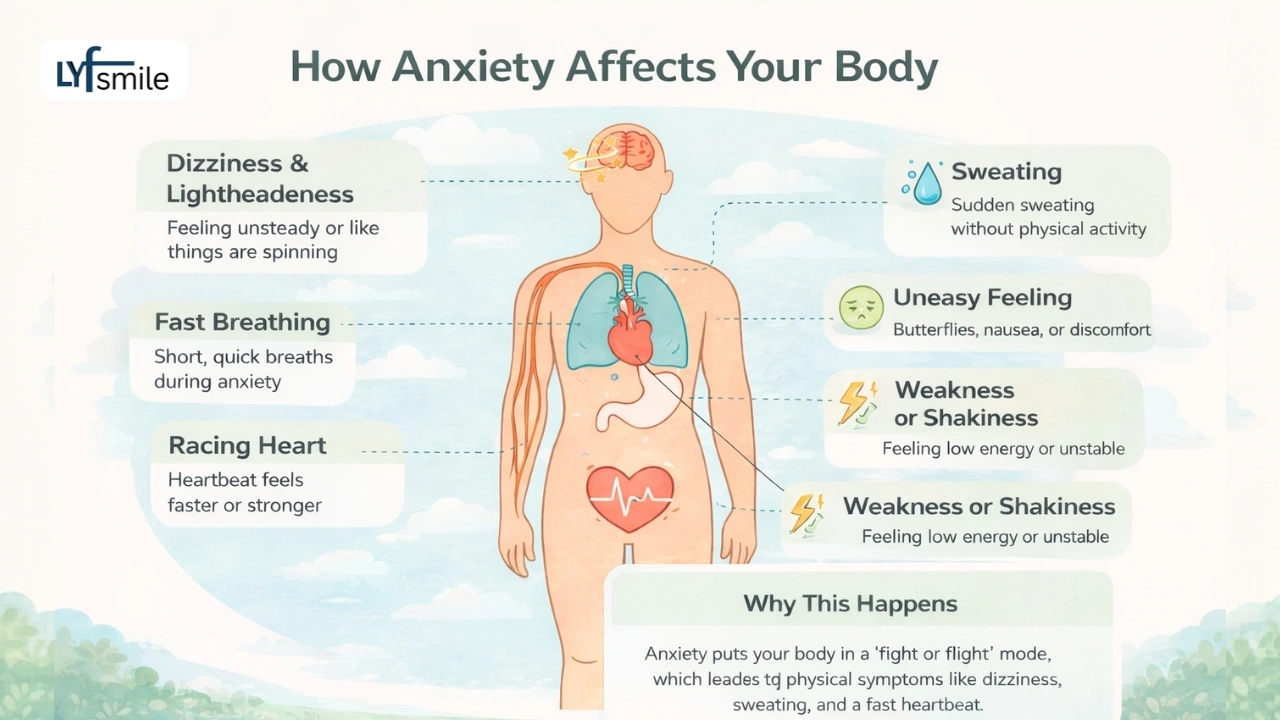 Anxiety doesn’t just affect thoughts; it also affects the body. When anxiety increases, the brain activates the “fight-or-flight” response, which prepares the body for danger even when there is none. This can lead to physical symptoms like dizziness, sweating, shaking, nausea, or a lightheaded feeling. It happens because your heart rate, breathing, and stress hormones all become more active at the same time.
This is also why many people look for a therapist in Gurgaon for anxiety, especially when these physical symptoms start feeling frequent or hard to manage.
Common triggers like stress, caffeine, dehydration, low blood sugar, or poor sleep can make these reactions stronger and more noticeable.
In such moments, a few simple steps can help:
Sit or lie down and let your body settle
Drink water slowly and stay hydrated
Avoid excess caffeine or skipping meals
Practice slow breathing to calm your nervous system
Notice and reduce common triggers
If symptoms continue often, it’s also important to rule out medical causes like anemia or ear-related issues.
Along with self-care, mental health therapy in Gurgaon can help you understand how anxiety is affecting your body and mind. At Lyfsmile, Mrs Tanya Sachdev (certified adult psychologist) helps individuals recognise these stress responses and work on calming them through CBT, mindfulness, and relaxation techniques.
She focuses on helping people break the cycle of anxiety by teaching practical ways to manage both physical and emotional symptoms.
With the right support, these symptoms can become easier to handle, helping you feel more stable and in control in daily life.
How to Break the Cycle of Constant Fear!
Living with constant fear and anxiety can feel overwhelming, but the good news is that you don't have to just live with it. There are healthy, practical ways to manage these feelings and slowly regain a sense of control. If you've been asking yourself, "Why do I feel so scared all the time?" or "Why do I live in constant fear?", here are some strategies that might genuinely help.
Identify Your Triggers
The first step to managing fear is figuring out where it's coming from. Maybe it's certain situations, ongoing stress, health worries, or past experiences that keep resurfacing.
Practice Relaxation Techniques
Simple practices like deep breathing, mindfulness, meditation, or yoga can do wonders for calming an overactive mind. Improve Your Sleep Habits
Ever notice how everything feels scarier when you're running on no sleep? Poor sleep and anxiety often feed off each other. Try sticking to a consistent bedtime, putting your phone away at least 30 minutes before sleep, and building a wind-down routine that signals to your brain it's time to relax.
Seek Professional Support
And finally, if these feelings persist despite your best efforts, please don't hesitate to reach out to a mental health professional. There's no shame in needing support ,therapy can help uncover the root causes of constant fear and anxiety and equip you with tools that actually work for your specific situation.
If constant fear and anxiety are affecting your quality of life, seeking support from a mental health professional can help you understand the underlying causes and develop healthier coping strategies. Book your session today.
Frequently Asked Questions
1. What causes anxiety, and which therapy is best to manage it?
Anxiety can develop due to stress, past experiences, lifestyle factors, or ongoing overthinking patterns. The most effective therapies usually include CBT, mindfulness-based therapy, and relaxation techniques, which help calm both thoughts and physical symptoms.
2. How do therapists help in managing anxiety symptoms?
Therapists help you understand your triggers, thought patterns, and body reactions. They guide you in breaking the cycle of fear and teach practical coping skills to manage symptoms like dizziness, sweating, and panic in a healthier way.
3. How do I know if I should seek anxiety treatment?
If you frequently feel restlessness, panic, dizziness, overthinking, or physical symptoms without clear medical causes, it may be helpful to seek anxiety treatment. When these symptoms affect daily life, professional support becomes important.
4. Is it possible for anxiety to have a physical impact on the body?
Yes, anxiety activates the fight-or-flight response, which can increase heart rate, breathing, and stress hormones. This can lead to physical symptoms like dizziness, sweating, nausea, shakiness, or fatigue.
5. Who is the best psychologist in Gurgaon for anxiety support?
There are many qualified professionals, but it’s important to choose someone experienced in anxiety treatment. At Lyfsmile, Mrs Tanya Sachdev (Certified Adult Psychologist) helps individuals manage anxiety using CBT, mindfulness, and evidence-based therapy techniques.
6. How long does anxiety treatment usually take?
Recovery time depends on the severity and personal situation. Some people notice improvement in a few weeks, while others may need longer support. Consistency in therapy plays a key role in long-term improvement.