

Sarvesh Kumari
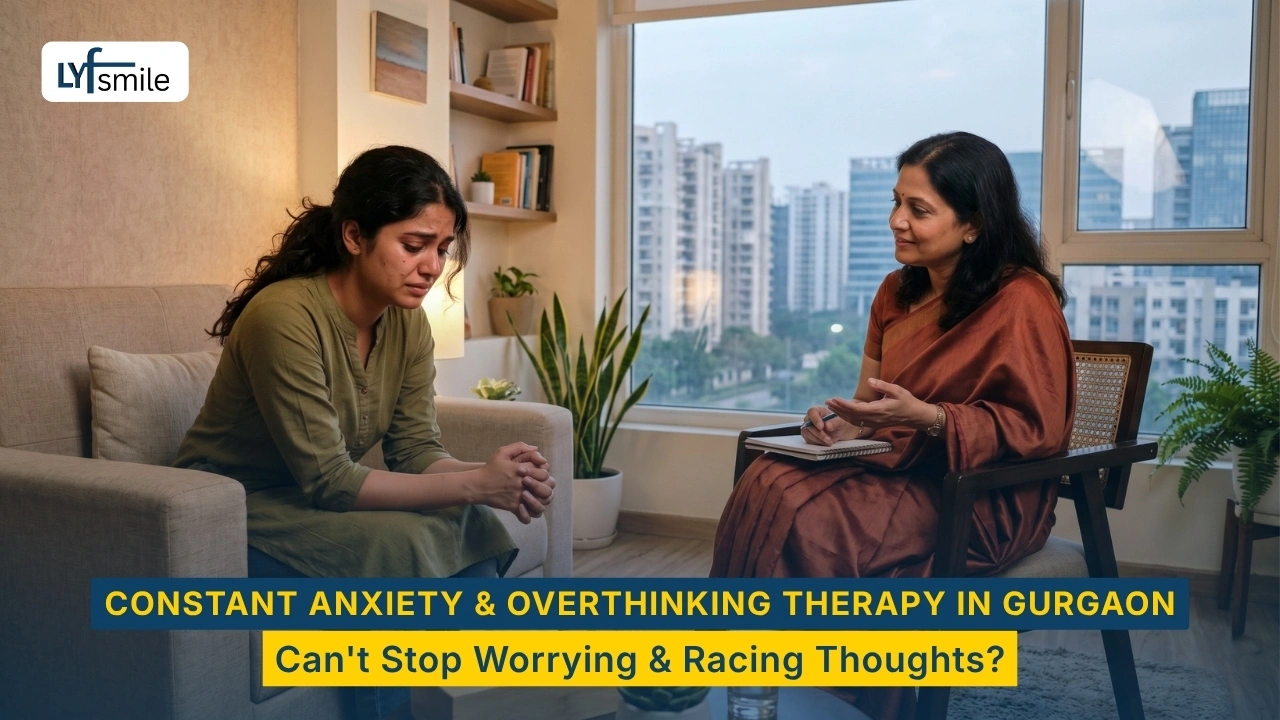
Constant Anxiety & Overthinking Therapy in Gurgaon!
Constant anxiety and overthinking are two of the most common and most misunderstood mental health challenges. It is not always panic or fear. Sometimes it is just a mind that will not slow down, no matter how hard you try.
At Lyfsmile, Mrs Ritika Dhall, a CBT-certified anxiety therapist, provides structured, constant anxiety and overthinking therapy in Gurgaon, online and in-person, to help you understand these patterns and feel genuinely calm again.
Anxious thoughts are repetitive worries that can feel difficult to control. When a person experiences constant anxiety and overthinking, the brain stays in a state of alertness and keeps searching for possible problems or worst-case scenarios. Stress, uncertainty, negative thinking patterns and anxiety disorders can all contribute to persistent anxious thoughts. These thoughts may interfere with concentration, sleep and everyday life, making it harder to relax or enjoy the present moment.
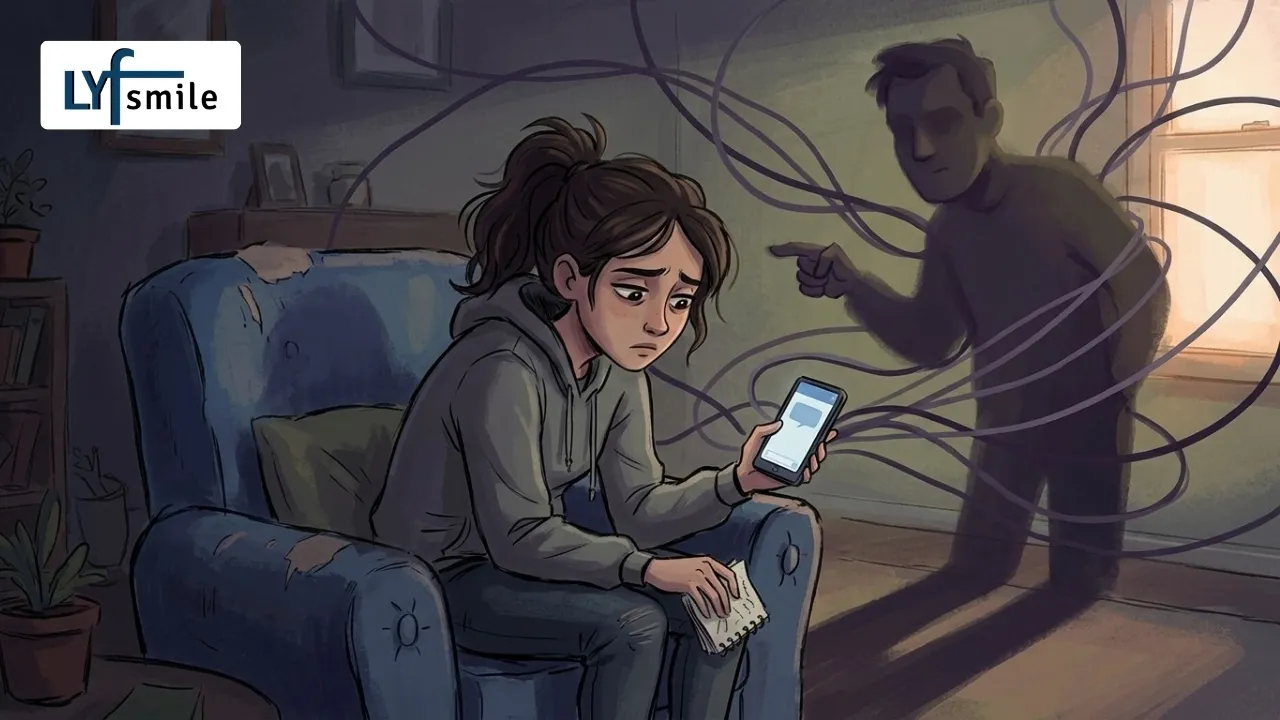
If these thoughts feel familiar, you are not alone. This is not just a busy mind. This is your brain caught in a loop; it does not know how to leave. And it is exhausting in a way that is very hard to explain to someone who has not felt it.
Why Does Constant Anxiety and Overthinking Feel So Exhausting?
Constant anxiety and overthinking can leave you feeling mentally and physically drained. Many people who experience anxiety often describe themselves as feeling exhausted and anxious, even when they have not done anything physically demanding. This happens because the brain remains in a constant state of alertness, continually anticipating problems or worst-case scenarios.
Persistent anxious thoughts and excessive worrying can make it difficult to relax and switch off. Over time, this ongoing mental activity may interfere with sleep, increase stress hormones and contribute to anxiety fatigue, leaving you feeling tired, irritable and unable to concentrate.
Stress, uncertainty and anxiety disorders can also trigger intrusive thoughts, making it harder to focus on the present moment. If you often wonder how to get anxious thoughts out of your head, you are not alone. Many people with anxiety and overthinking struggle with repetitive thinking patterns that seem difficult to control.
Feeling tired because of anxiety and experiencing mental exhaustion are common symptoms, but there are effective ways to manage them. Learning healthy coping strategies and seeking professional support can help reduce excessive worrying and improve overall emotional well-being.
The Therapist Who Will Be With You Through This | Mrs Ritika Dhall
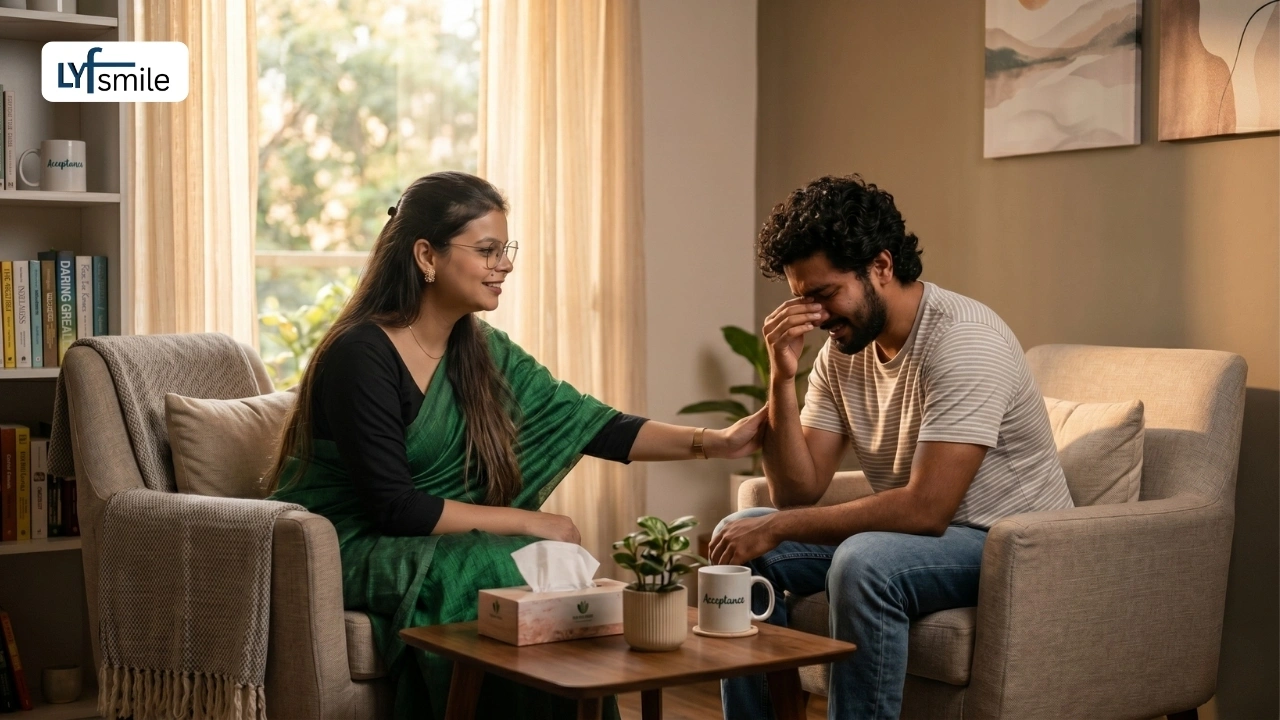 Mrs Ritika Dhall: Senior Consultant & CBT Expert, MA Counselling Psychology | CBT Certified | RCI Registered!
Ritika Dhall has spent over a decade working with people who feel exactly the way you might be feeling right now, exhausted by their own thoughts, unable to find quiet, unsure if things can actually get better.
They do get better. She has seen it happen not because of magic, but because the right support, the right approach, and the right timing can genuinely change the way your mind works.
She works with:
Constant anxiety and chronic overthinking
Racing thoughts and mental exhaustion
Panic attacks and generalised anxiety disorder
Social anxiety and persistent worry
Stress, trauma, and emotional burnout
Relationship and family concerns
This Is What Constant Anxiety & Overthinking Actually Feels Like
Not the dramatic version. Not what people imagine when they hear the word "anxiety." The quiet, daily version that most people carry alone because it is hard to explain and even harder to ask for help with.
The Thoughts That Will Not Leave You Alone
You wake up, and before you have even had your first cup of chai, your mind is already running. Replaying yesterday. Worrying about today. Dreading tomorrow.
You are sitting with family, and your mind is somewhere else entirely. You are watching something you enjoy, but a background noise of worry keeps pulling you back. You try to sleep, and that is when it gets loudest, because there is nothing left to distract you from yourself.
It is not that your problems are bigger than anyone else's. It is that your mind will not let them rest.
Common signs that this is more than just a busy mind:
Thoughts that loop and repeat, no matter how many times you have already thought them
Worrying about things you have no control over
Small decisions feel unnecessarily heavy
A constant low-level unease, even during good moments
Snapping at people you care about, not because you want to, but because you are running on empty
Feeling mentally tired before the day has even started
Lying awake replaying conversations, moments, choices
These patterns, the negative thought cycle, the mind that simply will not switch off, and overthinking affecting daily life, are not permanent. They are treatable.
According to the World Health Organisation, anxiety disorders affect 1 in 4 people globally, yet most people live with them silently for years before reaching out. You are not unusual for feeling this way. You are just someone who deserves proper support.
When Your Body Starts Saying What Your Mind Cannot
Here is something that surprises many people: constant anxiety does not just live in your thoughts. It settles into your body. Quietly. Gradually. Until one day you notice things that feel strange or unexplained.
You go for a checkup. Everything is fine. But the physical symptoms of anxiety keep showing up anyway.
That heaviness in your chest. The tight feeling in your throat when you are trying to hold it together. Hands that feel cold or tingly for no clear reason. A stomach that is always slightly unsettled. Headaches that come and go without warning. Breathing that feels just a little too shallow, like you can never quite get a full breath. That strange feeling of being disconnected from your surroundings, as if you are watching your life from a distance.
These are not random. These are what chronic anxiety and overthinking do to a body that has been carrying too much for too long. And they are entirely treatable once you understand where they are actually coming from.
When Should You Seek Professional Help for Anxiety and Overthinking?
Experiencing occasional stress and worry is a normal part of life, but persistent anxiety and overthinking that interfere with daily functioning may indicate the need for professional support. If you find yourself constantly worrying, struggling to relax, or feeling overwhelmed by anxious thoughts, it may be time to seek help from a mental health professional.
Sleep Problems
Panic Attacks
Difficulty Concentrating
Relationship Issues
Symptoms Affecting Work and Daily Life.
If constant anxiety and overthinking are affecting your quality of life, speaking with a qualified psychologist can help. Professional anxiety treatment and overthinking therapy can provide practical strategies to manage anxious thoughts, reduce excessive worrying and regain emotional well-being. If you have been searching for overthinking therapy near me, reaching out to an experienced mental health professional can be an important step towards recovery and long-term emotional wellness.
Why Gurgaon Clients Choose Lyfsmile for Anxiety & Overthinking Support
 From Sushant Lok and South City to DLF Phase 1, Sector 14, IFFCO Chowk, MG Road, and Cyber City, people across Gurgaon come to Lyfsmile anxiety therapy centre when they are ready to stop just surviving their thoughts and actually start changing them.
What they find here:
Certified, experienced therapists: RCI-registered, CBT-certified, with 12+ years of real-world experience
Affordable sessions: ₹30 per minute, no hidden costs or pressure to commit upfront
Student support: ₹10 per minute for students and unemployed individuals
Online and in-person: virtual overthinking counselling from home or in-person sessions at our anxiety clinic in Gurgaon
Flexible timing: early morning, evening, and weekend slots available
Complete confidentiality: everything stays entirely between you and your therapist
Hindi and English: whichever feels more natural to you
What Happens Inside the Sessions
At our anxiety clinic in Gurgaon, Lyfsmile psychologist and counselling team build sessions around your specific situation. Not a programme. Not a checklist. A genuine conversation that goes somewhere useful.
The primary approach used is Cognitive Behavioural Therapy, one of the most researched and clinically proven methods for constant anxiety and overthinking. CBT works by helping you see the connection between your thoughts, your feelings, and your behaviour, and then gradually changing the parts of that connection that are not serving you.
Alongside this, sessions may also include:
Mindfulness-based work: learning to notice thoughts without immediately getting caught in them. For people with a mind that simply will not switch off, this is often the piece that changes the most.
Exposure-based techniques: for situations or feelings that anxiety has made you start avoiding. Gradual, safe, and always at your pace.
Solution-focused conversations: practical tools that fit into your actual life. Not hypothetical strategies real ones you can use on a regular day.
Whether you are looking for the best psychologist in Gurgaon for anxiety, a psychologist for overthinking, affordable online counselling in Gurgaon, or virtual overthinking counselling, Lyfsmile overthinking counselling and anxiety therapy team offers consistent, professional support you can genuinely rely on.
Book a free 15-minute call. No commitment. No pressure. Just a conversation , and maybe the first real exhale you have had in a while.
(FAQs)
1. Why can't I stop overthinking even when I know I am doing it?
Because knowing and stopping are two completely different things. Overthinking is not a choice; it is a pattern your brain has learned, often as a way of trying to stay safe or in control. You cannot think your way out of a negative thought cycle. But you can change the pattern with the right support, which is exactly what Lyfsmile overthinking counselling is designed to do.
2. What causes constant anxiety and overthinking?
It is rarely one thing. Constant anxiety usually builds over time from a combination of factors, such as temperament, past experiences, prolonged stress, fear of uncertainty, or feelings of pressure that have never had a proper outlet. One of the most valuable things therapy does is help you map your specific pattern because understanding yours is the key to changing it.
3. How does therapy help with overthinking and anxiety?
Therapy, particularly CBT, helps you identify the thought patterns keeping you stuck and teaches you to respond to them differently. Over time, thoughts become less intense, less frequent, and far easier to manage. It is not about stopping thoughts entirely. It is about changing your relationship with them so they no longer control how you feel.
4. Can constant anxiety and overthinking be treated without medication?
For many people, yes. CBT and mindfulness-based therapy have decades of strong clinical evidence showing significant improvement in constant anxiety and overthinking without medication. Your therapist at Lyfsmile will help you understand what approach fits your specific situation without any pressure toward anything that does not feel right for you.
5. Why do I feel anxious without any clear reason?
Anxiety without reason is more common than most people realise. It usually means the patterns are running below the surface, unprocessed stress, fear of the future, or subtle pressure that has been quietly building. A therapist helps you find what is actually driving that unexplained unease, which makes it much easier to address and move through.
6. What are the signs of overthinking I should not ignore?
Overthinking affecting daily life shows up in specific ways, such as thoughts that loop constantly, difficulty making simple decisions, mental exhaustion from anxiety, always feeling worried, replaying conversations, and lying awake at night with a mind that simply will not switch off. If these feel familiar and persistent, reaching out to an overthinking therapist in Gurgaon is a good next step.
7. How long does anxiety therapy take to show results?
Most people notice a real shift within 4 to 6 sessions, not because everything is resolved, but because they begin understanding their thoughts differently and responding to them more effectively. Deeper, longer-standing patterns take more time. Your therapist works at whatever pace feels right for you.
8. When is the right time to reach out?
Honestly? Now. You do not need to be in crisis. You do not need to hit a breaking point. If overthinking is costing you sleep, peace, presence, or joy, that is reason enough. The earlier you get the right anxiety and stress counselling in Gurgaon, the easier the process tends to be.