


Kashu Shankhwar
Difference Between Good Touch and Bad Touch!
Understanding the difference between good touch and bad touch is an important part of body safety for children. Teaching children safe and unsafe touch through simple examples helps them recognize uncomfortable situations and protect themselves.
However, as children grow, it becomes important for them to understand that not every touch is safe or appropriate. Teaching them about good touch and bad touch helps them recognise personal boundaries and identify uncomfortable situations.
When children develop this awareness, they are more likely to express themselves without fear and learn to say “no” when something doesn’t feel right. This is why parents and caregivers need to talk about this topic openly, calmly, and in an age-appropriate way.
While teaching children about body safety, parents should also create a safe environment where children feel comfortable expressing their emotions and asking questions. If a child appears fearful or emotionally distressed after an uncomfortable experience, consulting a Child Psychologist Near Me or seeking Child Emotional Support can help them feel safe and understood.
What is Good Touch and Bad Touch?
Good touch is a type of physical contact that makes a child feel safe, comfortable, and cared for.
Examples include:
A hug from parents or grandparents
Holding hands while crossing the road
A gentle pat on the back for encouragement
Helping a child get dressed when they are very young
These touches help children feel loved and supported.
Bad touch, on the other hand, is any touch that makes a child feel uncomfortable, confused, scared, or unsafe.
Examples may include:
Someone touching a child’s private body parts
Forcing a child to hug or kiss someone
Touch that makes a child feel scared or uneasy
Children should understand that their feelings matter, and if something feels wrong, they have the right to say no.
How does it feel?
Good touch is a touch that is offered by parents and other family members of the kid. A place where a kid grows up and is nurtured is a place where a kid feels safe and secure. All the caregivers give proper treatment and a secure environment to the kids.
Examples of Good Touch
Parents hugging their child
A teacher giving a high-five
Holding hands while crossing the road
A comforting pat when a child is upset
Examples of Bad Touch
Touching private parts without permission
Asking a child to keep a secret
Forcing physical contact
Touch that makes the child uncomfortable
Teaching these examples helps children understand the difference between safe and unsafe touch.
Open communication is equally important. Encouraging children to speak freely with a trusted Child Counselor or parent helps them report uncomfortable experiences without fear or guilt.
Why is it so essential to teach the difference between good and bad touch?
 Teaching children about good and bad touch is essential for building their safety, confidence, and awareness from an early age. When children clearly understand the difference, they become more capable of recognising uncomfortable situations and taking the right steps to protect themselves.
Builds Safety Awareness: Children who are aware of good and bad touch feel more secure and confident. They can identify unsafe behavior and are more likely to ask for help in urgent situations. Without this knowledge, they may not understand when something is wrong.
Helps Prevent Childhood Trauma: Educating children about boundaries and inappropriate touch can protect them from abuse. Childhood trauma can deeply affect emotional and mental well-being in later stages of life, so early awareness plays a crucial role in prevention.
Encourages Body Confidence and Privacy: When children learn about personal boundaries, they begin to respect their own bodies. This understanding helps them feel confident, value their privacy, and communicate discomfort without fear.
Having open, honest, and age-appropriate conversations with children creates a safe environment where they feel heard and supported. It also strengthens trust between children and caregivers.
You might also like: Child Safety Awareness & Family Therapy
How can kids know about good and bad touch?
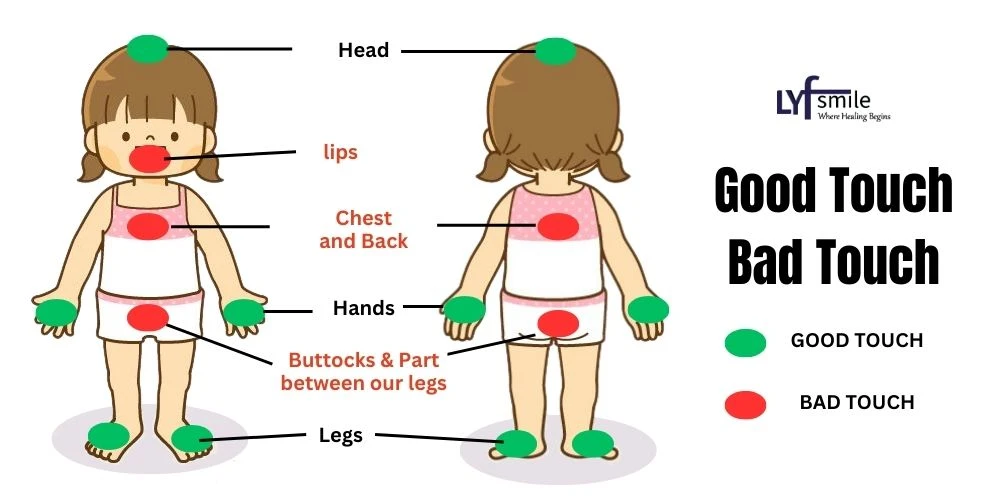 One can teach their kids about good and bad touch in the following manner-
Parents should have an open discussion about good and bad touch with their kids. They should teach them the basic anatomy of body parts. By knowing the names and parts of their body, they will learn about their private parts.
Parents should tell their kids that they need to yell for help in case they feel that someone is touching them badly. Make sure that you mention that not only strangers but also their acquaintances are not allowed to touch them badly.
What Is the Swimming Suit Rule for Children?
The swimming suit rule is a simple and age-appropriate way to teach children about body safety and personal boundaries. According to this rule, the parts of the body that are covered by a swimsuit are considered private parts, and no one should touch or ask to see these areas except in specific situations, such as when parents are helping young children with hygiene or when a doctor examines them in the presence of a trusted adult.
Teaching the swimming suit rule helps children understand the difference between good touch and bad touch without creating fear. It also encourages them to trust their feelings and speak up if anyone makes them feel uncomfortable.
Parents can explain that:
The body parts covered by a swimsuit are private.
Children have the right to say "No" to any touch that makes them uncomfortable.
No one should ask them to keep a secret.
They should tell a trusted adult immediately if something feels wrong.
By introducing the swimming suit rule early, parents can improve body safety for children, strengthen child safety awareness, and help children develop confidence in protecting their personal boundaries.
What is a childhood trauma, and how can it impact?
 Trauma is described as an incident that leads to feelings of fear, anxiety or helplessness. When a child faces trauma in the form of physical violence, growing up in a violent family, or being sexually abused, it impacts the child in the long run.
Stay active and explore with them. Make sure that they feel loved and affectionate. The development that takes place in the younger phase leads to the future personality of a child. When a kid shares an incident that made him or her uncomfortable, then pay attention and take the required actions in response to that. Let your kids know that you are there for them and they can come to you whenever any trouble comes to them.
Lyfsmile's best child psychologist & Child therapy services in India
 Lyfsmile's Best Child Counseling & Therapy Services in India offers compassionate, expert support for children facing a variety of mental health challenges. With a team of trained professionals, Lyfsmile provides a safe and nurturing environment where children can receive the help they need to navigate their emotional and psychological struggles. Whether it's dealing with behavioral issues, anxiety, or trauma, Lyfsmile tailors its therapy services to each child's unique needs, promoting their overall well-being and growth. Some common child mental health problems addressed by Lyfsmile's services include:
ADHD (Attention Deficit Hyperactivity Disorder)
PTSD (Post-Traumatic Stress Disorder)
Child Growth and Development Issues
Autism Spectrum Disorder (ASD), etc.
Conclusion
Teaching children about good touch and bad touch is more than just guidance; it is a foundation for their lifelong safety and confidence. It helps them understand their boundaries, trust their instincts, and respond when something doesn’t feel right.
When children are aware, they are less likely to stay silent and more likely to reach out to trusted adults for help. This simple awareness can protect them from harm and reduce the risk of long-term emotional trauma.
Equally important is creating a safe and open environment where children feel comfortable sharing their thoughts, asking questions, and expressing discomfort without fear. Trust and communication play a key role in strengthening their sense of security.
In the end, awareness is protection, and every child deserves to feel safe, heard, and empowered.
Faqs
What is the right age to teach good touch and bad touch to children?
Children can be introduced to good touch and bad touch concepts as early as 2–3 years of age. At this stage, they can understand basic body safety rules and personal boundaries. Early awareness plays an important role in protecting children from abuse.
How do I explain good touch and bad touch to my child easily?
To explain good touch and bad touch, use simple and clear language. Tell your child that a safe touch feels comfortable, while an unsafe touch may feel confusing or uncomfortable. This is an important step in teaching body safety to kids.
What are examples of good touch and bad touch for kids?
Examples of good touch and bad touch for kids include safe gestures like a hug from parents, while unsafe touch includes touching private parts or forcing physical contact. Teaching these examples helps children understand personal safety for children.
Can strangers and known people both give unsafe touch?
Yes. Unsafe touch can come from both strangers and people a child already knows. Children should understand that anyone who makes them feel uncomfortable, scared, or asks them to keep a touch secret is crossing personal boundaries. Teaching this awareness helps improve child safety and encourages children to speak up without fear.
What should children do if they experience bad touch?
If a child experiences bad touch, they should try to move away from the situation, say "No" loudly, and tell a trusted adult immediately. Parents, teachers, or caregivers should listen calmly, believe the child, and provide support. Prompt action is essential to ensure the child's safety and emotional well-being.
Why is body safety education important for children?
Body safety education helps children understand personal boundaries, recognize unsafe situations, and communicate openly when something feels wrong. Early awareness builds confidence, promotes child safety, and teaches children that they have the right to protect their bodies and seek help whenever needed.
Can bad touch affect a child's mental health?
Yes. Experiencing inappropriate or unsafe touch can have a significant impact on a child's mental health. It may lead to anxiety, fear, sadness, sleep problems, low self-esteem, or difficulty trusting others. Early support from parents and mental health professionals can help children recover and prevent long-term emotional effects.